Why Cloth Diapering Doesn’t Have to Be Complicated
For many parents, the idea of cloth diapering sounds noble but exhausting. Images of endless laundry, complicated folding, and diaper pails full of mess can be intimidating. The truth is, modern cloth diapering can be simple, sustainable, and surprisingly low-effort — especially if you choose the right system for your lifestyle.
This guide is for parents who want to reduce waste and save money over time, but who also value sleep, convenience, and sanity. It’s not about doing it the ‘right’ way; it’s about doing it in a way that actually works for your real life.
Choosing a Diaper System That Fits Your Routine
The first step to low-stress cloth diapering is picking a type that matches how you live. There are several styles, each with different trade-offs in terms of prep, drying time, and ease of use.
All-in-One (AIO) Diapers
AIOs are the closest thing to disposables in the cloth world. The absorbent layer is sewn into the waterproof outer shell, so there’s no stuffing or separate pieces to manage. When the diaper is wet or soiled, you simply unfasten it, dispose of solids (if needed), and toss it into the diaper pail.
Pros:
- Very easy to use, especially for caregivers who aren’t used to cloth.
- Great for daycare, grandparents, or babysitters.
- No separate inserts or covers to keep track of.
Cons:
- Longer drying time because of multiple layers.
- Higher upfront cost per diaper.
- Can be bulkier than other options.
Pocket Diapers
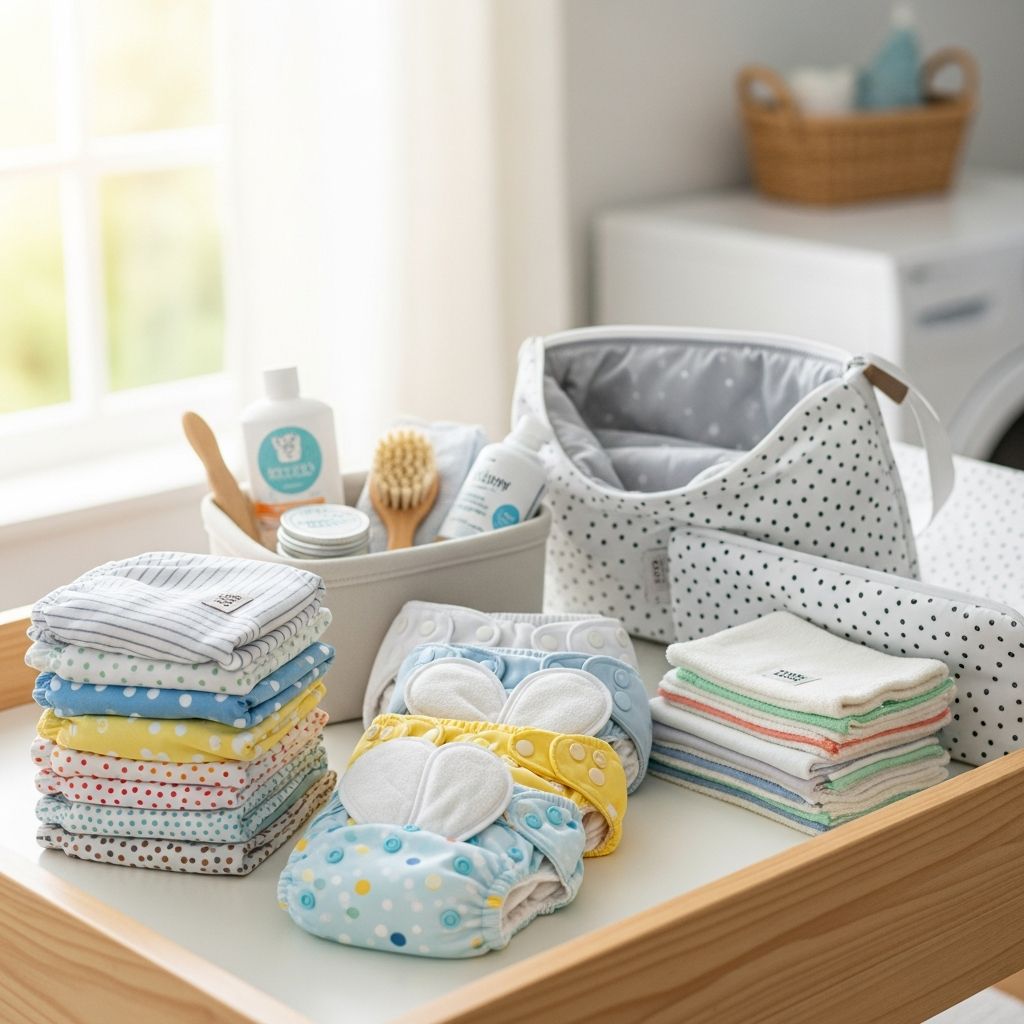
These have a waterproof outer shell with a pocket opening where you insert absorbent pads. You can customize absorbency by adding one or two inserts, and you can use different materials (cotton, bamboo, hemp) depending on your baby’s needs.
Pros:
- Customizable absorbency for day vs. night.
- Fast-drying shells since inserts can be removed.
- Good balance of convenience and cost.
Cons:
- Requires stuffing inserts before use.
- Inserts can shift or bunch if not placed carefully.
- Shells need to be turned inside out occasionally to check for trapped moisture.
Hybrid Systems (All-in-Two / AI2)
These separate into a waterproof cover and a removable soaker or insert. The cover can often be reused several times if only wet, which reduces laundry load.
Pros:
- Faster drying than AIOs.
- Covers can be reused if not soiled.
- Good for overnight or heavy wetters when paired with extra absorbency.
Cons:
- More pieces to manage than AIOs.
- Requires a bit more organization to keep covers and inserts matched.
Traditional Styles (Prefolds, Flats, Fitteds)
These are the classic cloth diapers that many parents remember from their own childhood. Prefolds and flats are flat rectangles that are folded and secured with pins, Snappis, or a separate cover. Fitteds are shaped like diapers but still need a waterproof cover.
Pros:
- Very affordable, especially if buying secondhand.
- Compact and easy to store.
- Great for travel or backup use.
Cons:
- Steeper learning curve for folding and fastening.
- Requires separate covers and fasteners.
- Less convenient for caregivers unfamiliar with cloth.
Building a Practical Diaper Stash
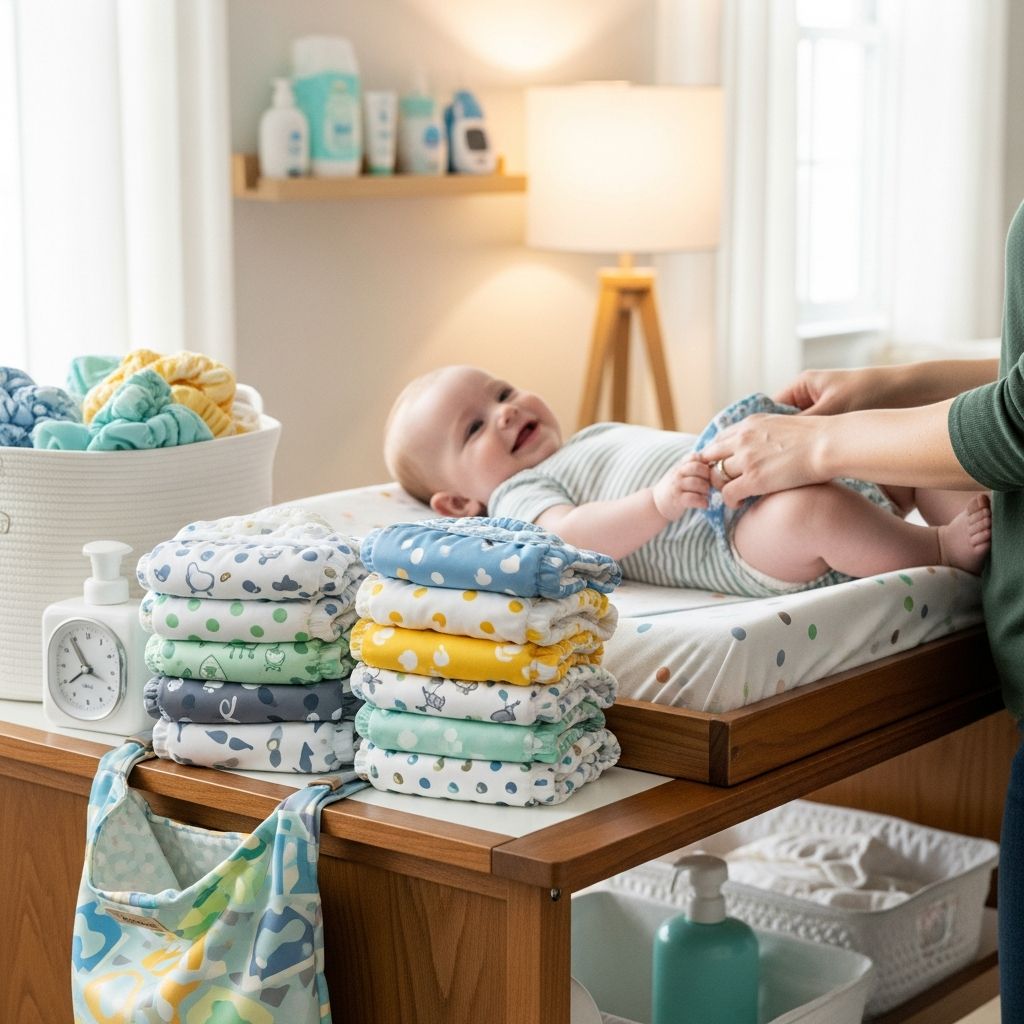
You don’t need dozens of diapers to get started. A small, well-chosen stash lets you test what works before investing heavily.
How Many Diapers Do You Actually Need?
A typical newborn may go through 8–12 diapers per day, while older babies may need 6–8. If you plan to wash every 2–3 days, a stash of 18–24 diapers is usually enough for part-time or full-time use.
Recommended Starter Set by Type
| Diaper Type | Recommended Starter Count | Additional Items Needed |
|---|---|---|
| All-in-One (AIO) | 18–24 diapers | None (all-in-one) |
| Pocket Diapers | 18–24 shells + 30–40 inserts | Extra inserts for customization |
| Hybrid (AI2) | 12–18 shells + 24–36 inserts | Extra inserts, optional extra shells |
| Prefolds + Covers | 24–30 prefolds + 6–8 covers | Snappis or pins, extra covers for soiled changes |
When to Buy More
- If you’re washing every 2–3 days and running out, add 6–12 more diapers.
- If you’re using hybrids, consider a few extra covers so you can reuse them between wet changes.
- If your baby is a heavy wetter or you want overnight options, invest in extra absorbent inserts (hemp or bamboo).
Setting Up a Low-Effort Diaper Routine
The key to sustainable cloth diapering is a routine that fits into your existing habits, not one that requires a complete lifestyle overhaul.
At Home: Keeping It Simple
- Use a dry pail (no water) with a washable liner or a disposable liner that can be tossed with the diapers.
- Store the pail in a cool, dry place away from direct sunlight to minimize odors.
- Keep a small stack of clean diapers and wipes in each bathroom or changing area to avoid constant trips to the laundry room.
- Change diapers as often as you would with disposables to prevent rashes and leaks.
On the Go: Diapering Without the Drama
- Use a wet bag (waterproof bag) to store soiled diapers when out of the house.
- Carry a few clean diapers, a small pack of wipes, and a change of clothes in a diaper bag.
- For long outings, bring a second wet bag so you can separate wet and soiled diapers if desired.
- When traveling, pack enough diapers to last the trip plus a few extras, and plan laundry stops if needed.
Washing Cloth Diapers Without the Stress
Washing is often the biggest worry for new cloth diaper users. The good news is that modern machines and detergents make it much easier than it used to be.
Basic Wash Routine
A simple, effective routine for most machines:
- Pre-rinse or cold wash: Run a cold, short cycle with no detergent to remove solids and urine. This helps prevent stains and odors.
- Main wash: Follow with a hot cycle using a cloth-diaper-safe detergent. Use the recommended amount for your load size and water hardness.
- Extra rinse: Add an extra rinse cycle to ensure all detergent is removed. Residue can cause repelling and rashes.
- Drying: Line dry when possible to extend the life of elastic and waterproofing. If using a dryer, use low heat and avoid high heat on waterproof covers.
What to Avoid in the Wash
- Don’t use fabric softener or dryer sheets — they coat fibers and reduce absorbency.
- Avoid detergents with optical brighteners, enzymes, or heavy fragrances if your baby has sensitive skin.
- Don’t overload the machine; diapers need room to move and rinse properly.
- Don’t wash diapers with other heavily soiled items (like workout clothes or towels) that can transfer oils or bacteria.
Dealing with Stains and Odors
- For stains, hang diapers in direct sunlight — UV light naturally bleaches and sanitizes.
- For odors, ensure you’re using enough detergent and doing an extra rinse. Stripping (washing without detergent) can help if residue builds up.
- Store diapers in a well-ventilated pail and wash regularly to prevent musty smells.
Minimizing Leaks and Fit Issues
Leaks are usually about fit and absorbency, not the diaper type itself.
Getting the Fit Right
- The diaper should be snug around the legs and waist without pinching.
- There should be no large gaps at the back or sides when your baby is standing.
- Adjust rise snaps as your baby grows to maintain a good fit.
- For pocket diapers, make sure inserts are fully inside the pocket and not bunched or folded.
Managing Absorbency
- Use more layers or thicker inserts for overnight or heavy wetters.
- Consider hemp or bamboo inserts for extra absorbency; they hold more liquid than cotton.
- Change more frequently if your baby is a heavy wetter or if the diaper feels very heavy.
- For newborns, use newborn-sized diapers or adjust larger ones with rise snaps to avoid gaps.
When Cloth Diapering Isn’t Working: Knowing When to Adjust
Cloth diapering isn’t a one-size-fits-all solution. It’s okay to mix and match or step back if it’s not working for your family.
Signs It Might Not Be the Right Fit
- You’re constantly stressed about laundry or running out of clean diapers.
- Leakage is frequent despite proper fit and absorbency.
- Someone in the household (including you) is consistently uncomfortable using cloth.
- It’s causing more conflict or exhaustion than it’s worth.
Flexible Approaches
- Use cloth at home and disposables when out or overnight.
- Try a different diaper type (e.g., switch from AIOs to pockets or hybrids).
- Reduce the number of cloth diapers and use them only part-time.
- Take a break and come back to it later if needed.
Frequently Asked Questions
Do I need special detergent for cloth diapers?
It’s best to use a detergent labeled as safe for cloth diapers. Avoid fabric softeners, bleach (unless recommended by the manufacturer), and heavy fragrances, which can reduce absorbency and irritate skin.
How often should I wash cloth diapers?
Every 2–3 days is ideal to prevent odors and mildew. If you have a small stash, you may need to wash more frequently; with a larger stash, you can stretch to every 3–4 days.
Can I wash cloth diapers with other laundry?
It’s safest to wash diapers separately, especially if your baby has sensitive skin or you’re using a shared machine. If you must mix, avoid washing with heavily soiled items or those with oils (like workout clothes).
How do I handle poop with cloth diapers?
For breastfed babies, poop is water-soluble and can go straight into the wash. For formula-fed or solid-food babies, shake or scrape solids into the toilet before placing the diaper in the pail. A diaper sprayer or bidet can make this easier.
Are cloth diapers really cheaper than disposables?
Over time, yes. While the upfront cost is higher, a well-maintained stash can last through multiple children and save hundreds or even thousands of dollars compared to disposables.
Can I use cloth diapers at daycare?
Many daycares accept cloth diapers, especially AIOs or pockets, which are easy to use. Check your provider’s policy and consider providing clear instructions and a supply of diapers and wipes.
How long do cloth diapers last?
With proper care, most modern cloth diapers last through one child and can be reused for siblings. Elastic and waterproofing may degrade over time, especially with high heat and harsh detergents.
What if I’m worried about leaks at night?
Use diapers with extra absorbency (hemp or bamboo inserts) and consider a dedicated overnight diaper or cover. A slightly tighter fit around the legs and waist can also help, as long as it’s still comfortable.
Final Thoughts: Cloth Diapering on Your Terms
Cloth diapering doesn’t have to be an all-or-nothing commitment. The goal isn’t perfection; it’s progress. Whether you use cloth full-time, part-time, or just for a season, every diaper you reuse is one less in a landfill and one more step toward a more sustainable routine.
Choose a system that fits your energy, schedule, and comfort level. Start small, learn as you go, and adjust as needed. With a little planning and a realistic approach, cloth diapering can be a simple, rewarding part of parenting — not an extra burden.
References
- Cloth Diapering for Beginners — Lighthouse Kids Company. Accessed 2025. https://lighthousekidscompany.com/blogs/cloth-diaper-blog/cloth-diapering-for-beginners
- The Ultimate Cloth Diaper Guide for Beginners — Guided Heart Doula. Accessed 2025. https://www.guidedheartdoula.com/post/the-ultimate-cloth-diaper-guide-for-beginners
- How to Cloth Diaper: A Beginner’s Guide — Golden Rippy. Accessed 2025. https://www.goldenrippy.com/how-to-cloth-diaper-a-beginners-guide/