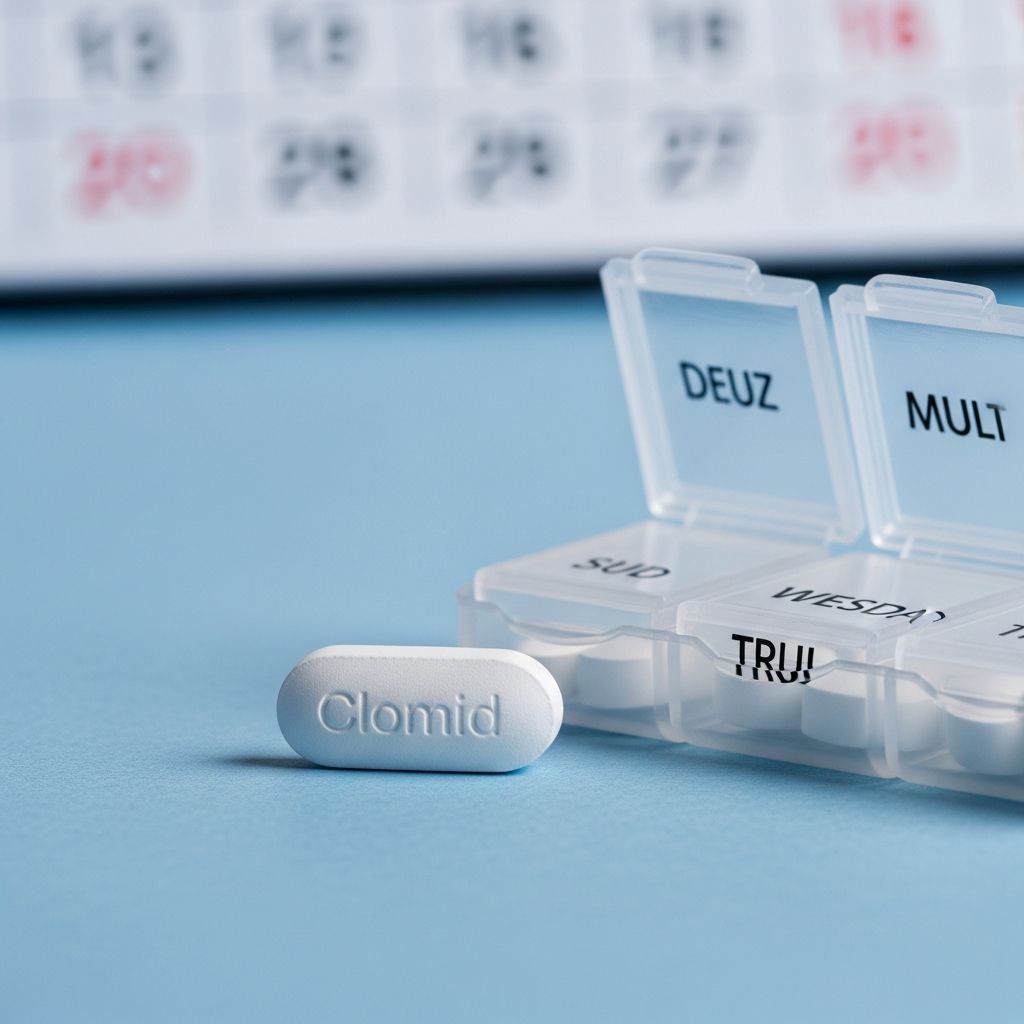
Clomid, known scientifically as clomiphene citrate, stands as a cornerstone in treating ovulatory infertility, helping countless women achieve pregnancy by stimulating egg release. This oral medication blocks estrogen receptors in the brain, prompting increased production of follicle-stimulating hormone (FSH) and luteinizing hormone (LH) to foster ovarian follicle growth. Ideal for conditions like polycystic ovary syndrome (PCOS) or irregular cycles, Clomid offers a non-invasive first-line approach with success rates that make it a popular choice in reproductive medicine.
Understanding Clomid’s Role in Overcoming Ovulatory Issues
Women experiencing anovulation—failure to ovulate regularly—benefit most from Clomid. By mimicking a natural hormonal surge, it encourages the ovaries to develop and release mature eggs. Typically prescribed for those with patent fallopian tubes and healthy partners’ sperm parameters, it’s often the initial step before advancing to injectables or assisted reproduction. Studies indicate that 70-80% of users ovulate on Clomid, with conception rates around 40% within six cycles, though multiples like twins occur in 5-10% of cases.
Consultation with a fertility specialist is crucial to assess suitability, as underlying issues like thyroid disorders or hyperprolactinemia must be ruled out first. Baseline ultrasounds and hormone panels guide personalized protocols.
Preparing for Your Clomid Cycle: Essential Steps
Before starting, expect a thorough evaluation including medical history, physical exam, semen analysis for partners, and hysterosalpingogram (HSG) to confirm tubal patency. If cycles are absent, progestin like medroxyprogesterone induces withdrawal bleeding to kickstart day 1. Lifestyle tweaks—maintaining BMI between 19-30, quitting smoking, limiting caffeine, and tracking basal body temperature (BBT)—enhance outcomes.
- Track your cycle: Use apps or kits to pinpoint day 1 accurately.
- Partner prep: Optimize sperm health via diet, exercise, and abstinence timing.
- Pharmacy check: Fill 50mg tablets; generics are equally effective.
Day-by-Day Breakdown of a Standard Clomid Protocol
A classic cycle spans 28-32 days, with Clomid taken early to align ovulation around mid-cycle. Here’s the timeline:
| Day | Actions | Expectations |
|---|---|---|
| 1-2 | Menstrual bleeding confirms cycle start; baseline ultrasound if monitored. | Hormone levels reset; light flow normal. |
| 3-7 | Take 50mg Clomid daily (one tablet). Start day 3 or 5 per doctor. | Follicles begin recruiting; possible hot flashes. |
| 8-12 | No pills; continue intercourse every 1-2 days. OPKs from day 10. | Ovulation approaches 7-10 days post-last dose. |
| 13-16 | Blood draw for progesterone (day 21 equivalent); trigger shot if follicles mature (18mm+). | Progesterone >3 ng/mL confirms ovulation. |
| 14-18 (ovulation window) | Timed intercourse or IUI 24-36 hours post-trigger. | Peak fertility; egg viable 12-24 hours. |
| 28+ | Pregnancy test if no period; repeat cycle if negative. | Beta hCG 14 days post-ovulation. |
Dosages may escalate to 100-150mg if no response, but never self-adjust. Extended 7-10 day regimens suit some.
Monitoring Progress: Ultrasounds, Bloodwork, and Triggers
While not always required, monitoring via transvaginal ultrasound tracks 1-3 follicles reaching 18-22mm, alongside estradiol levels >200 pg/mL. This prevents hyperstimulation. A trigger shot—hCG injection—mimics LH surge, inducing ovulation 36-40 hours later, ideal for timed intercourse or IUI. Without monitoring, rely on OPKs detecting LH surge.
Progesterone checks 7 days post-presumed ovulation verify corpus luteum function; low levels (<3 ng/mL) signal anovulation, prompting dose hikes.
Enhancing Clomid with Timed Intercourse or IUI
Timed Intercourse: Simplest add-on—intercourse days 12-18 or per OPK, covering sperm’s 5-day lifespan and egg’s 24-hour window. Success: 8-10% per cycle.
Clomid + IUI: Sperm washed and placed directly in uterus post-trigger boosts rates to 18-25%. Procedure: catheter insertion, painless, 5-10 minutes.
| Protocol | Per-Cycle Success | Cumulative (3-6 Cycles) |
|---|---|---|
| Clomid Alone | 8-10% | 20-30% |
| Clomid + Trigger | 15-20% | 30-40% |
| Clomid + IUI | 18-25% | 40-50% |
After 3-6 failed cycles, consider alternatives like letrozole or IVF.
Navigating Side Effects and Risks
Common: hot flashes (10-20%), bloating, breast tenderness, mood swings—mimicking PMS, resolving post-cycle. Visual disturbances (blurring, spots) in <2% warrant immediate halt. Rare: ovarian cysts, ectopic pregnancy risk unchanged. Long-term: up to 12 cycles max due to slight ovarian cancer link, though debated. No miscarriage or birth defect increase.
- Manage bloating: hydration, light exercise.
- Mood: stress reduction, partner support.
- Report: severe pain, vision changes promptly.
Maximizing Success: Lifestyle and Adjunct Tips
Conception odds soar with optimized habits. Aim for 2,000-2,500 calorie balanced diet, prenatal vitamins (400mcg folic acid), and acupuncture showing promise in trials. Avoid hot tubs, excess alcohol (<5 units/week). Track everything in a journal for pattern insights.
Emotional support via counseling or groups eases journey; 4/10 conceive on Clomid.
Adjusting Doses and Cycle Management
Non-responders up to 100mg (60%), then 150mg (limited efficacy). If ovulating sans conception post-6 cycles, explore donor sperm, laparoscopy, or gonadotropins. Women over 35 or with diminished reserve may skip to injectables.
Frequently Asked Questions
When should Clomid be started in the cycle?
Typically days 3-7 or 5-9 of menses for 5 days at 50mg daily.
How soon after Clomid does ovulation happen?
Usually 5-12 days post-last tablet, averaging 7-10 days.
Is a trigger shot always needed?
No, but it times ovulation precisely for IUI, improving rates 15-20%.
Can Clomid cause multiples?
Yes, twins 5-10%; higher orders <0.5%.
What if no period after cycle?
Test for pregnancy; if negative, progestin induces bleed for next round.
Max cycles of Clomid?
12, but most conceive/switch by 6.
Clomid empowers fertility journeys, blending science and timing for hopeful outcomes. Collaborate closely with providers for tailored success.
References
- The Protocol for Clomid and Trigger Shot Success — Liv Hospital. 2023. https://int.livhospital.com/clomid-and-trigger-shot/
- Clomid Fertility Drug Treatment Protocols, Clomiphene Citrate — Advanced Fertility Center of Chicago. 2024. https://www.advancedfertility.com/fertility-medications/clomid-treatment
- CLOMID (CLOMIPHENE CITRATE) Patient Information Leaflet — Manchester Fertility. 2025-10. https://mft.nhs.uk/app/uploads/sites/4/2025/10/SMPIL-25-013-Clomid.pdf
- Clomiphene (oral route) – Side effects & dosage — Mayo Clinic. 2025. https://www.mayoclinic.org/drugs-supplements/clomiphene-oral-route/description/drg-20063072