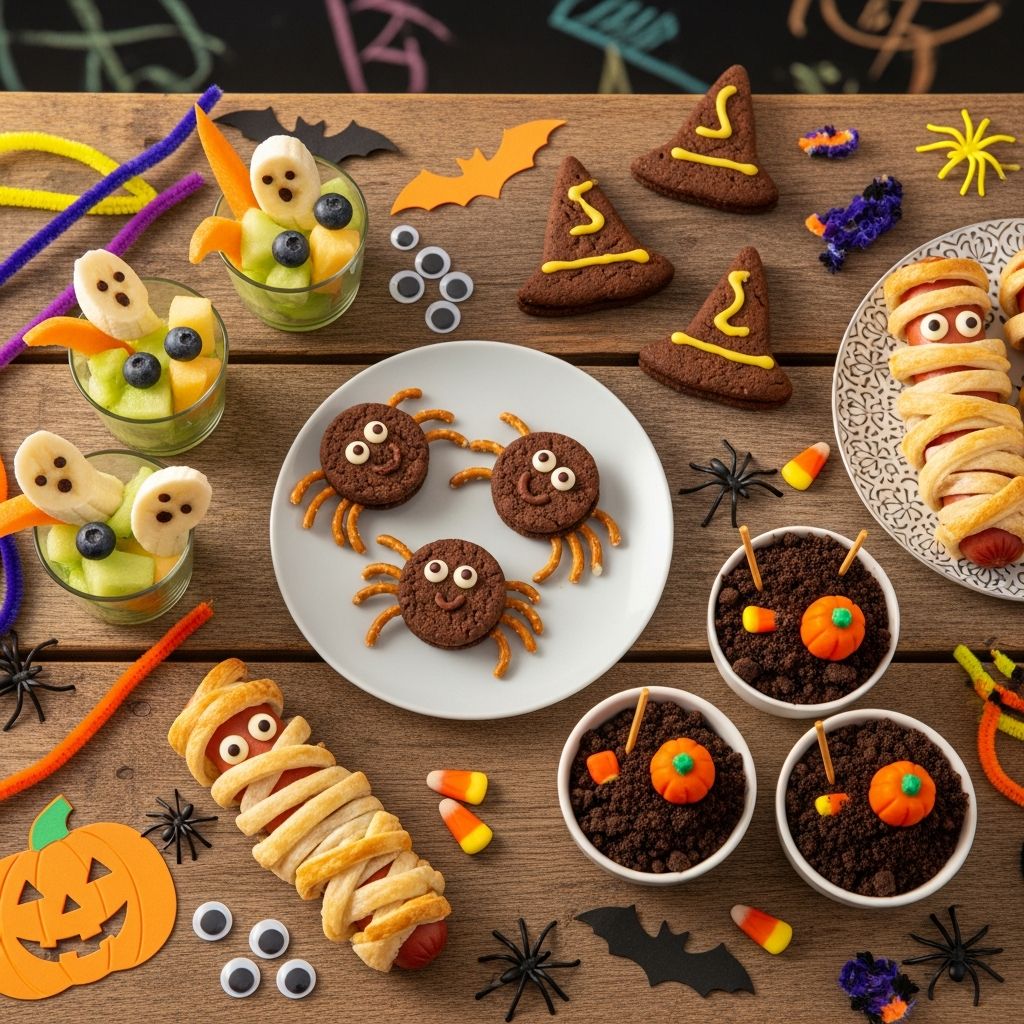
Classroom Halloween parties can be magical for kids, but they also come with real-world constraints: school food rules, allergies, busy schedules, and the challenge of feeding a room full of excited children without total chaos. This guide offers original, practical ideas for classroom Halloween treats that are festive, manageable for adults, and fun for kids without relying on complicated recipes or elaborate decorations.
Why Classroom Halloween Treats Need Extra Thought
Designing treats for a classroom is very different from hosting a party at home. You may not be there to serve the food, storage could be limited, and there will almost always be at least one food restriction in the group.
- Class-size scale: A treat that is easy for four kids might be exhausting for twenty-five.
- School policies: Many schools restrict nuts, homemade items, or high-sugar drinks.
- Teacher-friendly logistics: Teachers need treats that are easy to pass out and clean up, especially if they are squeezed into a short party window.
Planning Ahead: Questions to Ask Before You Bake
Before you start mixing batter or filling treat bags, a few quick questions will save time and stress later. Clear communication with the teacher helps you avoid surprises and ensures every child can safely participate.
- Ask about allergies and restrictions (nuts, dairy, gluten, eggs, artificial dyes, etc.).
- Confirm whether homemade treats are allowed or if everything must be pre-packaged.
- Check if the classroom has a refrigerator, freezer, or none at all.
- Find out how much time the class has for the party and whether kids will sit at desks or move around.
Key Principles for Classroom-Friendly Treats
Once you understand the rules and constraints, you can shape your treat ideas around a few simple principles. These guidelines help you prioritize treats that look special but are still realistic to pull off on a busy weeknight.
- Single-serve portions: Individual servings reduce mess and help with portion control.
- Minimal crumbs and stickiness: Sticky frosting and crumbs are a nightmare on shared desks; compact snacks are easier to manage.
- Short ingredient lists: Fewer ingredients typically mean fewer allergy risks and faster prep.
- Transportable and stackable: Trays, shallow boxes, or lidded containers make getting treats to school much less stressful.
Fun Food vs. Sugar Overload
Halloween and sugar often go hand in hand, but the classroom doesn’t need to turn into a candy factory. Kids will likely collect plenty of sweets later, so you can think of classroom treats as a balance of playful and reasonably wholesome.
- Pair sweets with something more substantial like fruit, cheese, or whole-grain snacks.
- Turn ordinary foods into Halloween characters rather than relying entirely on candy.
- Use decorations (stickers, themed napkins, small toys) to bring the “Halloween” vibe without adding extra sugar.
Quick Reference: Types of Classroom Treats
| Category | Examples | Best For | Prep Effort |
|---|---|---|---|
| Sweet & Simple | Decorated cookies, mini brownies, pudding cups | Traditional class parties | Moderate |
| Healthier Bites | Fruit cups, veggie packs, yogurt parfaits | Schools with nutrition guidelines | Low to Moderate |
| No-Bake Options | Snack mix, dipped pretzels, layered cups | Last-minute or no-oven households | Low |
| Non-Food Treats | Stickers, pencils, erasers, mini games | Allergy-heavy classrooms | Very Low |
Sweet Treats That Are Easy to Serve
Classic sweet treats still have a place in the classroom as long as they are easy to distribute and not too messy. Focus on small portions and sturdy items that can sit on a desk without collapsing.
- Mini Halloween cupcakes: Use mini liners and a thin layer of frosting with a single themed topper like a paper bat or candy eyeball.
- Spooky brownie squares: Bake brownies in a pan, slice into small squares, and add a simple drizzle of orange or white icing.
- Pudding “cauldrons”: Fill small cups with chocolate pudding, sprinkle crushed cookie “dirt” on top, and add one or two gummy worms.
Healthier Halloween Snack Ideas Kids Still Enjoy
Healthier classroom treats don’t have to look like punishment. A playful presentation can turn fruit, cheese, or whole grains into something kids get excited about.
- Fruit “pumpkins”: Peel small clementines and press a tiny piece of celery or green candy into the top to resemble a stem.
- String cheese ghosts: Draw ghost faces on string cheese wrappers with a food-safe marker.
- Veggie cups: Add carrot sticks and cucumber spears to clear cups with a spoonful of ranch or hummus at the bottom and place a Halloween sticker on each cup.
No-Bake Ideas for Busy Nights
Not everyone has the time, equipment, or desire to bake for a classroom. No-bake options can still feel creative and special while relying largely on assembling store-bought ingredients.
- Monster snack mix: Combine a cereal base with pretzels, a few chocolate candies, and small marshmallows. Portion into snack bags and attach a simple monster label.
- Dipped pretzel “wands”: Dip pretzel rods in melted chocolate or candy coating, then sprinkle with orange and black decorations before they set.
- Layered “graveyard” cups: Alternate crushed cookies and vanilla or chocolate yogurt in clear cups and top with a small cookie “tombstone” drawn with food-safe marker.
Top 10 Classroom-Friendly Halloween Treat Concepts
The list below provides ten flexible concepts that can be adapted to most classrooms, timeframes, and budgets. Each idea balances fun with practicality, with room to customize flavors and decorations.
- Mini monster muffins: Use mini muffin tins, then add simple candy eyes once cooled.
- Jack-o’-lantern fruit cups: Fill clear cups with orange fruit (mandarins, peaches, or mango) and draw jack-o’-lantern faces on the outside.
- Ghostly yogurt tubes: Chill yogurt tubes and use a marker to draw ghost faces on the packaging.
- Spider cracker stacks: Sandwich cheese between round crackers and use pretzel sticks as “legs” poking out from the sides.
- Broomstick snack bags: Fill brown paper lunch bags with popcorn, then tie the top with orange ribbon around a wooden craft stick to resemble a broom.
- Monster apple slices: Sandwich peanut-free spread between two apple slices, add a strip of fruit leather as a tongue, and stick on edible eyes.
- Pumpkin popcorn cups: Orange-tinted popcorn scooped into cups decorated like pumpkins with drawn-on faces.
- Mummy granola bars: Wrap store-bought bars with strips of white paper or tape, leaving a gap to draw or stick on “eyes.”
- Witch hat crackers: Place a round cracker under a cheese triangle, then add a band of chive or thin pepper strip around the base.
- Cauldron trail mix: Mini black paper cups filled with a simple mix of cereal, popcorn, and small chocolate pieces.
Allergy-Friendly and Nut-Free Approaches
Many classrooms are designated nut-free, and some have additional restrictions like egg or dairy allergies. A bit of extra planning keeps every child included and safe.
- Read every label closely, especially for shared equipment or “may contain” warnings.
- Stick with simple ingredients like fresh fruit, plain popcorn, or labeled allergy-friendly snacks when unsure.
- Prepare a small set of alternative treats if one or two children have unique restrictions.
Packaging and Presentation Tips for Easy Distribution
How you package treats can be just as important as what you make. Thoughtful packaging can simplify transport, serving, and cleanup while also making the snacks look more festive.
- Use clear cups, bags, or containers so kids can see the treat inside without opening it.
- Add small touches like ribbon, Halloween stickers, or themed tags for a party feel without lots of extra work.
- Label treats clearly if there are different versions (for example, dairy-free, gluten-free, or regular).
Transporting Treats to School Without Disaster
The trip from your kitchen to the classroom is an underrated part of Halloween treat planning. Sturdy containers and a bit of organization prevent smudged frosting and spilled snacks.
- Place cups or small containers in a shallow box lined with a towel to keep them from sliding.
- Use containers with lids whenever possible and avoid stacking anything delicate or frosted.
- Bring a few extra servings in case of accidental spills or last-minute classroom visitors.
Non-Food Halloween Treats for the Classroom
Some schools strongly limit food treats or encourage non-edible options instead. Non-food items can still feel exciting and help kids remember the celebration without adding to sugar intake.
- Halloween-themed pencils, erasers, stickers, or mini notebooks.
- Temporary tattoos, glow sticks, or small finger puppets.
- Simple activity pages or mini coloring books with Halloween scenes.
Balancing Treats with Classroom Activities
Treats do not have to be the entire focus of the party. Pairing snacks with simple activities can spread out the excitement and make the celebration feel more intentional.
- Set up rotating stations: a craft table, a game area, and a snack station.
- Offer a brief themed story or riddle time before passing out treats.
- Plan one quick clean-up game at the end so the room returns to normal smoothly.
Simple Classroom-Friendly Halloween Drink Ideas
Drinks often get overlooked until the last minute, but a small amount of planning can prevent sticky spills and sugar overload. Focus on clear containers and modest portions.
- Water bottles with Halloween labels or stickers applied at home.
- Small cups of 100% juice in orange or purple shades for a festive look.
- Plain milk or chocolate milk cartons if allowed by the school, decorated with drawn-on faces or mini sticker “costumes.”
Sample Classroom Halloween Treat Menu
To put everything together, here is a sample menu that balances sweet, savory, and fun while staying realistic for a medium-sized class.
| Item | Category | Notes |
|---|---|---|
| Mini monster muffins | Sweet treat | One per student, topped with candy eyes |
| Fruit “pumpkins” | Healthier option | Clementines with celery stems |
| Monster snack mix bags | No-bake snack | Cereal, pretzels, and a few chocolate pieces |
| Water bottles with labels | Drink | Decorated with Halloween stickers |
| Sticker sheets | Non-food favor | One sheet per child, handed out with treats |
FAQs About Classroom Halloween Treats
What if the school bans homemade treats?
If homemade items are not allowed, look for individually wrapped snacks in Halloween packaging, such as mini crackers, plain cookies, or fruit snacks that meet school rules. You can still personalize store-bought items with stickers, tags, or small notes so they feel special without being homemade.
How can I make treats without using nuts?
Choose simple bases like popcorn, plain cereal, fruit, or pretzels and pair them with nut-free chocolate or yogurt-covered pieces. Always check packaging carefully and consider making a separate nut-free mix in a clean bowl using utensils that have not touched other ingredients.
What if there are multiple allergies in the class?
Ask the teacher for specific guidance and, if possible, aim for one main treat that works for everyone, such as labeled dairy-free cookies or fruit cups. If that is not realistic, clearly label each option and let the teacher or caregivers choose what is safe for each child.
How much should I send for a class party?
Sending one main treat per child plus one or two small extras is usually plenty for a classroom celebration. Kids are often just as excited about the theme and the break from routine as they are about the quantity of food.
Can I involve my child in preparing the treats?
Yes, involving your child can make the process more meaningful and help them feel proud at the party. Let them decorate labels, stick on eyes, or stir together snack mix while you handle tasks that involve knives, hot pans, or careful measuring.
Making Classroom Halloween Treats Memorable and Manageable
Classroom Halloween treats don’t need to be elaborate to feel magical for kids. By focusing on safety, simplicity, and a few playful details, you can create snacks that travel well, please teachers, and give children that burst of Halloween excitement they look forward to all fall.