Modern children grow up surrounded by screens, apps, and battery-powered gadgets, yet some of the most powerful tools for their growth are still the simplest: classic toys that invite imagination instead of pressing buttons.
The Power of Simple, Open-Ended Play
Classic toys stand out because they do not entertain children for them; instead, they invite children to actively create the fun. A plain set of blocks can become a zoo in the morning, a spaceship by afternoon, and a castle before bedtime, all without a single light or sound effect.
Unlike many digital toys that direct the storyline, open-ended toys leave room for kids to ask questions, make decisions, and solve problems at their own pace. This kind of free play supports flexible thinking, persistence, and the confidence to try new ideas without fear of making a mistake.
- Open-ended toys have no single “right” way to play with them.
- Children control the pace, characters, and outcomes of their play.
- Imagination becomes the main engine of entertainment, not a screen.
Key Benefits of Classic Toys for Child Development
Thoughtfully chosen classic toys nurture the whole child: body, brain, and emotions. Rather than doing one narrow task, they often touch multiple developmental skills at once.
When parents understand what different toys actually help build, it becomes easier to choose quality over quantity and create a toy shelf that truly supports learning.
| Skill Area | What Classic Toys Do | Examples of Helpful Toys |
|---|---|---|
| Cognitive skills | Encourage problem-solving, cause-and-effect thinking, and early math and science concepts. | Puzzles, building blocks, shape sorters, simple board games. |
| Language and communication | Invite storytelling, new vocabulary, and conversation during pretend play. | Dolls, toy animals, play kitchens, puppets. |
| Fine motor skills | Develop control of hands and fingers through grasping, turning, stacking, or fitting pieces. | Construction sets, threading beads, peg boards, art supplies. |
| Gross motor skills | Build balance, coordination, strength, and spatial awareness through big body movements. | Balls, jump ropes, ride-on toys, pull-along toys. |
| Social and emotional skills | Promote sharing, turn-taking, empathy, and handling big feelings in pretend scenarios. | Board games, dress-up clothes, dollhouses, play doctor or store sets. |
Types of Classic Toys That Deserve a Place at Home
Not every toy box needs to be overflowing with options. A small, well-chosen mix of classic toys can cover almost every area of development and keep kids engaged for years.
Below are core categories to consider when building a meaningful, long-lasting toy collection.
1. Building and Construction Toys
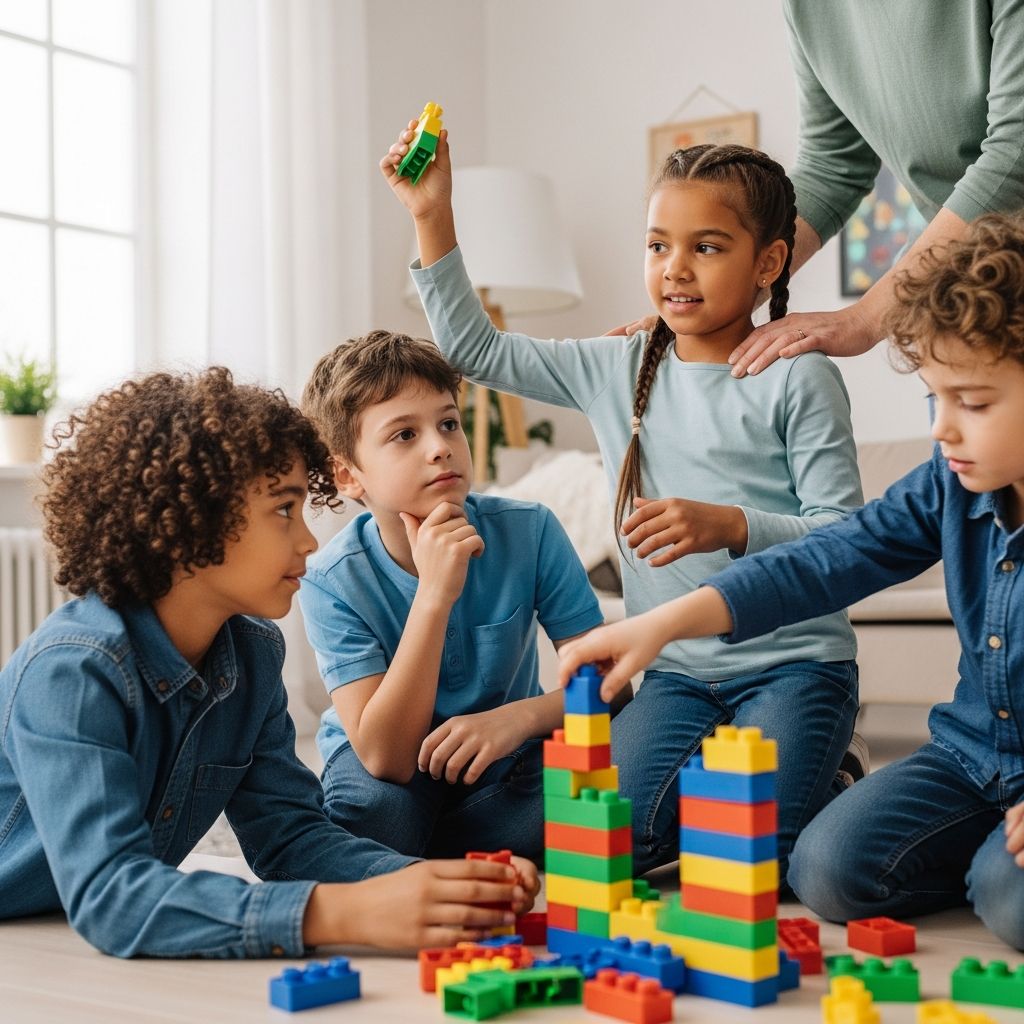
Construction toys give kids raw materials to bring their ideas to life. Rather than imposing a fixed design, these toys invite experimentation with balance, patterns, and structure.
As children stack, connect, and rebuild, they learn persistence and discover that failure is part of figuring things out, not a reason to stop trying.
- Wooden blocks in different shapes and sizes.
- Interlocking plastic bricks or construction sets.
- Magnetic tiles that easily snap together and apart.
- Simple planks or beams for towers, ramps, and bridges.
2. Pretend Play and Imaginative Sets
Pretend play lets children rehearse life in a safe, low-stakes way. They get to be the caregiver, the chef, the firefighter, or the veterinarian and explore big ideas like kindness, fairness, and bravery.
Classic pretend sets rarely tell kids what to say or do; instead, they act as props that support the child’s own stories and emotions.
- Dolls and toy figures with simple expressions and flexible roles.
- Play kitchen with dishes, food items, and utensils.
- Doctor kit, tool set, or pretend grocery store.
- Dress-up clothes, capes, hats, and simple costumes.
3. Movement and Outdoor Toys
Young bodies are designed to move, climb, jump, chase, and explore. Simple, durable outdoor toys channel that energy into healthy movement and joyful play.
These toys also help children learn limits, assess risk, and feel confident in what their bodies can do.
- Various sizes of balls for rolling, throwing, and kicking.
- Jump ropes, hula hoops, and simple obstacle course pieces.
- Ride-on toys, scooters, or balance bikes for older toddlers and preschoolers.
- Pull-along or push toys for new walkers.
4. Puzzles and Early Games
Puzzles and classic games teach children to look closely, think ahead, and tolerate a little frustration on the way to a goal. Matching shapes and images trains visual perception and attention to detail.
As kids grow into traditional board and card games, they practice taking turns, handling wins and losses, and following agreed-upon rules.
- Chunky wooden puzzles with knobs for toddlers.
- Jigsaw puzzles with increasing piece counts for older kids.
- Memory matching games with simple pictures.
- Age-appropriate board games that rely on chance and simple strategy.
5. Creative Arts and Craft Supplies
Art materials are classic for a reason: they give children a voice when words are not enough. Drawing, sculpting, and crafting let kids explore ideas, fears, and dreams in a concrete way.
Regular exposure to creative tools communicates that what a child imagines is worth time, space, and attention.
- Crayons, washable markers, and colored pencils.
- Plain paper, notebooks, and cardboard scraps for building.
- Child-safe scissors, glue sticks, and tape.
- Modeling dough or clay for squishing, rolling, and shaping.
How Classic Toys Compete With Screens
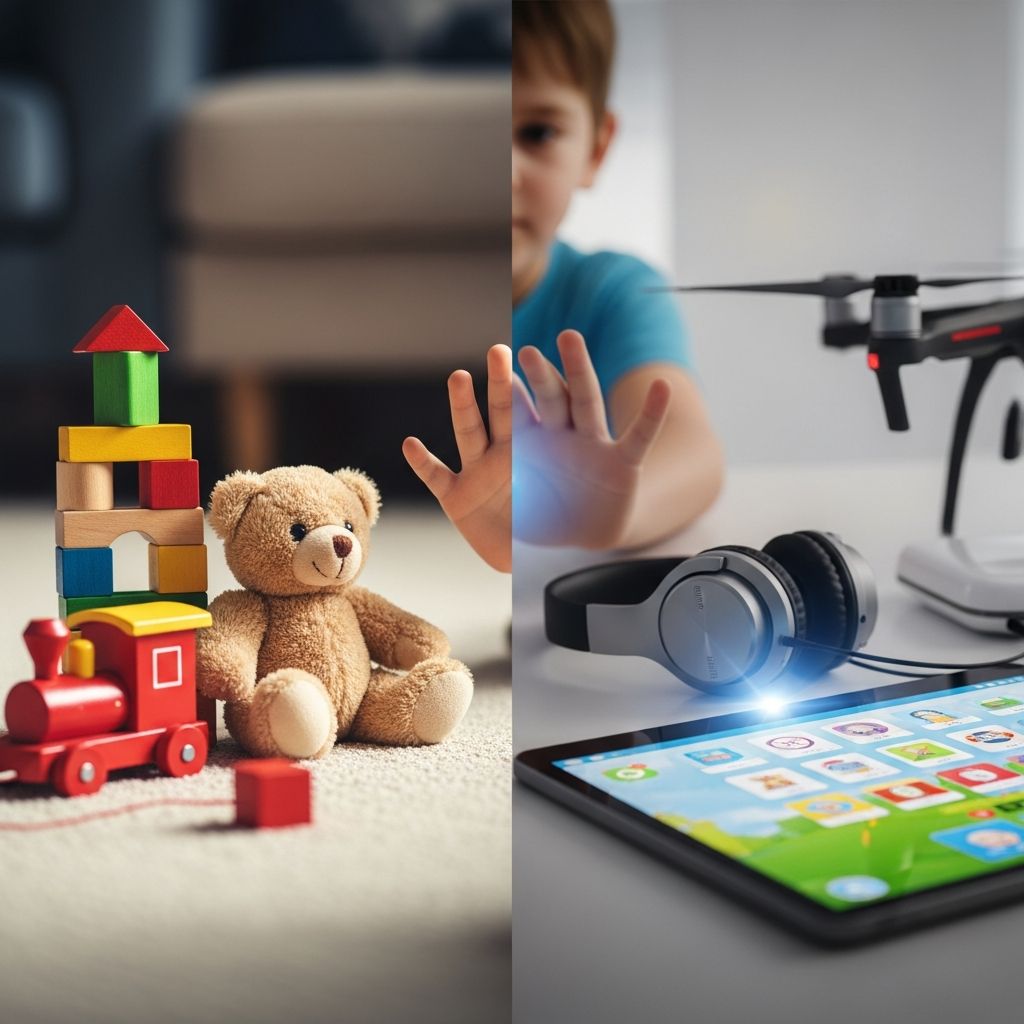
Digital games can be engaging, but they often move faster than a young brain can process deeply. Classic toys slow the pace back down to human speed, allowing children to focus, repeat actions, and make sense of what they are doing.
Rather than bright animations rewarding every tap, children learn to find satisfaction in their own progress: the tower that finally stands, the puzzle that fits, or the story that unfolds during pretend play.
Classic Toys vs. High-Tech Toys
| Feature | Classic Toys | Digital or Electronic Toys |
|---|---|---|
| Who drives the play? | Child invents the story and rules. | Device or app provides structure and outcomes. |
| Type of interaction | Hands-on, three-dimensional, sensory-rich. | Primarily visual and auditory, on a flat screen. |
| Focus and attention | Encourages slower, sustained attention. | Often fast-paced and highly stimulating. |
| Social connection | Easy to share, cooperate, and negotiate in person. | May isolate or promote parallel play on devices. |
| Skill building | Supports creativity, motor skills, self-directed problem-solving. | Can teach specific facts or skills, but often in fixed ways. |
Families do not need to ban screens entirely to benefit from classic toys. Setting aside daily “unplugged play” time can balance tech use and reinforce that screens are one option, not the default.
Choosing Classic Toys by Age and Stage
Children’s needs change quickly, and the best toys stretch just a little past what they can comfortably do today. Too simple, and boredom takes over; too complex, and frustration shuts down curiosity.
Using developmental stages as a rough guide makes toy shopping easier and reduces clutter from items that are not a good fit yet.
Babies (0–12 Months)
In the first year, babies explore with all their senses. Toys should be safe to mouth, easy to grasp, and sturdy enough to drop repeatedly.
- Soft rattles and textured balls for grabbing and shaking.
- Cloth or sturdy board books for looking and chewing.
- Simple stacking rings or cups for banging and nesting.
- Soft blocks that can be squeezed and knocked over.
Toddlers (1–3 Years)
Toddlers are on the move and eager to imitate adult life. Toys that support motion and simple pretend play help channel this enthusiasm.
- Pull-along animals and push toys for new walkers.
- Shape sorters and large-piece puzzles.
- Basic dolls, toy animals, and cars or trains.
- Stacking blocks, chunky crayons, and modeling dough.
Preschoolers (3–5 Years)
Preschoolers love stories, characters, and building more elaborate structures. They are also ready for simple rule-based games in small doses.
- Building sets with more varied pieces and connectors.
- Play kitchen, doctor sets, and dress-up clothes.
- Jigsaw puzzles with moderate piece counts.
- Beginner board games focused on matching or simple paths.
Early School Age (5–8 Years)
Once children enter school, they can handle more complex rules, multi-step projects, and early strategy. They also enjoy pursuing specific interests more deeply.
- Advanced construction kits and building challenges.
- Art sets with different mediums, such as watercolor or clay.
- Traditional board and card games that mix luck and planning.
- Science, craft, or engineering kits with hands-on components.
Creating a Calm, Play-Friendly Home Environment
The way toys are presented matters almost as much as what toys you choose. Overflowing bins and noisy clutter can overwhelm children and make it hard for them to settle into deep play.
With a few small changes, families can make their homes feel more like inviting play spaces and less like toy stores.
Practical Tips for Parents
- Rotate toys regularly: Keep a portion of toys stored away and swap them in every few weeks to renew interest without buying more.
- Display toys simply: Open shelves with baskets or trays encourage kids to see and choose what to play with.
- Limit noisy distractions: When possible, keep screens off in the background so children can focus on their own ideas.
- Join the play sometimes: Short, focused bursts of shared play strengthen relationships and model creativity.
Frequently Asked Questions About Classic Toys
Are classic toys really better than educational apps?
Classic toys and digital tools serve different purposes. Apps can teach specific facts or drill certain skills, but classic toys tend to support broader abilities like creativity, self-regulation, and flexible problem-solving. For most young children, hands-on play should form the foundation, with limited, mindful use of screens as a supplement rather than the main event.
How many toys does a child actually need?
There is no perfect number, but research and real-life experience both suggest that many children play more deeply when they have fewer, better-quality options. A small collection that covers building, pretend, movement, puzzles, and art often serves children better than crowded shelves full of single-purpose novelties.
What if my child only wants flashy, electronic toys?
It is common for children to be drawn to bright lights and sounds, especially when those toys are heavily marketed. Parents can still introduce classic toys by making time and space for them, joining in at first to spark ideas, and gradually stepping back as children discover how satisfying self-directed play can be.
Can classic toys support children with different learning needs?
Many classic toys can be adapted to different abilities because they have flexible rules and multiple ways to use them. For example, building blocks can become a fine motor tool, a math aid, or a storytelling prop, depending on how they are used. When in doubt, observe what naturally interests your child and offer classic toys that match those strengths.
How can I choose quality toys on a budget?
Durable, simple toys often hold up better than complicated ones, which makes them good candidates for buying secondhand, sharing with friends, or passing between siblings. Look for toys made from sturdy materials, with few parts that can easily break, and prioritize items that can be used in many different ways rather than those that do only one thing.
Bringing Play Back to the Center
Classic toys are not just charming reminders of the past; they are powerful tools for creating a calmer, more connected, and more creative childhood. When families intentionally choose simple, open-ended toys and protect time for unstructured play, they give children space to grow in ways no app can replicate.
In a world that moves quickly and demands constant input, a basket of blocks, a well-loved doll, or a bin of art supplies can be a child’s invitation to slow down, explore, and discover who they are through play.