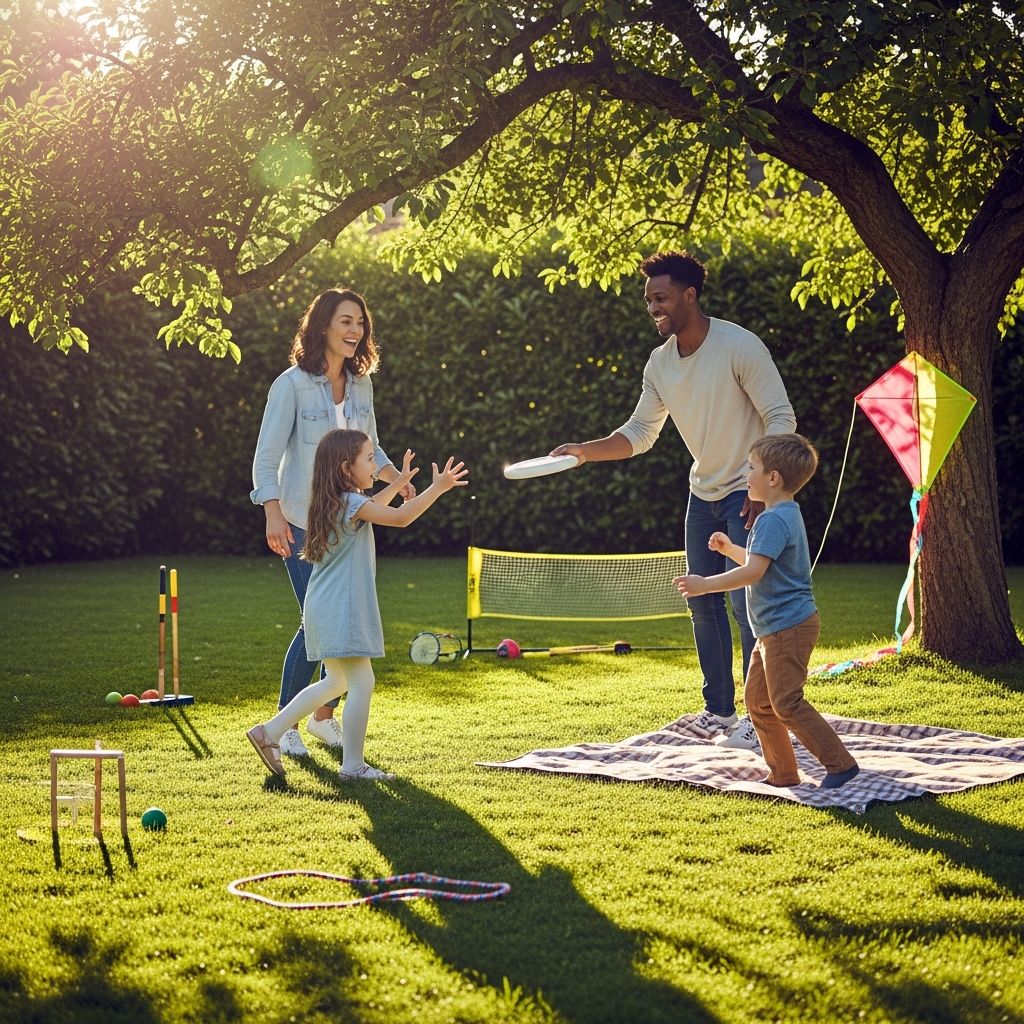
Outdoor games have long served as a cornerstone of childhood, fostering physical activity, social skills, and creativity without the need for expensive equipment. From ancient courtyard pastimes depicted in 16th-century art to modern backyard gatherings, these activities endure across generations. This guide delves into a selection of **classic outdoor games**, offering detailed instructions, historical context, variations, and tips to maximize enjoyment for kids and adults alike.
Understanding the Appeal of Classic Play
Before diving into specifics, consider why these games persist. A 1560 painting by Pieter Brueghel the Elder captures over 90 children’s games in outdoor settings, many recognizable today, highlighting their timeless nature. Such activities promote motor skills development, teamwork, and imaginative play, countering sedentary screen time. Studies from educational sources emphasize how unstructured outdoor play enhances cognitive growth and emotional resilience in children.
These games require minimal setup—often just chalk, a ball, or open space—making them accessible for parks, driveways, or lawns. They adapt to group sizes, ages, and skill levels, ensuring inclusivity.
Chasing Games: Building Speed and Strategy
Chase-based games sharpen reflexes and encourage strategic hiding or evasion. They thrive in open areas with boundaries defined by natural landmarks or cones.
Freeze Tag
In **Freeze Tag**, one player is ‘it’ and chases others to tag them. Tagged players freeze in place until freed by an unfrozen teammate crawling under their legs. Last unfrozen player becomes ‘it’. Ideal for 4-10 players; play in 10-15 minute rounds to maintain energy.
- Setup: Mark play area boundaries.
- Winning: No strict winner; rotate ‘it’ or set time limit.
- Variation: Shadow Tag—tag player’s shadow instead.
Historical roots trace to tag variants in English public schools, evolving into global favorites.
Kick the Can
**Kick the Can** combines hiding and speed. Place a can in a central ‘jail’ area. ‘It’ guards it while seekers hide. Seekers attempt to kick the can to free jailed teammates. If ‘it’ spots a hider, they yell their name and race back to kick the can first. Suited for 6+ players.
- Tips: Use a metal can for authentic sound; dim light enhances thrill.
- Safety: Avoid hard surfaces to prevent slips.
Hopping and Jumping Challenges
These solo or group activities build coordination and endurance, often using simple markings.
Hopscotch
**Hopscotch** involves a chalk-drawn grid (typically 10 squares in single/double patterns). Toss a stone into sequential squares, hop through without landing on it, and return to pick it up. Single-leg hops for most; two-footed for doubles. Reach the top without fault to claim a square for resting.
| Grid Layout | Hop Sequence |
|---|---|
| 1-2-3 (single column) 4 5 6 7-8-9-10 (side-by-side) | Start with #1, progress up and back. |
| Double boxes for partners. | Hop in/out without touching lines. |
Originating as Roman soldier training on massive grids, it evolved into playground staple. Variations include helicopter (spinning stone) or poison square.
Double Dutch
**Double Dutch** uses two ropes swung oppositely by turners while a jumper performs tricks inside. Start slow, advance to speed jumps, crossovers, or rhymes. Minimum 3 players; crowds cheer rotations.
- Skills Progression: Basic entry, high knees, ball tricks.
- Benefits: Improves rhythm, agility; popular in urban settings since 1800s.
Team Confrontations: Strength and Unity
Games pitting teams test collaboration and physical prowess.
Red Rover
Teams form human chains holding hands, 20 feet apart. One side calls, “Red Rover, Red Rover, send [name] on over!” The called player charges to break the chain. Success allows joining that team; failure joins opponents. Continue until one team remains.
- Players: 6+ for fairness.
- Safety Note: Grip tightly; younger kids use softer calls.
- History: Schoolyard classic pre-digital era.
Tug of War
Teams pull a thick rope over a center line or mud pit. Equal numbers; referee signals start/stop. Incorporate rules like no wrapping rope around body.
- Tips: Dig heels in grass; coordinate pulls on count.
Equipment-Light Toss and Throw Games
Using balls, beanbags, or household items, these emphasize accuracy.
Horseshoes or Quoits
Pitch metal horseshoes or rope rings at a stake 20-40 feet away. Ringers score 3 points, leaners 1, misses 0. First to 21 wins. Quoits variant uses softer materials for gardens.
| Distance | Scoring | Best For |
|---|---|---|
| 20 ft (kids) | Ringer: 3 pts | Backyards |
| 40 ft (adults) | Closer shoe: 1 pt | Lawns |
Medieval origins in mining communities; lawn versions popularized in 19th century.
Beanbag Toss (Cornhole Style)
Toss bags at angled boards with holes. Bags in hole: 3 points; on board: 1. Play to 21, last bag cancels if tied.
Hide and Seek Evolutions
Universal appeal with endless variants.
Sardines
Reverse hide-and-seek: one hider squeezes into spots; seekers find and join silently, sardine-style. Last finder is next hider.
- Twists: Nighttime glow sticks; themed hiding (e.g., behind trees only).
Ghost in the Graveyard
Group hides while one ghost patrols. Ghost tags hiders who freeze as statues. Freed statues haunt back. All haunted join ghost team.
Adapting Games for All Ages
Customize for inclusivity:
- Toddlers: Simplified tag walks, large hopscotch.
- Seniors: Seated beanbag toss, verbal Red Rover.
- Large Groups: Rotate stations: 10 min tag, then hopscotch.
Encourage rule-making to build negotiation skills. Weather-proof with indoor adaptations using furniture.
Health and Social Benefits
Regular play combats childhood obesity; U.S. CDC recommends 60 daily minutes of activity, met easily here[web:1]. Socially, games teach empathy, leadership[web:2].
Frequently Asked Questions
What are the best outdoor games for small spaces?
Hopscotch (driveway chalk), Double Dutch (sidewalk), or Beanbag Toss (portable boards).
Are these games safe for young children?
Yes, with supervision. Set boundaries, use soft equipment, and teach consent in tagging.
How do I introduce these to tech-savvy kids?
Challenge them to beat high scores; film tricks for social sharing.
Can adults play too?
Absolutely—add competitive leagues or adult variants like beer-league cornhole.
What if it rains?
Move indoors: tape hopscotch floors, pillow tug-of-war.
Setting Up Your Backyard Game Zone
Designate zones: grassy chase area, paved hopping court, shaded toss pit. Stock basics: chalk ($2/pack), ropes ($5), balls. Host weekly tourneys for routine fun.
These games not only entertain but preserve cultural play heritage, from Brueghel’s era to today. Rally neighbors for community events, reigniting street play traditions.
References
- Let’s play: The history of garden games — Lazy Susan Furniture. 2023. https://www.lazysusanfurniture.co.uk/blogs/news/let-s-play-the-history-of-garden-games
- 7 classic outdoor games that defined summer before screens took over — Long Island Press. 2025-05-23. https://www.longislandpress.com/2025/05/23/classic-outdoor-games/
- List of children’s games — Wikipedia (informational categories only). N/A. https://en.wikipedia.org/wiki/List_of_children’s-games
- Classic Childhood Games Every Generation Loves — Mama Smiles. N/A. https://www.mamasmiles.com/classic-childhood-games/
- Physical Activity Guidelines for Americans, 2nd edition — U.S. Department of Health and Human Services (.gov). 2018. https://health.gov/sites/default/files/2019-09/Physical_Activity_Guidelines_2nd_edition.pdf
- The Importance of Play in Promoting Healthy Child Development — American Academy of Pediatrics (.org). 2007 (authoritative review). https://publications.aap.org/pediatrics/article/119/1/182/70699/The-Importance-of-Play-in-Promoting-Healthy-Child