The urinary system is one of the body’s main “clean-up crews,” helping remove extra water and waste so your child can grow, play, and stay healthy. Knowing the basics makes it easier to spot problems early and support good habits at home.
What the Urinary System Does
The urinary system filters the blood, removes waste and extra fluid, and turns them into urine that leaves the body when a child pees. This constant cleaning helps keep salts, minerals, and water in a healthy balance, which is essential for normal growth, energy, and blood pressure control.
- Filters out waste products created when the body uses food for energy.
- Prevents buildup of extra water and salts that could harm organs.
- Helps regulate blood pressure, red blood cell production, and bone health through hormone and mineral control.
Main Parts of the Urinary System
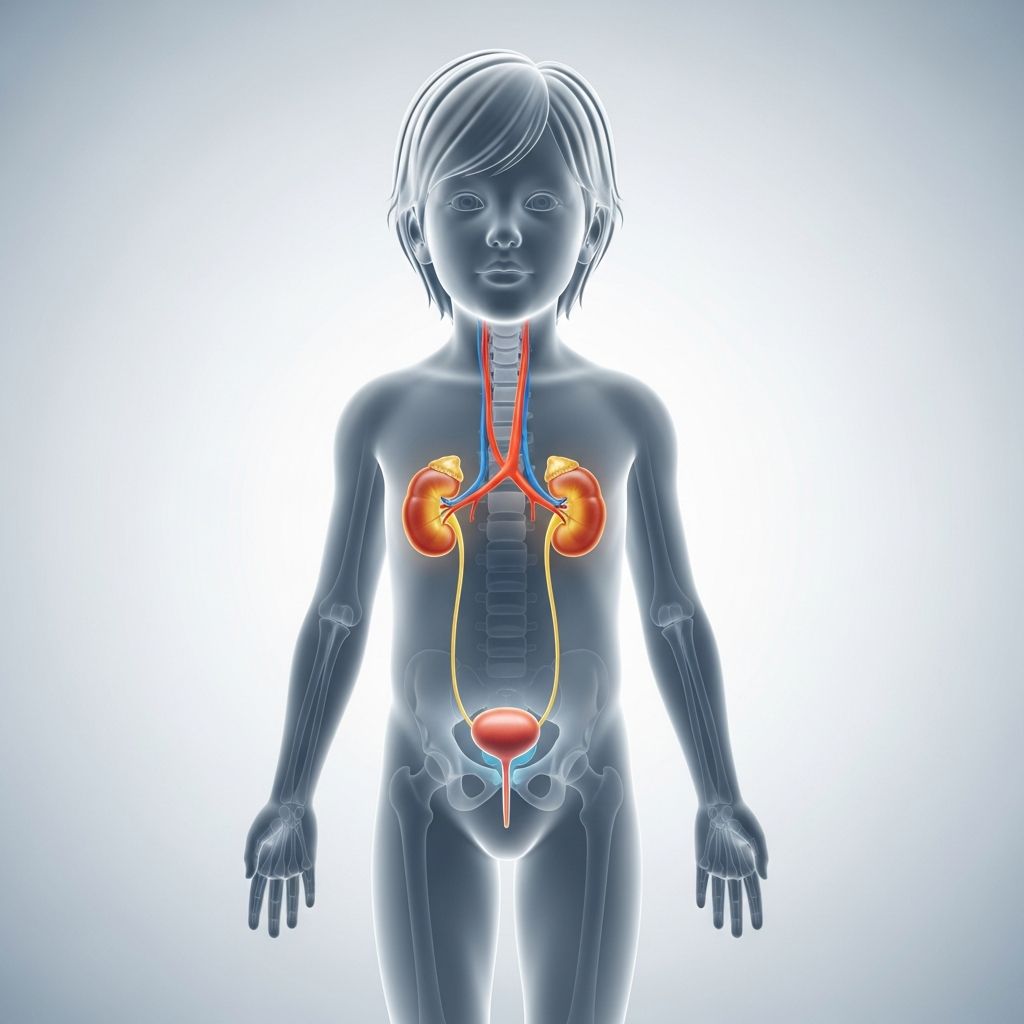
Several organs work together to make, store, and release urine. Each has a specific job, but they rely on one another to work smoothly, especially in growing children.
| Part | Location | Main Role |
|---|---|---|
| Kidneys | Mid-back, just below the rib cage on both sides | Filter blood, remove waste and extra fluid, and make urine; also help control blood pressure, red blood cells, and minerals. |
| Ureters | Thin tubes from each kidney to the bladder | Carry urine from the kidneys down to the bladder using gentle, rhythmic squeezing. |
| Bladder | Low in the pelvis, behind the pubic bone | Stores urine until a child is ready to pee, then squeezes to push it out. |
| Sphincter muscles | At the bladder outlet around the urethra | Act like a valve that stays closed to hold urine and relaxes when a child decides to urinate. |
| Urethra | Tube leading from the bladder to the outside of the body | Final pathway that lets urine exit the body during peeing. |
How Urine Is Made and Removed
The process of making urine happens around the clock. Even while a child sleeps, the kidneys are busy filtering blood and sending urine down to the bladder.
- Blood carrying waste and extra fluid flows into the kidneys through large blood vessels.
- Millions of tiny filters inside the kidneys separate useful substances from waste and excess water.
- Useful things like most water, sugars, and many salts are taken back into the bloodstream.
- Leftover waste and extra fluid become urine and move into small tubes inside the kidney.
- Urine drips from each kidney into a ureter and travels to the bladder.
- The bladder slowly fills and stretches like a balloon until the child feels the urge to pee.
- When the child relaxes the sphincter muscles and tightens the bladder muscle, urine travels out through the urethra.
Normal Urination in Children
Healthy urination patterns change with age, fluid intake, and activity levels. Parents can use a few simple signs to decide whether their child’s peeing seems typical or needs a closer look.
- Infants and toddlers may pee very often because their bladders are small and they drink frequently.
- By school age, many children urinate about 4–7 times a day, including bathroom breaks at school and at home.
- Urine is usually light yellow to clear; very dark yellow or strong smell can suggest dehydration.
- Most children should be able to hold urine long enough to reach the bathroom once toilet trained, though accidents can still happen, especially under stress or excitement.
Why the Urinary System Matters for Overall Health
The urinary system does much more than make pee. Its work affects many other systems in the body, which is why early attention to urinary problems can prevent long-term complications.
- Healthy kidneys help control blood pressure and support a strong heart and blood vessels.
- They help keep the right levels of calcium and phosphorus, which support strong bones and teeth.
- They release hormones that signal the bone marrow to make red blood cells, which carry oxygen throughout the body.
Common Urinary Issues in Kids
Many children experience urinary problems at some point, ranging from mild irritation to infections that need antibiotics. Early recognition and treatment usually lead to full recovery.
- Urinary tract infection (UTI): Infection in any part of the urinary system, often the bladder, causing burning, frequent urination, or fever.
- Bedwetting (nocturnal enuresis): Unintentional urination during sleep in a child old enough to be toilet trained.
- Daytime wetting: Small leaks or full accidents while awake, often tied to holding urine too long or constipation.
- Irritation of the urethra: Discomfort or burning without a true infection, sometimes triggered by soaps, bubble baths, or tight clothing.
- Kidney problems: Less common but more serious conditions that may be present at birth or develop later, sometimes affecting kidney structure or function.
Warning Signs Parents Should Watch For
Some symptoms suggest that the urinary system is under stress or may be infected. These signs always deserve attention and often a call to the child’s health care provider.
- Pain, burning, or crying when peeing.
- Needing to pee very often or urgently, passing only small amounts each time.
- Fever without a clear cause, especially in babies and toddlers.
- Foul-smelling, cloudy, or bloody urine.
- Back, side, or lower belly pain not explained by injury or activity.
- New or worsening bedwetting in a child who was previously dry at night.
- Swelling of the face, hands, or feet, or sudden weight gain that may indicate fluid retention.
Helping Your Child Keep Their Urinary System Healthy
Daily habits make a big difference in how well the kidneys and bladder work. Simple routines can lower infection risk and support long-term kidney health.
- Offer regular water throughout the day instead of sugary drinks.
- Encourage bathroom breaks every 2–3 hours so children do not “hold it” for long periods.
- Support a balanced diet rich in fruits, vegetables, whole grains, and lean proteins to prevent constipation and maintain a healthy weight.
- Teach good bathroom hygiene, including wiping from front to back after bowel movements for girls.
- Avoid bubble baths, harsh soaps, and strongly scented products in the genital area that can cause irritation.
- Choose breathable cotton underwear and avoid very tight clothing around the pelvis.
Special Considerations for Boys and Girls
Anatomy differences can influence which urinary issues are more common in girls versus boys. Understanding these differences helps parents focus on the right preventive steps.
- Girls have a shorter urethra, so bacteria have a shorter distance to travel to reach the bladder, which can make infections more likely.
- Boys may occasionally have problems related to the foreskin or urethral opening that affect urine stream or cause irritation.
- Both boys and girls benefit from gentle cleaning with water and mild, unscented cleanser rather than scrubbing or using perfumed products.
Medical Visits and Testing
When urinary problems occur, health professionals can use simple tests to find the cause and decide on treatment. Most testing is quick and noninvasive, especially for common complaints like pain with urination or fever.
- Urine sample: A basic test that looks for signs of infection, blood, protein, or other abnormalities.
- Urine culture: A lab test that identifies which germs are causing an infection and which antibiotic will work best.
- Blood tests: Sometimes used to measure how well the kidneys are filtering waste and maintaining balance.
- Imaging studies: Ultrasound or other scans can show the size, shape, and position of the kidneys and bladder if structural problems are suspected.
Home Support During Urinary Illness
When a child has a urinary infection or other problem, care at home helps treatment work more quickly and keeps the child comfortable. Follow the health care provider’s advice closely and watch for any changes.
- Give all prescribed medicines exactly as directed, even if your child feels better before they are finished.
- Offer extra fluids, mainly water, to help flush bacteria and waste products from the urinary tract.
- Encourage rest and quiet activities while the child feels unwell or has a fever.
- Use loose, soft clothing to reduce pressure and friction in the pelvic area.
- Track symptoms, including pain, fever, and bathroom trips, so you can report changes to the health care provider.
Emotional Support and Bladder Problems
Urinary problems can be embarrassing for children, especially older kids who wet the bed or have accidents at school. A calm, nonjudgmental response from adults makes a big difference in how they cope.
- Avoid punishment or teasing for bedwetting or accidents; these rarely help and can increase anxiety.
- Reassure your child that many kids deal with similar issues and that most improve with time and support.
- Work with teachers or caregivers to create discreet bathroom plans for children who need more frequent restroom access.
Frequently Asked Questions (FAQs)
How much water should my child drink for healthy kidneys?
There is no single amount that fits every child, because needs change with age, activity, and climate. As a general rule, children should drink enough water for their urine to be pale yellow, and they should have regular wet diapers or bathroom trips throughout the day.
Is it normal for my child to hold pee for a long time?
Occasional holding is common if a child is busy playing or does not want to use unfamiliar bathrooms. Persistent habits of holding urine for many hours, though, can increase the risk of infections, accidents, or bladder problems, so gentle reminders to take bathroom breaks are helpful.
What does blood in my child’s urine mean?
Pink, red, or cola-colored urine can be a sign of blood and should always be evaluated by a health care provider. Causes range from infections and minor irritation to kidney disease or other conditions, so prompt medical advice is important.
When should I worry about bedwetting?
Bedwetting is very common in younger school-age children and often runs in families. It usually becomes more concerning if it suddenly starts after months of dry nights, appears with other symptoms like pain or daytime accidents, or continues to cause distress as a child gets older, in which case speaking with a health professional is wise.
Can diet affect my child’s urinary health?
Yes, diet plays a role in both kidney and bladder health. A pattern high in salty snacks, sugary drinks, and low in fiber can promote dehydration and constipation, which may contribute to urinary issues, while balanced meals with plenty of water, fruits, vegetables, and whole grains support a healthier urinary tract.
Key Takeaways for Parents
The urinary system quietly supports nearly every part of a child’s health by clearing waste, controlling fluid balance, and coordinating with hormones and blood vessels. Parents who pay attention to bathroom habits, encourage healthy routines, and seek timely advice for unusual symptoms give their children the best chance at strong kidney and bladder health throughout life.