Children’s name labels solve a very real parenting problem: kids lose things constantly, and labeling their belongings dramatically increases the chances that items make it back home. At the same time, not every labeling option is kind to sensitive skin, safe for little mouths, or gentle on the environment. This guide walks through how to keep track of your child’s belongings without compromising their health or your values.
Why Parents Rely on Name Labels
By preschool, most children bring multiple items to school each day—jackets, lunchboxes, water bottles, and spare clothes—and unlabeled items quickly disappear into the classroom lost-and-found. Name labels help educators and caregivers return items to the right child and prevent arguments about ownership. They are especially useful in daycare, preschool, elementary school, summer camp, and sports programs, where dozens of nearly identical items are in circulation.
For many families, labels are more than a convenience; they can save significant money and time. Replacing lost gear, hunting through piles of unclaimed clothing, and navigating mix-ups over allergy-safe food all become less stressful when items are clearly marked. A consistent labeling system also teaches children responsibility by making it easier for them to identify and care for their own belongings.
Common Types of Children’s Name Labels
Children’s labels fall into a few broad categories, each with its own strengths and limitations. Understanding these types helps you decide which combination works best for your family’s routine and your child’s specific needs.
Stick-On Labels
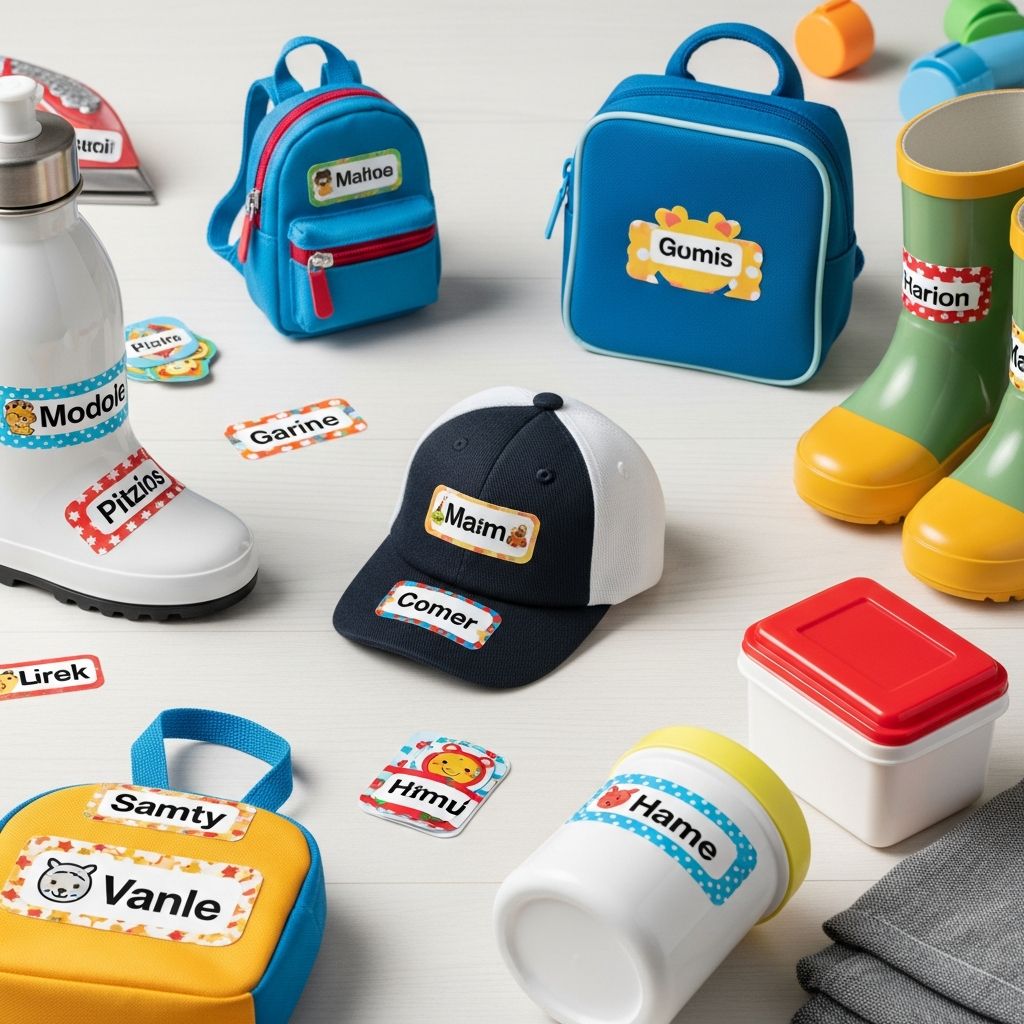
Stick-on labels are pressure-sensitive adhesive stickers designed to attach to hard surfaces like lunchboxes, bottles, and school supplies. Many are advertised as dishwasher-safe and waterproof, which makes them a popular option for busy families who need quick, no-iron, no-sew solutions. They are often customizable with names, icons, and colors, which can be helpful for pre-readers who identify their items by picture instead of text.
However, stick-on labels may not bond as reliably to fabrics and can peel at the edges on flexible materials. If used on clothing tags, they may eventually work their way loose in the wash. Careful placement and following the manufacturer’s instructions are important for maximizing durability.
Iron-On Labels
Iron-on labels are designed for fabrics and attach with heat, typically from a household iron. When applied properly, the adhesive melts into the fibers and creates a strong bond that can withstand repeated washing and drying. These are ideal for items like uniforms, camp clothes, socks, and underwear that do not have large care tags.
The tradeoff is that they require more effort to apply, and misuse of heat can damage delicate fabrics. Parents should always test on a small area of the garment if they are unsure, use the recommended pressing cloth, and avoid very high heat on synthetic materials that might melt or discolor.
Sew-In Labels
Sew-in labels are the most traditional option, usually made from woven or printed fabric tapes that are stitched into seams or onto garment linings. They are extremely durable and tend to outlast the clothing itself, making them a good choice for hand-me-downs or resale. Because they contain no adhesive, they are typically better tolerated by children with adhesive sensitivities.
The obvious downside is the time and skill required to sew them on. For parents without a sewing machine or experience, this can feel like a weekend project rather than a quick task. Still, a small starter set of sew-in labels can be useful for high-value items like coats and specialty sports clothing.
Write-On and DIY Solutions
A low-cost approach is to use permanent marker directly on care tags, shoe liners, or lunch containers. This method is fast and flexible and requires no special supplies. Some companies also sell blank label strips that can be written on with a marker, blending DIY simplicity with a more polished look.
The downside is that marker ink may fade or bleed over time, especially with frequent washing or exposure to moisture. Additionally, ink written directly on fabric can sometimes transfer or show through layers, which not all families find acceptable for aesthetic reasons.
Balancing Durability and Your Child’s Comfort
A label that stays put but causes itching, redness, or discomfort is ultimately not a good solution. Children may scratch at or peel off irritating labels, which defeats the purpose of labeling in the first place. Parents should pay attention to where labels sit on the body and how they feel against the skin.
For clothing, placing labels on existing care tags or in waistbands and hems rather than necklines can reduce irritation. Soft-edged, woven labels tend to be more comfortable than stiff, plasticky materials. When in doubt, doing a small trial on one garment and checking your child’s reaction after a full day of wear can guide future decisions.
Potential Skin Sensitivities and Allergies
Some children are particularly sensitive to adhesives, dyes, and synthetic materials. If your child has a history of eczema, contact dermatitis, or allergies, it is wise to take a cautious approach to labeling. Reactions can include redness, itching, rash, or even blistering where the label touches the skin.
In these cases, it is safer to avoid labels placed directly on the skin. Instead, focus on labeling areas that will not come in direct contact with your child’s body, such as shoe insoles, outerwear linings, backpack interiors, and care tags. If a reaction occurs, remove the label immediately and consult a healthcare professional if symptoms persist.
Materials and Safety Considerations
Parents often assume that products marketed for children are automatically safe, but it is still important to look critically at materials and manufacturing claims. Certain plastics, adhesives, and inks can contain substances that are less desirable for items that may end up in a toddler’s mouth or pressed against their skin for hours each day.
When reviewing label options, it can be helpful to look for brands that advertise the absence of common concerning substances, such as specific plasticizers or heavy metals. While not every product is independently tested by third parties, clear safety-focused messaging and transparent material descriptions offer more reassurance than vague marketing language.
Where to Place Labels for Maximum Effect
Strategic placement of labels can dramatically increase their usefulness without compromising clothing comfort or appearance. Rather than labeling every inch of fabric, focus on the high-risk items and the spots most visible to teachers and caregivers.
- Clothing: Inside collars, waistbands, or care tags on jackets, sweaters, pants, and uniforms.
- Shoes: Insoles, tongue, or heel area where the label will not rub excessively.
- Lunch gear: Lids and bottoms of containers, outer casing of lunchboxes, and flat surfaces of water bottles.
- School supplies: Pencil cases, notebooks, folders, and calculators.
- Sports and camp items: Towels, swim gear, goggles case, sleeping bags, and flashlights.
Labeling consistently in similar locations—such as the neck area for shirts or the tongue of shoes—also helps teachers quickly find names during busy transitions, like getting kids ready for recess or home time.
Comparison of Label Types
The table below gives a quick at-a-glance overview of how common label types stack up across important criteria such as effort, comfort, durability, and suitability for sensitive skin.
| Label Type | Best For | Effort to Apply | Durability in Wash | Comfort on Skin | Good for Sensitive Skin? |
|---|---|---|---|---|---|
| Stick-on | Hard items like bottles, lunchboxes, and folders | Very low | High on hard surfaces; variable on fabric | Depends on placement; avoid direct contact | Moderate; choose products marketed for sensitive users |
| Iron-on | Clothing without tags, uniforms, socks | Moderate; requires heat | High when correctly applied | Good if fabric is soft and edges are smooth | Moderate; test one garment first |
| Sew-in | High-value items, hand-me-down clothes | High; sewing skills and time needed | Very high | Good, especially with soft woven labels | High; no adhesive against skin |
| Marker / DIY | Quick labeling of tags and supplies | Very low | Medium; may fade or blur | Neutral if kept off skin | High when written on existing tags only |
Labeling Strategies for Different Ages
Labeling needs evolve as children grow, and adjusting your approach can avoid both over-labeling and unnecessary stress. An infant’s daycare bag requires different labeling strategies than a middle-schooler’s sports kit or laptop case.
Babies and Toddlers
At this age, every item left at daycare or nursery is managed by adults, and many objects end up in children’s mouths. Labels for this group should prioritize safety and minimal skin contact while being clearly legible for caregivers. Using bold fonts and simple symbols can help staff quickly match items to the right child, even when multiple children share similar gear.
Focus on external labeling of bags, bottles, snack containers, and extra clothing, and avoid placing adhesive labels where curious hands can easily peel them off and explore them by mouth. For items that children chew or suck on, consider whether labeling the storage case instead of the object itself is sufficient.
Preschool and Early Elementary
Children in this age range begin to take some responsibility for their belongings, especially backpacks, lunchboxes, and jackets. Labels with recognizable colors, icons, or characters can encourage independence because children can spot their own items easily in a crowd of similar gear. Many kids enjoy choosing their own label designs, which makes them more invested in taking care of labeled items.
This is also a stage where clothing gets swapped frequently—during art projects, outdoor play, and bathroom trips. Labeling spare clothes, hats, mittens, and rain gear helps avoid confusion and ensures that your child does not accidentally come home in someone else’s garments.
Older Kids and Tweens
Older children may care more about aesthetics and privacy. They may prefer understated labels on the inside of clothing or discrete printing on items rather than bright, cartoonish stickers. Involving them in choices around label design and placement can prevent pushback and ensure labels are actually used rather than quietly peeled off.
At this age, electronics, sports gear, music instruments, and specialty equipment make labeling especially important. Clear identification can deter casual mix-ups and is a small but meaningful deterrent to theft during busy after-school activities or team practices.
Eco-Conscious and Minimalist Approaches
For families trying to reduce waste, name labels offer an opportunity to support sustainable habits. Durable, long-lasting labels can extend the usable life of clothing and gear by making it easier to return misplaced items or pass them along to siblings and friends. Reusable labels or erasable options may be useful for items that frequently change owners.
Parents who prioritize sustainability can also look for labels made from materials aligned with their values, such as those that advertise reduced use of harsh chemicals or focus on longevity rather than disposability. Combining labeling with a smart inventory system—owning fewer, high-quality items and tracking them carefully—can significantly cut down on both waste and stress.
Practical Tips for Successful Labeling
A little planning goes a long way when it comes to labeling. Rather than rushing to mark everything the night before school starts, creating a small system can make the task manageable and ensure you are labeling what actually needs labeling.
- Start with a checklist of must-label items like jackets, shoes, lunch gear, and main school supplies.
- Group items by label type so you can do all iron-ons or sew-ins in one session rather than piecemeal.
- Keep a small labeling kit—labels, marker, scissors, and instructions—in one place so it is easy to update as new items are purchased.
- Teach older children to add labels themselves to new items like notebooks or water bottles.
- Do a quick labeling review at the start of each season to update sizes, new sports, and camp gear.
Frequently Asked Questions
Do I really need to label every single item my child owns?
No. It is usually enough to focus on the items most likely to be misplaced or shared—such as outerwear, lunch containers, water bottles, and school supplies. If time is limited, prioritize things that would be most expensive or annoying to replace and add more labels gradually as needed.
Can labels damage clothing or leave residue?
When applied and removed according to manufacturer instructions, most modern labels are designed to avoid permanent damage. However, certain adhesives may leave residue on delicate fabrics or surfaces if pulled off forcefully. Testing on an inconspicuous area and following the recommended temperature settings for iron-on labels help protect garments.
Are personalized labels safe if my child walks home alone?
This is a personal decision. Some families prefer initials or a symbol instead of full names on externally visible items for privacy reasons, especially for children who travel independently. Another option is to use full identification only inside items and keep outer labeling more subtle.
What if my child has very sensitive skin?
For children with sensitive skin, it is safest to avoid any label that will touch bare skin or sit tightly against the body. Sew-in labels in seams, labels placed on existing care tags, and marker on tags rather than on fabric are often better tolerated. If a reaction appears, remove the label and consult a healthcare professional for guidance.
How many labels should I buy to start?
A modest starter set often works best—enough for one full set of school or daycare clothing, outerwear, main lunch and drink containers, and a few high-priority extras. Once you see which items are most frequently misplaced, you can order additional labels targeted to your family’s real-world needs instead of guessing.
Making Labels Work for Your Family
Thoughtful labeling is part of building a calmer, more organized daily routine. It provides practical benefits—fewer lost jackets, less confusion at pickup—and offers subtle lessons in responsibility for children as they learn to recognize, care for, and keep track of their own belongings. The key is choosing labeling methods that respect your child’s comfort, support your safety and privacy preferences, and fit realistically into your life.
With a little experimentation and attention to materials, placement, and your child’s sensitivities, you can enjoy the convenience of well-labeled gear without adding unnecessary risks. In the end, the best label is not only the one that stays put, but the one that quietly supports your child’s everyday adventures while keeping both people and possessions cared for.