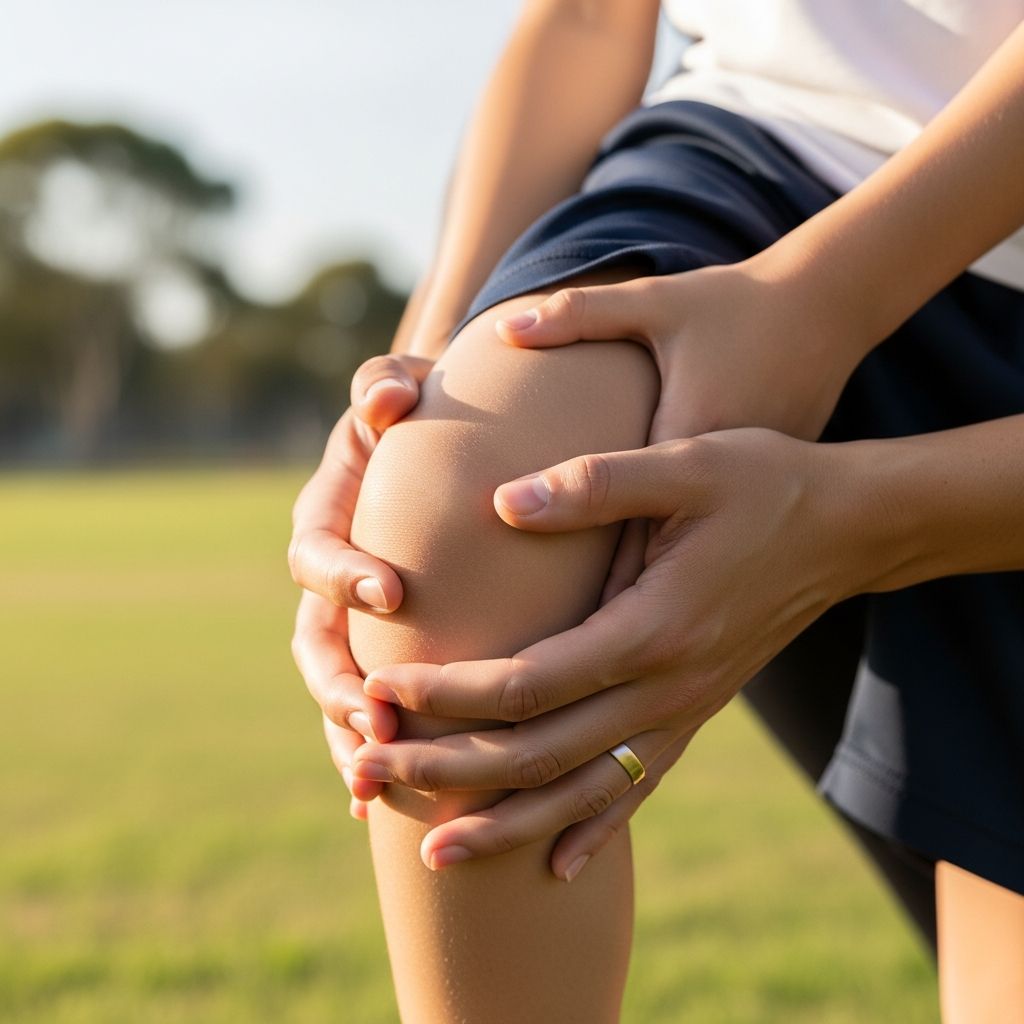
The knee is a vital joint that bears significant weight and enables dynamic movements essential for play and sports. In children and adolescents, knee injuries are frequent due to their active lifestyles and growing bodies, often occurring in sports like soccer, basketball, and gymnastics. These injuries range from acute trauma like ligament tears to chronic overuse conditions, requiring prompt parental awareness for optimal outcomes.
Why Children’s Knees Are Vulnerable
Young knees differ from adult ones because of ongoing skeletal development. The growth plates, or physeal plates, are softer areas of cartilage at bone ends susceptible to fractures under stress. Ligaments and tendons attach differently in kids, making certain tears like ACL ruptures present as avulsion fractures where bone fragments pull away. Hormonal changes during puberty, muscle imbalances, and rapid growth spurts further heighten risk, especially in girls who experience higher ACL injury rates due to landing mechanics.
Statistics highlight the prevalence: acute knee trauma affects active youth frequently, with unique pediatric etiologies like tibial spine fractures mimicking adult ACL tears. Overuse from repetitive training without adequate recovery exacerbates issues, turning minor strains into persistent pain.
Common Acute Knee Injuries in Youth
Acute injuries stem from sudden impacts, twists, or falls, demanding immediate attention to avoid complications.
Ligament Sprains and Tears
Anterior cruciate ligament (ACL) injuries top the list, often from pivoting or direct blows. In kids, complete tears are rarer; instead, tibial spine avulsions occur where the ligament pulls off bone. Symptoms include a popping sensation, rapid swelling, instability, and inability to bear weight. Medial collateral ligament (MCL) sprains arise from valgus forces, causing medial pain and swelling.
Patellar Dislocations
The kneecap (patella) can dislocate laterally during twists or impacts, common in teens. Pain is intense, with visible deformity, swelling, and difficulty extending the knee until reduced. Recurrent cases signal instability needing bracing or surgery.
Meniscal and Cartilage Damage
Meniscus tears result from rotational forces, more common with ACL injuries. Kids may have discoid menisci, a congenital variant causing snapping between ages 2-6. Symptoms: locking, popping, effusion, and pain on deep squats. Cartilage injuries, like osteochondritis dissecans (OCD), involve bone and cartilage fragments detaching, causing activity-related pain and extension loss.
Fractures and Bone Injuries
Pediatric-specific fractures include tibial spine and distal femur types from high-energy trauma. Stress fractures emerge from repetitive loading, presenting as insidious pain worsening with activity.
Overuse and Chronic Knee Conditions
Not all knee pain signals trauma; repetitive stress during growth phases leads to these prevalent issues.
Patellofemoral Pain Syndrome
This anterior knee pain, dubbed “runner’s knee,” stems from kneecap tracking issues, muscle imbalances, or tight hamstrings/quads. Common in adolescent athletes, it worsens with stairs, squatting, or prolonged sitting.
Osgood-Schlatter and Sinding-Larsen-Johansson
Osgood-Schlatter affects boys post-growth spurt, causing tibial tuberosity pain and prominence from patellar tendon traction. Sinding-Larsen-Johansson (jumper’s knee) targets the patella’s inferior pole in 9-12-year-old boys. Both resolve with rest but may leave bony bumps.
Tendonitis and Apophysitis
Overuse inflames tendons, like patellar tendonitis from jumping sports. Apophysitis involves growth plate irritation at tendon attachments. Pain persists at rest or motion.
Recognizing Symptoms: A Parent’s Checklist
Early detection prevents escalation. Watch for:
- Sudden pain with popping/audible snap
- Swelling or effusion within hours
- Bruising, instability, or buckling
- Limping, reduced range of motion
- Mechanical symptoms like locking/catching
- Chronic ache worsening with activity
Use this table to differentiate acute vs. chronic:
| Feature | Acute Injury | Chronic/Overuse |
|---|---|---|
| Onset | Sudden, traumatic | Gradual, repetitive |
| Swelling | Rapid, significant | Mild or intermittent |
| Pain Pattern | Constant, severe | Activity-related |
| Examples | ACL tear, fracture | Osgood-Schlatter, PFPS |
Adolescents with knee pain? Always check hips for slipped capital femoral epiphysis (SCFE), presenting as limp and external rotation.
Diagnosis: From Exam to Imaging
Start with history: injury mechanism, prior episodes. Physical exam assesses effusion, stability (Lachman test for ACL), meniscal provocation, and alignment. Imaging: X-rays rule out fractures/growth issues; MRI details soft tissues. Ultrasound aids dynamic assessment in kids.
Treatment Approaches
Tailor to injury and maturity.
- RICE Protocol: Rest, Ice (20 min/hour), Compression, Elevation for initial 48-72 hours.
- Bracing/Immobilization: For sprains, dislocations.
- Physical Therapy: Strengthens hips/quads, improves landing mechanics, especially for girls.
- Medications: NSAIDs for pain/inflammation.
- Surgery: Rare in kids; arthroscopy for meniscal tears, OCD drilling, or tibial spine fixation.
Overuse cases need 2-3 months sports rest. Full recovery varies: sprains 2-6 weeks, ACL 6-12 months.
Prevention Strategies for Young Athletes
Proactive steps reduce incidence by up to 50%.
- Balanced training: Incorporate strength, flexibility, neuromuscular drills (e.g., FIFA 11+ program).
- Proper warm-ups/cool-downs, gradual intensity ramps.
- Correct footwear, technique coaching, especially jumping/landing.
- Monitor growth spurts; cross-train to avoid overuse.
- Equipment checks: Knee braces for at-risk sports.
Frequently Asked Questions (FAQs)
Can knee injuries heal without surgery in kids?
Yes, many like cartilage tears, sprains, and overuse issues resolve with conservative care due to superior healing in growing tissues.
How do I know if it’s serious?
Seek care for inability to bear weight, significant swelling, or instability post-injury.
Are girls more prone to knee injuries?
Yes, higher ACL risk from biomechanics; prevention focuses on hip/thigh strengthening.
When to return to sports?
After pain-free full motion/strength, typically 4-12 weeks, guided by PT.
Does Osgood-Schlatter go away?
Symptoms resolve post-growth spurt, though bump may persist.
Long-Term Outlook and When to Worry
Most pediatric knee injuries heal well with timely intervention, minimizing arthritis risk. Monitor for recurrence or growth disturbances. Persistent pain warrants specialist consult—pediatric orthopedists excel in physeal-sparing techniques. Empower kids with body awareness for lifelong joint health.
References
- Acute Knee Injuries in Children and Adolescents: A Review — PubMed/NCBI. 2021-03-15. https://pubmed.ncbi.nlm.nih.gov/33749718/
- Top 5 Knee Injuries for Kids and Teens — Orthopedic Institute SF. 2023-01-01. https://orthopedicinstitutesf.com/top-5-knee-injuries-for-kids-and-teens/
- Adolescent with Knee Pain — American Academy of Family Physicians (AAFP). 2012-09-15. https://www.aafp.org/pubs/afp/issues/2012/0915/p569.html
- Knee Pain and Knee Injuries — Children’s Healthcare of Atlanta (CHOA). 2024-01-01. https://www.choa.org/medical-services/orthopedics/knee-injuries
- Common Causes of Adolescent Knee Pain — Scottish Rite for Children. 2023-01-01. https://scottishriteforchildren.org/common-causes-of-adolescent-knee-pain/
- Knee Pain in Kids — St. Louis Children’s Hospital. 2023-01-01. https://www.stlouischildrens.org/health-resources/pulse/knee-pain-kids
- Common Knee Injuries in Children — Ventura Orthopedics. 2023-01-01. https://venturaortho.com/common-knee-injuries-in-children/