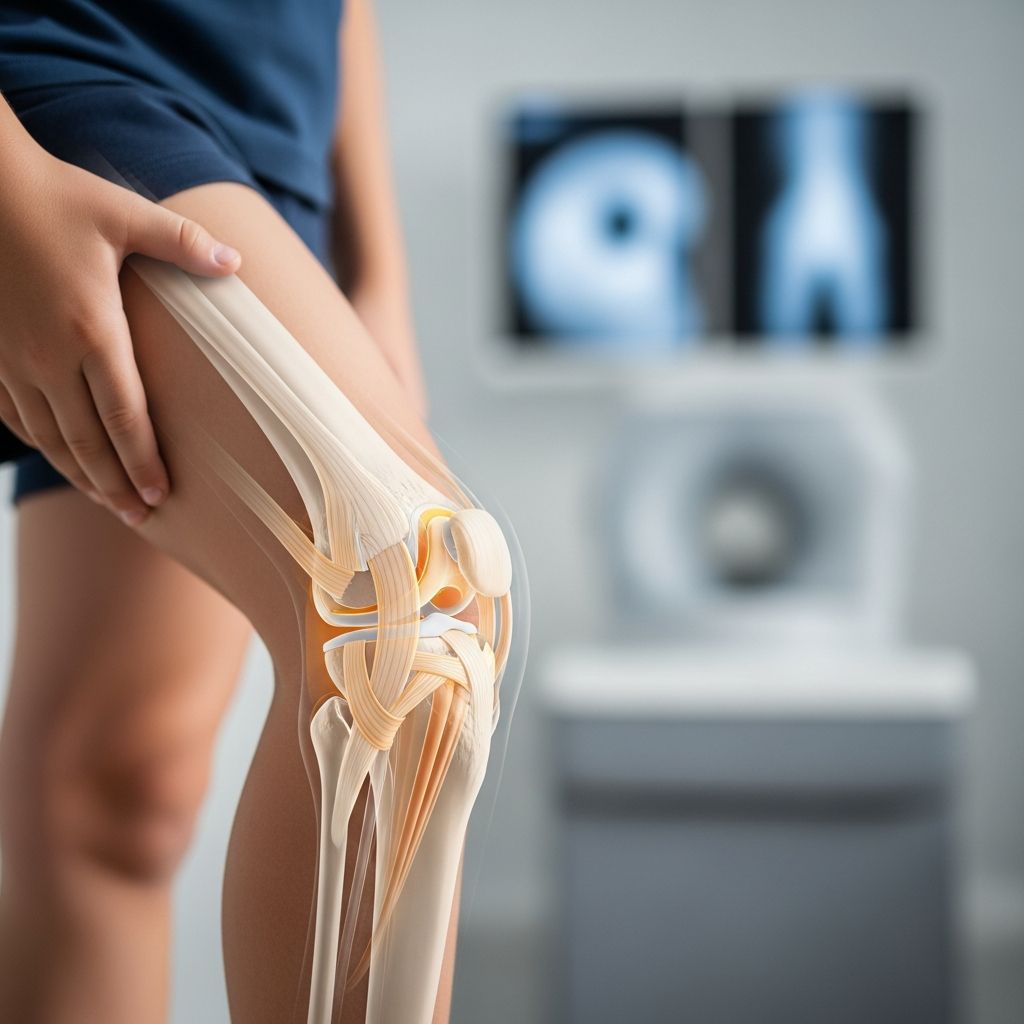
The knee is one of the hardest-working joints in a child’s body. Running, jumping, pivoting, and even simple play on the playground can put stress on the knee. When pain or injury appears, it can be worrying for parents who are unsure if their child needs rest, a brace, or urgent medical care.
This guide explains how knee injuries happen in growing kids and teenagers, what the most common problems are, how they are diagnosed and treated, and what parents can do to protect young knees.
Why Growing Knees Are Vulnerable
Children and adolescents are not just “small adults.” Their bones, cartilage, and soft tissues are still developing, which changes both the way they get injured and how they heal.
- Open growth plates: Areas of softer bone near the ends of long bones where growth happens can be injured more easily than mature bone.
- Rapid growth spurts: Muscles and tendons may be tight while the bones lengthen, increasing strain around the knee.
- High activity levels: Sports, dance, and free play mean frequent jumping, cutting, and pivoting that load the knee joint.
- Overuse from organized sports: Year-round training and single-sport specialization increase the risk of chronic, repetitive stress injuries.
Because of these differences, some injuries that would be ligament tears in adults may instead show up as growth plate fractures in younger athletes.
Traumatic vs. Overuse Knee Problems
Knee issues in kids generally fall into two big groups.
| Type of problem | How it starts | Typical examples | Common signs |
|---|---|---|---|
| Traumatic injuries | Sudden incident: fall, collision, twist, or awkward landing | Ligament tears, meniscus tears, patellar dislocation, fractures | Immediate pain, swelling, trouble walking or weight-bearing |
| Overuse injuries | Develop slowly from repetitive stress or training errors | Patellofemoral pain, tendonitis, apophysitis (Osgood-Schlatter, jumper’s knee) | Gradual pain with activity, often less swelling, sometimes both knees |
Common Knee Injuries and Conditions in Young People
Many different structures can be injured around the knee. Below are the problems most often seen in children and teens.
1. Ligament Injuries (Sprains and Tears)
Ligaments are strong bands of tissue that connect bone to bone. In the knee, key ligaments include the anterior cruciate ligament (ACL), posterior cruciate ligament (PCL), medial collateral ligament (MCL), and lateral collateral ligament (LCL).
- How they happen: Sudden twisting, cutting, or pivoting; landing from a jump; or a direct blow to the knee, especially in sports like soccer, basketball, football, and skiing.
- Typical symptoms:
- A popping sensation or sound at the time of injury
- Rapid swelling within a few hours
- Feeling of the knee “giving way” or being unstable
- Pain with weight-bearing or movement
In younger children, the force that would tear a ligament in an adult may instead damage the growth plate near where the ligament attaches, so specialized pediatric assessment is important.
2. Meniscus Tears (Cartilage Injuries)
The menisci are C-shaped pads of cartilage that cushion and stabilize the knee joint. A tear can occur when a child twists the knee while the foot is planted or from a deep squat during sports.
- Common signs:
- Pain along the joint line (inside or outside of the knee)
- Swelling and stiffness
- Catching, locking, or the feeling that the knee “gets stuck”
- Difficulty fully straightening or bending the knee
Some children are born with a thicker-than-usual meniscus (called a discoid meniscus), which can cause snapping, popping, or locking even without a clear injury.
3. Patellar Dislocation and Kneecap Problems
The kneecap (patella) sits in a groove at the end of the thighbone and glides up and down when the knee bends. A strong twist, pivot, or direct blow can cause the kneecap to slide out of place, usually toward the outside of the knee.
- Patellar dislocation often causes:
- Sudden, severe pain and visible deformity
- Swelling and trouble moving the knee
- Feeling that the kneecap shifted or “popped out”
- Patellofemoral pain syndrome (anterior knee pain) is a more gradual pain around or behind the kneecap from overuse, muscle imbalance, or alignment issues.
Patellofemoral pain is one of the most common causes of knee pain in active adolescents, particularly runners, dancers, and jumping athletes.
4. Tendon-Related Overuse Problems
Tendons connect muscle to bone. Around the knee, repeated jumping and running can stress these tissues, leading to pain and inflammation.
- Patellar tendonitis (“jumper’s knee”): Pain at the front of the knee, usually just below the kneecap, worsened by jumping, squatting, or going down stairs.
- Osgood–Schlatter disease: Irritation where the patellar tendon attaches to the top of the shinbone, seen most often during growth spurts and in jumping or running sports.
These conditions are usually not dangerous but can be quite painful and may limit sports participation if not managed properly.
5. Fractures and Growth Plate Injuries
Injuries around the knee can result in fractures (broken bone) or damage to growth plates at the end of the femur or tibia.
- Can be caused by falls, high-speed collisions, or severe twisting.
- May involve the kneecap, the top of the shinbone, or the lower end of the thighbone.
- Growth plate (Salter–Harris) fractures require prompt evaluation to reduce the risk of long-term deformity or growth disturbance.
These injuries usually cause marked pain, swelling, and difficulty moving or bearing weight, and they often need urgent medical attention.
Recognizing Warning Signs in Your Child’s Knee
Not every sore knee needs an emergency visit, but certain signs suggest a more serious injury that should be checked promptly.
- Severe pain after a fall, twist, or collision
- Immediate or rapidly increasing swelling
- Inability to stand, walk, or bear weight on the injured leg
- Visible deformity or kneecap out of place
- Locking, catching, or inability to fully straighten the knee
- Persistent pain lasting more than a week despite rest and simple care
- Fever, redness, or feeling unwell along with knee pain (possible infection)
For milder pain that slowly appears with activity and improves with rest, an overuse problem is more likely, and you may start with home care and a call to your child’s primary doctor or sports medicine provider.
How Doctors Diagnose Knee Injuries in Kids
A thorough evaluation looks beyond just the point of pain to understand what structure is involved and whether growth plates might be affected.
Medical History
- How and when the pain started (suddenly vs. gradually)
- Specific injury details: twist, fall, direct blow, or awkward landing
- Sports played, training schedule, and recent changes in activity level
- Location of pain and what makes it better or worse
- Past injuries or medical conditions
Physical Examination
- Observation of posture, walking pattern, and leg alignment
- Checking for swelling, warmth, or bruising
- Palpation to pinpoint tender areas (joint line, kneecap, tendons, growth plates)
- Range-of-motion testing (bending and straightening)
- Special tests for ligaments and meniscus stability
- Sometimes examination of the hip, because hip problems can cause knee pain in adolescents.
Imaging Tests
Some injuries can be diagnosed from the exam alone; others need imaging.
- X-rays: Look for fractures, growth plate injuries, alignment issues, or signs of osteochondritis dissecans (areas of damaged bone and cartilage).
- MRI: Helpful for ligament tears, meniscus injuries, and cartilage damage, especially when X-rays are normal but symptoms persist.
- Ultrasound: Sometimes used to look at tendons, fluid, or superficial structures.
Treatment Options for Knee Injuries in Children and Teens
Treatment depends on the type and severity of injury, the child’s age, and activity level. Many conditions improve with non-surgical treatment, but some structural injuries in active teens may require surgery.
Initial Home Care for Mild Injuries
For minor sprains, bruises, or overuse pain without red-flag signs, basic home care may be appropriate:
- Relative rest: Reduce or temporarily stop painful activities, especially running and jumping.
- Ice: Apply a cold pack for 15–20 minutes at a time, several times a day during the first 48–72 hours.
- Compression: An elastic bandage or sleeve may help limit swelling (not too tight).
- Elevation: Raise the leg on pillows above heart level to decrease swelling.
- Pain relief: Over-the-counter medications such as acetaminophen or ibuprofen may be recommended; always follow dosing guidance from a health professional.
Medical and Rehabilitation Treatments
- Bracing or splinting: Supports the knee, limits motion, and protects healing tissues for some sprains, patellar problems, or fractures.
- Physical therapy: Often a key part of treatment for ligament sprains, patellofemoral pain, tendonitis, and recovery from surgery. Focuses on strength, flexibility, balance, and proper movement patterns.
- Activity modification: Reducing training volume, avoiding high-impact activities, or temporarily switching sports can give tissues time to heal.
When Surgery Is Considered
While many pediatric knee injuries heal without surgery, certain conditions may require an operation for the best outcome in active adolescents.
- Significant ACL tears in competitive young athletes
- Large or unstable meniscus tears
- Recurrent patellar dislocations with cartilage damage
- Fractures involving the joint surface or growth plate that are displaced
Pediatric orthopedic and sports medicine surgeons use techniques designed to protect growth plates while restoring stability and function whenever possible.
Returning Safely to Sports and Play
Rushing back too soon increases the chance of re-injury. A gradual, supervised return is important for a full recovery.
- Pain and swelling should be minimal or gone.
- Strength and flexibility should be close to the uninjured side.
- The child should be able to jog, run, cut, and jump without pain or instability.
- After ligament or meniscus surgery, specific timelines and functional tests guide return to sport.
Coaches, athletic trainers, and physical therapists often help monitor this process.
Preventing Knee Injuries in Kids and Teens
No plan can prevent every injury, but parents and coaches can reduce risk with smart training habits and attention to early symptoms.
Training and Technique
- Encourage variety in sports instead of year-round single-sport specialization, especially at young ages.
- Promote proper landing and cutting mechanics (bending hips and knees, avoiding inward knee collapse), especially in jumping and pivoting sports; neuromuscular training programs have been shown to reduce ACL injury risk.
- Ensure gradual increases in training intensity, duration, and frequency rather than sudden spikes.
Strength, Flexibility, and Alignment
- Include strengthening for hips, core, quadriceps, and hamstrings to support proper knee alignment.
- Address muscle tightness with regular stretching, especially quadriceps and hamstrings.
- Use appropriate footwear and replace worn-out shoes that can affect leg alignment and shock absorption.
Listening to Pain Signals
- Teach children that pain is information, not a sign to push harder.
- Encourage early reporting of pain or swelling so training can be adjusted.
- Seek evaluation if pain persists, worsens, or interferes with normal activities.
Frequently Asked Questions (FAQs)
When should I take my child with knee pain to the doctor?
Seek prompt medical care if your child cannot walk, if the knee looks deformed, if there is rapid swelling, severe pain after an injury, or fever and redness around the joint. For pain that slowly appears with activity and does not improve after several days of rest and simple care, schedule an appointment with your child’s doctor or a sports medicine specialist.
Does every ligament or meniscus injury in a teen require surgery?
No. Some partial ligament sprains and smaller meniscus tears can be managed successfully with bracing, physical therapy, and activity modification. Surgery is more likely for complete ACL tears in active adolescents, large or unstable meniscus tears, and injuries that leave the knee unstable or locked. The decision depends on age, growth remaining, sport, and exam and imaging findings.
Can my child keep playing sports with Osgood–Schlatter or jumper’s knee?
Often, yes, with modifications. Many young athletes with these overuse conditions can continue playing if pain is manageable, activities are adjusted, and they follow a treatment plan including stretching, strengthening, and rest days. If pain is severe, causes limping, or does not improve with a structured plan, a break from impact sports may be needed.
Are girls really more likely to tear their ACL?
Adolescent girls have a higher rate of non-contact ACL injuries than boys in several sports, partly due to differences in anatomy, hormones, and movement patterns such as landing with knees collapsing inward. Targeted neuromuscular training and strengthening programs that teach proper landing and cutting mechanics can lower this risk.
How long does it take for a serious knee injury to heal?
Healing time depends on the specific injury and treatment. Mild sprains or overuse conditions may improve in a few weeks with rest and therapy. After ACL reconstruction or major meniscus surgery, return to full sports often takes 6–12 months, guided by strength, function, and medical clearance rather than the calendar alone.
References
- Acute Knee Injuries in Children and Adolescents: A Review — Fabricant PD et al., JAMA Pediatrics. 2021-03-22. https://pubmed.ncbi.nlm.nih.gov/33749718/
- Knee Pain and Knee Injuries — Children’s Healthcare of Atlanta. 2023-06-01 (last reviewed). https://www.choa.org/medical-services/orthopedics/knee-injuries
- A Parent’s Guide to Knee Injuries — Nationwide Children’s Hospital Sports Medicine. 2022-01-01. https://www.nationwidechildrens.org/-/media/nch/gated-content/sports-medicine/knee/a-parents-guide-to-knee-injuries.pdf
- Common Causes of Adolescent Knee Pain — Scottish Rite for Children. 2022-04-15. https://scottishriteforchildren.org/common-causes-of-adolescent-knee-pain/
- Adolescent Anterior Knee Pain — OrthoInfo, American Academy of Orthopaedic Surgeons (AAOS). 2020-09-01. https://orthoinfo.aaos.org/en/diseases–conditions/adolescent-anterior-knee-pain/
- Adolescent with Knee Pain — American Academy of Family Physicians (AAFP). 2012-09-15. https://www.aafp.org/pubs/afp/issues/2012/0915/p569.html
- Knee Injuries in Children & Adolescents — National Council of Youth Sports / sports medicine experts. 2022-02-01. https://ncys.org/wp-content/uploads/2022/02/2022_ST_Knee-Injuries-in-Children.pdf