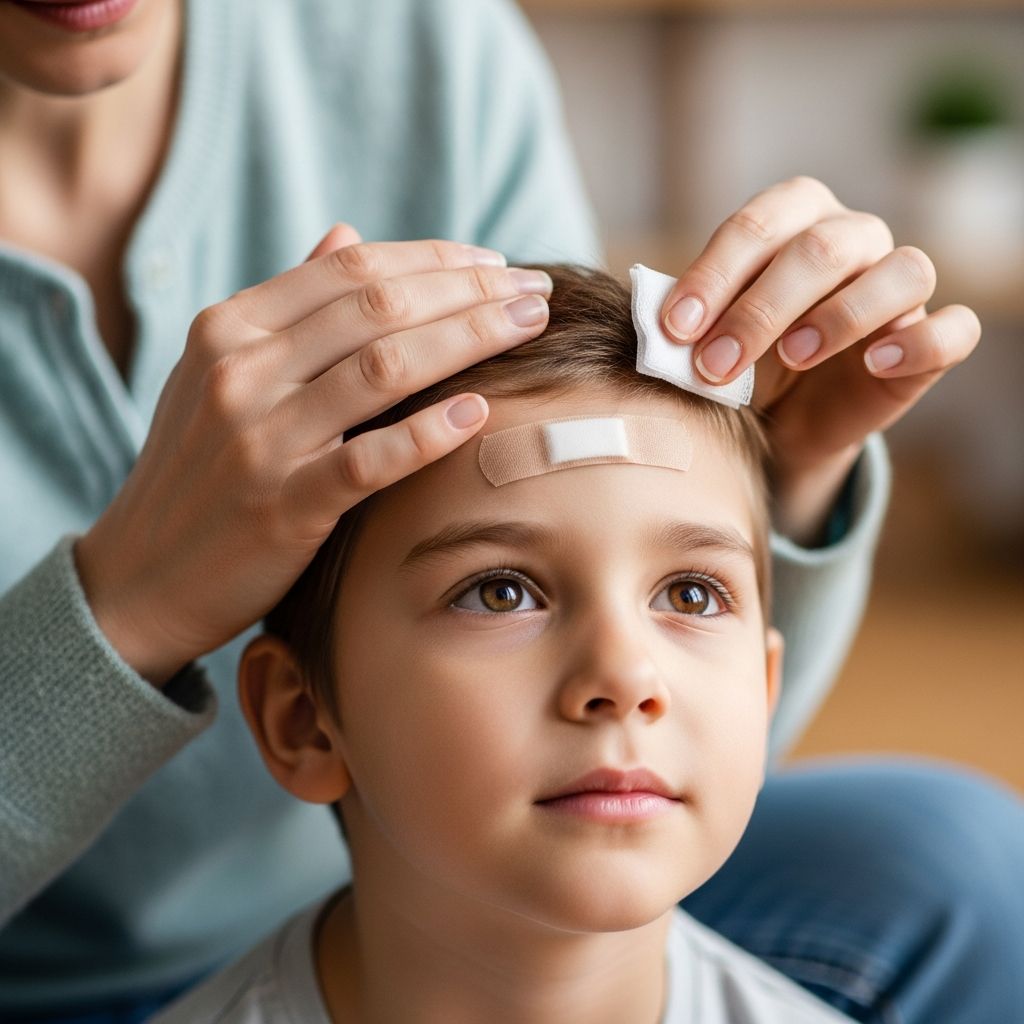
Head wounds in children can look frightening, especially because the scalp and face bleed easily. A small cut can quickly cover hair, skin, and clothing with blood, which is alarming for any parent. Understanding what is serious, what is minor, and what to do in the first few minutes can make a big difference in your child’s safety and your own peace of mind.
This guide explains how to recognize different types of head wounds, provide calm and effective first aid, decide when to seek medical care, and help your child recover safely afterward.
Why Head Wounds Look Worse Than They Are
The scalp has a rich blood supply, so even a small cut can bleed a lot. This can create the impression of a severe injury when the underlying damage is actually minor. Bright red blood on hair and skin spreads quickly and may drip or soak through cloths in seconds, which often causes parents to panic.
In many cases, the skull underneath is intact, and the main issue is a superficial cut or bruise. However, because the brain and skull are involved, every head wound deserves careful attention and observation, even if it appears simple at first glance.
Common Ways Children Get Head Wounds
Children are naturally active and curious, which increases their risk of bumps and cuts to the head. Understanding how these injuries usually happen can help you reduce risk and respond quickly when they occur.
- Falls from beds, sofas, changing tables, strollers, or playground equipment.
- Collisions during sports, rough play, or running into furniture, doors, or walls.
- Accidents involving bicycles, scooters, skateboards, or skates, especially without helmets.
- Objects striking the head, such as balls, toys, or falling items from shelves.
- Car or bike accidents where the head makes contact with a hard surface.
Types of Head Wounds You May See
Not all head injuries look the same. Being able to describe what you see helps you decide what to do and explain the situation clearly to a healthcare professional if needed.
| Type of Wound | What It Looks Like | Common Concerns |
|---|---|---|
| Minor cut or scrape | Shallow break in the skin; may ooze or bleed lightly but usually slows with gentle pressure. | Risk of infection if not cleaned; may leave a small scar. |
| Deeper laceration | Edges of skin are parted; may be more than a few millimeters deep or longer than a few centimeters. | Often needs medical closure (stitches, staples, or glue) to heal well and reduce scarring. |
| Scalp bump (“goose egg”) | Soft, raised swelling on the scalp, often with bruising; skin may be intact. | Usually from a minor impact; watch for signs of more serious head injury. |
| Puncture wound | Small opening from a nail, sharp object, or bite; may not bleed much on the surface. | Higher infection risk; possible deeper damage beneath the skin. |
| Wound with suspected skull injury | Dent, soft area, or bone irregularity under the wound; sometimes associated with large swelling or deformity. | Medical emergency; possible skull fracture or brain injury. |
Stay Calm: First Steps Before First Aid
Children often take cues from adults during emergencies. If you appear panicked, your child’s fear and distress typically increase. Taking a moment to steady yourself allows you to act more clearly and effectively.
Before beginning hands-on care, quickly check for immediate life-threatening problems, such as trouble breathing, extreme drowsiness, or unconsciousness. If any of these are present, call emergency services right away.
Step-by-Step First Aid for Minor Head Wounds
If your child is awake, responsive, and able to talk or cry normally, you can usually start basic first aid at home while continuing to monitor their condition. Follow these general steps for a minor scalp cut or bump.
1. Keep Your Child Still and Safe
- Gently guide your child to sit or lie down in a safe place away from stairs, sharp corners, or moving vehicles.
- Discourage running, jumping, or rough play immediately after the impact.
- Support the head and neck in a comfortable, neutral position if your child is lying down.
2. Control the Bleeding
- Wash your hands or use disposable gloves if available to reduce infection risk.
- Use a clean cloth, sterile gauze, or a folded paper towel to apply firm, gentle pressure directly to the bleeding area.
- Maintain steady pressure for several minutes without constantly lifting the cloth to “check,” since this can restart bleeding.
- If blood soaks through the cloth, place a second layer on top rather than removing the first one.
If you suspect a deeper injury to the skull (such as a visible dent or severe deformity), avoid pressing hard on the wound. Instead, apply very light covering and seek urgent medical care.
3. Clean the Wound Carefully
Once the bleeding has slowed or stopped, you can gently clean the area. Cleaning removes dirt and bacteria that increase the risk of infection and helps you see the wound clearly.
- Rinse the wound gently with cool, clean running water. Let the water run over the area rather than scrubbing.
- Use mild soap around the wound if needed, taking care not to get soap directly into deeper cuts.
- Pat the surrounding skin dry with a clean towel or gauze, leaving the wound slightly moist.
- Avoid using hydrogen peroxide or iodine unless specifically advised by a healthcare professional, as these can irritate healing tissue.
4. Protect the Area
After cleaning, most small cuts benefit from a simple protective covering. This keeps the area cleaner, discourages scratching, and reduces the chance of reopening the wound.
- For small cuts, use an adhesive bandage if it sticks well in the hair-free area.
- For scalp wounds under hair, a small pad of gauze secured with medical tape often works better.
- Change the dressing if it becomes wet, dirty, or loose, and check the wound once or twice a day for signs of infection.
Handling Swelling and Pain
Swelling often appears within minutes after a bump to the head. Many children develop a raised, soft lump on the scalp that looks dramatic but rarely indicates serious damage by itself.
- Apply a cold pack, bag of ice, or a bag of frozen vegetables wrapped in a thin cloth to the injured area.
- Hold the cold pack in place for about 10–20 minutes at a time, allowing breaks in between to avoid chilling the skin.
- Offer age-appropriate pain medication if recommended by your child’s healthcare provider. Avoid giving any medication your child is allergic to or that you have been told not to use.
When a Head Wound Needs a Doctor
Some wounds look small but still require medical care to heal safely and correctly. When in doubt, it is safer to have a professional examine your child’s head, especially in very young children or after a high-impact accident.
Signs the Wound Itself Needs Medical Attention
- The cut is wide open, with separated skin edges that do not close when you press them together gently.
- The wound is deeper than the top layer of skin or you can see tissue beneath the skin.
- The cut is longer than a few centimeters or lies on the forehead, face, or near the eyes where scarring would be more noticeable.
- The bleeding continues heavily after several minutes of firm pressure.
- The wound contains dirt, glass, or other material that you cannot easily rinse away.
- The injury is caused by an animal or human bite or a rusty, dirty object.
Signs of a Possible Serious Head Injury
Some symptoms point to more than just a surface wound. These may indicate a concussion, skull fracture, or bleeding inside the skull. Seek urgent or emergency medical care right away if your child shows any of the following:
- Loss of consciousness at any time, even briefly.
- Repeated vomiting or nausea that does not improve.
- Seizure or abnormal movements of the body.
- Confusion, difficulty speaking, or trouble understanding instructions.
- Weakness, clumsiness, or difficulty walking or using arms and legs.
- One pupil larger than the other, or sudden vision changes such as double or very blurry vision.
- Clear or bloody fluid leaking from the nose or ears.
- Extreme drowsiness, inability to wake the child, or behavior that seems unlike your child’s usual personality.
- A soft spot, obvious dent, or major deformity of the skull.
Monitoring Your Child After a Head Wound
Even after a minor head injury, your child should be observed closely for a period of time. Some symptoms of more serious problems develop slowly, rather than immediately after the impact.
- Stay with or near your child for the first several hours after the injury.
- Watch how they talk, move, and interact. Note any confusion, unusual sleepiness, or new complaints of headache, dizziness, or vision changes.
- Allow quiet rest and calm play. Avoid activities that require intense concentration or fast movement right after the injury.
- Follow your healthcare provider’s advice about when your child can return to school, sports, and screen time.
Concussion and Head Wounds
A child can have both a visible head wound and a concussion at the same time. A concussion is a type of brain injury that may or may not involve a cut or bump on the scalp. Sometimes the outside of the head looks nearly normal, but the child still has a concussion.
Symptoms of concussion may include headache, dizziness, sensitivity to light or noise, trouble concentrating, mood changes, and sleep problems. If your child shows these signs after a head injury, consult a healthcare professional, even if the cut itself seems minor.
Caring for the Wound in the Days After
Proper care during the healing phase helps prevent infection and reduce scarring. Most small head wounds heal quickly, often within a week or two, but they still need gentle attention.
- Keep the area clean and dry. If the dressing becomes wet or dirty, replace it with a fresh one.
- Follow instructions for stitches, staples, or skin glue, including when to return for removal if needed.
- Discourage scratching, picking, or rubbing at scabs, which can reopen the wound and increase the chance of scarring.
- Protect healing skin from strong sunlight with hats or shade, as fresh scars can darken with sun exposure.
Preventing Future Head Wounds
No parent can prevent every fall or bump, but simple safety measures significantly reduce the risk and severity of head injuries. Many of these steps are inexpensive and easy to put into place at home and during play.
- Use properly fitting helmets for biking, skateboarding, scootering, and contact sports.
- Secure heavy furniture and televisions to the wall to prevent tipping.
- Install safety gates near stairs and keep floors clear of toys and clutter.
- Use car seats and seat belts correctly for every ride, no matter how short.
- Teach older children safe play habits, such as no roughhousing near hard surfaces or sharp edges.
Emotional Support for Your Child
Head wounds can be emotionally upsetting, especially when there is a lot of blood or when a child needs stitches or a hospital visit. Many children feel frightened, embarrassed, or worried about how they look while the wound heals.
- Offer calm reassurance and explain in simple language what is happening and why.
- Let your child know that crying is okay and that you will stay with them during treatment when allowed.
- Praise their bravery and cooperation, even for small steps like holding still or answering the doctor’s questions.
Frequently Asked Questions About Children’s Head Wounds
Can my child go to sleep after a head injury?
Feeling tired after a stressful event or crying spell is common. If your child is otherwise acting normally, it is usually acceptable to let them sleep. However, you should be able to wake them periodically and see that they are alert, responsive, and breathing normally. If they are very hard to wake, seem confused on waking, or you are worried, seek medical attention immediately.
How do I know if my child has a concussion?
There is no simple way for a parent to confirm a concussion at home. Warning signs include headache, dizziness, confusion, trouble concentrating, sensitivity to light or sound, mood changes, and balance problems. If your child shows any of these symptoms after a head injury, contact a healthcare provider for guidance and possible evaluation.
Will my child have a scar?
Some head wounds heal with barely noticeable marks, especially when hidden by hair. Deeper cuts or wounds on the forehead or face are more likely to leave a visible scar. Proper wound cleaning, timely closure when needed, good sun protection, and avoiding picking at scabs all help reduce the appearance of scarring.
Should I use antibiotic ointment on the wound?
For many minor cuts, a thin layer of over-the-counter antibiotic ointment can help keep the surface moist and reduce infection risk. However, some children develop skin irritation from these products. If the skin around the wound becomes red, itchy, or develops a rash, stop using the ointment and consult your child’s healthcare provider.
When can my child return to sports and playground activities?
Return to active play depends on both the wound and any associated head injury. A simple scalp cut without signs of concussion may allow a quicker return once the wound is protected and your child feels well. If your child has had a concussion or more serious head injury, follow your healthcare provider’s step-by-step plan for gradually resuming physical activities.
Key Takeaways for Parents
- Most childhood head wounds look worse than they are because the scalp bleeds easily, but they still deserve careful attention.
- Start with basic first aid: keep your child still, control bleeding with gentle pressure, clean the wound, and protect it with a simple dressing.
- Watch for red flag symptoms such as repeated vomiting, confusion, seizures, extreme drowsiness, or fluid from the nose or ears, and seek urgent medical help if they appear.
- Follow your healthcare provider’s advice about wound care, concussion monitoring, and safe return to school, sports, and play.