Halloween can be magical for children when costumes feel like an invitation to play, imagine, and explore rather than just a last-minute errand. Thoughtful outfits help kids express their personalities, join the neighborhood fun, and stay comfortable and safe while they collect treats or attend school events.
This guide offers an entirely original look at children’s Halloween costumes, focusing on creativity, practicality, and flexibility for a wide range of ages, budgets, and energy levels. It does not copy or mirror any other article’s wording or structure; instead, it provides new themes, fresh organization, and practical tips written in completely new language.
Why Children’s Costumes Matter More Than You Think
For a child, a costume is more than fabric; it is a temporary identity that lets them experiment with bravery, silliness, or elegance. The right choice can boost confidence, reduce social anxiety at parties, and create memories that stick long after the candy is gone.
Parents also benefit from planning thoughtfully. A well-chosen outfit:
- Reduces last-minute stress and expensive rush purchases.
- Can be reused for school plays, dress-up bins, or themed birthdays.
- Helps avoid tears from itchy seams, tricky closures, or costumes that fall apart mid-block.
Big Costume Themes Kids Naturally Love
Most children’s Halloween ideas fall into a few broad themes that you can customize to your child’s style. Thinking in themes first makes it easier to brainstorm something unique without starting from scratch.
| Theme | What Kids Like About It | Easy DIY Angle |
|---|---|---|
| Animals & Creatures | Soft, cuddly, and expressive with tails, ears, and wings. | Use hoodies, felt ears, face paint, and leggings. |
| Fantasy & Magic | Capes, wands, crowns, and the chance to play powerful characters. | Repurpose dress-up clothes and add simple homemade props. |
| Everyday Heroes | Relatable role models like helpers and community workers. | Use real clothing plus a few symbolic accessories. |
| Food & Objects | Funny, unexpected, and perfect for kids who love a good joke. | Create shapes from cardboard, foam, and oversized T-shirts. |
| Classic Spooky | Ghosts, witches, and monsters for kids who enjoy a friendly scare. | Layer dark clothing with simple makeup and inexpensive add-ons. |
Animal Adventures: From Backyard Critters to Mythical Beasts
Animal-inspired costumes are dependable favorites because they are cozy, clear to recognize, and easy to build from items you may already own. They also work across a wide range of ages, from toddlers who prefer soft onesies to older kids who want dramatic wings or horns.
- Backyard favorites: Think squirrels, raccoons, bunnies, owls, or garden insects like ladybugs.
- Farm and pet ideas: Cats, dogs, chickens, cows, and horses appeal to younger kids who know these animals from books and toys.
- Mythical and wild: Dragons, phoenixes, wolves, jungle cats, and sea creatures let older kids lean into bold colors and dramatic details.
To keep costs down, combine solid-colored clothing with handmade ears, tails, or wings. Face paint can do most of the storytelling, and it is easier to layer under jackets than bulky masks.
The Magic Corner: Wands, Wings, and Whimsy
Fantasy costumes give children a chance to become characters that could never exist in their day-to-day life. These outfits are especially popular with imaginative kids who invent elaborate backstories and pretend games.
- Winged wonders: Fairies, tiny forest guardians, butterflies, and gentle sprites.
- Spellcasters: Wizards, potion brewers, and stargazing sorcerers with capes and simple hats.
- Royal and heroic: Knights, queens, princes, and guardians of enchanted lands.
Most fantasy looks can be built around a single signature piece, like wings, a crown, or a cloak. This makes them excellent for families who prefer buying one standout accessory and pairing it with regular clothes.
Mini Everyday Heroes: Community Helpers as Halloween Stars
Children often look up to the real-world people who keep them safe, teach them, or help their neighborhoods run smoothly. Costumes inspired by everyday heroes make Halloween feel meaningful while still offering plenty of fun.
- Neighborhood protectors: Firefighters, paramedics, crossing guards, and lifeguards.
- Community builders: Gardeners, construction workers, delivery drivers, and bus drivers.
- Quiet helpers: Librarians, teachers, veterinarians, and postal workers.
These outfits are often simple to assemble with existing clothing, such as button-down shirts, vests, and reflective tape, plus homemade name tags or badges. They also allow great conversations about gratitude and community.
Costumes That Make Everyone Laugh
Some kids treasure being the funniest one on the block. Pun-based or whimsical costumes work especially well for older children who enjoy wordplay and wry humor, but younger kids can also delight in silly shapes and colors.
- Playful foods: Oversized fruits, breakfast foods, or ice cream themes.
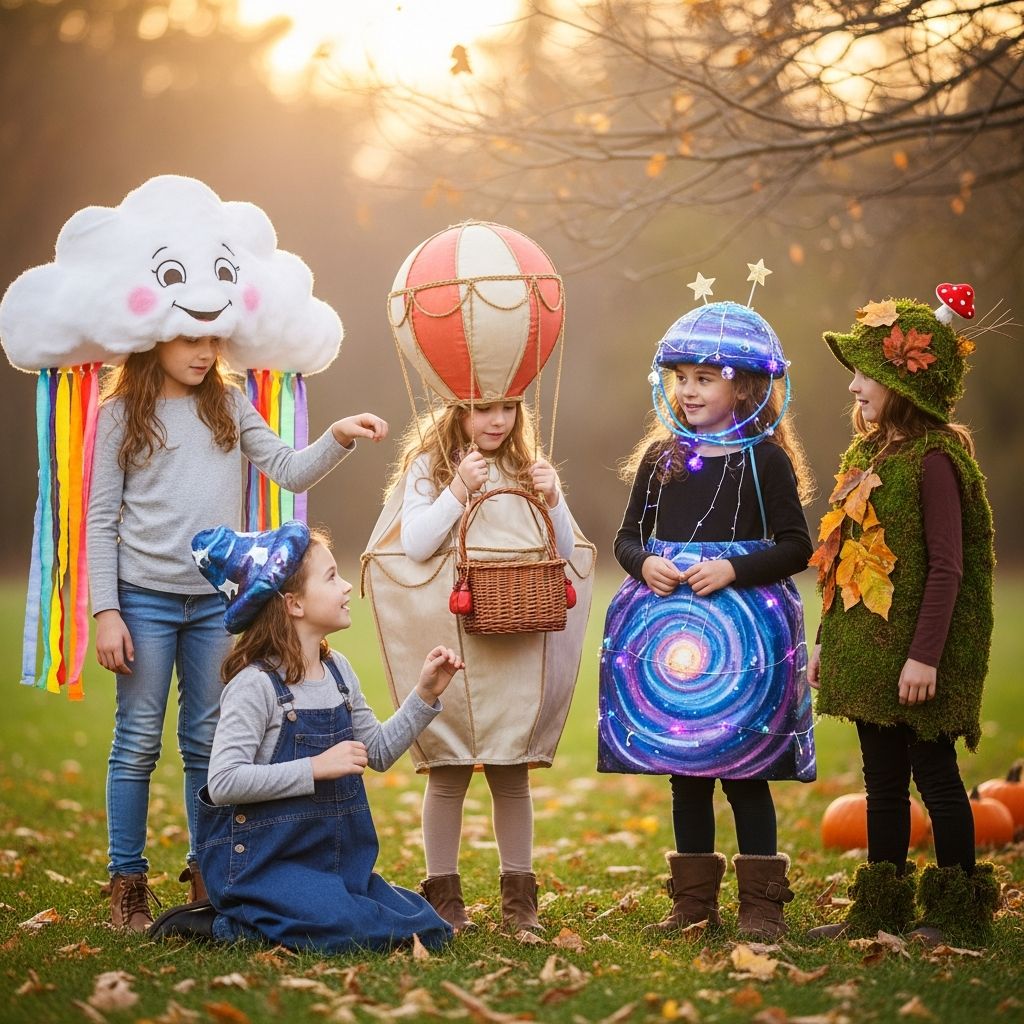
- Unexpected objects: Traffic cones, crayons, cloud with raindrops, or a walking book.
- Gentle puns: For example, combining simple props and a sign to turn a phrase into a visual joke.
Keep humor-focused costumes lightweight and flexible so kids can still climb porch steps and hold treat bags easily. If a joke needs explanation, consider adding a small sign or label to help neighbors understand the gag.
Classic Spooky Looks Made Kid-Friendly
Some children want Halloween to feel just a tiny bit eerie, while others shy away from anything too intense. The key is to find the right level of spookiness for your child’s personality and age.
- Gentle ghosts: Soft fabrics, friendly eyes, and pastel tones instead of harsh black and white.
- Softly spooky witches and wizards: Focus on stars, moons, and sparkles more than frightening details.
- Cartoon-style monsters: Bright colors, goofy faces, and plush horns or claws.
Consider whether your child will attend daytime school parades or evening events, and adjust makeup and accessories accordingly. A costume that reads as charming under daylight can still feel delightfully spooky once the sun goes down.
Coordinated Costumes for Siblings and Friends
Group costumes transform trick-or-treating into a team adventure. Siblings, cousins, or close friends can choose a theme together, or parents can suggest a broad category and let each child pick their preferred role within it.
- Storybook cast: Different characters from a shared favorite story or series.
- Nature squad: A collection of weather elements, plants, or animals that belong to the same environment.
- Mixed snack pack: Each child chooses a different food or drink, like a walking pantry of silliness.
Coordinated outfits are especially handy for photos and family albums. To avoid arguments, make sure every child has some control over details like color, accessories, or face paint style.
Comfort Comes First: Fabric, Fit, and Feel
No matter how clever a costume is, it will not see much use if it itches, pinches, or drags. Comfort should guide your decisions before you commit to any design, especially for younger children who tire easily or dislike restrictive clothing.
- Choose breathable materials like cotton for base layers, especially if your area has warm autumn weather.
- Size up slightly to allow for layers underneath in colder climates and to make bathroom breaks easier.
- Avoid stiff seams, scratchy tulle, and tight necklines that may bother children after a few minutes.
Whenever possible, have your child try on the full outfit and walk around the house for at least ten minutes. Use this mini test run to adjust hems, trim loose threads, or remove any accessories that constantly slip or twist.
Safety Essentials: Visibility, Mobility, and Weather
Safety considerations can blend naturally into a stylish costume. With a few small choices, you can help your child stay visible to drivers and comfortable across different temperatures and terrains.
- Add reflective tape to capes, shoes, or treat bags so drivers can see your child more easily.
- Swap out rigid masks for face paint or soft eye masks that do not block peripheral vision.
- Ensure your child can navigate stairs and curbs without tripping over long skirts or oversized pants.
Think about weather flexibility: a costume that accommodates a coat, hat, or gloves will last longer into the night. At the same time, make sure your child can easily remove layers if indoor parties feel too warm.
Budget-Friendly DIY Ideas Using Everyday Items
Transforming ordinary clothing and household supplies into Halloween magic can be as satisfying as the celebration itself. As a bonus, children love seeing familiar objects turned into something new and whimsical.
- Closet basics: Solid-colored shirts, leggings, and hoodies form the foundation for animals, superheroes, or simple monsters.
- Craft drawer staples: Felt, cardboard, duct tape, yarn, and fabric scraps can become ears, badges, or belts.
- Reused materials: Old belts, scarves, and hats can gain new life with paint or small decorations.
For families who are short on time, aim for one or two standout details instead of a fully handmade outfit. A dramatic hat, bold cape, or creative sign can carry the idea even if the rest of the clothing is simple.
Involving Kids in the Creative Process
When children help design their costumes, they tend to wear them more proudly and with less fuss. Involving them in age-appropriate decisions also turns planning into quality time rather than a rushed task.
- Ask open-ended questions like “What kind of character do you want to be?” instead of offering only pre-made options.
- Invite older kids to sketch ideas or choose a color scheme, then discuss what is doable within time and budget.
- Let younger children choose accessories such as socks, hair clips, or face-paint colors.
Even small choices build ownership. A child who selected their own cape lining or tail color is more likely to cooperate with getting dressed on the big night.
Photo-Friendly Details You Will Appreciate Later
Photos are often how families remember particular childhood Halloweens. Thinking about visuals while planning costumes ensures that your snapshots and group pictures capture the spirit you are aiming for.
- Choose at least one bold color or recognizable accessory that stands out in low light.
- Avoid overly busy patterns that make details hard to see in photos taken on phones.
- Plan a simple background spot at home, such as a decorated front step, for quick pre-trick-or-treat pictures.
Try to capture candid photos of your child interacting in costume, not only posed portraits. The way they move, grin, or stomp around becomes part of the story the outfit tells.
FAQs: Common Questions About Kids’ Halloween Costumes
How early should families choose a Halloween costume?
Choosing a costume about three to four weeks ahead works well for most families. This timing leaves room for shipping delays, small alterations, or a change of heart without creating last-minute panic.
What if my child changes their mind repeatedly?
It is common for children to switch ideas many times. One strategy is to set a final decision date and invite them to change accessories, makeup, or small details rather than the entire concept after that point.
How can I make a costume last beyond Halloween night?
Pick designs that double as play clothes, such as capes, hats, and soft animal onesies that can live in a dress-up bin. Avoid fragile pieces that only work once and instead choose sturdy items that can appear in imaginative play, school projects, and birthday parties.
Are elaborate makeup looks safe for kids?
Many children’s makeup products are designed with sensitive skin in mind, but it is still wise to patch-test on a small area first. Choose products labeled for use on the face, remove everything shortly after events, and moisturize to keep skin comfortable.
What can I do if my child dislikes costumes but wants to join the fun?
Some kids feel overwhelmed by full outfits but still enjoy the atmosphere of Halloween. In these cases, try simple themed accessories like a festive T-shirt, a headband, or a small cape that can be removed easily at any time.
Making Halloween Costumes Part of Family Traditions
Costumes are one piece of a larger seasonal ritual that can include decorating, baking, reading themed stories, or walking the same route each year. Approaching costume planning with fun and flexibility turns it into an annual creative project rather than another item on a crowded to-do list.
Whether your child chooses to be a gentle woodland creature, a dramatic sorcerer, or a walking slice of pizza, the goal is for them to feel seen, comfortable, and excited. With a bit of imagination and planning, Halloween costumes can become cherished memories stitched together from fabric, glue, and a whole lot of laughter.