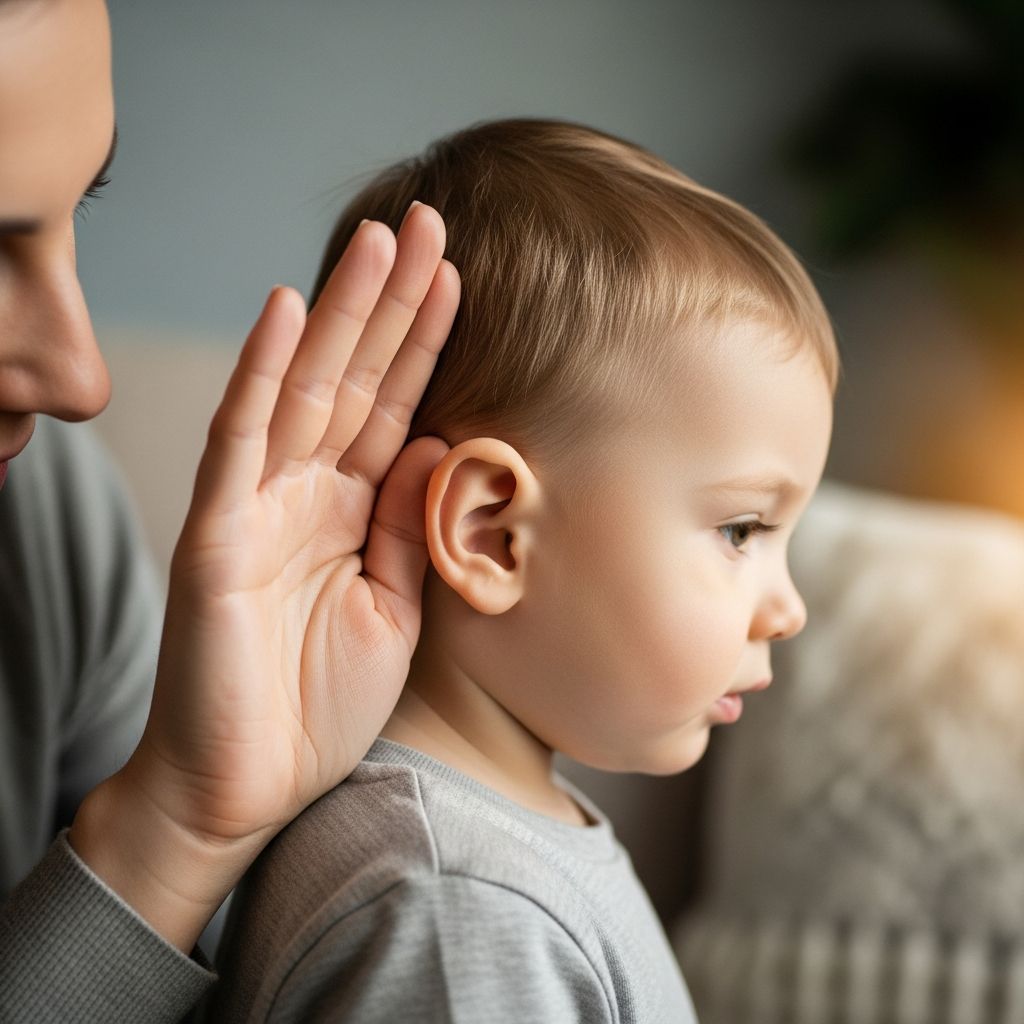
Understanding how children’s ears function is crucial for parents aiming to support healthy development. This guide explores ear structure, the hearing mechanism, potential issues, detection strategies, and protective measures, drawing from established anatomical principles to help families nurture strong auditory skills.
Understanding the Structure of the Ear
The human ear, particularly in children, is a sophisticated organ divided into three primary sections: the outer ear, middle ear, and inner ear. Each part plays a distinct role in capturing, amplifying, and processing sound waves while also contributing to balance.
The **outer ear** consists of the visible auricle (pinna) and the external acoustic meatus (ear canal). The auricle, made of elastic cartilage covered in skin, funnels sound waves into the canal, directing them toward the eardrum. This initial capture is essential for children, as it sets the stage for clear sound transmission during language acquisition.
Behind the eardrum lies the **middle ear**, an air-filled cavity housing the three smallest bones in the body: the malleus (hammer), incus (anvil), and stapes (stirrup), known collectively as the auditory ossicles. These ossicles form a chain that amplifies vibrations from the eardrum and transmits them to the inner ear, overcoming the impedance mismatch between air and fluid.
The **inner ear** features the bony labyrinth, including the cochlea for hearing and vestibular structures for balance. The cochlea, a spiral-shaped, fluid-filled structure, contains the organ of Corti with hair cells that convert mechanical vibrations into electrical signals sent via the vestibulocochlear nerve (cranial nerve VIII) to the brain.
| Ear Section | Key Components | Primary Function |
|---|---|---|
| Outer Ear | Auricle, Ear Canal | Captures and funnels sound waves |
| Middle Ear | Ossicles (Malleus, Incus, Stapes), Eustachian Tube | Amplifies and transmits vibrations |
| Inner Ear | Cochlea, Vestibular Apparatus | Converts sound to neural signals; maintains balance |
How Sound Travels Through a Child’s Ear
The journey of sound in a child’s ear begins when waves enter the outer ear. The auricle collects them, and the canal conducts them to the tympanic membrane (eardrum), causing it to vibrate.
These vibrations move the ossicles: the malleus attaches to the eardrum, the incus connects to the malleus, and the stapes presses against the oval window of the cochlea. This piston-like action creates fluid waves in the cochlea. The Eustachian tube, linking the middle ear to the throat, equalizes pressure to ensure optimal eardrum function, which is especially vital during flights or colds in kids.
In the cochlea, waves ripple along the basilar membrane, stimulating hair cells. High-frequency sounds activate cells near the base, while low frequencies affect those at the apex. Hair cells release neurotransmitters, generating impulses interpreted as sound by the brain.
- Sound waves hit eardrum → Ossicles amplify → Fluid waves in cochlea → Hair cells activate → Nerve signals to brain.
- Balance function: Utricle, saccule, and semicircular canals detect head position and motion via similar hair cell mechanisms.
Why Hearing Matters for Child Development
Hearing is foundational for speech, language, and cognitive growth in children. From birth, infants rely on auditory cues to learn sounds, words, and social interactions. Delays in hearing can impact reading, academic performance, and emotional bonds.
The auditory system matures rapidly in early years; by age 3, most sound processing pathways are established. Parental awareness of this process aids in fostering environments rich in varied sounds, promoting neural connections essential for literacy and communication.
Common Ear and Hearing Challenges in Children
Children face unique risks due to developing anatomy and behaviors like frequent infections or exposure to loud toys.
- Otitis Media: Fluid buildup behind the eardrum from infections, causing temporary conductive hearing loss. Eustachian tube dysfunction in young kids contributes.
- Noise-Induced Damage: Prolonged loud exposure harms inner ear hair cells, which do not regenerate. Toys exceeding 85 decibels pose risks.
- Congenital Issues: Genetic or birth-related losses affect 1-3 per 1,000 newborns, often sensorineural involving cochlea or nerves.
- Wax Buildup or Foreign Objects: Common in toddlers, blocking the canal and muffling sound.
Sensorineural loss disrupts inner ear or nerve function, while conductive issues involve outer/middle ear blockages. Early identification prevents long-term developmental hurdles.
Spotting Signs of Hearing Difficulties
Parents should observe milestones: newborns startle to sounds, coo by 2 months, babble by 6 months, and follow simple directions by 12 months. Red flags include:
- No response to loud noises by 3 months.
- Limited babbling or no words by 18 months.
- Frequent ear tugging or infections.
- Inconsistent response to name or speech.
Behavioral cues like turning up TV volume or speaking loudly signal potential problems. Routine monitoring during well-child visits is key.
Hearing Screenings and Evaluations
Universal newborn screening using otoacoustic emissions (OAE) or auditory brainstem response (ABR) detects issues early. Follow-up audiograms measure thresholds across frequencies.
For older children, pure-tone testing assesses detection at various pitches. Tympanometry checks middle ear function. Early intervention, like hearing aids or cochlear implants, significantly improves outcomes if loss is confirmed.
| Test Type | Age Group | Purpose |
|---|---|---|
| OAE/ABR | Newborns | Detects inner ear/nerve function |
| Pure-Tone Audiometry | 3+ years | Measures hearing thresholds |
| Tympanometry | All ages | Assesses middle ear pressure |
Protecting Your Child’s Hearing Health
Prevention starts with safe environments:
- Limit headphone volume to 60% max, under 60 minutes daily.
- Use ear protection at noisy events (e.g., concerts, races).
- Vaccinate against infections like measles that risk hearing.
- Manage allergies/colds to prevent fluid buildup.
- Avoid inserting objects into ears; seek professional cleaning for wax.
Model quiet habits and ensure regular check-ups. Breastfeeding may offer some protection against recurrent otitis media.
Treatment Options for Hearing Loss
Conductive losses often resolve with antibiotics, tubes for drainage, or adenoidectomy. Sensorineural cases may require hearing aids amplifying sound or cochlear implants bypassing damaged parts.
Speech therapy supports language development post-diagnosis. Consistent use of devices yields best results when started early.
Frequently Asked Questions (FAQs)
At what age should my baby have a hearing test?
All newborns receive screening; follow-ups occur at well-visits. Early detection is critical for intervention before 6 months.
Can loud toys damage my child’s hearing?
Yes, sounds over 85 dB can harm hair cells. Keep toys at safe levels and limit exposure time.
What if my child fails a hearing screen?
Rescreen promptly; diagnostic tests follow. Most passes on retest, but confirm to rule out loss.
How does swimming affect ears?
Water pressure or infections risk otitis externa. Use swim plugs and dry ears gently.
Is hearing loss reversible in kids?
Conductive often yes, via medical treatment; sensorineural typically permanent but manageable with aids.
Building a Hearing-Friendly Home
Create spaces with balanced noise: read aloud, play soft music, and minimize background TV. Encourage face-to-face talks to aid lip-reading cues. Monitor screen time, as constant audio exposure fatigues developing ears.
Nutrition supports ear health—omega-3s and zinc aid hair cell function. Active play enhances auditory processing through environmental sounds.
References
- Ear anatomy: Parts and functions — Kenhub. 2023. https://www.kenhub.com/en/library/anatomy/the-ear
- Hearing & Balance: Crash Course Anatomy & Physiology #17 — Crash Course (YouTube). 2015-11-02. https://www.youtube.com/watch?v=Ie2j7GpC4JU
- Ear Anatomy – Inner Ear — UTHealth Houston. Accessed 2026. https://med.uth.edu/orl/online-ear-disease-photo-book/chapter-3-ear-anatomy/ear-anatomy-inner-ear/
- Ear: Anatomy, Facts & Function — Cleveland Clinic. 2023-09-28. https://my.clevelandclinic.org/health/body/24048-ear
- How Do We Hear? — NIDCD, NIH. 2023-07-13. https://www.nidcd.nih.gov/health/how-do-we-hear
- Human ear | Structure, Function, & Parts — Britannica. Accessed 2026. https://www.britannica.com/science/ear
- BASIC ANATOMY OF THE HEARING SYSTEM — USAARL. Accessed 2026. https://usaarl.health.mil/assets/docs/hmds/Section-15-Chapter-8-Ear-Anatomy.pdf