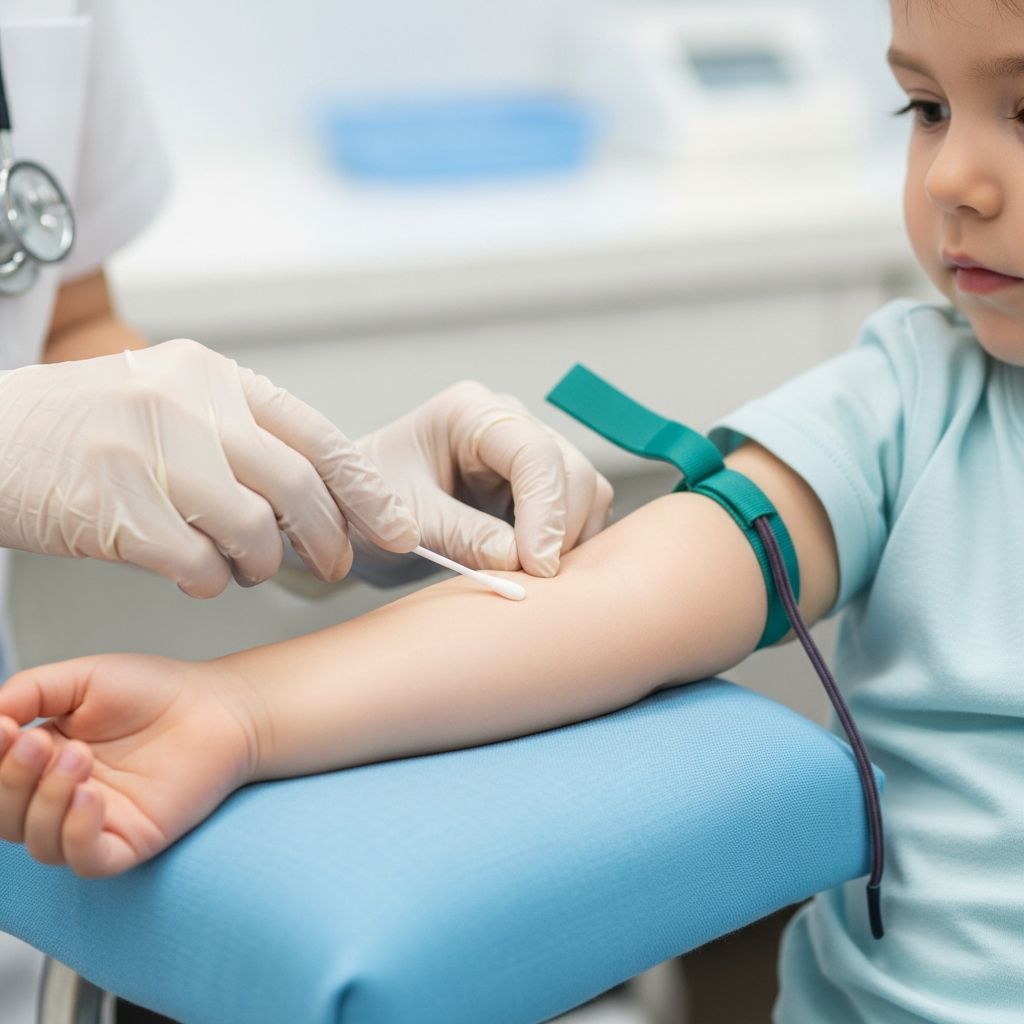
Hearing that your child needs a blood test can feel worrying, especially if you are not sure what the test is for or what the results might mean. Blood tests are a routine part of pediatric care and often give doctors important clues long before a child looks or feels very sick.
This guide explains in plain language why blood tests are used in children, the most common types of tests, and practical ways to support your child before, during, and after a blood draw.
Why Doctors Order Blood Tests for Kids
Pediatricians use blood tests to gather information that cannot be seen from a physical exam alone. A small sample of blood can show how organs are working, whether a child has an infection, or if there are problems with the immune system, hormones, or nutrition.
Blood work may be done as part of:
- Routine checkups to screen for silent conditions such as anemia or high cholesterol.
- Follow-up after an illness to confirm a diagnosis or see if treatment is working.
- Monitoring of long-term conditions like diabetes, kidney disease, or autoimmune disorders.
- Pre-surgery evaluation to be sure blood counts and clotting are in a safe range.
How Blood Is Collected in Children
The method used to collect blood depends on your child’s age, size, and the type of test ordered. Babies and very young children may have a tiny amount of blood taken from a heel or finger, while older children usually have blood drawn from a vein in the arm.
Common collection methods include:
- Heel stick: A quick puncture of the heel used mainly in newborns for screening tests.
- Finger stick: A small prick on the fingertip to collect a few drops of blood, often for point-of-care checks such as blood sugar.
- Venipuncture: A needle placed into a vein, usually in the arm or hand, to collect several test tubes of blood for more extensive testing.
Overview of Common Pediatric Blood Tests
Many different tests can be performed on a single blood sample. Some results look at the cells in the blood, while others measure chemicals, proteins, or hormones dissolved in the liquid part of blood called plasma or serum.
Below is a high-level view of major groups of blood tests used in children.
| Category | What It Looks At | Why It’s Ordered |
|---|---|---|
| Blood cell tests | Red cells, white cells, platelets | Check for anemia, infection, or clotting problems |
| Chemistry & metabolic panels | Electrolytes, sugars, kidney & liver markers | Assess organ function, hydration, and metabolism |
| Clotting and bleeding tests | How quickly blood clots and related proteins | Investigate easy bruising, heavy bleeding, or pre-surgery safety |
| Hormone & endocrine tests | Thyroid, growth, and other hormones | Evaluate growth, puberty, and metabolic issues |
| Infection & immune tests | Antibodies, inflammatory markers, specific germs | Confirm infections or check immune system function |
| Nutrition & vitamin tests | Iron, vitamins, cholesterol, and more | Identify deficiencies or high levels that affect health |
| Blood type & special tests | Blood group, compatibility, genetic or specialty studies | Prepare for transfusions or evaluate rare conditions |
Blood Cell Tests: Red, White, and Platelets
The most familiar blood test is the complete blood count, often called a CBC. This group of measurements tells the doctor how many red blood cells, white blood cells, and platelets are present and gives information about their size and shape.
Key parts of a typical blood cell panel include:
- Red blood cells and hemoglobin: Show how well the blood can carry oxygen, helping detect anemia or dehydration.
- White blood cells: Indicate how the immune system is responding; high or low counts can point toward infection or bone marrow problems.
- Platelets: Help with clotting; low levels may cause easy bruising or prolonged bleeding.
Blood Chemistry and Metabolic Panels
Chemistry tests look at the dissolved substances in the fluid part of the blood. These panels provide a snapshot of how major organs and body systems are functioning.
Common components include:
- Electrolytes: Sodium, potassium, chloride, and bicarbonate show fluid balance and help detect dehydration or conditions affecting the kidneys and lungs.
- Kidney markers: Substances filtered by the kidneys can build up when kidney function is reduced.
- Liver enzymes and proteins: Abnormal levels may suggest liver inflammation, bile flow problems, or nutritional issues.
- Blood sugar: Measures glucose levels to screen for or monitor diabetes and other metabolic concerns.
Clotting and Bleeding Tests
Some children bruise easily, have frequent nosebleeds, or bleed longer than expected after minor cuts or dental work. In these situations, doctors may order tests that measure how quickly blood forms a clot and whether clotting proteins are working properly.
These tests can help:
- Identify inherited bleeding conditions such as certain clotting factor deficiencies.
- Monitor medications that thin the blood.
- Assess bleeding risk before surgery or other procedures.
Hormone and Endocrine Blood Tests
Hormones are chemical messengers that help control growth, energy use, stress responses, and puberty. When a child grows more slowly or quickly than expected, feels unusually tired, or shows early or delayed signs of puberty, blood tests may be used to look at hormone levels.
Examples of hormone-related tests include:
- Thyroid function tests: Check hormones involved in metabolism, temperature regulation, and energy.
- Growth-related tests: May include growth hormone or factors influenced by it when there are concerns about stature.
- Puberty hormones: Evaluate estrogen, testosterone, or related hormones if puberty is significantly early or late.
Infection and Immune System Tests
Blood tests are often used to look for infections or to see how the immune system is working. Some tests check for the presence of a specific germ, while others measure antibodies or general signs of inflammation.
These tests can help doctors:
- Confirm bacterial or viral infections when symptoms alone are unclear.
- Monitor chronic infections that require long-term treatment.
- Evaluate autoimmune conditions in which the immune system mistakenly attacks the body’s own tissues.
Nutrition, Vitamins, and Cholesterol
Children require the right balance of nutrients to support growth, brain development, and immune function. When a child is a very picky eater, has a chronic illness, or follows a restricted diet, blood tests may be used to check for deficiencies or excesses.
Common nutrition-related tests include:
- Iron studies: Look at iron stores and transport to detect iron deficiency or overload.
- Vitamin levels: Such as vitamin D or B vitamins if there are concerns about bone health, fatigue, or nerve function.
- Lipid panels: Measure cholesterol and related fats, especially in children with a strong family history of heart disease or other risk factors.
Blood Typing and Special Tests
Knowing a child’s blood type becomes important before a transfusion, certain surgeries, or in some pregnancy-related situations. Blood typing identifies the child’s group (such as A, B, AB, or O) and Rh factor, which must be compatible with any blood they receive.
In addition, some children may need specialized blood tests, such as genetic studies, tests for rare metabolic conditions, or detailed evaluations of the bone marrow’s ability to make blood cells. These are usually ordered and interpreted by specialists.
Understanding Your Child’s Blood Test Report
Blood test reports often list many numbers, each with a “reference range.” These ranges represent values that are typical for healthy people of a certain age and sex, but children’s normal ranges are not the same as adults’ and can change as they grow.
When you look at your child’s report, keep in mind:
- Values slightly outside the reference range may still be normal for your child.
- Illness, medications, and even the time of day can affect results.
- Your child’s doctor compares results with symptoms and exam findings, not in isolation.
How to Prepare Your Child for a Blood Test
Good preparation can reduce fear and make the blood test experience smoother for both your child and the healthcare team. Children often cope better when they know what to expect in age-appropriate terms.
Helpful preparation tips include:
- Explain that a small needle will go into the arm or finger and that it may pinch or sting but will be over quickly.
- Avoid using frightening language such as “shot” or “hurt a lot”; instead, focus on honest but calm descriptions.
- Bring a comfort item like a stuffed animal, blanket, or favorite toy.
- If fasting is required, follow instructions about food and drink so the results will be accurate.
Helping During the Blood Draw
Your presence and behavior during the blood draw can strongly influence how your child feels. Staying calm and confident shows your child that the procedure is safe and manageable.
During the blood draw, you can:
- Hold your child’s hand or sit them on your lap if allowed.
- Use distraction such as storytelling, music, or counting games.
- Encourage slow, deep breaths to help your child stay relaxed.
- Praise your child for cooperating, focusing on effort rather than bravery.
Safety and Risks of Blood Tests in Children
Blood tests use sterile, single-use needles and are considered very safe. The most common after-effects are minor, such as brief soreness at the puncture site or a small bruise.
To reduce problems after the test:
- Keep the bandage on for the recommended time to prevent bleeding.
- Encourage gentle use of the arm for the rest of the day.
- Let the care team know if your child feels dizzy, very anxious, or has a history of fainting with needles.
Questions to Ask Your Child’s Doctor
Understanding why a test is ordered and what the results mean can make the process less stressful. It is always appropriate to ask the healthcare provider to explain in simple terms.
Useful questions include:
- What specific tests are you ordering, and what are you looking for?
- Does my child need to fast or avoid any medicines before the test?
- When and how will we get the results?
- What will be the next steps if any results are abnormal?
SEO-Friendly FAQs About Children’s Blood Tests
How often do children need blood tests?
Most healthy children do not need routine blood work at every checkup. Doctors usually recommend specific tests when there is a medical reason, such as symptoms, family history, or screening guidelines for a certain age group. Some long-term conditions may require regular blood tests to monitor treatment and overall health.
Are blood tests painful for kids?
Children may feel a quick pinch or stinging sensation when the needle goes in, but the discomfort is usually brief. Using numbing creams when appropriate, preparing children in advance, and using distraction techniques can make the experience much less stressful. Many children are surprised by how quickly it is over.
Can my child eat or drink before a blood test?
Some tests require fasting, which means no food or certain drinks for a set time before the blood draw, while others do not. Always follow the instructions provided by your child’s healthcare team, and ask for clarification if you are unsure. If fasting is needed, scheduling an early-morning appointment can make it easier for your child.
How long do children’s blood test results take?
Many standard tests return results within a day or two, but more specialized studies may take longer. Some clinics provide results through an online portal, while others call or schedule a follow-up visit to discuss findings. Ask how and when you will be notified so you know what to expect.
What if my child’s blood test is abnormal?
An abnormal value does not always mean a serious illness. Doctors consider how far a result is from the expected range, your child’s age, symptoms, and medical history before deciding what it means. Sometimes the next step is simply to repeat the test later; in other cases, additional tests or a referral to a specialist may be recommended.
Can blood tests replace a physical exam?
Blood tests are a helpful tool but do not replace a thorough history and physical examination. Many conditions are diagnosed mainly through talking with families and examining the child, with blood work used only to confirm or refine the diagnosis. The best care comes from combining both approaches.
How can I reduce my child’s fear of needles?
Start by acknowledging that the test may feel uncomfortable but emphasizing that it is quick and helps keep them healthy. Practice coping skills such as deep breathing, counting, or focusing on a favorite song or story before the appointment. Afterward, recognize their effort and talk about what went well so that future experiences feel more manageable.