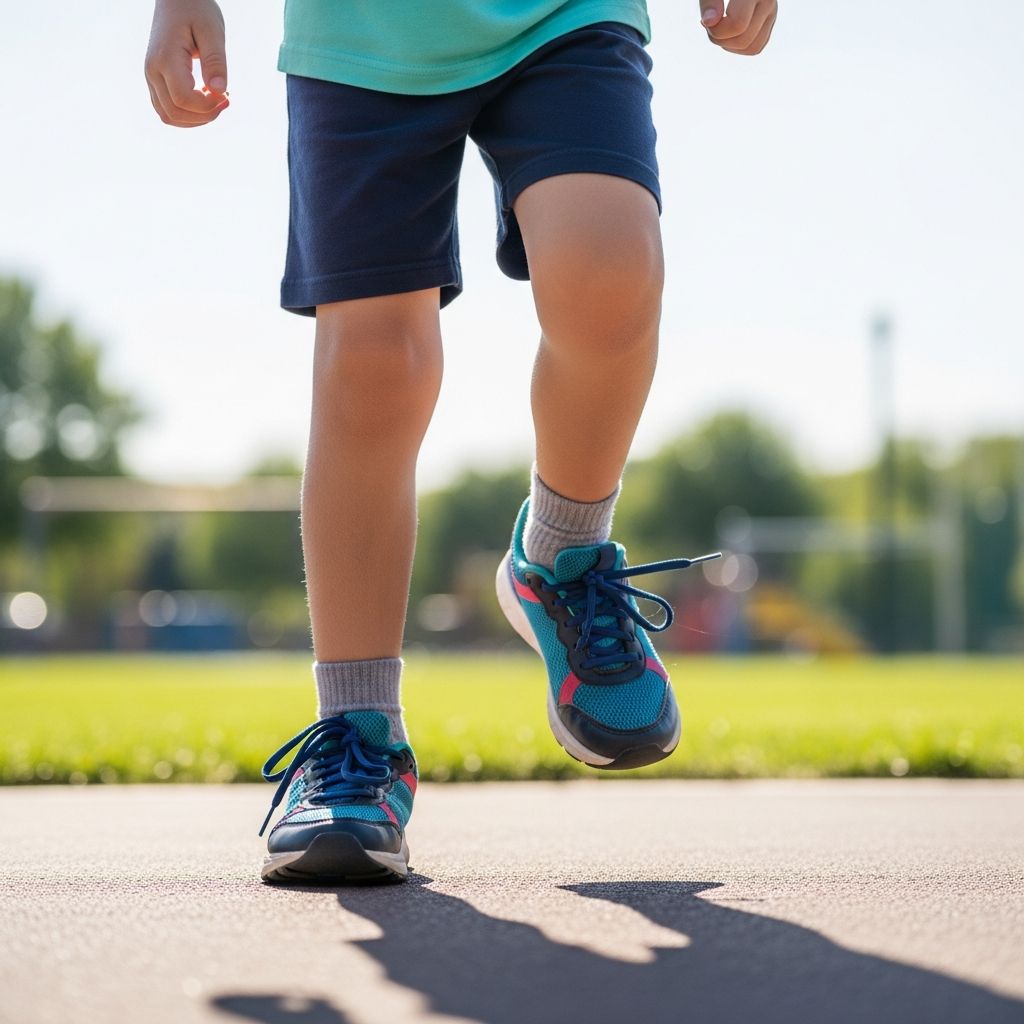
The ankle is a remarkable joint that supports a child’s active lifestyle, enabling running, jumping, and playing. Understanding its structure and vulnerabilities helps parents protect their kids from injuries and respond effectively when issues arise.
Understanding the Ankle’s Basic Anatomy in Children
Children’s ankles consist of key bones including the tibia (shinbone), fibula (calf bone), talus (ankle bone), and calcaneus (heel bone). These form the talocrural joint, a hinge-like structure allowing up-and-down movements like dorsiflexion (toes up) and plantarflexion (toes down).
The distal ends of the tibia and fibula create a stable socket, or mortise, for the talus, ensuring weight-bearing stability. Ligaments such as the strong deltoid on the inner side and lateral ligaments (anterior talofibular, calcaneofibular, posterior talofibular) provide side-to-side reinforcement.
Muscles play dual roles: the Achilles tendon connects calf muscles (gastrocnemius and soleus) to the heel for push-off power, while tibialis anterior lifts the foot, and peroneals control outward turns.
- Tibia and Fibula: Form the ankle’s sturdy frame, bound by syndesmosis ligaments for minimal movement.
- Talus: Transfers body weight to the foot without direct muscle attachment.
- Calcaneus: Heel bone anchoring the Achilles tendon.
This setup allows flexibility for play while bearing a child’s growing body weight, but rapid growth can make ligaments laxer than in adults, increasing injury risk.
How Children’s Ankles Differ from Adults
Kids’ bones have growth plates (physeal plates), softer cartilage zones vulnerable to fractures from impacts that adults might shrug off as sprains. Ligaments in children are more elastic, often leading to avulsion fractures where bone pulls off ligament attachments rather than tears.
The subtalar joint below the talus enables side-to-side motions (inversion/eversion), crucial for uneven playground surfaces. Arches—medial, lateral longitudinal, and transverse—develop gradually, supported by tendons like posterior tibialis and peroneus longus.
| Feature | Children | Adults |
|---|---|---|
| Bone Strength | Softer with growth plates | Denser, fused |
| Ligament Elasticity | High, prone to avulsions | Less elastic, prone to tears |
| Arch Development | Ongoing | Fully formed |
| Healing Speed | Faster due to growth | Slower |
These differences mean pediatric ankle issues require age-specific care to avoid growth disruptions.
Common Ankle Injuries in Active Children
Sprains top the list, occurring when ligaments stretch or tear from twists, often during sports or falls. Inversion sprains (foot rolling inward) are most frequent, stressing lateral ligaments.
Strains affect muscles/tendons, like Achilles overuse from running. Fractures hit growth plates in high-impact play. Sever’s disease inflames the heel growth plate in young athletes, while shin splints cause front-leg pain from repetitive stress.
- Sprain Grades: Grade 1 (mild stretch), Grade 2 (partial tear), Grade 3 (complete tear with instability).
- Overtuse Issues: Common in soccer, basketball where jumping/ quick turns prevail.
Boys in contact sports and girls in gymnastics face higher risks due to activity patterns.
Spotting Ankle Injury Symptoms in Kids
Children may not articulate pain clearly, so watch for limping, refusal to bear weight, swelling, bruising, or tenderness. Deformity signals fractures; popping sounds indicate severe sprains.
Pain worsens with movement; instability feels like wobbling. In growth plate injuries, localized tenderness over bony areas stands out.
Use the Ottawa Ankle Rules for kids over 5: inability to walk four steps or bone tenderness predicts fracture needing X-ray.
Immediate Response to Ankle Injuries
Follow RICE: Rest (no weight-bearing), Ice (20 minutes hourly), Compression (elastic wrap), Elevation (above heart). Avoid heat initially; it boosts swelling.
Over-the-counter pain relievers like ibuprofen reduce inflammation if age-appropriate. Crutches help mobility; brace for mild sprains.
- Assess severity: Can child walk? Any deformity?
- Apply ice wrapped in cloth.
- Immobilize with splint if swelling severe.
- Seek doctor if no improvement in 48 hours.
Urgent care for numbness, pale/cold foot, or severe pain.
Medical Diagnosis and Treatment Options
Doctors examine via physical tests (anterior drawer for ligament laxity), X-rays for bones/growth plates, MRI for soft tissues if needed.
Treatment: Conservative for most—immobilization (cast/boot 2-6 weeks), PT for strength. Surgery rare, for displaced fractures or chronic instability.
Healing timelines: Sprains 1-6 weeks; fractures 4-8 weeks. Kids recover quicker but need monitoring for growth issues.
Rehabilitation and Strengthening Exercises
Post-immobilization, PT restores range, strength, balance. Start with non-weight-bearing: towel scrunches, alphabet tracing with foot.
Progress to balance board, calf raises, resistance bands. Proprioception training prevents re-injury via single-leg stands.
- Early Phase: Gentle stretches, ice massage.
- Mid Phase: Isometric holds, stationary bike.
- Advanced: Agility drills, sport-specific.
Aim for full return in 4-12 weeks, guided by professional.
Preventing Ankle Problems in Young Athletes
Proper warm-ups, strength training (calf/peroneal focus), and footwear with good support/arch cushioning cut risks. Tape/braces for prior injuries.
Monitor training volume; rest days prevent overuse. Surface matters—avoid slick fields.
| Prevention Strategy | Benefit |
|---|---|
| Strength Exercises | Boosts ligament support |
| Proper Shoes | Enhances stability |
| Balance Training | Improves proprioception |
| Gradual Progression | Avoids overuse |
When to Consult a Specialist for Your Child
Persistent pain >2 weeks, repeated sprains, limping, or growth concerns warrant pediatric orthopedist. Early intervention preserves long-term joint health.
Frequently Asked Questions (FAQs)
Can kids outgrow ankle sprains without treatment?
No, untreated sprains risk chronic instability. Always use RICE and monitor.
How long do children’s ankle fractures take to heal?
Typically 4-8 weeks in cast, faster than adults due to robust healing.
Is taping safe for young children?
Yes, under guidance for high-risk activities; avoid constant use.
What shoes best prevent ankle injuries?
High-top with firm heel counter, good traction, replaced every 6 months.
Does Sever’s disease require surgery?
Rarely; rest, stretching, orthotics usually suffice.
References
- Structure and Mechanics of the Ankle — Massage Today (AMTA). 2023-05-15. https://www.amtamassage.org/publications/massage-today/structure-mechanics-ankle/
- Ankle Anatomy — Moreau Physical Therapy. 2024-02-10. https://www.moreaupt.com/mobile/Injuries-Conditions/Ankle/Ankle-Anatomy/a~47/article.html
- Ankle joint: anatomy, structure & functions — Medi.de. 2023-11-20. https://www.medi.de/en/diagnosis-treatment/ankle-pain/anatomy/
- Foot and Ankle Structure and Function — Physiopedia. 2025-01-05. https://www.physio-pedia.com/Foot_and_Ankle_Structure_and_Function
- Ankle joint: Anatomy, bones, ligaments and movements — Kenhub. 2024-08-12. https://www.kenhub.com/en/library/anatomy/the-ankle-joint
- Foot and Ankle Anatomy — Dr. Gary Driver. 2023-09-18. https://www.drgarydriver.com/foot-and-ankle-surgeon-weatherford-fort-worth-tx/