Scoliosis involves an abnormal sideways bend in the spine, typically forming a “C” or “S” pattern, and is frequently identified in growing children. This condition affects about 2% of adolescents, with diagnosis often occurring during puberty’s growth phase, though it can appear earlier or later.
Recognizing the Core Nature of Spinal Curvature
The human spine naturally curves front to back for balance and support, but scoliosis introduces a lateral twist exceeding 10 degrees, measured via X-ray. In children, this deviation can subtly alter posture and body alignment, potentially progressing if unchecked during rapid growth periods. Parents play a vital role in early observation, as many cases remain asymptomatic initially but may influence physical development over time.
Primary Categories of Scoliosis in Young Patients
Scoliosis manifests in distinct forms, each with unique origins and implications for pediatric care.
- Idiopathic Scoliosis: The most prevalent type, especially in adolescents, lacks a clear cause but shows genetic links; it comprises about 80-85% of cases and progresses variably.
- Congenital Scoliosis: Arises from vertebral malformations present at birth, potentially worsening with growth and sometimes linked to other organ issues like heart or kidney anomalies.
- Neuromuscular Scoliosis: Stems from underlying nerve or muscle disorders such as cerebral palsy or muscular dystrophy, leading to imbalances that curve the spine.
- Degenerative or Adult-Onset: Rare in children but can emerge later from wear or osteoporosis, building on earlier mild curves.
Understanding these categories guides tailored interventions, emphasizing regular pediatric evaluations.
Visible and Hidden Indicators in Kids
Early detection hinges on spotting physical asymmetries during routine activities like dressing or bending. Common external signs include:
- Uneven shoulder heights or one protruding shoulder blade.
- Asymmetric waistline or elevated hip on one side.
- Prominent ribs on one side, especially when forward-bending (rib hump).
- Head not centered over pelvis, or overall body lean.
Severe progressions may bring back discomfort, fatigue, or respiratory strain from lung compression, though mild cases (10-20 degrees) often evade notice without screening. Parents should observe during growth spurts around ages 10-15, when curves advance quickest in girls.
| Curve Degree | Classification | Common Impacts | Management Focus |
|---|---|---|---|
| 10-20° | Mild | Minimal symptoms; cosmetic changes | Observation |
| 20-40° | Moderate | Posture issues; possible pain | Bracing |
| 40°+ | Severe | Pain, breathing/cardiac strain | Surgery likely |
This table summarizes progression risks, underscoring the need for timely checks.
Unraveling the Underlying Factors
For idiopathic cases, genetics play a key role, with family history elevating risk; females face higher progression odds. Congenital forms trace to fetal spinal development errors, while neuromuscular types link to conditions weakening muscle control. No single trigger explains all instances, but growth hormones amplify curves during puberty. Environmental factors remain under study, but routine screening trumps speculation.
Diagnostic Processes for Accurate Assessment
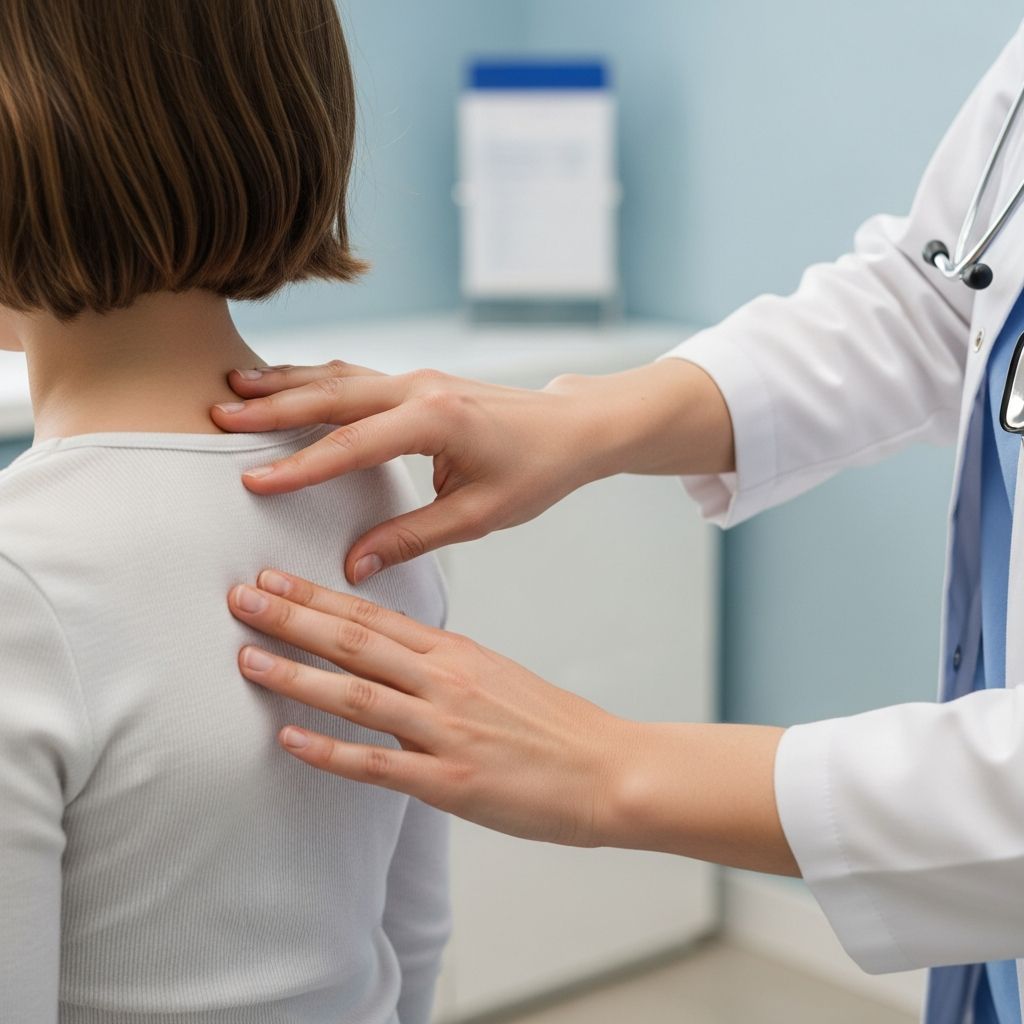
Pediatricians initiate with the Adams forward bend test, observing trunk rotation and rib asymmetry. Confirmation via X-rays measures Cobb angle (curve degree), with low-dose imaging preferred for kids to minimize radiation. Advanced tools like MRI assess spinal cord involvement if neurological signs appear, ensuring comprehensive evaluation.
School screenings or parental vigilance often prompt initial visits; curves under 10 degrees typically warrant no action.
Observation: The Foundation of Mild Case Management
For curves below 20-25 degrees, especially post-growth, regular X-rays every 6-12 months track stability. This non-invasive approach suits most children, avoiding unnecessary interventions while empowering families with data-driven reassurance.
Bracing Strategies to Guide Spinal Growth
When curves hit 20-40 degrees in growing kids, custom braces worn 16-23 hours daily can halt progression by 50% or more. Types include underarm plastic shells or nighttime options, fitted for comfort and compliance. Success peaks before skeletal maturity, with weaning post-growth. Daily wear demands commitment, but improves outcomes versus progression to surgery.
Surgical Interventions for Progressive Curves
Curves over 40-50 degrees, unresponsive to bracing, may require spinal fusion surgery, fusing vertebrae with rods and screws for straightening. Performed by pediatric orthopedic specialists, modern techniques shorten recovery and preserve motion. Risks like infection are low (1-2%), with high satisfaction in severe cases. Surgery timing aligns with growth cessation to optimize results.
Exercise and Physical Therapy Roles
Schroth method or specific exercises strengthen core muscles, enhance posture, and ease discomfort, though they don’t fully correct curves. Integrated with bracing, they boost adherence and well-being; avoid unproven “cures” lacking evidence.
Navigating Daily Life and Emotional Well-Being
Scoliosis can dent self-image due to visible changes, prompting anxiety or activity avoidance. Encourage sports like swimming for strength without impact, and foster open talks. School plans may accommodate brace wear or physio sessions, ensuring academic continuity.
Long-Term Prognosis and Adulthood Transition
Most treated children lead active lives; mild cases rarely worsen post-growth, while braced or surgical ones maintain function. Adults monitor for degenerative shifts, prioritizing bone health via nutrition and exercise. Early intervention yields enduring benefits.
Frequently Asked Questions About Childhood Scoliosis
At what age is scoliosis most commonly found in children?
Primarily between 10-15 years during pubertal growth spurts, though screenings catch earlier cases.
Can scoliosis be prevented?
No definitive prevention exists for idiopathic types, but early detection via exams mitigates severity.
Is bracing uncomfortable for kids?
Initial adjustment occurs, but modern braces are lightweight; compliance tips include gradual wear-up.
Does scoliosis affect sports participation?
Many activities are safe; low-impact like yoga aid management, guided by physicians.
What happens if scoliosis goes untreated?
Mild cases often stable, but severe progression risks pain, lung issues, or cosmetic concerns.
References
- What is Scoliosis? Understanding Your Condition — Rush Ortho. 2023-10-15. https://www.rushortho.com/news-events/news/what-is-scoliosis-understanding-your-condition/
- Scoliosis — McGovern Medical School, UTHealth Houston. 2024-05-20. https://med.uth.edu/neurosciences/conditions-and-treatments/spine-disorders-and-back-pain/scoliosis/
- Scoliosis: What It Is, Types, Causes, Symptoms & Treatment — Cleveland Clinic. 2025-01-10. https://my.clevelandclinic.org/health/diseases/15837-scoliosis
- Scoliosis — Inspira Health Network. 2024-08-12. https://www.inspirahealthnetwork.org/services-treatments/orthopedics/spinal-conditions/scoliosis
- Scoliosis – Symptoms and causes — Mayo Clinic. 2025-04-25. https://www.mayoclinic.org/diseases-conditions/scoliosis/symptoms-causes/syc-20350716
- 8 Surprising Ways Scoliosis Can Affect the Body — Jason Lowenstein MD. 2023-11-05. https://jasonlowensteinmd.com/8-ways-scoliosis-can-affect-the-body/
- Scoliosis Overview — OrthoInfo – AAOS. 2024-02-28. https://orthoinfo.aaos.org/en/diseases–conditions/introduction-to-scoliosis/