Childhood Games of the Early 1950s: Home and School
Growing up in the early 1950s was a vastly different experience from childhood today. Before television became a household staple and electronic entertainment dominated leisure time, children spent countless hours playing outdoors and engaging in imaginative games that required minimal equipment but maximum creativity. The games we played not only kept us physically active but also taught us valuable social skills, sportsmanship, and the importance of outdoor recreation. Whether in the schoolyard during lunch breaks or on quiet residential streets after school, these games defined an entire generation’s childhood experience.
Outdoor Street Games and Playground Activities
The streets of the 1950s were our playgrounds. With far fewer cars on the road and lower traffic volumes than today, children had the freedom to play safely outside their homes for hours at a time. The neighborhood became our kingdom, and the games we invented or inherited from previous generations kept us entertained from dawn until dinner time. These outdoor activities were not just pastimes; they were essential components of growing up, keeping us physically fit and socially connected with our peers.
Street Sports and Ball Games
Ball games dominated our outdoor play. We played with simple equipment—often just a ball and our imagination. Stickball was a favorite among urban children, using a broomstick as a bat and whatever ball we could find, from tennis balls to pink Spaldeens. Punchball offered similar entertainment without the need for a bat, as we used our fists to hit the ball. These games taught us hand-eye coordination and strategic thinking while requiring nothing more than open space and willing participants.
Touch football in the fall months provided another avenue for outdoor entertainment. Unlike organized leagues with uniforms and coaches, we simply gathered neighborhood friends and played by our own rules. Winter brought sledding adventures and snowball fights that combined physical activity with friendly competition. Spring arrived with renewed enthusiasm for baseball variations, where a manhole cover could serve as home plate and parked cars as bases. The creativity involved in adapting our urban environment to suit our games was remarkable.
Individual Skill Games
Beyond team sports, individual skill games captivated our attention. Marbles were incredibly popular, with various types available—from common clay marbles to special collectible ones. The stakes were high, as winning a game meant claiming your opponent’s marbles. These games taught us mathematical skills, strategy, and patience as we aimed to shoot our marbles into winning positions. Skipping rope was another beloved activity that improved coordination and cardiovascular fitness while requiring almost no investment in equipment.
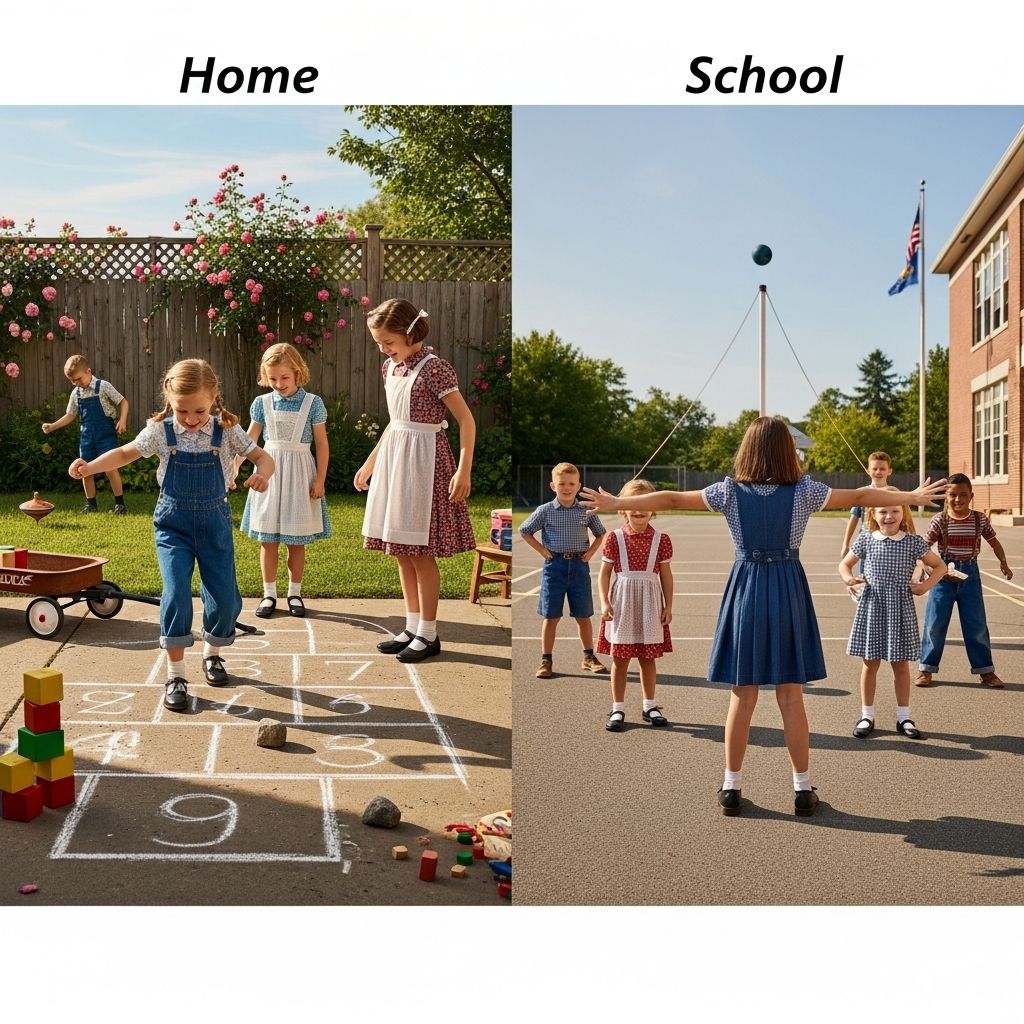
Hopscotch drew children to sidewalks and playgrounds with its simple chalk grid and the challenge of balancing and hopping in sequence. Pavement chalk allowed us to create not just hopscotch grids but entire artistic landscapes for our games and imaginative play. These activities kept us engaged while developing balance, coordination, and fine motor skills essential for our physical development.
Chase and Chasing Games
Games involving pursuit and evasion were staples of playground entertainment. British Bull Dog, where one person in the middle attempted to catch others running from one side to another, combined speed with strategy. Hide and Seek tested our problem-solving abilities as we sought creative hiding spots throughout the neighborhood. Ring-a-ring-a-roses and blind man’s bluff provided enjoyable group activities that didn’t require any equipment or special skills.
The game of War introduced competitive elements with a Cold War twist. One child designated as “It” would declare war on specific “countries” chosen by other players, then attempt to hit them with a ball while they froze in place. This game combined elements of chance, quick thinking, and physical agility while reflecting the historical context of the era in which we grew up.
School Lunch and Recess Games
School provided structured opportunities for play during lunch periods and recess breaks. These designated times brought together children from different grades and backgrounds, creating mini-tournaments and games that lasted weeks or even the entire school year. Schoolyard games often involved rotating players and constantly shifting alliances as friendships evolved throughout the day.
Marble Variations and Collectibles
Marbles held special significance during school lunchtimes. The variety available meant that each child had favorites—some sought after “cats eyes” with their distinctive striped patterns, while others treasured special marbles with unique colors or designs. The economics of marble games were straightforward: win and expand your collection, lose and sacrifice cherished pieces. This created genuine stakes that made every game meaningful rather than casual.
Group Playground Games
The schoolyard accommodated various group games that involved multiple children and complex rules developed through years of tradition. Johnny-on-the-Pony involved stacking players on top of one another until someone collapsed, a game that tested strength and team coordination. Four-Box Baseball and Box Ball adapted traditional baseball to smaller spaces, making them perfect for schoolyard play where land was limited but enthusiasm was unlimited.
Chinese Handball and Moon’s Up were handball-court games where children took turns defending space and returning balls. These games naturally incorporated rotation systems where players who accumulated too many points faced humorous consequences—being the “loser” meant becoming the wall while other children threw balls at you. While this might sound harsh by modern standards, these games built camaraderie and taught children resilience and good humor.
Home Entertainment and Board Games
When weather made outdoor play impossible or evening hours arrived, home provided entertainment through board games and card games. Before television dominated family leisure time, these games represented the primary indoor entertainment, bringing families together for hours of friendly competition and bonding.
Classic Card and Board Games
Family favorites included games that spanned generations. Happy Families taught recognition and memory skills while entertaining players of all ages. Ludo provided straightforward race-to-the-finish mechanics that even young children could understand and enjoy. Snakes and Ladders offered similar accessible gameplay with an element of chance that kept results unpredictable and exciting.
As families sought more complex entertainment, Cluedo became a household favorite, teaching deductive reasoning and strategy as players worked to solve mysteries. Monopoly represented the ultimate family board game experience—a game that could consume entire evenings and create lasting memories of negotiation, strategy, and friendly competition among family members. These games were more than entertainment; they were family traditions that brought generations together around the table.
Card Games for Various Ages
Card games offered flexibility in terms of player numbers and complexity levels. These games required minimal setup and storage space, making them ideal for family play. The social interaction inherent in card games—from playful trash talking to collaborative teamwork—created bonds that extended beyond the game itself.
The Physical and Social Benefits of 1950s Games
The games we played in the 1950s provided benefits that extend far beyond simple entertainment. Physical activity was built into our daily routines through these games, keeping us active and fit without the need for organized sports programs or gym memberships. Running, jumping, throwing, and balancing were natural components of playground games that developed our strength, coordination, and endurance.
Socially, these games taught invaluable lessons about fairness, taking turns, winning gracefully, and losing without resentment. We learned to negotiate rules, resolve disputes, and adapt games to accommodate different numbers of players or equipment limitations. These interpersonal skills developed through natural play rather than adult instruction, making them more ingrained and authentic.
The independence granted to children in the 1950s—the freedom to play in streets and neighborhoods without constant adult supervision—created a sense of self-reliance and adventure. We managed our own games, resolved our own conflicts, and created our own entertainment based on imagination and available resources. This autonomy was character-building in ways that supervised, structured, adult-organized activities often aren’t.
Comparison of 1950s Games vs. Modern Entertainment
| Aspect | 1950s Games | Modern Entertainment |
|---|---|---|
| Equipment Cost | Minimal to free (chalk, balls, natural materials) | High (consoles, computers, applications) |
| Physical Activity | Constant movement and exercise | Primarily sedentary |
| Social Interaction | Face-to-face group play | Often solitary or virtual |
| Supervision | Minimal adult oversight | Varies but often screen-monitored |
| Imagination Required | Essential for gameplay | Pre-programmed and scripted |
| Outdoor Time | Several hours daily | Often limited |
Why These Games Mattered
The games of the 1950s represented more than mere pastimes. They were cultural artifacts reflecting the values and circumstances of the era. Limited commercial entertainment options meant children created their own fun with remarkable ingenuity. The availability of unsupervised outdoor space allowed for genuine childhood independence and adventure. The combination of physical activity, social interaction, and imaginative engagement created childhoods fundamentally different from—and in many ways richer than—contemporary youth experiences.
These games built communities within neighborhoods as children of various ages gathered to play. Older children taught younger ones the rules and strategies, creating intergenerational bonds. Friendships formed through shared games and common interests in particular activities. The schoolyard became a social ecosystem where hierarchies, alliances, and competitions created the drama and excitement that made childhood memorable.
Frequently Asked Questions
What were the most popular games played in 1950s schoolyards?
Popular schoolyard games included marbles, hopscotch, British Bull Dog, hide and seek, four-box baseball, and various handball variations. Marbles held particular significance as children risked and collected them during lunchtime play.
Why were outdoor street games safe in the 1950s?
The 1950s saw significantly fewer automobiles on residential streets compared to today. Traffic volumes were lower, making streets safer for children to play in without adult supervision while still enjoying freedom and independence.
What board games were most popular with families in the 1950s?
Cluedo and Monopoly were family favorites for their engaging gameplay and ability to bring multiple family members together. Simpler games like Ludo, Snakes and Ladders, and Happy Families were also popular, especially with younger children.
How did children play baseball without modern equipment in the 1950s?
Children adapted urban environments creatively, using manhole covers as home plate, parked cars as bases, and makeshift bats. Games like stickball and punchball required minimal equipment while providing similar athletic challenges.
Were marbles more than just a game in the 1950s?
Yes, marbles served as a form of currency in schoolyard economies. Winning meant acquiring new marbles, losing meant parting with valued pieces. Different types had varying worth, creating a complex system of collection and trade among players.
How much time did children spend playing outdoors in the 1950s?
Children typically played outside for several hours daily before television became widespread. Mornings, afternoons after school, and weekends were dedicated to outdoor games until dinner time or darkness fell.
References
- Children’s Games in the 1950s — MyLearning. Accessed 2025. https://www.mylearning.org/stories/family-life-in-the-1950s
- Childhood Memories of Growing Up in the 1950s and 1960s — Kids of the 50s and 60s. Accessed 2025. https://kidsofthe50sand60s.com/tag/games/
- Street Games of the ’50s — David Perlstein. Accessed 2025. https://davidperlstein.com/street-games-of-the-50s/
- Lunchtimes at Primary School 1950s — Family Stories. Accessed 2025. https://recollectionsfamilystories.com/files/primaryschool-lunchtime-games.php