Understanding the Critical Role of Emergency Planning in Childcare Settings
Every childcare environment—whether a home-based operation, preschool, or full-time center—faces the potential for unexpected emergencies that require swift, organized responses. The safety infrastructure established before an emergency occurs becomes the foundation that protects vulnerable children during moments of crisis. Developing a thorough emergency preparedness strategy is not merely a regulatory requirement; it represents a commitment to creating a secure environment where children can learn and grow with confidence.
State and federal regulations establish baseline expectations for childcare providers through frameworks like the Child Care and Development Block Grant (CCDBG) Act, which mandates that states implement health and safety standards specifically designed to protect children during emergencies. However, an effective plan extends far beyond meeting minimum compliance requirements. It provides staff with clarity about their roles, gives families peace of mind, and creates a culture of preparedness that minimizes panic and maximizes protective responses when seconds count.
Identifying Relevant Hazards and Community-Specific Risks
Before constructing an emergency plan, childcare providers must conduct a thorough assessment of the specific hazards that pose realistic threats to their facility and community. This assessment process involves analyzing both natural and human-caused emergencies that could affect the area where the childcare operates.
Natural hazards commonly requiring emergency preparation include severe weather events such as tornadoes, hurricanes, earthquakes, floods, and winter storms. The frequency and severity of these events vary significantly by geographic location. A facility in the southern United States may face tornado threats during spring months, requiring specialized shelter-in-place procedures for basement rooms lacking windows. Conversely, a coastal facility must prepare for hurricane season with evacuation routes and supply considerations specific to that threat.
Human-caused emergencies demand equal attention in the planning process. These include structural fires, utility failures, chemical spills, transportation accidents, medical emergencies, and security threats. Facilities must evaluate their proximity to potential hazard sources, such as industrial sites, major roadways, or rail lines.
Conducting this hazard analysis involves consulting with local fire departments, police agencies, and emergency management officials who can provide insights into community-specific risks and inform recommendations for facility modifications or procedural adjustments.
Establishing Clear Command Structure and Assigned Responsibilities
During an emergency, confusion about who makes decisions, who communicates with external agencies, and who assumes specific safety tasks creates dangerous delays. An effective emergency plan designates specific individuals responsible for different functions, with clearly articulated backup personnel in case the primary individual is unavailable.
Key roles that must be assigned include:
- Emergency coordinator who assumes overall command and decision-making authority
- Staff member responsible for calling emergency services (911)
- Personnel designated to account for all children and verify attendance
- Individual managing communication with families and providing notifications
- Staff members assigned to escort children with mobility challenges or special needs during evacuations
- Personnel responsible for securing emergency kits, documentation, and supplies
- Individuals trained to provide first aid and basic medical response
Assigning responsibilities based on individual capabilities and normal job functions ensures that people understand their duties within the context of regular operations. A staff member who typically manages older children might be designated to lead those children during evacuation, while personnel with medical training become the primary responders for health-related emergencies.
Developing Comprehensive Response Procedures for Multiple Scenarios
Emergency preparedness requires planning for four fundamental response types, each requiring distinct procedural steps and staff coordination. Understanding the differences between these responses and when each applies ensures that facilities deploy appropriate protective measures for the specific threat.
Evacuation Procedures
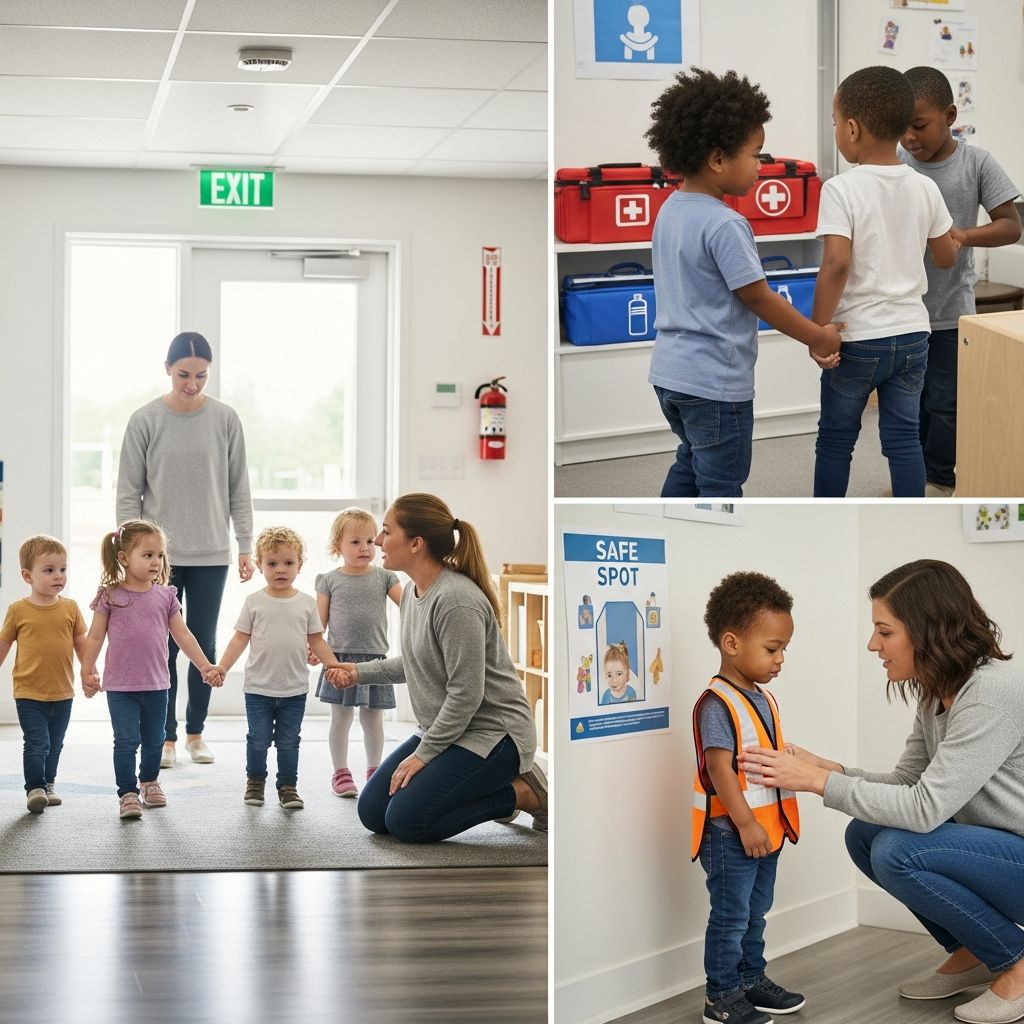
Evacuation procedures activate when a facility must be completely emptied and occupants moved to an external location. Fire emergencies typically require immediate evacuation, as do gas leaks, chemical spills affecting the facility, and similar internal threats. Evacuation procedures must address the unique needs of infants and toddlers who cannot self-evacuate, children with mobility challenges, and staff members who require assistance during movement.
Effective evacuation plans establish predetermined evacuation routes with clearly marked pathways, identify assembly areas situated a safe distance from the building, and establish procedures for accounting for all children once they reach the assembly point. Staff must be trained on techniques for safely evacuating sleeping children, particularly in facilities providing overnight care. Documentation of evacuation times helps identify procedural bottlenecks requiring improvement.
Relocation Procedures
Relocation procedures guide the transfer of children and staff to an alternative facility location when the primary childcare site becomes temporarily unusable but evacuation to the outdoors is not necessary. Situations triggering relocation include utility failures rendering the facility unsafe, structural damage from storms, or contamination requiring temporary relocation while remediation occurs.
Establishing formal agreements with secondary facilities in advance creates seamless relocation pathways. These arrangements must include transportation planning, provision for special supplies or medications individual children require, and communication protocols for notifying families of the relocation.
Shelter-in-Place Procedures
Shelter-in-place responses keep children and staff within the facility or in secure interior areas when external threats—such as severe weather or dangerous external conditions—make remaining indoors the safest option. Tornado warnings, active threats in the community, or hazardous air quality may necessitate shelter-in-place activation.
Effective shelter-in-place procedures identify designated safe areas within the facility, preferably interior rooms lacking windows or basement locations offering maximum protection from severe weather. Staff must know how to secure children in these areas, account for all occupants, and maintain calm, age-appropriate communication while waiting for the all-clear signal from emergency authorities.
Lockdown Procedures
Lockdown procedures activate when security threats originating outside or inside the facility require controlled access restriction. These procedures ensure that unauthorized individuals cannot enter occupied areas while authorized emergency responders can access the facility as needed.
Lockdown implementation includes calling emergency services immediately, moving children and staff to secure rooms, locking doors to accessible areas while maintaining unlocked access for first responders, and securing windows with coverings. Staff members must turn off lights and minimize noise to indicate absence from the secured area. Children remain sheltered until emergency authorities provide notification that the threat has cleared.
Creating Communication and Family Reunification Systems
During emergencies, families experience heightened anxiety about their children’s safety and status. Establishing clear communication procedures that provide timely, accurate information reduces panic and prevents unsafe decisions like families attempting to retrieve children during active emergencies.
Communication procedures must address multiple phases: immediate notification that an emergency has occurred, ongoing updates about the situation status, and final notification when normal operations resume or alternative arrangements become necessary. Identifying multiple communication channels—phone trees, text messaging systems, social media platforms—ensures that messages reach families despite potential infrastructure disruptions.
Family reunification procedures establish the process for returning children to authorized adults following emergencies requiring evacuation or relocation. These procedures must verify that pickup individuals are actually authorized to collect specific children, maintain documentation of each child’s departure time and receiving adult, and ensure that no child leaves the facility without proper authorization.
Maintaining current emergency contact information for every child, including multiple authorized pickup individuals, becomes essential for successful reunification. Regular updates ensure that contact details remain accurate as families’ circumstances change.
Implementing Specialized Procedures for Vulnerable Populations
Children under three years old, children with disabilities, and children with chronic medical conditions face particular challenges during emergencies. Effective plans include specialized procedures ensuring that these children’s specific needs receive attention during crisis situations.
Infants and non-ambulatory toddlers require trained staff to execute techniques for safe evacuation without independent mobility. Children with hearing or visual impairments need modified communication approaches ensuring they understand emergency instructions. Children dependent on medical equipment or medications require plans for maintaining necessary supplies during evacuations or relocations.
Specialized care plans for individual children provide essential information to all staff members about specific medical conditions, equipment requirements, emergency medications, and communication strategies. Regular training ensures that backup staff can provide appropriate care if primary caregivers become unavailable.
Establishing Food Allergy Response Protocols
Food allergies represent a significant emergency threat in childcare environments where exposure can trigger life-threatening reactions. Beyond preventing accidental exposure through careful food selection and labeling practices, facilities must establish response protocols for managing allergic emergencies.
Emergency action plans must identify which children have food allergies, the specific foods or substances triggering reactions, symptoms indicating an allergic emergency, and locations where emergency medications like epinephrine auto-injectors are stored. Staff training on recognizing allergic symptoms, administering emergency medications, and contacting emergency medical services provides the rapid response capabilities that save lives.
Creating Practical Staff Training and Competency Development
Written emergency procedures become meaningless without staff training ensuring that all team members understand their specific responsibilities and possess the skills necessary for effective implementation. Comprehensive training programs introduce new employees to emergency procedures during orientation and provide ongoing education for existing staff.
Training components include reviewing emergency procedures and individual role assignments, practicing evacuation and shelter-in-place drills with children, learning specialized techniques for moving non-ambulatory children, and participating in scenario-based exercises that simulate emergency conditions. Regular drills conducted monthly for evacuation and weather-related emergencies from April through October maintain staff readiness and identify procedural improvements.
Documentation of drills creates records demonstrating compliance with regulatory requirements while providing opportunities to analyze responses and refine procedures. Recording drill times, identifying obstacles to smooth execution, and implementing recommended changes creates a continuous improvement cycle.
Preparing Emergency Supply Kits and Essential Resources
Emergency supplies required during evacuations or relocations depend on the anticipated duration of separation from the facility and the specific age groups in care. Portable emergency kits should include emergency contact information for each child in envelope packets, medical documentation including allergy information, medications individual children require, basic first aid supplies, water and shelf-stable food items, comfort items for young children, and documentation needed for reunification.
Kits must remain portable enough for staff to transport during evacuation while containing adequate supplies for extended separations from the facility. Regular inspection ensures supplies remain current, medications have not expired, and quantities are sufficient for all children in care.
Coordinating with Community Emergency Management and First Responders
Effective childcare emergency plans align with broader community emergency response systems. Coordination with local fire departments, police agencies, and emergency management officials ensures that childcare facility procedures complement community response capabilities and that emergency responders understand the facility’s layout, vulnerable populations, and specific challenges.
Formal relationships with emergency management agencies provide access to planning resources, training opportunities, and feedback on emergency procedures. First responders familiar with the facility’s emergency plan can respond more effectively when actual emergencies occur.
Maintaining and Updating Emergency Plans
Emergency preparedness requires ongoing commitment beyond the initial plan development. Regular reviews of procedures identify necessary updates reflecting facility changes, staffing modifications, or lessons learned from drills. Communicating plan revisions to staff, families, and emergency management officials ensures that all stakeholders understand current procedures.
Frequently Asked Questions About Childcare Emergency Planning
Q: How often should emergency drills be conducted?
A: Fire evacuation drills should be practiced monthly year-round, while tornado drills should be practiced monthly from April through October. Additional drills for other emergency types should be conducted according to state licensing requirements and facility-specific needs.
Q: What information should be included in emergency contact packets?
A: Emergency contact packets should contain each child’s personal information, authorized pickup individuals with contact information, medical history including allergies and medications, any special care requirements, and emergency medical authorization forms.
Q: How should facilities handle children with mobility challenges during evacuations?
A: Facilities must assign trained staff members to assist children with mobility challenges, ensure evacuation routes accommodate mobility devices when possible, and identify alternative exit routes if primary routes are inaccessible.
Q: What should families do to prepare for childcare emergencies?
A: Families should maintain current emergency contact information with the facility, discuss emergency procedures with their children, ensure children understand what to do when staff members provide emergency instructions, and keep emergency supplies at home.
Q: How can facilities support children emotionally after experiencing emergencies?
A: Facilities should provide reassurance, maintain normal routines, allow children to express feelings, and consider consulting with mental health professionals if children show signs of trauma or anxiety.
References
- Emergency Preparedness and Response in Child Care — Wisconsin Department of Children and Families. 2024. https://dcf.wisconsin.gov/ccregulation/emergencyprep
- Head Start Program Performance Standards: Emergency Preparedness Manual for Early Childhood Programs — U.S. Department of Health and Human Services, Administration for Children and Families. 2024. https://headstart.gov/safety-practices/emergency-preparedness-manual-early-childhood-programs/emergency-preparedness-manual-early-childhood-programs
- Child Care Licensing Rules: Emergency Preparedness Requirements — Texas Department of Health and Human Services. 2024. https://apps.hhs.texas.gov/training/cbt/child-care-licensing/emergencyprep/D_CCDBG_EmergencyPrep3.html
- Sample Childcare Emergency Action Plan — Federal Emergency Management Agency Training Institute. 2024. https://training.fema.gov/emiweb/is/is36/handouts%20-sample%20plans/eap_sample.pdf
- Child Care Emergency Planning Guide — Pennsylvania Emergency Management Agency. 2024. https://www.pa.gov/content/dam/copapwp-pagov/en/pema/documents/preparedness/planning/community-planning/documents/child-care/child-care-emergency-planning-guide.doc
- Safety and Emergency Planning Resources — New York State Office of Children and Family Services, Division of Child Care Services. 2024. https://ocfs.ny.gov/programs/childcare/emergency-planning/