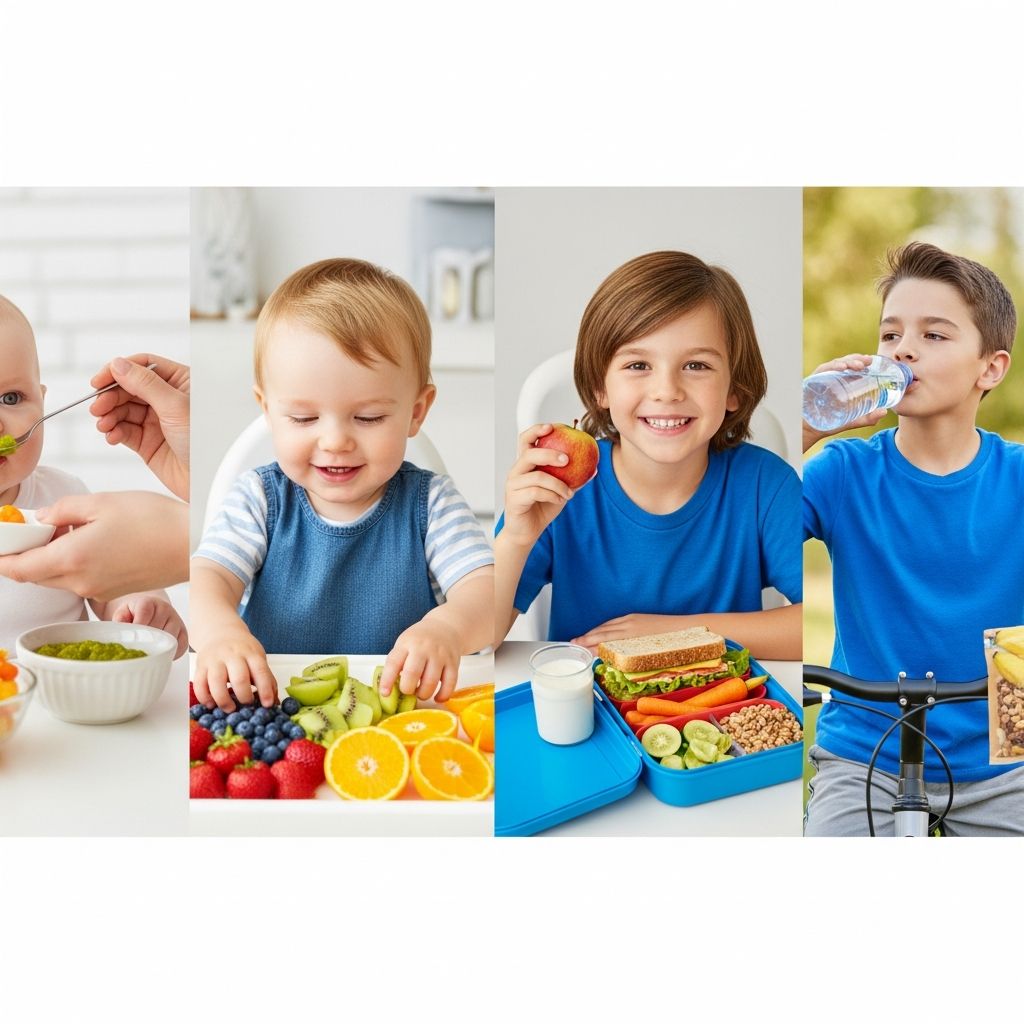
Providing the right nutrition at each developmental stage is crucial for children’s physical growth, cognitive development, and overall well-being. This guide outlines evidence-based recommendations for feeding infants through teens, drawing from authoritative health sources to help parents navigate evolving nutritional demands.
Nutrition Foundations in Infancy (0-12 Months)
The first year of life lays the groundwork for lifelong eating habits. Breast milk or formula serves as the primary nutrition source, delivering essential antibodies, fats, and proteins for rapid brain and body growth.
Exclusive breastfeeding is recommended for the first 6 months, as it supports optimal growth and development. Around 4-6 months, introduce complementary solids when the baby shows readiness signs like good head control and interest in food.[10]
- Begin with iron-fortified single-grain cereals mixed with breast milk or formula.
- Progress to pureed fruits, vegetables, and proteins such as meats or beans, introducing one new food at a time to monitor allergies.
- Include high-allergen foods like peanut products and eggs around 6 months under medical guidance.
By 6-12 months, breast milk or formula remains central, complemented by solids 2-3 times daily. Delay juice until at least 6 months, limiting to 4-6 ounces from a cup.
Key Nutrients for Infants
- Iron: Vital for brain development; sources include fortified cereals and pureed meats.
- Zinc: Supports growth and immunity; found in meats and grains.
- Calcium and Vitamin D: Essential for bones; from dairy introductions like yogurt.
| Food Group | Approximate Amount |
|---|---|
| Breast Milk/Formula | 24-32 oz |
| Solids | 2-4 tbsp per meal, increasing gradually |
Building Healthy Habits in Toddlers (1-3 Years)
Toddlers experience a growth slowdown but high energy needs, averaging 80 kcal/kg/day or 1000-1400 kcal total. Transition to table foods encourages self-feeding with soft, small pieces to foster independence.
Offer three meals and 2-3 snacks daily, emphasizing variety across food groups. Limit juice and avoid sugary drinks to prevent obesity risks.
- Fruits and vegetables: 1 cup combined daily (1/4 cup servings for 1-year-olds).
- Grains: 2-3 oz, half as whole grains.
- Proteins: Include meats, beans, and eggs.
- Dairy: 2 cups of milk or equivalents.
Mealtimes should be family-style to model healthy choices. Toddlers may be picky, so repeated exposure (up to 10-15 times) can increase acceptance of new foods.
Daily Intake Table for Toddlers (Ages 1-3)
| Nutrient/Food Group | Boys & Girls (Ages 2-3) |
|---|---|
| Calories | 1000-1400 kcal |
| Fruits | 1 cup |
| Vegetables | 1 cup |
| Grains | 3 oz |
| Protein | 2-5 oz |
| Dairy | 2-2.5 cups |
Fueling Preschool Growth (3-5 Years)
Preschoolers need about 70 kcal/kg/day, with caloric intakes of 1200-1600 for boys and 1200-1800 for girls, adjusted for activity. This stage builds preferences, so involve kids in shopping and cooking to encourage veggie and whole food intake.
Provide balanced plates: half fruits/veggies, quarter grains, quarter proteins, plus dairy. Snacks like yogurt with fruit or veggie sticks sustain energy without spoiling appetite.
- Magnesium: For bones and energy; from nuts, seeds, greens.
- Potassium: Heart health; bananas, potatoes, beans.
Avoid forcing foods; positive mealtime vibes promote better eating long-term.
Daily Guidelines for Preschoolers (Ages 3-5)
| Group | Boys | Girls |
|---|---|---|
| Calories | 1,000-1,600 | 1,000-1,600 |
| Fruits | 1-1.5 cups | 1-1.5 cups |
| Vegetables | 1-2 cups | 1-2 cups |
| Grains | 3-5 oz | 3-5 oz |
| Protein | 2-5 oz | 2-4 oz |
| Dairy | 2-2.5 cups | 2-2.5 cups |
Supporting School-Age Kids (6-12 Years)
School years demand 60-65 kcal/kg/day for ages 6-8 and 35-45 for 9+, with 1800-2200 kcal for 11-12-year-olds. Active lifestyles require carb-rich whole grains, lean proteins, and calcium for bone density during peak growth.
Pack nutrient-dense lunches: whole grain sandwiches, fruits, veggies, yogurt. After-school snacks like nuts or cheese prevent junk food reliance.
- Encourage water over soda; aim for 6-8 cups daily.
- Balance macronutrients: 45-65% carbs, 10-30% protein, 25-35% fats.
Monitor portions as appetites grow, teaching kids to listen to hunger cues.
Intake Recommendations (Ages 5-8 Example)
| Group | Boys | Girls |
|---|---|---|
| Calories | 1200-2000 | 1200-1800 |
| Fruits | 1-2 cups | 1-1.5 cups |
| Vegetables | 1.5-2.5 cups | 1.5-2.5 cups |
| Grains | 4-6 oz | 4-6 oz |
| Protein | 3-5.5 oz | 3-5 oz |
| Dairy | 2.5 cups | 2.5 cups |
Navigating Teen Nutrition (13-18 Years)
Adolescence brings growth spurts, with boys needing 2000-3200 kcal and girls 1800-2400, varying by activity. Hormonal shifts increase needs for iron (girls), calcium, and protein for muscle/bone development.
Promote whole foods over processed; include calcium-rich dairy or alternatives (3 cups daily), veggies (2.5-4 cups), and proteins (5.5-7 oz). Address picky eating or dieting pressures with education on balanced fueling for sports and studies.
- Calcium and Vitamin D: Prevent osteoporosis; dairy, fortified foods.
- Iron: Especially for menstruating teens; meats, spinach.
Teen Daily Guidelines (Ages 14-18)
| Group | Boys | Girls |
|---|---|---|
| Calories | 2000-3200 | 1800-2400 |
| Fruits | 2-2.5 cups | 1.5-2 cups |
| Vegetables | 2.5-4 cups | 2.5-3 cups |
| Grains | 6-10 oz | 6-8 oz |
| Protein | 5.5-7 oz | 5-6.5 oz |
| Dairy | 3 cups | 3 cups |
General Tips for All Ages
Consistency matters: regular meals, limited screens at table, and role modeling. Hydrate with water; limit added sugars to <10% calories. Consult pediatricians for personalized advice, especially with allergies or conditions.
Frequently Asked Questions
When should I start solids?
Around 4-6 months when baby is ready; start with iron-fortified cereals.
How much milk for toddlers?
Limit to 16-24 oz daily to avoid iron deficiency; pair with solids.
Can preschoolers have juice?
Yes, but <4 oz, 100% from cup; prefer whole fruits.
What if my school-ager skips breakfast?
Offer portable options like yogurt, fruit, whole grains for energy.
How to handle teen junk food cravings?
Stock healthy alternatives; educate on long-term health impacts.
References
- Understanding Your Child’s Nutritional Needs — Northwest Family Clinics. 2023. https://www.northwestfamilyclinics.com/blog/understanding-your-childs-nutritional-needs
- Nutrition and Hydration Requirements In Children and Adults — NCBI Bookshelf. 2023. https://www.ncbi.nlm.nih.gov/books/NBK562207/
- Ages 0-2 Feeding Recommendations — Healthy Eating Research. 2024. https://healthyeatingresearch.org/tips-for-families/ages-0-2-feeding-recommendations/
- Dietary Recommendations for Healthy Children — American Heart Association. 2024. https://www.heart.org/en/healthy-living/healthy-eating/eat-smart/nutrition-basics/dietary-recommendations-for-healthy-children
- Nutrition for kids: Guidelines for a healthy diet — Mayo Clinic. 2025. https://www.mayoclinic.org/healthy-lifestyle/childrens-health/in-depth/nutrition-for-kids/art-20049335