Understanding Physical Development in Early Childhood
Physical growth during infancy and early childhood represents one of the most visible and remarkable transformations a child experiences. As parents and caregivers observe their little ones, they witness the progression from helpless newborns to active, coordinated five-year-olds capable of running, jumping, and manipulating objects with precision. This journey of physical mastery unfolds through predictable developmental stages, each building upon the skills acquired in previous phases.
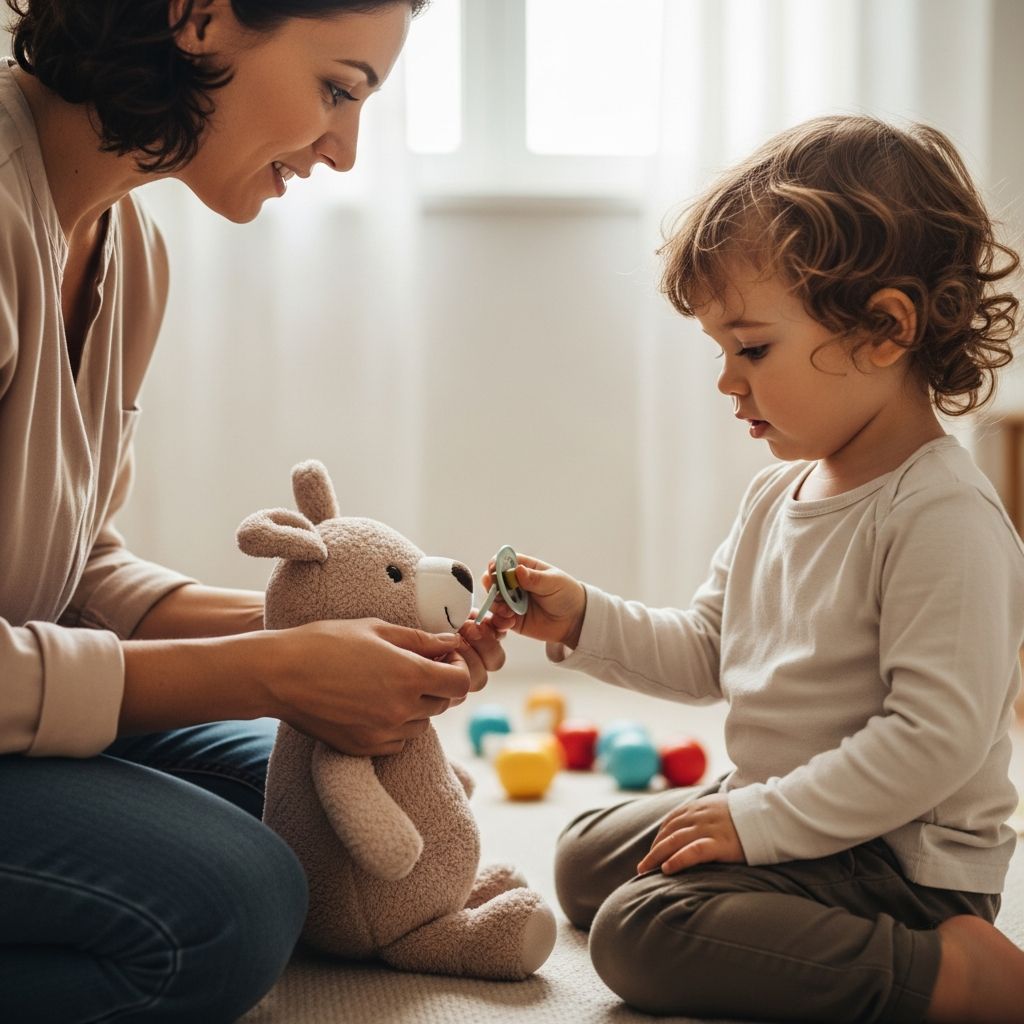
Motor development encompasses two distinct categories of movement capabilities. Gross motor skills involve the coordination of large muscle groups and enable activities such as rolling, sitting, crawling, walking, and jumping. Fine motor skills, by contrast, involve precise control of smaller muscle groups, particularly in the hands and fingers, allowing children to grasp objects, manipulate toys, and eventually write and draw. Understanding these developmental progressions helps caregivers recognize when their children are reaching appropriate milestones and when professional consultation might be beneficial.
Birth Through Two Months: Establishing Foundation Movements
Newborns arrive in the world with limited voluntary control over their muscles, yet they possess several reflexive movements that lay the groundwork for intentional motor development. During the first two months of life, infants demonstrate remarkable progress in head control and hand awareness, establishing the foundation for all future movement capabilities.
In these early weeks, newborns naturally turn their heads from side to side while lying on their backs, a reflexive action that helps them breathe and explore their environment. When placed on their stomachs for tummy time, babies begin lifting their heads and turning to both sides, gradually strengthening the neck and upper back muscles required for future milestones. This seemingly simple activity represents critical preparation for sitting, crawling, and eventually walking.
Hand development also begins immediately after birth. Newborns reflexively close their fingers in tight grasps and instinctively bring their hands to their mouths, actions that support oral exploration and hand-eye coordination. By around two months, infants can hold onto a rattle briefly with one hand, demonstrating the beginning of intentional grasping rather than purely reflexive responses.
Three to Five Months: Increasing Control and Coordination
As babies progress through the three-to-five-month period, they demonstrate increasingly sophisticated motor control and begin transitioning from reflexive to intentional movements. This phase marks a turning point where infants can participate more actively in play and interaction with their caregivers.
By three months, babies lift their heads further while on their stomachs and push up higher on their forearms, building the upper body strength necessary for future crawling. At this age, infants also begin rolling from belly to back, a milestone that requires coordinated trunk and limb movements. Their reaching abilities improve significantly, and they can now grasp strings and hold blocks, demonstrating developing hand-eye coordination.
Four-month-old babies show increased sitting capability when adults support them with hands placed on the floor in front. They bring their hands to their midline during play, an important developmental marker indicating improved body awareness and bilateral coordination. Around five months, infants begin rolling from back to belly and can shift their weight to reach for objects while lying on their stomachs. This same period brings the ability to bring their feet to their mouths while on their backs, an action that combines flexibility with body control.
Six to Eight Months: Sitting and Crawling Emergence
Between six and eight months, babies undergo dramatic changes in mobility and independence. This period marks the transition from stationary positioning to active exploration of their environment through independent movement.
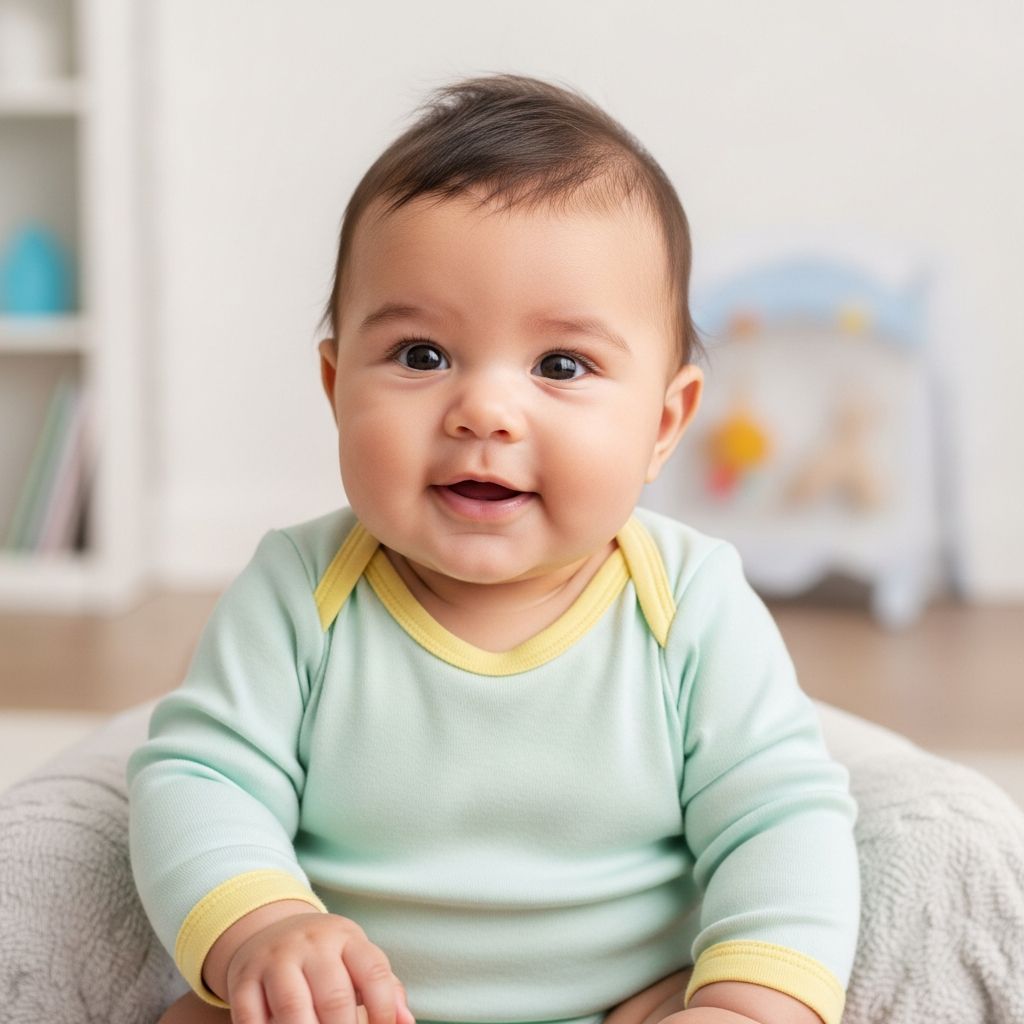
Six-month-old babies typically achieve independent sitting, a milestone that significantly expands their ability to play, explore, and interact with caregivers. This newfound stability in the upright position opens numerous developmental possibilities. Simultaneously, babies at this age can roll from back to belly, demonstrating improved body control and coordination.
By seven months, many babies begin crawling on their bellies and can maintain a quadruped position on their hands and knees, though they may not yet move forward consistently. Eight-month-olds show substantial progress in mobility, crawling forward on hands and knees with increasing confidence, transitioning from sitting to quadruped positions, and pulling themselves to a standing position when holding onto support such as furniture. Fine motor skills advance during this period as well, with babies developing the ability to move rattles in ninety-degree arcs, grasp toys with their whole hands, and use raking motions with palms facing downward to pick up small objects.
Nine to Fourteen Months: Walking and Grasping Refinement
The nine-to-fourteen-month period represents one of the most transformative phases in early development, as babies progress from furniture-supported walking to independent steps and develop increasingly sophisticated fine motor control.
Nine-month-old infants typically begin walking along surfaces and furniture while holding on for support, a stage often called cruising. By ten months, many babies can stand independently for brief periods without external support, a precursor to walking. By eleven months, babies demonstrate longer periods of independent standing and begin taking their first tentative steps.
Fine motor development during this period includes clapping hands together and grasping and pulling actions, often demonstrated through activities such as removing socks. By twelve months, babies typically achieve independent walking and can creep upstairs using hands and feet in a bear-crawl position. They also develop the ability to open board books and place pegs onto pegboards, demonstrating improved hand precision. The pincer grasp—using the forefinger and thumb to hold objects—emerges during this phase, allowing babies to pick up smaller items with greater control than previously possible. Attempts at self-feeding with spoons become evident, though these early efforts remain somewhat messy.
Fifteen Months to Two Years: Stair Navigation and Running
Between fifteen months and two years, toddlers consolidate their walking skills and begin developing more complex movement patterns.
Toddlers in this age range typically creep downstairs as well as walk up and down stairs with adult assistance or by holding onto rails. They develop the ability to walk backwards, a more sophisticated balance skill than forward walking. Running emerges during this period, though early running often results in frequent falls as toddlers refine their balance and coordination.
Fine motor development continues with the ability to stack two to three cubes and place two shapes correctly into a shape board. Toddlers begin holding markers in an overhand grasp and start drawing vertical lines. By age two, most toddlers can run while avoiding obstacles, climb on furniture such as sofas and chairs, and navigate stairs independently while holding rails. They begin attempting to scoot on toys without pedals, foreshadowing future interest in wheeled toys.
Two to Three Years: Balance and Complex Skills
The period from two to three years brings increased sophistication in both gross and fine motor capabilities, as toddlers develop better balance, coordination, and manual dexterity.
By age two, toddlers walk and run with increasing competency and can jump in place with both feet leaving the ground simultaneously. They navigate stairs independently going both up and down. By three years, children demonstrate improved balance and can stand briefly on one leg, jump forward moderate distances, and catch large balls, though not always reliably.
Fine motor skills advance substantially during this period. Two-to-three-year-olds can stack eight to ten cubes, draw horizontal lines in addition to vertical ones, and string two to four beads onto a line. They achieve proficiency with spoons and begin showing interest in using forks. An important skill emerges during this phase: the ability to hold an object with one hand while using the other hand to perform a different action, such as stabilizing paper while drawing. Toddlers in this age group develop the capacity to unbutton large buttons and handle safety scissors to snip, though coordination remains imperfect.
Three to Five Years: Refinement and Complex Movements
From three to five years, children refine previously acquired skills and develop new complex movement patterns that support play, sports participation, and school readiness.
Three-to-four-year-olds improve their balancing abilities significantly and can stand on one leg for three to four seconds. They kick balls forward, run with increasing stability, and jump with growing confidence. These children grasp markers using a tripod grip—a more mature and efficient pencil hold—and can cut straight lines with scissors. They button and unbutton large buttons with relative ease and demonstrate increased dexterity with small objects.
By age four, children run, jump, and climb with improved coordination and begin developing skipping abilities. They catch balls reliably and may attempt simple somersaults. By five years, most children skip on alternate feet and attempt to jump rope, demonstrating sophisticated balance and coordination. They begin learning to skate and swim, ride bicycles with or without training wheels, and climb with confidence. Drawing abilities progress to include recognizable shapes and figures, and writing may begin to emerge as children develop the fine motor control and cognitive skills necessary for written expression.
Factors Influencing Motor Development Pace
While the milestones outlined above represent typical development, individual children progress at varying rates based on numerous factors. Understanding that developmental variation is normal helps parents maintain perspective and avoid unnecessary anxiety about minor differences in timing.
Several factors influence the rate at which children acquire motor skills:
- Genetics and body composition: Children inherit physical characteristics that influence their development, including height, build, and muscle composition.
- Opportunity for practice: Access to safe spaces for movement, encouragement from caregivers, and varied play experiences significantly impact skill acquisition.
- Cultural practices: Parenting approaches vary across cultures, with different practices around tummy time, independent play, and movement exploration affecting developmental timelines.
- Birth circumstances: Premature infants typically follow adjusted timelines, with developmental expectations based on corrected age rather than chronological age during the first two years.
- Health and nutrition: Overall health status and adequate nutrition support normal development, while illness or nutritional deficiency may temporarily slow progress.
Supporting Motor Development at Home
Caregivers play a crucial role in supporting children’s motor development through environmental setup, encouragement, and appropriate opportunities for movement.
For infants, regular tummy time helps strengthen neck, shoulder, and back muscles essential for later milestones. Safe spaces where babies can move freely without restriction support natural developmental progression. As children grow, access to age-appropriate climbing structures, balls, wheeled toys, and fine motor activities promotes skill development. Encouraging independent exploration while maintaining safety allows children to practice new skills without fear, facilitating both physical development and growing confidence.
Frequently Asked Questions
When should I be concerned if my child hasn’t reached a particular milestone?A: Children develop at individual rates, and variation within several months of typical milestones is common. However, if your child shows significant delays across multiple areas, lacks interest in movement, or demonstrates regression in previously acquired skills, consult your pediatrician for professional evaluation.
Q: How much tummy time does my baby need?
Starting with short supervised sessions and gradually increasing to multiple daily sessions totaling several hours supports development of neck and trunk strength necessary for later milestones.
Does early walking indicate advanced development?
Early walking demonstrates one aspect of motor development but doesn’t necessarily indicate overall advanced development. Children acquire skills on different timelines, and later walking often reflects individual variation rather than developmental concern.
How can I encourage fine motor skill development in my toddler?
Offer age-appropriate activities such as stacking blocks, playing with large beads, using washable markers for drawing, and manipulating objects of different sizes and textures. These activities build hand strength and coordination while supporting play-based learning.
Should I use baby walkers to help my child learn to walk?
Research suggests that traditional baby walkers may actually slow walking development. Push toys that require active leg movement provide safer, more developmentally beneficial support for walking practice.
References
- Children’s Developmental Milestones: Gross and Fine Motor Skills — Brown Health. 2024. https://www.brownhealth.org/be-well/childrens-developmental-milestones-gross-and-fine-motor-skills
- Gross Motor Skill Milestones for Infants — Rady Children’s Health. 2024. https://www.rchsd.org/programs-services/physical-therapy/developmental-milestones/gross-motor-skill-milestones-for-infants/
- Gross Motor Skills: Birth to 5 Years — Children’s Hospital of Richmond. 2024. https://www.chrichmond.org/services/therapy-services/developmental-milestones/gross-motor-skills-birth-to-5-years/
- Gross Motor Skills (Babies and Toddlers) — Oxford Health NHS. 2024. https://oxfordhealth.nhs.uk/cit/resources/gross-motor-skills-babies-and-toddlers/
- CDC’s Developmental Milestones: Learn the Signs. Act Early. — Centers for Disease Control and Prevention. 2024. https://www.cdc.gov/act-early/milestones/index.html
- Motor Development Milestones — World Health Organization. 2024. https://www.who.int/tools/child-growth-standards/standards/motor-development-milestones