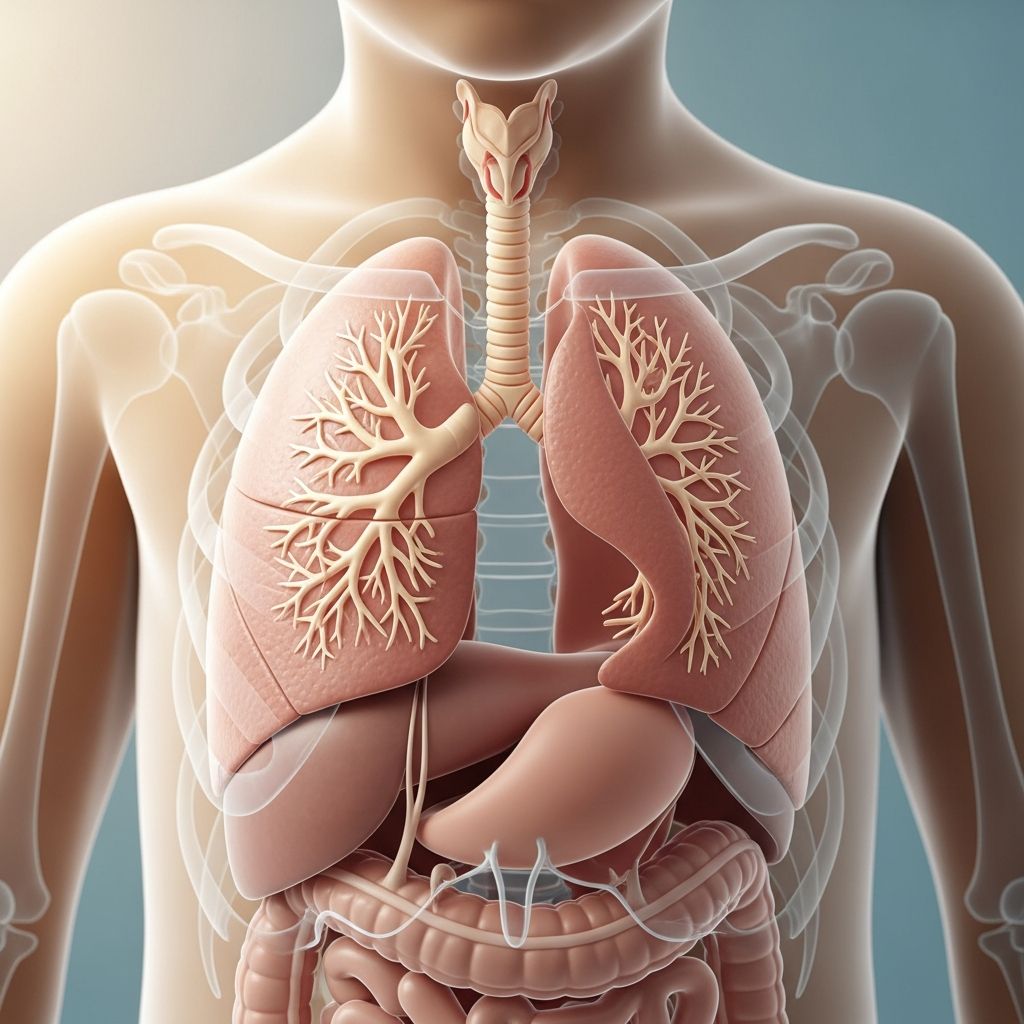
Your child’s lungs begin forming early in pregnancy and continue maturing well into adulthood. Understanding this process empowers parents to foster optimal respiratory health from birth through childhood.
Foundational Stages in the Womb
Lung development starts remarkably early, dividing into distinct phases that build the respiratory system’s architecture. These prenatal stages lay the groundwork for independent breathing after birth.
Initial Formation: Weeks 3-5
During the embryonic period, around three to five weeks post-conception, a primitive groove appears in the pharynx, leading to the emergence of the lung bud from the foregut. This bud quickly splits into left and right branches, establishing the basic lung structure. Even at this tiny size—about 2mm—early tissue movements mimic breathing practice.
Airway Branching: Weeks 5-16
Next, the pseudoglandular phase sees the lung bud elaborate into a branching network resembling a tree. The right lung forms three primary buds for its upper, middle, and lower lobes, while the left develops two for upper and lower lobes. Bronchi and bronchioles form, creating the airway tree’s framework by week 16. Small cell clusters at branch ends foreshadow future air sacs.
- Key features: Bronchial tree completion and initial bronchiole growth.
- Breathing motions detectable around week 10, though survival remains impossible without further maturation.
Gas Exchange Preparation: Weeks 16-26
In the canalicular stage, respiratory units called canaliculi develop, alongside primitive sac-like structures. Capillaries proliferate around these, setting up oxygen-carbon dioxide exchange sites. This phase is vital; disruptions can cause conditions like bronchopulmonary dysplasia in preemies.
Maturation for Birth: Weeks 26 to Delivery
The saccular stage ramps up lung readiness. Saccules expand, their walls thin for efficiency, and surfactant production begins—a vital lipoprotein mix that stabilizes air sacs against collapse during exhalation. Premature infants often receive synthetic surfactant to aid breathing.
| Stage | Timeline | Major Developments |
|---|---|---|
| Embryonic | 3-5 weeks | Lung bud formation and branching |
| Pseudoglandular | 5-16 weeks | Airway tree establishment |
| Canalicular | 16-26 weeks | Primitive sacs and capillaries |
| Saccular | 26 weeks-birth | Surfactant production, wall thinning |
| Alveolar | 32 weeks+ postnatal | True alveoli formation |
Postnatal Lung Expansion
At birth, lungs shift from fluid-filled to air-breathing, a monumental transition powered by the first breath. Newborns start with 20-50 million alveoli, surging to 300 million by age 8—a 400-600% increase.
Infancy Boom: Birth to 6 Months
The first six months witness explosive alveoli multiplication alongside rapid airway and tissue growth. Lung capacity expands dramatically to match the growing torso.
Toddler to School Age: 6 Months to 8 Years
Growth slows but continues steadily. By age 3, lungs resemble scaled-down adult versions; from 3-8 years, they enlarge with body size, enhancing capacity.
- Rapid alveoli gain in early infancy.
- Ongoing maturation until early adulthood for full capacity.
Factors Shaping Healthy Growth
Several elements influence lung development. Genetics provide the blueprint, but environment, nutrition, and early exposures play key roles.
Nutrition and Prenatal Care
Adequate maternal nutrition supports surfactant synthesis and tissue growth. Folic acid, omega-3s, and balanced diets aid fetal lung maturity.
Environmental Safeguards
Avoid tobacco smoke, pollutants, and infections. Breastfeeding bolsters immunity, reducing respiratory illness risks that could stunt growth.
Recognizing Respiratory Challenges
Prematurity heightens risks like respiratory distress syndrome from surfactant deficiency. Postnatally, asthma, infections, or allergies can impair development.
- Signs of trouble: Persistent wheezing, rapid breathing, or feeding difficulties.
- Seek care for blue lips, lethargy, or retractions.
Parental Strategies for Strong Lungs
Parents can actively promote lung health through daily habits.
- Encourage Outdoor Play: Fresh air and activity build capacity.
- Maintain Clean Air: Use HEPA filters, ban smoking indoors.
- Promote Breastfeeding: Antibodies protect against infections.
- Monitor Vaccinations: Prevent flu, whooping cough.
- Model Healthy Breathing: Avoid secondhand smoke exposure.
Regular check-ups track growth via lung function tests as kids age.
Frequently Asked Questions
When do a baby’s lungs start developing?
Lung buds form as early as 3-5 weeks after conception, with branching continuing through the first trimester.
What is surfactant and why is it important?
Surfactant, produced from 26 weeks, is a fatty compound that keeps alveoli open, preventing collapse. It’s critical for preemies.
How many alveoli does a newborn have?
Newborns have 20-50 million, growing to 300 million by age 8.
Can premature birth affect lung growth?
Yes, early delivery before full surfactant or alveolar stages increases risks like chronic lung disease.
Until what age do lungs fully develop?
Alveolar growth continues into early adulthood, around age 20.
Long-Term Respiratory Wellness
Beyond infancy, habits like balanced diet, exercise, and pollution avoidance sustain lung function. School-age kids benefit from sports and allergy management to maximize capacity.
By understanding these phases—from embryonic buds to mature alveoli—parents equip children for lifelong vitality. Proactive steps today yield breaths of fresh air tomorrow.
References
- Fetal Lung Development Stages Explained | AARC CEUs — AARC. 2023. https://atrespiratorylectures.com/blog/posts/fetal-lung-development-stages-and-phases-overview-and-study-guide-1
- Lung Development (Child to Adult) & Assessment — Lecturio. 2024. https://www.lecturio.com/nursing/free-cheat-sheet/lung-development-child-to-adult-assessment/
- How Children’s Lungs Grow — Dr. Mayank Shukla. 2023. https://www.drmayankshukla.com/how-childrens-lungs-grow/
- An Amazing Journey: How Young Lungs Develop — American Lung Association. 2024. https://www.lung.org/blog/how-young-lungs-develop
- Early life risks to your child’s lungs — Asthma + Lung UK. 2023. https://www.asthmaandlung.org.uk/support-parents-carers/what-are-early-life-risks-childrens-lungs
- Understanding Child Lung Development and Respiratory Health — Newport Children’s Medical. 2024. https://www.newportchildren.com/lung-development-in-children-factors-affecting-respiratory-health/