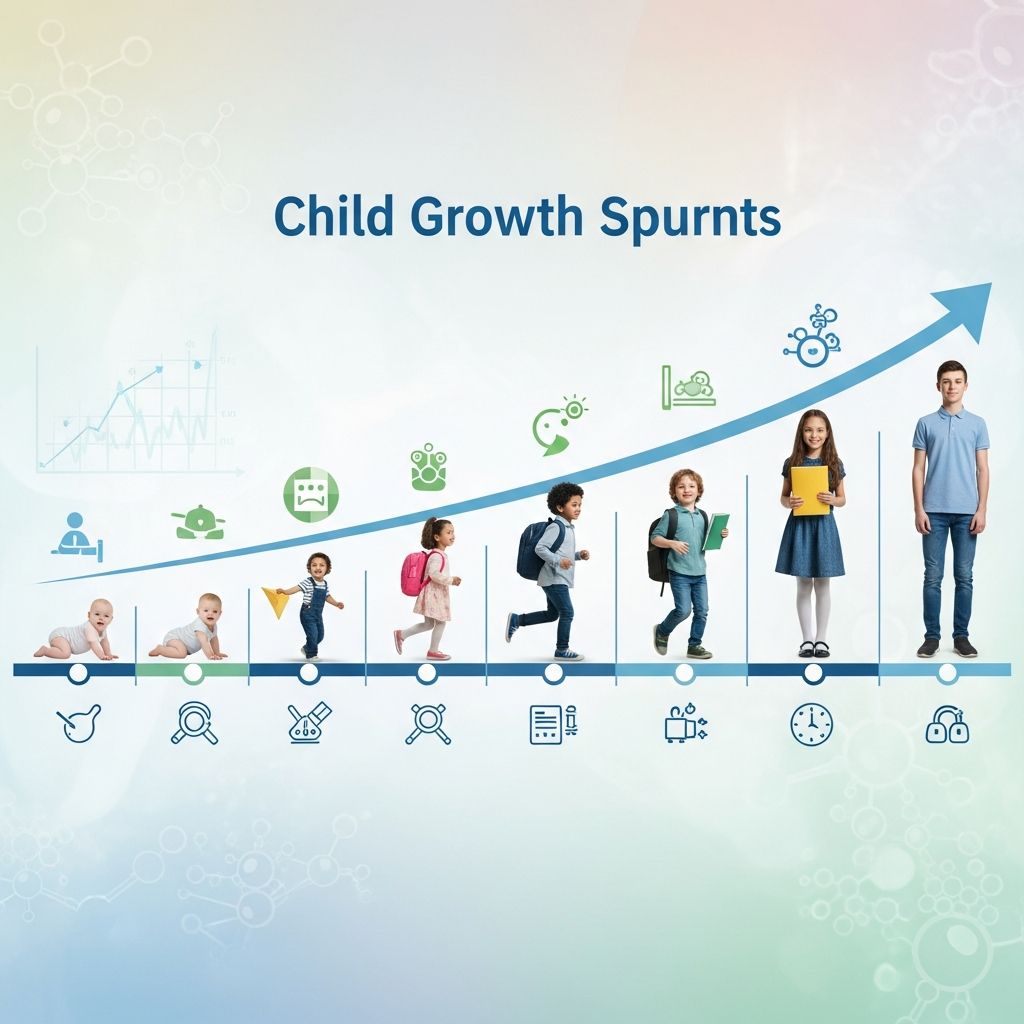
Growth spurts represent accelerated phases of physical development in children, marked by rapid increases in height, weight, and body proportions. These bursts occur predictably across infancy, childhood, and adolescence, influenced by genetics, nutrition, and hormones. Understanding their timing helps parents support healthy development and address concerns promptly.
Defining Growth Spurts in Childhood Development
Unlike steady daily growth, spurts involve intense periods where children can gain several inches in weeks to months. Infants experience the most dramatic changes, tripling birth weight and adding about 10 inches in the first year. Toddlers and school-age kids follow with steadier but punctuated advances, culminating in puberty’s peak velocity.
These phases mimic natural patterns, like bamboo’s sudden shoots after dormancy, rather than linear progress. Factors like sleep, diet, and activity fuel them, with genetics setting ultimate potential.
Infancy: The Fastest Growth Phase
Newborns enter life with explosive growth. In the first 12 months, babies typically lengthen by 10 inches and triple their weight, with spurts clustering at specific intervals.
- 2-3 weeks: Early adjustment spurt; increased feeding demands emerge as metabolism ramps up.
- 4-6 weeks: Babies demand more milk, cluster feed evenings, appear fussier, and sleep irregularly—signs of rapid cellular division.
- 3 months: Height gains accelerate; expect 1-2 inches total in this window, alongside better head control.
- 6 months: Doubling birth weight often occurs; solid foods introduction supports sustained energy needs.
- 9 months: Crawling and standing spur length increases; appetite surges for mobility fuel.
Parents notice sudden shoe size jumps or onesie tightness. Track via pediatric charts during well-visits using stadiometers for precision.
Toddler and Preschool Advancements
After infancy’s frenzy, growth moderates to 2-3 inches annually from ages 1-5. Spurts punctuate this: around 12, 18, and 24 months, toddlers gain 4-6 pounds yearly alongside height.
By age 5, children often double birth height. Eating patterns shift—picky phases coincide with steady metabolism—but nutrient-dense meals prevent lags. Outdoor play enhances bone density during these years.
| Age Range | Average Annual Height Gain | Weight Gain | Key Milestones |
|---|---|---|---|
| 1-2 years | 4-5 inches | 4-6 lbs | Walking, language bursts |
| 3-5 years | 2-3 inches | 4-5 lbs | Preschool skills, coordination |
Middle Childhood: Steady Builds Before Puberty
Ages 6-10 feature consistent 2-2.5 inches yearly growth, with subtle spurts around 6-7 years. Kids gain 4-7 pounds annually, building toward adolescence.
This ‘pre-pubertal’ phase refines proportions; limbs elongate gradually. School demands increase caloric needs—protein for tissues, calcium for bones. Vision or posture shifts may signal spurts.
Puberty: The Peak Velocity Surge
Adolescence unleashes the most noticeable spurts, driven by hormones. Girls peak ages 9-15 (3-4 inches/year max), boys 12-17 (4-6 inches/year).
- Girls: Breast budding precedes height peak by 2 years; menstruation follows, with 1-2 more inches post-onset. Final height by 14-15.
- Boys: Testicular growth starts changes; voice deepens amid rapid gains. Growth halts around 16-18.
Muscle mass surges in boys post-height peak; girls focus on hip widening. Appetite skyrockets—teens may consume double calories temporarily.
Recognizing Signs of an Impending Spurt
Bodies signal acceleration clearly:
- Hunger spikes, especially evenings or nights.
- Heightened sleep needs; fatigue from tissue building.
- Fussiness, clinginess in young ones; mood swings in teens.
- Sudden clothing/shoe ill-fit.
- Increased thirst, thirst for protein-rich foods.
For infants, cluster feeding; for adolescents, Osgood-Schlatter (knee pain from tendon lag).
Nutritional Strategies to Fuel Healthy Growth
Spurts demand optimal intake: 50% carbs, 30% fats, 20% proteins daily. Calcium (1,000mg kids, 1,300mg teens), vitamin D, zinc, iron prevent deficiencies.
- Infants: Breast milk/formula on-demand; introduce iron-fortified cereals at 6 months.
- Toddlers: Whole grains, dairy, fruits; limit sugars.
- School-age/Teens: Lean meats, veggies, nuts; 3 meals + 2 snacks.
Hydration aids metabolism; consistent routines stabilize hormones.
Potential Challenges During Rapid Growth
Not all spurts pass smoothly:
- Musculoskeletal pains: Growing pains (thighs/calves), Osgood-Schlatter.
- Hip issues: Slipped capital femoral epiphysis—seek ortho if limping.
- Uneven limbs: Monitor leg discrepancies; mild resolve, severe need orthotics.
- Vision shifts: Eye elongation alters focus; annual exams essential.
Consult pediatricians if growth deviates from charts or pains persist.
Predicting Your Child’s Adult Height
Genetics dominate (80% influence), but tools estimate:
- Mid-Parental Method: (Mother’s height + Father’s height ± 13cm for boys, -13cm girls)/2. Add/subtract 8-10cm margin.
- CDC Growth Charts: Plot current stats; percentile consistency predicts trajectory.
- Bone Age X-rays: Assess maturity via hand/wrist plates for precise forecasts.
Nutrition/environment tweak outcomes; early intervention corrects lags.
Monitoring Progress with Professional Guidance
Pediatricians use WHO/CDC charts at checkups, plotting against peers. Deviations prompt thyroid/hormone tests. Home tracking: monthly measurements same time/conditions.
Encourage sleep (10-14 hours kids, 8-10 teens)—growth hormone peaks nocturnally.
Frequently Asked Questions
At what ages do babies have growth spurts?
Common at 2-3 weeks, 4-6 weeks, 3, 6, 9, and 12 months, with intense feeding and sleep changes.
How much do kids grow during puberty?
Girls: 3-4 inches peak year; boys: 4-6 inches. Total 8-12 inches over span.
Can diet affect growth spurt intensity?
Yes, balanced nutrition with proteins, calcium maximizes potential; deficiencies stunt.
What if my child grows unevenly?
Monitor; consult for leg discrepancies or hip pain to rule out issues like SCFE.
How accurate are height prediction methods?
Mid-parental estimates within 4 inches; bone age scans refine to 2 inches.
References
- What Are the Common Growth Spurt Ages & Signs in Children? — Conway Medical Center. 2023-05-15. https://www.conwaymedicalcenter.com/news/topic/growth-spurts-and-whats-normal/
- Growth Spurts — Cleveland Clinic. 2023-10-20. https://my.clevelandclinic.org/health/diseases/22070-growth-spurts
- Understanding growth spurts in infants — Summer Health. 2024-02-12. https://www.summerhealth.com/blog/6-month-growth-spurt
- Normal Growth for 6- to 12-Year-Olds — Nemours KidsHealth. 2023-08-01. https://kidshealth.org/en/parents/growth-6-12.html
- Growth Spurts: What to Expect as Your Child Grows — Banner Health. 2024-01-10. https://www.bannerhealth.com/healthcareblog/teach-me/growth-spurts-what-to-expect-as-your-child-grows
- Prepare Your Child For A Healthy Growth Spurt — Franciscan Health. 2023-11-05. https://www.franciscanhealth.org/community/blog/growth-spurts-in-your-child
- Understanding Growth Spurts and Their Impact on Nutrition — Cornerstone Children’s Clinic. 2024-03-22. https://www.cornerstonechildrensclinic.com/blog/1320570-understanding-growth-spurts-and-their-impact-on-nutrition