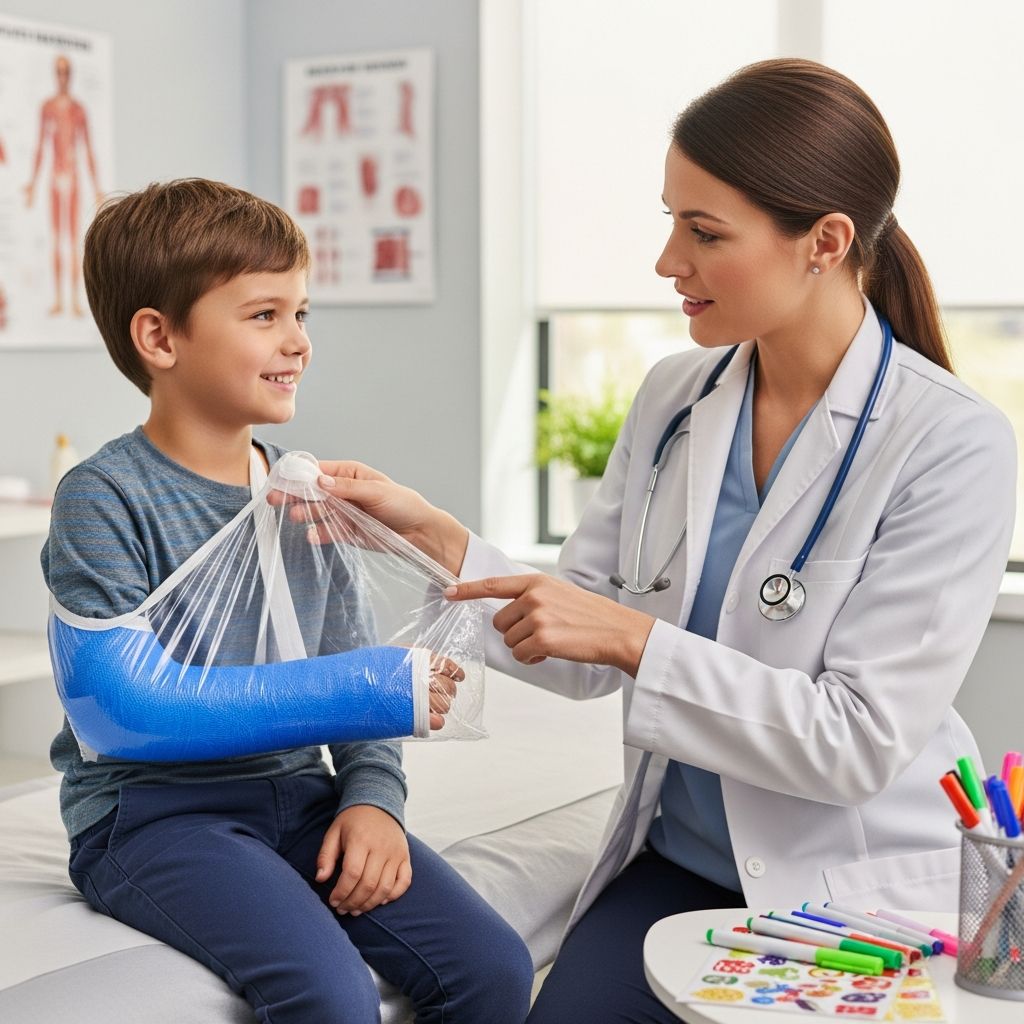
When a child suffers a fracture, a cast becomes their steadfast ally in healing. These rigid supports immobilize the bone, allowing it to mend properly while minimizing pain and swelling. Understanding how to care for a child’s cast is crucial for parents, as it directly influences recovery speed and prevents setbacks like infections or skin irritations. This guide draws from established medical practices to equip you with practical knowledge.
Understanding Fractures and Cast Types in Children
Children’s bones are more flexible than adults’, often resulting in greenstick fractures where the bone bends and cracks rather than fully breaking. Casts come in various forms: plaster casts offer superior molding for displaced fractures, while fiberglass versions are lighter and more durable for active kids. Splints, typically used initially for swelling control, are removable and feature a hard shell with soft padding.
Splints cover the injury and adjacent joints for stability, transitioning to full casts as swelling decreases. Providers select the type based on fracture location and severity, ensuring optimal support.
Initial Steps After Cast Application
The first 48-72 hours post-casting demand vigilance. Elevate the limb above heart level using pillows to combat swelling—crucial for legs, where reclining may be necessary. Apply ice packs wrapped in towels around the cast’s injury site; avoid direct contact to prevent moisture ingress. Encourage frequent finger or toe wiggling to promote circulation without straining the cast.
- Elevate: Keep the casted area raised during rest.
- Ice properly: Use wrapped packs for 15-20 minutes hourly.
- Mobilize extremities: Wiggle digits every hour while awake.
These measures reduce edema and discomfort, setting a strong foundation for healing.
Daily Hygiene and Moisture Protection
Water is a cast’s nemesis, softening materials and fostering skin issues. For bathing, encase the cast in two plastic bags secured with tape or rubber bands, ensuring no gaps. Opt for sponge baths or waterproof cast covers designed for showers. Post-bath, pat dry any exposed skin edges gently.
| Method | Pros | Cons |
|---|---|---|
| Plastic Bag Cover | Cheap, accessible | May slip if not secured |
| Waterproof Sleeve | Secure, reusable | Costs more upfront |
| Sponge Bath | No risk to cast | Less thorough cleaning |
Avoid lotions, powders, or deodorants inside, as they trap moisture and irritate skin. Dirt and sand must stay out to prevent abrasions.
Managing the Inevitable Itch
Itching peaks after a week as skin regenerates. Resist the urge to insert hangers, sticks, or fingers—such actions lacerate skin, inviting bacteria and infection. Instead, direct a hairdryer on cool setting under cast edges for soothing airflow. Some find relief by gently tapping the cast or using a clean, dry cloth rubbed externally.
- Cool hairdryer: Most effective non-invasive method.
- External massage: Rub over the cast surface.
- Avoid: Any penetrating objects.
If itching intensifies or persists, consult your doctor promptly.
Activity Levels and Protecting the Cast
Balance rest with gentle movement to prevent stiffness. For arm casts, slings support initially but wean off as tolerated. Leg casts may require crutches; teach proper gait to avoid falls. Prohibit high-impact play, but permit school or desk activities with precautions. Inspect daily for dents, cracks, or tight spots signaling adjustment needs.
Don’t apply direct pressure or lean heavily on the cast. Padding must remain intact—never pull it out.
Spotting and Addressing Warning Signs
Vigilance averts complications. Check exposed skin daily for redness, blisters, or sores. Monitor for:
- Increasing pain or numbness.
- Foul odors or unusual wetness.
- Cast cracks, soft spots, or shifting.
- Persistent swelling or discoloration in digits.
Seek immediate care if these arise, as they may indicate compartment syndrome or infection—rare but serious.
Nutrition and Lifestyle Support for Healing
Bone repair demands calcium, vitamin D, and protein. Encourage dairy, leafy greens, fortified cereals, and lean meats. Weight-bearing on non-casted limbs maintains overall strength. Positive reinforcement helps kids cope; distractions like books or games ease boredom.
Healing timelines vary: 4-8 weeks for most pediatric fractures, longer for severe cases. Follow-ups track progress via X-rays.
Cast Removal: What to Anticipate
Removal marks recovery’s end, using a vibrating cast saw that cuts plaster/fiberglass without spinning—padding protects skin despite noise and warmth. Post-removal, skin may flake; wash gently. Muscle atrophy requires physical therapy to regain strength, motion, and flexibility.
Never self-remove; it risks injury and disrupts healing.
Special Considerations for Young Children
Toddlers may pick at casts—use onesies or mittens. School-age kids benefit from decorated casts to foster positivity. Teens, nearing skeletal maturity, heal slower; emphasize compliance.
Frequently Asked Questions
Can my child swim with a cast?
No, water compromises the cast. Wait until removal and doctor approval.
How long does a child’s fracture take to heal?
Typically 4-8 weeks, depending on age, location, and severity.
What if the cast smells bad?
Contact your provider immediately—possible infection sign.
Is physical therapy always needed after?
Often yes, to restore strength and prevent stiffness.
Can I paint the cast?
Yes, with doctor approval using non-toxic markers after 48 hours drying.
Long-Term Recovery and Prevention
Post-cast, gradual activity resumption prevents re-injury. Strengthen via prescribed exercises. Prevent future fractures with helmets, safety gear, and supervised play. Balanced diets and activity build resilient bones.
(Word count: 1678)
References
- Cast care: Do’s and don’ts — Mayo Clinic. 2023-05-12. https://www.mayoclinic.org/healthy-lifestyle/childrens-health/in-depth/cast-care/art-20047159
- Cast Care Tips to Get You Through Your Fracture Recovery — Spine & Orthopedic. 2024-02-15. https://www.spineorthopedicnm.com/blog/cast-care-tips-to-get-you-through-your-fracture-recovery
- Cast Care — Orthopaedic Center of Southern Illinois. 2023-11-08. https://www.orthocenter-si.com/services/lower-extremity/cast-care
- Casts: Types & Care — Cleveland Clinic. 2024-07-20. https://my.clevelandclinic.org/health/treatments/25191-casts
- Caring for a Cast at Home — Ortho OIC. 2024-01-10. https://www.orthooic.com/blog/caring-for-a-cast/
- Care of Casts and Splints — American Academy of Orthopaedic Surgeons (AAOS). 2023-09-05. https://orthoinfo.aaos.org/en/recovery/care-of-casts-and-splints/
- Cast Care Tips — NorthShore – Endeavor Health. 2024-03-22. https://www.northshore.org/healthresources/encyclopedia/encyclopedia.aspx?DocumentHwid=not62118spec