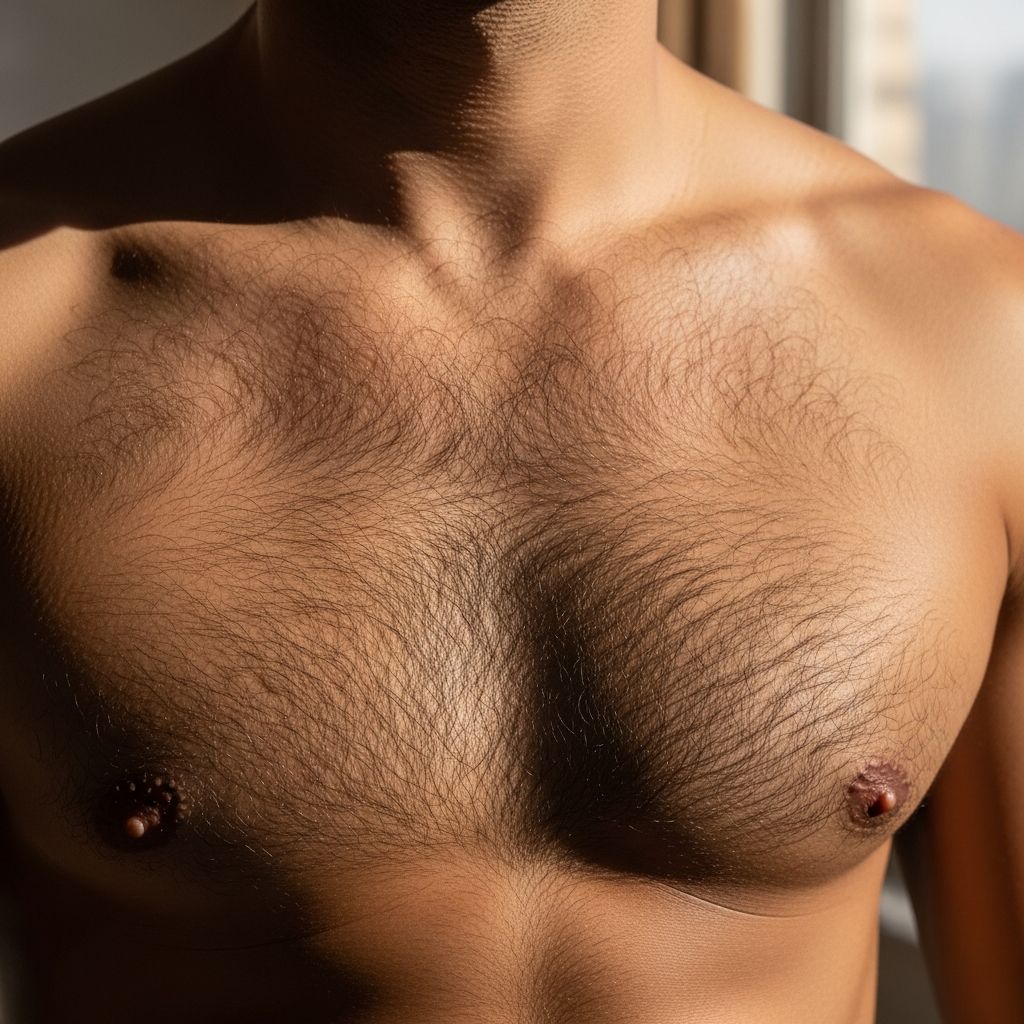
Male chest hair often sparks debate among grooming enthusiasts, but emerging research highlights its functional roles beyond aesthetics. From safeguarding skin to signaling vitality, this natural feature carries evolutionary and physiological value that modern men might overlook.
Evolutionary Roots and Protective Functions
Chest hair traces back to humanity’s primate ancestors, where dense fur helped regulate body temperature in varied climates. As early hominids like Australopithecus roamed savannas around three million years ago, body hair transitioned from a cooling hindrance to a selective trait. Humans evolved efficient sweating mechanisms, reducing overall fur, yet patches like chest hair persisted for targeted protection.
Today, this hair acts as a buffer against environmental stressors. It shields delicate chest skin from ultraviolet radiation, minor abrasions, and friction during physical activity. Hair follicles, packed with blood vessels, nerves, and stem cells, enhance skin resilience. Wounds in hair-rich areas heal faster due to superior vascular supply and regenerative cells, as outer arm injuries mend quicker than inner arm ones.
In combat scenarios, analogous facial hair demonstrates impact absorption. A study on beards showed furred faces withstand 16% higher peak forces and absorb 37% more energy from blunt strikes, dispersing shock over longer durations. Chest hair likely offers similar defense for the torso during falls or tussles.
Hormonal Signals and Health Indicators
Chest hair density correlates with androgen levels, particularly testosterone and its potent form, dihydrotestosterone (DHT). Puberty converts fine vellus hair to thick terminal strands via these hormones, with men typically showing more on the chest, abdomen, and face. Abundant growth signals robust endocrine function, though genetics dictate sensitivity—sparse hair doesn’t imply low testosterone.
Beyond hormones, hair health reflects circulation. Leg hair thinning often precedes peripheral artery disease, where arterial blockages starve distant follicles of oxygen and nutrients. Robust chest hair may similarly indicate strong cardiovascular flow to the core.
| Factor | Role in Chest Hair | Health Implication |
|---|---|---|
| Testosterone/DHT | Promotes terminal hair growth | Healthy hormone balance |
| Follicle Stem Cells | Aid skin repair | Faster wound healing |
| Blood Supply | Nourishes follicles | Good circulation marker |
| Nerve Endings | Enhance tactile sensitivity | Increased sensory feedback |
Intelligence and Cognitive Correlations
Intriguing data links chest hair to intellectual prowess. A survey of medical students revealed nearly 50% classified as ‘very hairy,’ versus 10% in the general male population. Similarly, Mensa members—high-IQ society affiliates—frequently exhibited thick chest rugs. These findings, though from older studies, suggest a possible androgen-intelligence nexus, as elevated testosterone influences brain development and spatial reasoning.
While causation remains unproven, the pattern persists in professions demanding analytical skills. Genetics may cluster traits like hairiness and cognitive gifts, offering hairy men a subtle badge of mental acuity.
Attraction Dynamics Across Age Groups
Women’s preferences for chest hair shift with life stages. Fertile women in their peak reproductive years often favor smoother torsos, potentially linking bald chests to youth and fertility cues. Postmenopausal women, however, lean toward hairier profiles, associating them with maturity and stability.
Interestingly, spousal chest hair may echo paternal traits due to heritable mate preferences or sexual imprinting—women subconsciously selecting partners resembling their fathers. This could explain familial resemblances at family gatherings, turning chest hair into an unexpected social icebreaker (or avoider).
Recent polls reinforce masculinity perceptions: 54% of women view hairy men as more rugged and reliable partners, enhancing relational bonds. Body hair also heightens intimacy through nerve-rich follicles, amplifying touch sensations and reducing friction-related irritation.
Patterns, Variations, and Normalcy
Chest hair isn’t uniform; a 1965 analysis of 1,400 men aged 17-71 identified 15 patterns across four zones: sternal (mid-chest), infraclavicular (collarbone vicinity), pectoral (breast area), and circumareolar (around nipples). The dominant pecto-sterno-infraclavicular style covers pecs, sternum, and clavicle ends, with asymmetry common—left and right sides often differ.
- Sternal Pattern: Central vertical strip.
- Pectoral Pattern: Expansive breast coverage.
- Infraclavicular: Upper chest scattering.
- Circumareolar: Nipple-ring focus.
Such diversity underscores normality; uneven growth affects most men, dispelling grooming anxieties.
Grooming Considerations and Risks
While natural retention maximizes benefits, grooming appeals for aesthetics. Shaving risks ingrown hairs, itching, and razor burn as coarse strands regrow. Waxing or trimming preserves length while neatening, but disrupts protective layers temporarily.
Pubic-adjacent grooming demands caution; dense hair can harbor pathogens, elevating STI risks, yet moderate trimming balances hygiene without eliminating sensory perks. Cleveland Clinic notes body hair’s roles in protection, thermoregulation, and identity, advising against total removal unless medically indicated.
Modern Evolutionary Hangover or Asset?
Chest hair endures as an evolutionary relic with practical merits. Fleas were easier to detect on furred bodies millennia ago, and it signaled health to mates. Though sweating supplants fur for cooling, residual hair insulates vital organs and cushions impacts.
In contemporary society, embracing chest hair fosters body positivity. It counters smooth-skin ideals from media, reminding men that natural variance equates to strength. Studies affirm its multifaceted utility, from healing acceleration to partner allure.
Frequently Asked Questions
Does chest hair indicate high testosterone?
Yes, denser chest hair often reflects elevated testosterone and DHT levels, though genetics modulate expression. Healthy hormone profiles promote terminal hair without excess implying hyperandrogenism.
Is uneven chest hair abnormal?
No, asymmetry is standard; research catalogs varied patterns across chest zones, with most men showing side-to-side differences.
Should men shave their chest hair?
Not recommended routinely—shaving invites irritation and ingrowns. Trimming offers compromise if aesthetics demand it, but natural states yield protective benefits.
Do women prefer hairy chests?
Preferences vary: younger women often like less hair, while older ones favor more. It signals masculinity to many.
Can chest hair aid wound healing?
Indeed, follicles supply stem cells and blood flow, speeding recovery in haired regions.
Chest hair embodies more than follicular flair—it’s a testament to biological ingenuity. Whether flaunting a full rug or subtle fuzz, science validates its worth in health, allure, and heritage.
References
- Body Hair: Types & Why You Have It — Cleveland Clinic. 2023-10-12. https://my.clevelandclinic.org/health/body/body-hair
- Testing the Pugilism Hypothesis for the Evolution of Human Facial Hair — PMC (Peer-reviewed). 2020-11-01. https://pmc.ncbi.nlm.nih.gov/articles/PMC7671116/
- How much difference your hair really makes to keep you cool or warm — University of Wollongong (.edu). 2023-07-20. https://www.uow.edu.au/media/2023/how-much-difference-your-hair-really-makes-to-keep-you-cool-orwarm.php
- How being hairy can be good for you — Independent Online (IOL). 2015-05-04. https://iol.co.za/lifestyle/health/2015-05-04-how-being-hairy-can-be-good-for-you/