Generative AI tools such as ChatGPT have become staples in many teenagers’ study routines, offering quick assistance with homework, essays, and exam prep. While these technologies promise enhanced efficiency and tailored support, recent studies reveal potential drawbacks, including reduced brain engagement and threats to genuine skill development. This article delves into the evolving role of AI in secondary education, drawing on expert insights and research to guide parents, educators, and students toward balanced integration.
The Rise of AI Assistance Among High Schoolers
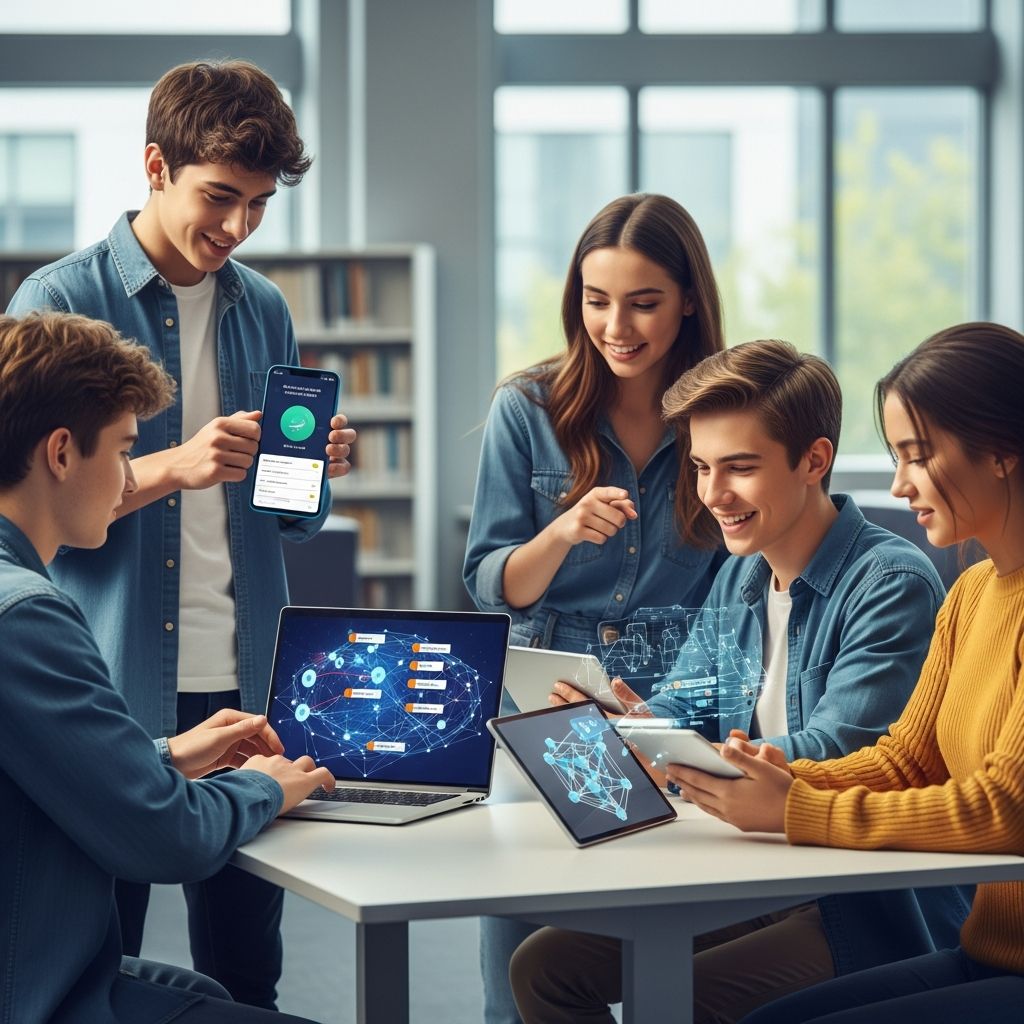
Since its launch, ChatGPT has seen explosive adoption among teens, who use it for everything from brainstorming ideas to drafting full assignments. A shift from panic over cheating to strategic incorporation marks the landscape, with schools now exploring AI as a classroom ally. Educators report students leveraging these tools for instant feedback, mirroring a 24/7 tutoring service that adapts to individual needs.
This trend aligns with broader digital learning shifts, where AI personalizes content based on past interactions, helping teens tackle complex topics at their pace. For instance, a student struggling with history essays might receive customized outlines, fostering deeper exploration without rote memorization.
Key Advantages for Student Success
AI’s strengths in education are evident in several areas, making it a powerful supplement for motivated learners.
- Customized Study Plans: Tools like ChatGPT analyze user queries to suggest targeted exercises, such as grammar drills or vocabulary builders, ideal for language arts and standardized test prep.
- Round-the-Clock Support: Unlike traditional tutors, AI provides immediate responses, building confidence and reducing deadline stress for busy teens.
- Skill-Building Prompts: By simulating logical reasoning, AI helps develop critical thinking, guiding students through data interpretation and structured arguments.
Teachers benefit too, generating fresh lesson materials aligned with class levels, saving time on repetitive tasks and sparking engagement through topical guides.
Hidden Cognitive Costs Revealed by Science
Despite these perks, emerging research paints a cautionary picture. An MIT study involving 54 young adults (ages 18-39) tasked participants with SAT-style essays using ChatGPT, Google Search, or no aids. EEG monitoring across 32 brain regions showed ChatGPT users exhibited the lowest neural activity, particularly in executive control and attention areas. Their essays were strikingly similar, described as “soulless” by evaluators, lacking originality.
The no-AI group displayed peak brain connectivity in alpha, theta, and delta waves—linked to creativity, memory, and semantic processing—reporting greater satisfaction and ownership. When ChatGPT users rewrote essays without the tool, they recalled little content, indicating shallow memory integration. In contrast, the search-only group maintained robust engagement, suggesting traditional research preserves cognitive effort.
| Group | Brain Engagement | Essay Quality | Memory Retention |
|---|---|---|---|
| ChatGPT Users | Low (reduced alpha/theta waves) | Similar, unoriginal | Poor recall |
| Google Search | High | Active, satisfied | Strong |
| No Tools | Highest connectivity | Creative, owned | Excellent |
Lead researcher Ekaterina Kosmyna warns against early AI reliance, especially for developing brains, urging analog methods to build resilience and neural pathways. Psychiatrist Dr. Zishan Khan echoes this, noting overdependence weakens memory, fact retrieval, and adaptability in youth.
Academic Integrity in the AI Era
Cheating fears have evolved into policy debates. Early post-ChatGPT reactions focused on bans, but by 2024, institutions partnered with AI firms for ethical tools. A Brookings report advocates a “prosper, prepare, protect” framework: harnessing AI for growth, teaching its use, and safeguarding against misuse like plagiarism.
In K-12 settings, 2026 trends predict state-level guidelines, with movements pushing back against unchecked adoption. Higher ed forecasts system unification to track AI use transparently.
Strategies for Responsible AI Integration
To maximize benefits while minimizing risks, stakeholders can adopt these practices:
- For Parents: Monitor usage, encourage AI as a starting point for original work, and discuss ethical boundaries.
- For Educators: Assign AI-inclusive tasks, like critiquing generated content or using it for brainstorming only, to promote analysis over copying.
- For Teens: Treat AI as a tutor, not a ghostwriter—refine outputs in your voice, verify facts, and reflect on processes learned.
Experts like Dr. Steve Watson from Cambridge emphasize embracing AI’s complexity: it opens doors but demands vigilance to avoid workload offloading that stunts growth.
Future Outlook: 2026 and Beyond
Looking to 2026, AI will deepen higher ed integration, prioritizing seamless systems over fragmented ones. K-12 may see anti-AI traction alongside innovative pilots. Policymakers face calls for pre-implementation testing, ensuring tools enhance rather than erode learning.
Ultimately, AI thrives as an enhancer when paired with human effort. Rebecca Quintana notes the journey from fear to collaboration, predicting AI-company alliances will yield equitable tools.
Frequently Asked Questions
Is ChatGPT safe for teen homework help?
Yes, when used as a supplement for ideas or feedback, not full assignments. It risks shallow learning if over-relied upon, per MIT findings.
Does AI reduce creativity in students?
Studies show heavy use correlates with lower originality and brain engagement, but proper guidelines can foster critical skills.
How can schools detect AI-generated work?
Tools and teacher training focus on style uniformity and depth; policies emphasize process over product.
What are long-term brain effects of AI study aids?
Overreliance may weaken memory and resilience in developing brains, advocating balanced analog-digital approaches.
Can AI prepare teens for exams effectively?
It excels in practice questions and explanations but pair with self-testing for retention.
References
- The Impact of Chat GPT on Education — Digital Learning Institute. 2023-approx. https://www.digitallearninginstitute.com/blog/the-impact-of-chat-gpt-on-education
- 5 Predictions on How AI Will Shape Higher Ed in 2026 — Inside Higher Ed. 2026-01-05. https://www.insidehighered.com/news/tech-innovation/artificial-intelligence/2026/01/05/5-predictions-how-ai-will-shape-higher-ed
- ChatGPT’s Impact On Our Brains According to an MIT Study — TIME. 2024-approx. https://time.com/7295195/ai-chatgpt-google-learning-school/
- Rebecca Quintana speaks with Inside Higher Ed about predictions — Marsal Family School at University of Michigan (.edu). 2025-approx. https://marsal.umich.edu/news/rebecca-quintana-speaks-inside-higher-ed-about-predictions-ais-impact-higher-education-2026
- A new direction for students in an AI world: Prosper, prepare, protect — Brookings Institution. 2024-approx. https://www.brookings.edu/articles/a-new-direction-for-students-in-an-ai-world-prosper-prepare-protect/