Inclusive education brings students with a wide range of abilities and needs into the same classroom, with the goal of creating a learning environment where everyone can participate, belong, and progress. This vision is powerful, but it also presents complex challenges for teachers who must balance academic, social, emotional, medical, and behavioral needs at the same time. In special-needs inclusive classrooms, the pressures on educators can be intense, especially when training, resources, or support systems are limited.
This article explores the most common challenges teachers encounter in special-needs inclusive settings and discusses why each issue matters for students, families, and schools. It also highlights supportive practices and mindsets that can make inclusion more successful and sustainable.
What Is a Special-Needs Inclusive Classroom?
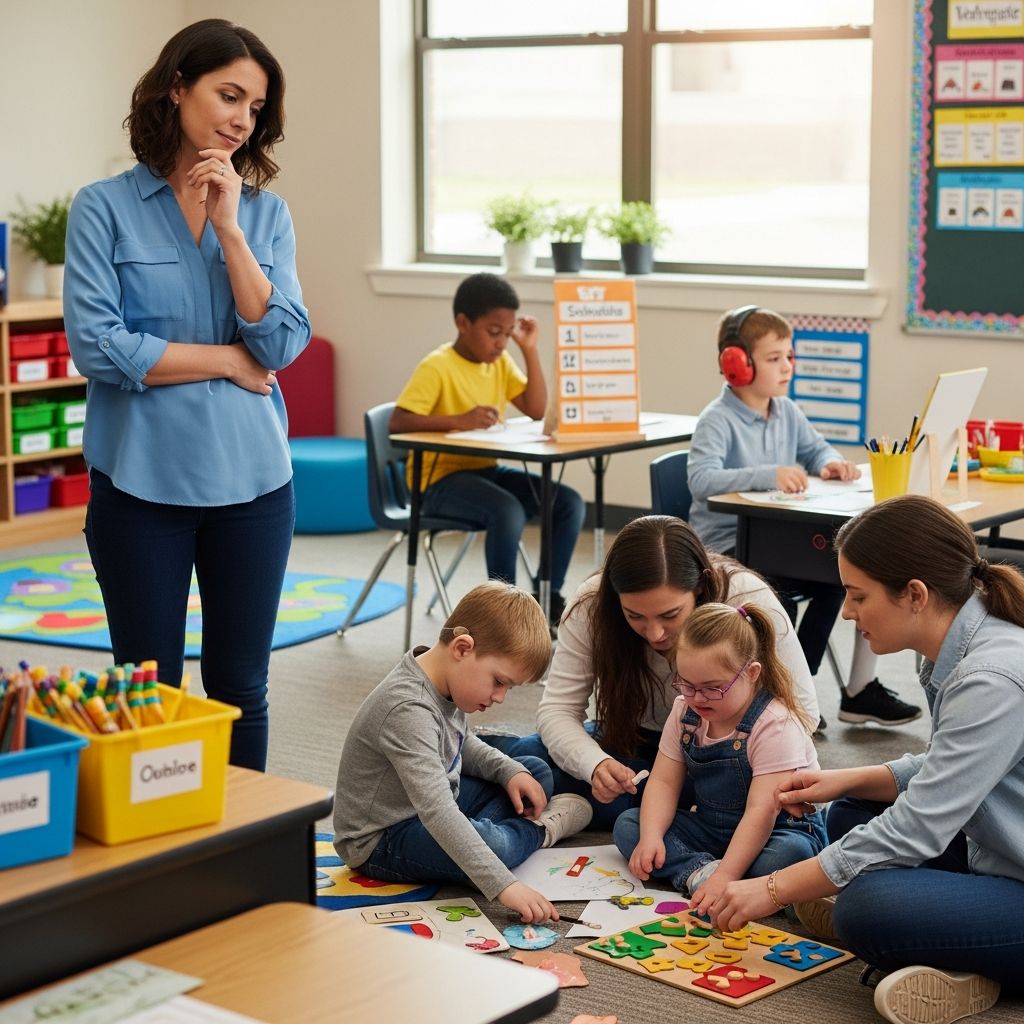
A special-needs inclusive classroom is a learning environment where students with disabilities learn alongside their typically developing peers for most or all of the school day. Rather than separating students into different rooms based on ability or diagnosis, the inclusive model emphasizes shared learning experiences, differentiated instruction, and appropriate supports. In many schools, this means having both a general education teacher and a special education teacher, supported by aides or related service providers, working together with one class.
- Students may have a wide range of needs, from mild learning differences to severe and profound disabilities.
- Instruction, assessment, and classroom routines are adapted so that each student can participate as fully and safely as possible.
Overview of Key Teacher Challenges
Teachers in inclusive classrooms often describe the experience as rewarding yet overwhelming. Many of the challenges they face stem from the need to meet very different needs at the same time while also managing logistics, communication, and expectations from multiple stakeholders. The following sections unpack the most frequently reported areas of difficulty, which include experience and training gaps, instructional planning, emotional demands, and coordination of support services.
| Challenge Area | Core Issue | Impact on Classroom |
|---|---|---|
| Lack of inclusion experience | Limited practice with inclusive models and team-teaching | Uncertainty, inconsistent supports, and trial-and-error planning |
| Limited experience with severe disabilities | Complex medical, physical, and communication needs | Safety concerns and difficulty matching instruction to abilities |
| Creating activities for all students | Wide academic and developmental range | Some students bored, others overwhelmed or left out |
| Educating students with milder disabilities | Needs that are less visible but still significant | Risk of under-supporting students who seem “almost fine” |
| Emotional issues, including death | Serious illness, fragility, or loss of classmates | Grief, fear, and emotional strain for students and staff |
| Insufficient aides and support | Too few adults for intensive needs | Safety risks and reduced individual attention |
| Teaching compassion | Limited exposure to disability and difference | Misunderstandings, teasing, or social isolation |
| Working with parents of typically developing students | Fears and misconceptions about inclusion | Conflict over fairness, safety, and academic rigor |
| Individualized lesson plans and IEPs | Multiple detailed plans with different goals | Heavy planning load and monitoring requirements |
| Coordinating therapies and services | Scheduling and communication with specialists | Interrupted instruction and fragmented routines |
Lacking Experience in an Inclusion Setting
Many teachers enter the profession with limited exposure to fully inclusive classrooms, even if they have completed coursework on special education. When they begin teaching in an inclusion setting, they often discover that theory does not fully prepare them for the day-to-day realities of co-teaching, managing a wide range of behaviors, and adapting instruction in real time. This lack of experience can make the first few years especially stressful.
Inexperienced teachers may struggle with questions such as how to share responsibilities with another educator, how to maintain high expectations while still offering accommodations, and how to protect instructional time when unexpected needs arise. Without structured mentoring or collaborative planning time, they may feel that they are always reacting rather than proactively designing a strong inclusive program.
- New teachers benefit from observing experienced inclusion teams and receiving coaching on classroom organization, communication, and differentiation.
- Schools that treat inclusion as a shared, school-wide commitment rather than an isolated classroom project tend to provide more consistent support.
Lacking Experience With Severe and Profound Disabilities
Inclusive classrooms sometimes enroll students with severe or profound disabilities, such as significant cognitive delays, complex medical needs, limited mobility, or minimal verbal communication. For teachers without prior experience, learning how to support these students can feel intimidating and high-stakes. They must quickly understand individualized health plans, positioning requirements, feeding protocols, and communication systems while still teaching the rest of the class.
There is also the challenge of designing educational experiences that are meaningful and appropriate for each student. For example, while some classmates work on grade-level reading or math, a student with profound disabilities might be working on eye-gaze communication, simple choice-making, or sensory engagement. Aligning these very different goals under a shared theme or activity requires creativity, collaboration with specialists, and access to adaptive equipment.
- Hands-on training with assistive technology, augmentative communication, and safe handling procedures helps build confidence.
- Teachers need clear guidance from nurses, therapists, and special educators to balance medical safety with meaningful participation in classroom life.
Creating Activities That Include All Students
One of the most visible challenges in inclusive classrooms is designing lessons and activities that genuinely include everyone. In a single group, some students may read fluently, others may be emerging readers, and some may communicate primarily through pictures, gestures, or devices. If activities are not carefully adapted, certain students can become passive observers rather than active participants.
Teachers often rely on differentiation and universal design for learning to address these differences. This may involve offering multiple ways to access content (visual, auditory, tactile), different levels of text or support, and varied options for demonstrating understanding. Even with these strategies, the time needed to prepare materials and coordinate with support staff can be overwhelming, and teachers may feel they are constantly racing to stay ahead.
- Using common themes or shared stories with tiered tasks allows all students to work on related concepts at their own level.
- Embedding peer support, such as cooperative learning or peer tutoring, can increase engagement while also building social connections.
Educating Students With Less Severe Disabilities
Students with mild to moderate disabilities, such as specific learning disabilities, ADHD, or high-functioning autism, may blend into the general classroom more easily, but they still need targeted supports. Because their challenges are sometimes less obvious than those of peers with more complex needs, teachers can unintentionally overlook them, especially during busy group activities. These students may mask their difficulties, become quietly disengaged, or act out when academic demands exceed their current skills.
Balancing the needs of students with milder disabilities against those with more visible needs can leave teachers feeling pulled in multiple directions. If planning time is limited, accommodations such as chunked assignments, graphic organizers, or small-group reteaching might not be implemented consistently. Over time, this can widen achievement gaps and contribute to frustration for both students and families.
- Regular progress monitoring and check-ins help ensure that students with milder disabilities are actually benefiting from inclusion, not just present in the room.
- Collaboration with special educators can support targeted interventions that fit smoothly within whole-class instruction.
Dealing With Death and Serious Health Issues
In some inclusive classrooms, students may have life-limiting conditions or serious medical fragility. When a classmate experiences a health crisis or passes away, the emotional impact on students and staff can be profound. Teachers may feel unprepared to talk about illness, disability, and death in age-appropriate ways or to support grieving families while managing their own emotions.
These experiences can also change the classroom climate. Students may become fearful, anxious, or confused about what has happened, and they may need space to ask questions, share feelings, or remember their classmate. At the same time, instructional routines and academic expectations still exist, placing teachers in the difficult position of balancing emotional support with the ongoing responsibilities of teaching.
- Support from school counselors, psychologists, and administrators is crucial when the class faces serious illness or loss.
- Simple, honest explanations and rituals such as memory projects or cards can help students process events in a healthy way.
Not Having Enough Teacher Aides and Support Staff
Inclusive classrooms often depend on paraprofessionals or teacher aides to help with personal care, behavior support, mobility, and small-group instruction. When there are not enough aides, or when turnover is high, the strain on the classroom teacher increases dramatically. One teacher may end up trying to manage feeding, toileting, medical monitoring, and differentiated instruction all at once, which is not sustainable or safe.
Inconsistent staffing can also disrupt students who rely on predictable routines and familiar adults. Substitute aides may not know individual communication systems, behavioral cues, or health needs, which can lead to misunderstandings or unsafe situations. Over time, inadequate support staffing contributes to teacher burnout and undermines the quality of inclusion for everyone in the classroom.
- Clear role definitions, ongoing training, and respectful collaboration between teachers and aides strengthen the entire classroom team.
- Advocacy at the school and district level is often necessary to secure appropriate staffing ratios for classes with intensive needs.
Teaching Compassion and Respect to Students
Not all students have prior experience interacting with peers who use wheelchairs, communication devices, or who behave differently due to disability. Without guidance, they may respond with curiosity that looks like staring, or even with teasing or exclusion. One of the ongoing challenges for teachers in inclusive classrooms is shaping the social climate so that differences are understood and respected rather than feared or mocked.
Teaching compassion involves more than a single lesson on kindness. It requires consistent modeling, explicit teaching of empathy, and structured opportunities for positive interactions. When teachers intervene quickly in moments of insensitivity and provide alternative ways to respond, they help all students develop the social and emotional skills needed for a truly inclusive community.
- Class discussions, stories, and activities that highlight diverse abilities can normalize differences and reduce stigma.
- Pairing students thoughtfully in groups helps build friendships and shared experiences across ability levels.
Working With Parents of Typically Developing Students
Parents of typically developing children sometimes have concerns about inclusive classrooms. They may worry that the teacher’s attention will be diverted from their child, that challenging behaviors will disrupt learning, or that the curriculum will be “watered down” to accommodate students with disabilities. When these worries are not addressed, tension can develop between families and schools, leaving teachers in the middle.
Teachers must explain how inclusion works, what supports are in place, and how academic expectations are maintained for all students. This requires clear communication, patience, and willingness to listen to parents’ fears. At the same time, confidentiality laws prevent teachers from sharing details about individual students’ diagnoses or plans, which can make these conversations more delicate.
- Regular updates, classroom newsletters, and open-house events focused on inclusion can build trust with families.
- Emphasizing the social and emotional benefits of inclusion, such as empathy and collaboration skills, helps families see value beyond test scores.
Addressing Individualized Lesson Plans and IEPs
Most students with identified disabilities receive services through an Individualized Education Program (IEP) or similar plan. In an inclusive classroom, the teacher may be responsible for implementing and monitoring several different IEPs at once, each with its own goals, accommodations, and reporting requirements. Keeping track of who needs what support, when, and how can be a major organizational challenge.
Teachers must align IEP goals with the general curriculum while ensuring that specialized instruction is provided. This may involve creating alternative assignments, modifying tests, offering extra time, or providing assistive technology. Documenting progress for multiple students adds another layer of work, especially when combined with grading, communication with families, and collaboration with service providers.
- Systems such as checklists, color-coded folders, or digital trackers can make it easier to monitor accommodations and goal progress.
- Co-planning between general and special education teachers ensures that IEP requirements are embedded into daily lessons rather than tacked on at the last minute.
Coordinating Therapies and Related Services
Students in inclusive classrooms may receive speech therapy, occupational therapy, physical therapy, behavioral support, or other related services. These supports are essential, but they also complicate schedules and classroom routines. Pull-out sessions can cause students to miss parts of lessons, while in-class therapy requires careful coordination so that it enhances learning rather than disrupting it.
Teachers must communicate regularly with therapists about goals, progress, and classroom expectations. When communication is strong, therapy strategies can be reinforced in everyday classroom activities, making support more effective. When coordination is weak, students may experience fragmented services, confusion about expectations, or inconsistent use of tools and strategies.
- Shared planning time between teachers and therapists allows them to integrate therapy goals into classroom projects and routines.
- Visual schedules and clear transition routines help students move between classroom and therapy sessions with less stress.
Frequently Asked Questions (FAQs)
1. Why are inclusive classrooms important if they are so challenging for teachers?
Inclusive classrooms promote equity by giving students with disabilities access to the same academic content, social opportunities, and community membership as their peers. While they are demanding for teachers, inclusive settings can improve outcomes in areas such as communication, independence, and peer relationships when properly supported.
2. How can schools better support teachers in special-needs inclusive classrooms?
Schools can provide structured training, mentoring, and collaborative planning time, as well as adequate staffing and access to specialists. Clear policies, consistent administrative backing, and a culture that treats inclusion as a shared responsibility also make a significant difference.
3. Do inclusive classrooms lower academic standards for typically developing students?
Inclusive classrooms do not have to lower standards; instead, they encourage teachers to use flexible methods to help each student meet high expectations. When instruction is differentiated effectively, students without disabilities can benefit from varied teaching approaches, collaborative learning, and opportunities to develop leadership and empathy.
4. What can parents do to support successful inclusion?
Parents can ask questions, stay informed, and maintain open communication with teachers while respecting student confidentiality. Supporting inclusive values at home, encouraging children to be kind and accepting, and participating in school events focused on diversity and inclusion all help strengthen the inclusive community.
5. How do teachers cope with the emotional strain of working in inclusive classrooms?
Teachers benefit from peer support, professional counseling when needed, and realistic workload expectations from school leadership. Reflective practices, such as journaling, supervision groups, or professional learning communities, can also help them process difficult experiences and celebrate successes.