Cervicalgia is the medical word for neck pain. It can affect adults, teens, and even younger children. While neck pain in kids is often mild and short-lived, it sometimes signals a more serious problem that needs prompt medical care.
This guide explains what cervicalgia is, why it happens, how to recognize concerning symptoms, and what parents can do to support a child with neck pain.
What Does “Cervicalgia” Mean?
The spine has several regions. The cervical spine is the top section, located in the neck. Cervicalgia simply means pain or discomfort coming from the cervical spine or surrounding tissues.
Neck pain can:
- Feel sharp, stabbing, or burning
- Feel dull, aching, or tight
- Stay in the neck or spread to the head, shoulders, or arms
- Last a few hours, days, or sometimes longer, depending on the cause
In many children, cervicalgia is related to minor muscle strain or posture and improves with simple care. Persistent, severe, or unusual symptoms require evaluation by a healthcare professional.
Common Causes of Cervicalgia in Young People
Neck pain in kids and teens can arise from muscles, joints, ligaments, nerves, or the spine itself. Below are frequent causes, from most common and mild to less common but more serious.
1. Muscle Strain and Overuse
This is one of the leading reasons children and adolescents develop neck pain. Everyday activities can overload neck and shoulder muscles, including:
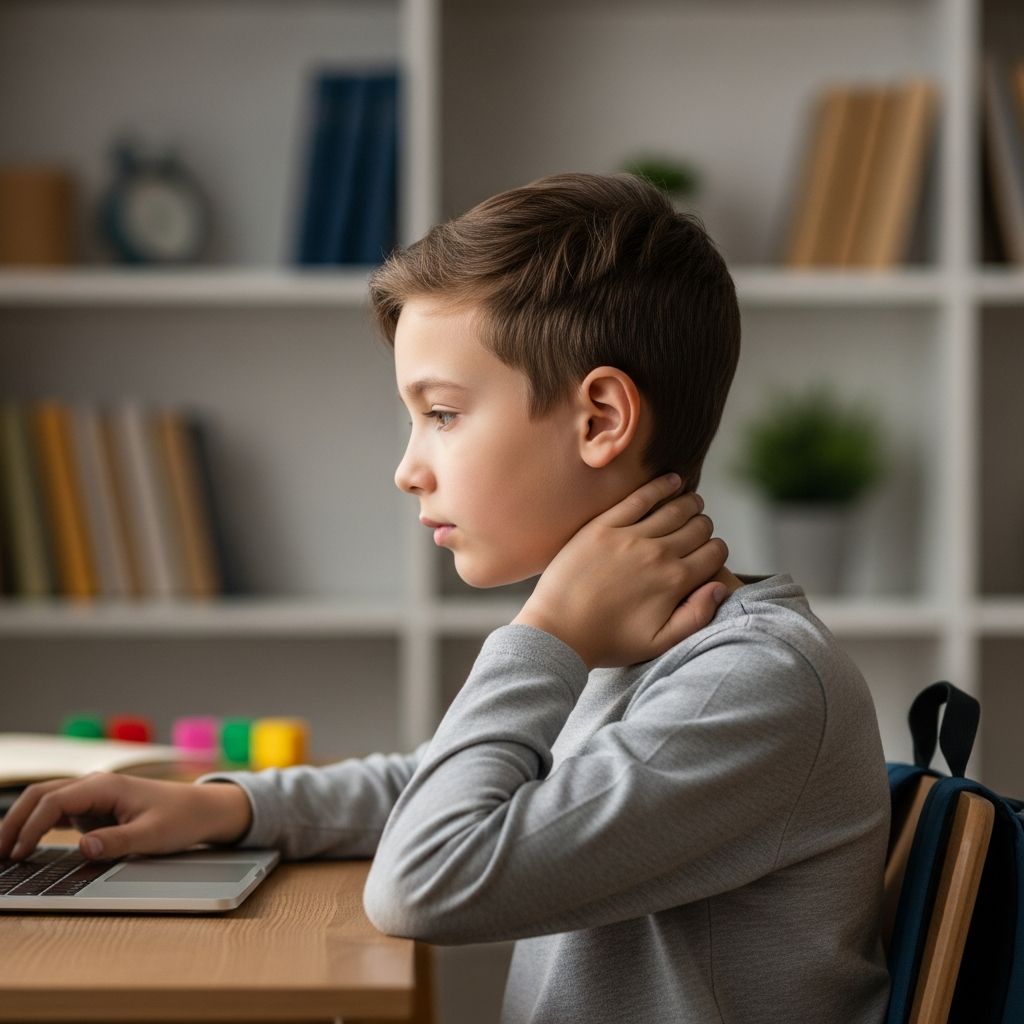
- Poor posture while using phones, tablets, or computers (“text neck”)
- Carrying heavy backpacks on one shoulder
- Sleeping in an awkward position or on too many pillows
- Sudden increase in sports or dance training
In these cases, pain usually:
- Feels sore or tight
- Worsens with certain movements or after activity
- Improves with rest, stretching, and simple pain relief
2. Injuries and Whiplash
Falls, sports collisions, or car accidents can injure the neck. A common injury pattern is whiplash, where the head is suddenly thrown backward and then forward, stretching muscles and ligaments.
After an acute injury, a child may have:
- Immediate or delayed neck pain and stiffness
- Headaches
- Pain with turning or bending the neck
Any neck pain after a significant impact needs medical evaluation to rule out more serious damage such as fracture or nerve injury.
3. Posture and Screen Use
Hours spent looking down at a phone or leaning forward at a desk can overload the neck and upper back. Over time, this can cause:
- Muscle tightness and fatigue
- Rounded shoulders and forward head posture
- Recurrent headaches or upper back pain
Improving ergonomics, taking breaks, and strengthening postural muscles often relieve these symptoms.
4. Emotional Stress and Tension
Children and teens sometimes “carry” stress in their neck and shoulders. Worry, anxiety, or school stress can lead to muscle tension and pain without any clear physical injury.
Clues that stress contributes to cervicalgia include:
- Neck pain during exams, major transitions, or family stress
- Teeth grinding or jaw clenching
- Other physical complaints such as stomachaches or trouble sleeping
5. Underlying Spine or Joint Conditions
Some medical conditions affect the cervical spine and can show up in adolescence or, less commonly, childhood. Examples include:
| Condition | How It Affects the Neck | Typical Features |
|---|---|---|
| Juvenile arthritis | Inflames joints in the cervical spine | Morning stiffness, joint swelling, chronic pain |
| Disc problems (e.g., herniated disc) | Disc material can press on nearby nerves | Pain radiating to arm, numbness, or weakness |
| Spinal stenosis | Narrowing of spaces in the spine, compressing spinal cord or nerves | Neck and arm pain, balance or coordination issues |
| Structural abnormalities | Unusual curves or vertebral changes | Visible posture changes, chronic discomfort |
6. Infections and Other Serious Causes
Occasionally, cervicalgia is a sign of a more serious illness. Conditions that can cause neck pain include:
- Meningitis – infection of the tissues around the brain and spinal cord, often causing fever, severe headache, and a stiff neck
- Spinal infections – infection in the bones or discs of the spine
- Cancer or tumor in or near the neck or spine
These causes are uncommon in children but very important to recognize quickly. Red flag symptoms are listed later in this guide.
Recognizing Symptoms of Cervicalgia
Neck pain can present in different ways. Understanding what your child feels helps you decide how urgently they need care.
Typical Symptoms
Children and teens with simple muscular cervicalgia may notice:
- Aching, tight, or sore neck muscles
- Difficulty turning the head fully
- Stiffness after waking or after long periods of sitting
- Headaches, especially at the back of the head
- Tenderness in the shoulders or upper back
Sometimes pain spreads to nearby areas, including the shoulders, upper back, or the base of the skull. This is often due to shared muscles and nerves in the region.
Nerve-Related Symptoms
If a nerve in the neck is irritated or compressed (sometimes called a pinched nerve), symptoms may expand beyond simple pain.
- Burning or electric-shock–like pain radiating down the arm
- Numbness or tingling in the shoulder, arm, or hand
- Weakness when lifting the arm or gripping objects
Nerve symptoms always deserve medical evaluation, especially if they are getting worse.
Systemic or Whole-Body Symptoms
Neck pain plus other general symptoms may indicate infection or another medical condition. Watch for:
- Fever or chills
- Severe headache
- Extreme fatigue
- Unexplained weight loss
- Difficulty swallowing, breathing, or speaking
If these occur with neck pain, seek urgent medical care.
When to Call the Doctor Right Away
Most mild neck pain in children can be watched at home for a short period. However, you should contact a healthcare provider urgently or go to emergency care if your child has:
- Neck pain after a fall, sports collision, or car accident
- Neck pain plus:
- Fever and severe headache
- Very stiff neck and trouble bending the head forward
- Confusion, trouble staying awake, or seizures
- Weakness, numbness, or tingling in the arms or legs
- Loss of balance, clumsiness, or changes in walking
- Difficulty controlling bladder or bowel function
- Unexplained weight loss or night pain that wakes them regularly
- Severe pain that does not improve at all with rest or pain medicine
These signs may point to a serious infection, spinal cord involvement, or another urgent condition that requires immediate evaluation.
How Doctors Diagnose Cervicalgia
When you bring your child to a doctor for neck pain, the visit will usually include:
Medical History
The provider will ask questions such as:
- When did the pain start, and did anything trigger it?
- Is the pain constant or does it come and go?
- What makes the pain better or worse?
- Are there headaches, fevers, numbness, or weakness?
- Has your child had any injuries, infections, or chronic illnesses?
Physical and Neurologic Exam
The exam may involve:
- Gently checking neck motion in different directions
- Feeling for muscle tightness, tenderness, or spasms
- Testing strength in the arms and shoulders
- Checking reflexes, sensation, and balance
These findings help the clinician decide whether imaging or other tests are needed.
Imaging and Other Tests
Not all children with neck pain need X-rays or scans. Doctors may order tests when pain is severe, persistent, follows major trauma, or is associated with neurologic changes or other red flags.
- X-rays – show bones, alignment, and some joint changes
- MRI – gives detailed images of discs, nerves, and soft tissues
- CT scan – offers more detail for bone or complex injuries
- Blood tests – help identify infection or inflammatory conditions when suspected
Treatment Options for Neck Pain in Children
Management of cervicalgia depends on the cause, severity, and how long the pain has been present. Many children improve with simple, noninvasive approaches.
Home Care and Self-Management
For mild, short-term neck pain without red flag symptoms, doctors often recommend:
- Rest from aggravating activities – but avoid complete bed rest; light movement is usually helpful.
- Heat or cold packs – cold may reduce pain in the first 24–48 hours after minor injury, while warmth may relax tight muscles later.
- Gentle stretching – slow, controlled range-of-motion exercises, as instructed by a clinician.
- Over-the-counter pain relievers – such as acetaminophen or ibuprofen, using the correct dose for the child’s age and weight, and only under guidance from a healthcare provider.
- Posture changes – raising screens to eye level, using a supportive chair, and limiting long periods in one position.
Physical Therapy and Rehabilitation
If neck pain persists or keeps returning, a doctor may prescribe physical therapy. A pediatric-trained therapist can:
- Teach safe stretching and strengthening exercises
- Work on posture, core strength, and body awareness
- Provide education on safe backpack use and sports techniques
Active rehabilitation helps prevent stiffness and reduces the chance that short-term pain becomes a long-term problem.
Medications
Beyond over-the-counter pain medicine, a doctor might use other medications in certain cases:
- Stronger pain relievers for short periods after significant injury
- Muscle relaxants for severe spasms in older teens
- Anti-inflammatory or immune-modulating drugs for arthritis or other inflammatory conditions
All medicines for children should be prescribed or approved by a pediatric provider.
Treatment of Serious Underlying Conditions
When cervicalgia is caused by infection, tumor, or serious spinal disease, treatment focuses on that underlying problem. Depending on the diagnosis, care may involve:
- Antibiotics or antiviral medications
- Hospital care and close monitoring
- Specialist consultation (e.g., neurology, rheumatology, oncology)
- Procedures or surgery in select cases, such as severe nerve compression or structural instability
Helping Your Child Prevent Neck Pain
Many risk factors for everyday cervicalgia can be reduced with simple habits at home and school.
Healthy Posture and Screen Habits
- Encourage your child to hold screens at eye level instead of looking down.
- Limit long uninterrupted periods of device use; suggest brief breaks every 20–30 minutes.
- Adjust study spaces so that:
- Feet are flat on the floor
- Back is supported by a chair
- Shoulders stay relaxed, not hunched
Safe Backpack and Sports Use
- Choose a backpack with two wide, padded straps.
- Encourage using both straps and tightening them so the bag sits high on the back.
- Keep backpack weight reasonable; many experts suggest no more than about 10–15% of a child’s body weight.
- Make sure sports techniques are age-appropriate and that your child warms up and stretches regularly.
Sleep and Stress Management
- Provide a pillow that keeps the neck in a neutral, comfortable position.
- Encourage regular sleep schedules and relaxing pre-bedtime routines.
- Help your child learn stress-management tools, such as deep breathing, talking about worries, or relaxation exercises.
Frequently Asked Questions (FAQs)
Is neck pain in kids usually serious?
Mild neck pain in children is often related to muscle strain, posture, or minor injuries and usually improves with rest and simple care. However, severe pain, pain after significant trauma, or pain with fever, neurologic symptoms, or other red flags should be treated as potentially serious until a doctor evaluates it.
How long does cervicalgia typically last?
For minor causes, neck pain may last a few days to a couple of weeks and then resolve fully with appropriate management. When pain persists beyond several weeks, keeps returning, or interferes with school, sleep, or daily activities, a healthcare provider should reassess the child.
Can my child go to school or play sports with neck pain?
If pain is mild and your child can move the neck reasonably well, attending school and doing light activities is usually safe, as long as they avoid movements that sharply increase pain. After any significant injury or if serious causes are suspected, they should avoid sports until cleared by a medical professional.
When is imaging like an X-ray or MRI needed?
Doctors order imaging when symptoms or exam findings suggest a structural problem, such as fracture, disc herniation, spinal instability, or tumor, or if pain is persistent and unexplained. Otherwise, many children with straightforward muscular neck pain do not need X-rays or advanced scans.
What should I avoid doing if my child has neck pain?
Avoid forcing the neck through painful movements or performing strong manipulations or adjustments at home. Do not give adult-strength pain medications or any prescription drugs without medical guidance. If you suspect a serious injury, keep your child’s neck as still as possible and seek emergency help immediately.
References
- Cervicalgia: Symptoms, causes, and treatment — MedicalNewsToday. 2018-01-11. https://www.medicalnewstoday.com/articles/320001
- Neck Pain (Cervicalgia) — The Ohio State University Wexner Medical Center. 2023-05-15. https://wexnermedical.osu.edu/brain-spine-neuro/spine-diseases-conditions/neck-pain
- Neck pain: 6 common causes and treatments — Cleveland Clinic. 2022-09-06. https://my.clevelandclinic.org/health/symptoms/21179-neck-pain
- Neck Pain — Mayo Clinic. 2022-07-29. https://www.mayoclinic.org/diseases-conditions/neck-pain/symptoms-causes/syc-20375581
- Neck Pain (Cervicalgia) — Baylor Scott & White Health. 2023-03-10. https://www.bswhealth.com/conditions/neck-pain
- Chronic Neck Pain: Causes, Treatments and When to Get Help — Hospital for Special Surgery. 2023-02-16. https://www.hss.edu/health-library/move-better/chronic-neck-pain