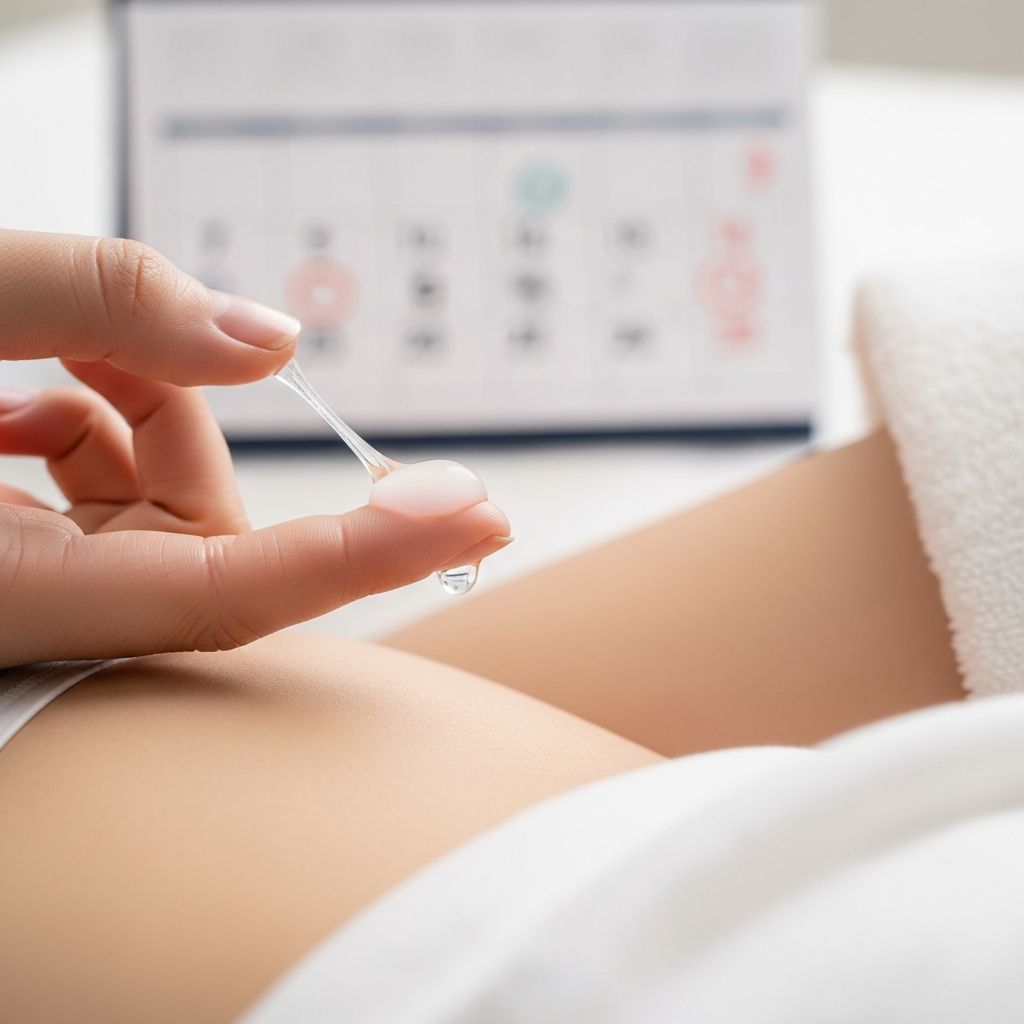
Cervical mucus serves as a natural indicator of fertility, transforming in texture, color, and volume across the menstrual cycle due to hormonal shifts. By observing these changes, individuals can better understand their reproductive health, time intercourse for conception, or identify less fertile periods for natural contraception.
Understanding Cervical Mucus and Its Role in Reproduction
Cervical mucus is a gel-like substance produced by glands in the cervix, influenced primarily by estrogen and progesterone levels. During the cycle, it acts as a protective barrier or a welcoming medium for sperm, depending on the phase. Tracking it empowers fertility awareness methods (FAMs), which involve monitoring daily changes to predict ovulation accurately.
Hormones drive these transformations: rising estrogen before ovulation creates sperm-friendly mucus, while post-ovulation progesterone thickens it to block sperm entry. Consistent observation over several cycles reveals personal patterns, enhancing reliability for family planning.
Phases of the Menstrual Cycle and Corresponding Mucus Patterns
The menstrual cycle, typically 28 days, divides into key phases where mucus evolves predictably. Here’s a breakdown:
- Menstrual Phase (Days 1-5): Heavy bleeding masks any mucus, making it unnoticeable. Focus shifts to recovery as the uterine lining sheds.
- Early Follicular Phase (Days 6-9): Post-period dryness prevails, with little to no discharge. The vagina feels dry or slightly damp, signaling low estrogen.
- Late Follicular Phase (Days 10-13): Estrogen climbs, producing sticky or creamy mucus—white, yellow, or cloudy, with a tacky feel between fingers.
- Ovulatory Phase (Days 14-16): Peak fertility arrives with clear, stretchy, egg-white mucus that’s slippery and watery, facilitating sperm survival up to 5 days.
- Luteal Phase (Days 17-28): Progesterone dominates, drying up mucus into thick, gluey, or scant discharge until menstruation resumes.
Detailed Descriptions of Mucus Types by Cycle Stage
Each mucus variety offers clues about fertility status. Use clean fingers or toilet paper to check: stretch it between thumb and forefinger to assess elasticity.
| Stage | Appearance | Texture/Feel | Fertility Level |
|---|---|---|---|
| Post-Period Dry | None or scant | Dry, no sensation | Low |
| Sticky | Cloudy white/yellow | Tacky, breaks easily | Low |
| Creamy | White, lotion-like | Smooth but not stretchy | Rising |
| Egg-White | Clear, abundant | Stretchy (1-2 inches), slippery | Peak |
| Post-Ovulation | Thick, minimal | Gum-like, sticky | Low |
This table summarizes common observations; individual variations occur due to hydration, stress, or medications.
Practical Techniques for Daily Cervical Mucus Monitoring
Effective tracking requires consistency. Wash hands, insert a finger toward the cervix, and note observations multiple times daily, especially after bathroom visits. Log in a journal or app: color, amount, stretchiness, and sensation (dry/wet).
Pro Tips:
- Check before and after urination for accuracy.
- Avoid lubricants or recent intercourse, which can alter samples.
- Track alongside basal body temperature (BBT) and cycle length for confirmation.
- Observe for 3+ cycles to establish baselines.
Apps like Natural Cycles integrate mucus data with algorithms for precise fertile window predictions.
Interpreting Mucus for Conception: Timing Intercourse Optimally
For those trying to conceive, egg-white cervical mucus (Type 4) signals the 5-6 day fertile window, with highest odds on ovulation day amid this mucus. Sperm can survive 3-5 days in optimal mucus, while the egg lives 12-24 hours. Aim for intercourse every 1-2 days during slippery mucus.
Studies show couples using mucus tracking with intercourse timing achieve pregnancy rates comparable to some fertility treatments when combined with other FAMs.
Using Mucus Observations for Natural Birth Control
Fertility awareness avoids hormones by identifying ‘safe’ days outside the fertile window. Sticky or dry mucus indicates low risk, but require backups like condoms during transitional creamy stages. Effectiveness reaches 98% with perfect use, dropping with inconsistencies.
Hormonal contraceptives alter mucus to a constant thick state, blocking sperm; discontinuing may restore natural patterns over 1-3 months.
Cervical Mucus Shifts During Pregnancy and Other Life Stages
Post-conception, mucus thickens into a gummy plug protecting the uterus. Early pregnancy brings increased white, sticky leukorrhea from elevated progesterone. Later, it may thin or show pink tinges signaling labor’s approach.
Menopause reduces mucus production, leading to dryness; breastfeeding suppresses ovulation, mimicking post-period patterns.
Common Influences on Mucus Patterns and Troubleshooting Variations
Several factors mimic or disrupt patterns:
- Medications: Antibiotics, antihistamines dry mucus; fertility drugs amplify it.
- Lifestyle: Dehydration thickens; arousal fluids resemble fertile mucus.
- Health Issues: Infections cause foul odor, green/yellow hues, or itching—consult a doctor.
If patterns are erratic, test for thyroid issues or PCOS, which affect hormones.
Health Red Flags: When to Seek Medical Advice
Normal mucus is odorless; abnormalities warrant attention:
- Bloody outside menstruation (except ovulation spotting).
- Green, gray, or frothy with fishy smell (possible BV or yeast).
- Persistent itching/burning.
Consult OB-GYN for personalized guidance, especially if TTC over 6-12 months without success.
Frequently Asked Questions About Cervical Mucus
What does fertile cervical mucus really look like?
It appears clear, slippery, and stretches like raw egg whites without breaking, indicating peak estrogen and ovulation proximity.
How soon after my period does fertile mucus start?
Typically days 10-14 in a 28-day cycle, progressing from sticky to creamy to egg-white as ovulation nears.
Can I track mucus while on birth control?
Hormonal methods suppress natural changes, producing consistently thick mucus; tracking resumes fully after stopping.
Does age affect cervical mucus quality?
Yes, quality declines with age, especially post-35, due to lower estrogen, impacting fertility.
Is mucus tracking reliable for avoiding pregnancy?
With diligent daily logging and multiple confirmations (e.g., BBT), perfect use yields 98-99% effectiveness.
Enhancing Your Fertility Awareness Routine
Combine mucus tracking with ovulation tests, BBT charting, and cycle apps for robust predictions. Educate partners for shared responsibility. Resources from certified FAM instructors ensure proper technique.
Empowerment through body literacy fosters reproductive autonomy, whether planning a family or spacing births naturally.
References
- Cervical Mucus: Stages, Tracking, Family Planning, and More — Healthline. 2023-10-15. https://www.healthline.com/health/womens-health/cervical-mucus
- What is cervical mucus, and how can I track it? — Natural Cycles Help Center. 2023-05-20. https://help.naturalcycles.com/hc/en-us/articles/360003742618-What-is-cervical-mucus-and-how-can-I-track-it
- What Does Vaginal Discharge Look Like Throughout the Cycle? — Hello Clue. 2024-02-10. https://helloclue.com/articles/cycle-a-z/wet-sticky-what-your-discharge-is-telling-you
- Cervical Mucus Monitoring — UNC School of Medicine (med.unc.edu). 2022-08-01. https://www.med.unc.edu/timetoconceive/study-participant-resources/cervical-mucus-testing-information/
- Vaginal Discharge Throughout the Menstrual Cycle — Northwest Women’s Center. 2025-07-15. https://www.nwwomens.com/2025/07/15/vaginal-discharge-throughout-the-menstrual-cycle/