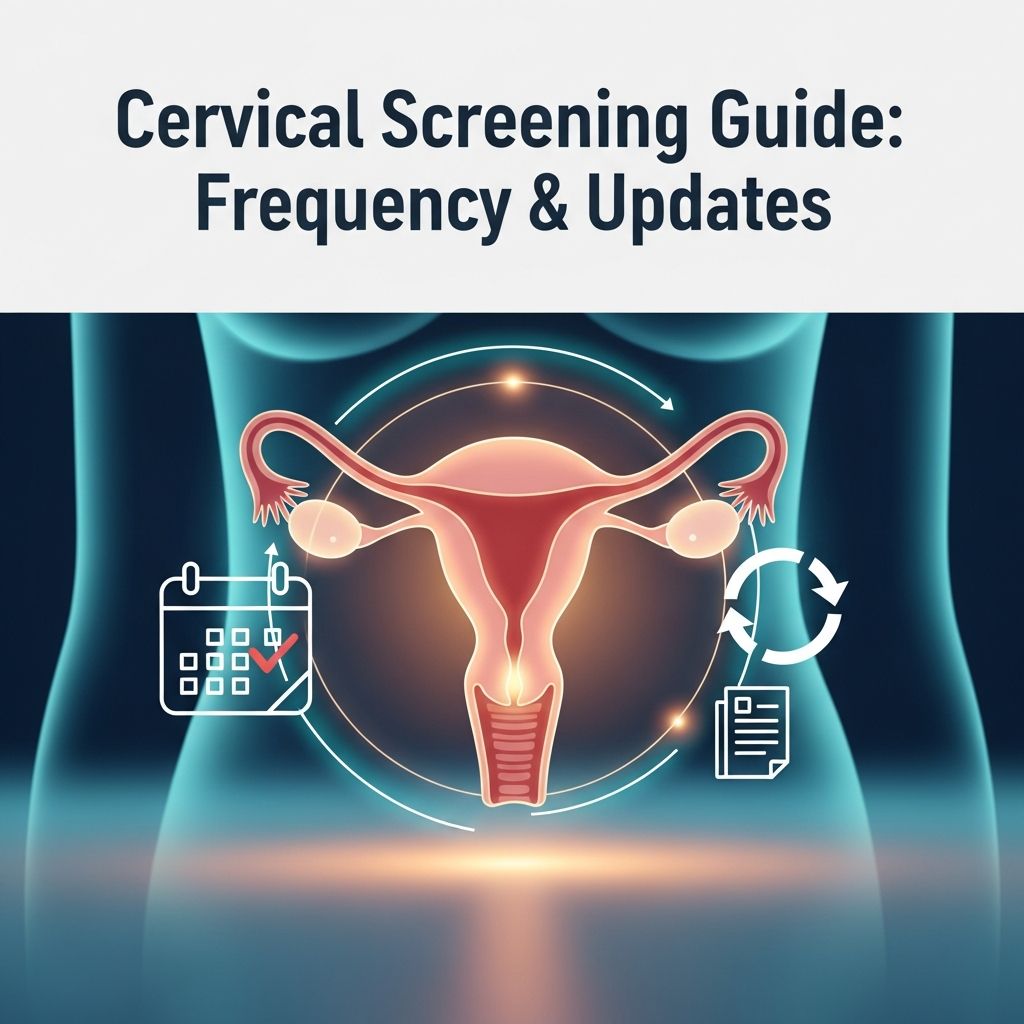
Cervical cancer screening detects precancerous changes early, allowing timely intervention to prevent cancer development. Current 2026 guidelines from major health authorities emphasize personalized schedules based on age, risk, and testing methods like Pap smears and HPV tests.
Why Regular Cervical Screening Matters
Cervical cancer, primarily caused by persistent high-risk human papillomavirus (HPV) infections, is highly preventable through screening. HPV testing identifies high-risk strains responsible for over 90% of cases, offering higher sensitivity than traditional cytology alone. Early detection via Pap smears or HPV tests can identify cellular abnormalities before they progress, significantly reducing mortality rates.
Guidelines have evolved with FDA-approved self-collection kits, making screening more accessible. For average-risk women, adherence to these protocols ensures optimal protection without unnecessary procedures.
Age-Based Screening Recommendations
Screening protocols vary by age group to balance benefits and risks, such as overdiagnosis in younger women.
- Ages 21-24: Pap test (cervical cytology) every 3 years. HPV co-testing is not recommended due to high HPV prevalence and transient infections.
- Ages 25-29: Pap test every 3 years or primary HPV testing, per updated preferences. This shift acknowledges HPV’s superior detection.
- Ages 30-65: Preferred primary high-risk HPV (hrHPV) testing every 5 years, or co-testing (HPV + Pap) every 5 years, or Pap alone every 3 years if HPV unavailable.
- Over 65: Discontinue if adequate prior negative screens (e.g., 3 negative Paps or 2 negative HPVs in last 10 years) and no history of abnormalities.
These align with USPSTF Grade A recommendations, indicating high certainty of substantial net benefit.
Understanding Pap Smears and HPV Tests
Pap Smear (Cytology): Involves collecting cervical cells during a speculum exam for microscopic examination of abnormalities. Effective for ages 21-29 but less sensitive for high-grade lesions than HPV testing.
HPV Testing: Detects high-risk HPV DNA or RNA. Primary hrHPV screening every 5 years is now preferred for 30-65 due to better long-term risk prediction. Co-testing combines both for comprehensive evaluation.
| Test Type | Frequency (30-65) | Pros | Cons |
|---|---|---|---|
| Primary hrHPV | Every 5 years | Higher sensitivity; self-collection possible | May detect transient infections |
| Co-testing (HPV + Pap) | Every 5 years | Comprehensive; reflex cytology on positives | More invasive; higher cost |
| Pap alone | Every 3 years | Standard, widely available | Lower sensitivity for HPV-related changes |
Source-adapted comparison based on 2026 guidelines.
Breakthrough: Self-Collection for HPV Testing
2024-2025 FDA approvals revolutionized access. Women 30-65 can now use clinician-supervised or at-home kits like Teal Wand for vaginal self-swabs, equivalent to clinician-collected samples.
HRSA mandates insurance coverage starting 2027, with no cost-sharing for follow-ups. Studies show self-sampling boosts participation: 87% return rate vs. 30% for clinic Paps. For negative self-tests, a conservative 3-year interval applies until more data emerges.
Process: Insert swab, collect sample, mail to lab. Positive results prompt clinician evaluation like colposcopy.
Factors Influencing Your Screening Schedule
Not one-size-fits-all. Consult providers for adjustments if you have:
- Immunosuppression (e.g., HIV)
- Prior cervical intraepithelial neoplasia (CIN2+), adenocarcinoma in situ (AIS), or cancer history
- In utero DES exposure
- Hysterectomy with cervical removal (may exit screening)
Average-risk applies to asymptomatic women without these factors. Pregnancy typically defers new screenings unless high-risk.
No-Cost Coverage and Access Improvements
Under HRSA updates, plans cover recommended screens and all follow-ups (e.g., colposcopy, biopsy) without copays, aligning with breast/colon cancer policies. This addresses barriers, improving completion rates.
When to Stop Cervical Screening
Exit criteria for ages 65+:
- Adequate negative history: 3 consecutive negative cytology or 2 negative hrHPV in past 10 years, with last within 5 years.
- No CIN2+ history in past 25 years.
Resume if new risk factors emerge post-exit.
Risks, Benefits, and What to Expect
Benefits: Reduces incidence by 80-90% with adherence.
Risks: False positives (anxiety, extra tests); rare bleeding/discomfort.
Prep: Avoid douching, intercourse, tampons 48 hours prior. Expect mild spotting post-procedure.
HPV Vaccination Synergy
CDC reduced doses for some preteens, enhancing prevention. Vaccinated women still need screening as no test detects all strains perfectly.
Frequently Asked Questions
What if my test is abnormal?
HPV-positive or ASCUS prompts genotyping or colposcopy per ASCCP algorithms. Most resolve without treatment.
Can I screen at home?
Yes, FDA-approved self-kits for 30-65; consult provider for suitability.
How accurate is self-collection?
Comparable to clinician samples for high-risk HPV detection.
Does hysterectomy end screening?
Usually, if cervix removed and no history; confirm with doctor.
What about periods?
Schedule outside menstruation for best results.
Empowering Your Health Journey
Discuss options with your OB-GYN. Track via apps or calendars. Early action saves lives—screening adherence is key.
References
- Updated Guidelines for Cervical Cancer Screening and HPV Vaccination — American Association for Cancer Research (AACR). 2026-01-12. https://www.aacr.org/blog/2026/01/12/updated-guidelines-can-help-make-cervical-cancer-screening-and-hpv-vaccination-more-convenient/
- Cervical Cancer Screening & Prevention in 2026 — Tufts Medicine. 2026. https://www.tuftsmedicine.org/about-us/news/cervical-cancer-screening-guidelines-2026
- Practice Advisory: American Cancer Society Updated Cervical Cancer Screening Guidelines — ASCCP. 2026-01. https://www.asccp.org/wp-content/uploads/2026/01/Practice-Advisory-ACS-Guidelines-Updated-12-19.25.pdf
- New cervical cancer testing guidelines — UnitedHealthcare. 2026. https://www.uhcprovider.com/en/resource-library/news/2026/cervical-cancer-testing-guidelines.html
- ACOG Responds to Updated HRSA Guidelines — American College of Obstetricians and Gynecologists (ACOG). 2026-01-05. https://www.acog.org/news/news-releases/2026/01/acog-responds-to-updated-hrsa-womens-preventive-services-initiative-guidelines-on-cervical-cancer-screening
- Cervical Cancer: Screening — U.S. Preventive Services Task Force (USPSTF). Current. https://www.uspreventiveservicestaskforce.org/uspstf/recommendation/cervical-cancer-screening
- Update to the Women’s Preventive Services Guidelines — Federal Register (HRSA). 2026-01-05. https://www.federalregister.gov/documents/2026/01/05/2025-24235/update-to-the-womens-preventive-services-guidelines