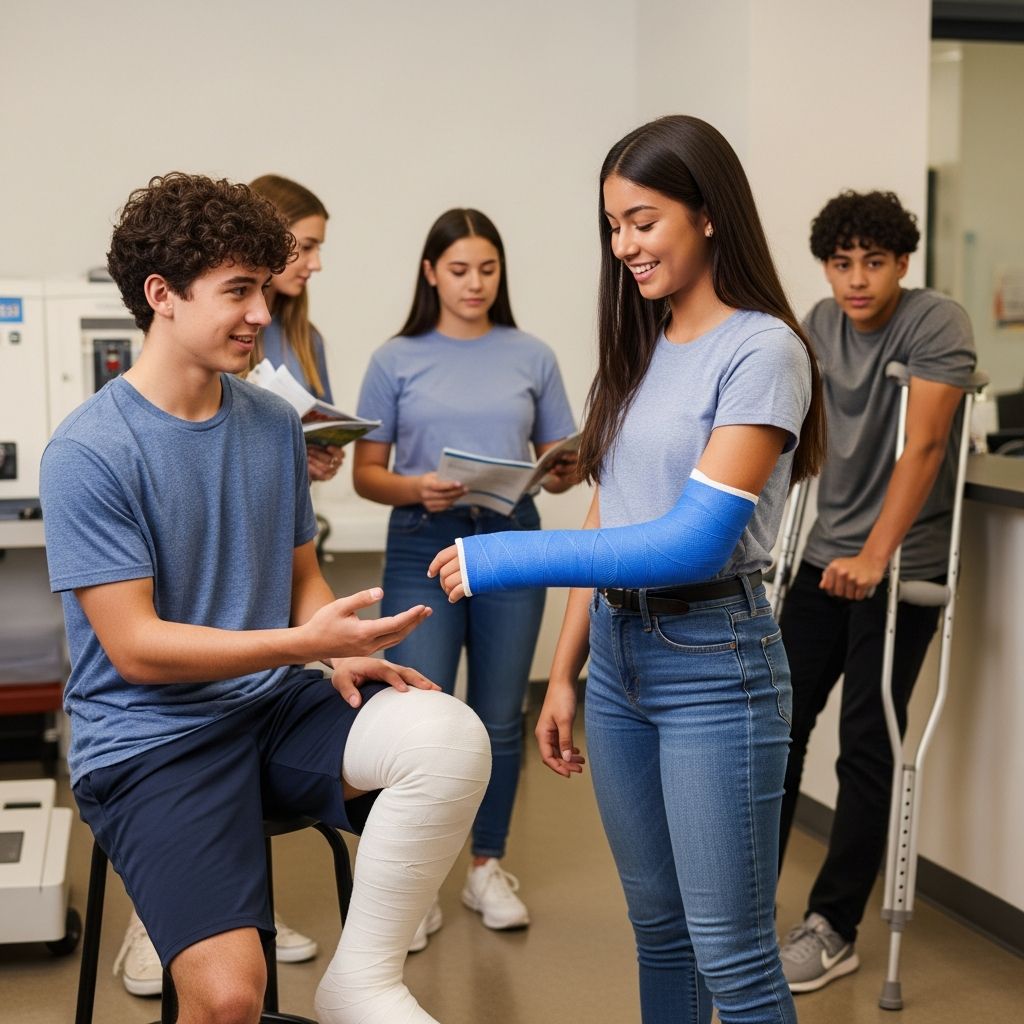
Breaking a bone or needing a cast for a serious sprain can flip your routine upside down, but good cast care makes healing smoother, safer, and less stressful.
Why Casts Matter in Healing
A cast keeps broken bones or injured joints in the correct position so they can mend in a straight, strong line. By limiting movement, it protects the injured area from further damage and helps reduce pain over time.
Most teen casts are made from either plaster or fiberglass materials wrapped around a soft padding layer, creating a hard shell that acts like a protective shield. Even though the shell feels tough, the skin and tissue underneath remain sensitive and need careful attention.
Types of Casts You Might Get
Not all casts look or feel the same. The type you receive depends on which bone is injured, how serious the break is, and how active you are day-to-day.
- Plaster casts: Heavier, very moldable, and often used right after an injury for a snug, precise fit.
- Fiberglass casts: Lighter, more durable, often brightly colored, and usually more water-resistant on the outside.
- Short casts: Cover part of a limb (like below the elbow or below the knee) and allow some joint movement.
- Long casts: Stretch over multiple joints (like from hand to upper arm or from foot to thigh) to keep a larger area from moving.
| Cast Type | Material | Typical Use | What It Feels Like |
|---|---|---|---|
| Plaster short arm cast | Plaster with soft inner padding | Wrist or forearm fractures | Heavier, smooth surface, warms up as it hardens |
| Fiberglass short leg cast | Fiberglass outer shell with padding | Ankle or lower leg injuries | Lighter, firm, can be brightly colored |
| Long leg cast | Plaster or fiberglass | Shin, knee, or thigh fractures | Restricts knee movement, harder to walk or sit comfortably |
| Thumb spica cast | Usually fiberglass | Thumb, wrist, or scaphoid bone injuries | Thumb and wrist held still, fingers mostly free |
Setting Up Your Space for Life With a Cast
The first few days with a cast are usually the most awkward, so planning ahead can save a lot of frustration. Create a setup that makes it easier to move, sleep, and study without bumping the injured area.
- Keep pillows nearby to prop up an arm or leg whenever you sit or lie down.
- Place school supplies, phone chargers, and water bottles within easy reach so you move less.
- Clear paths of clutter, backpacks, or cords to avoid tripping when you are tired or using crutches.
Daily Cast Care: Do This Every Day
Good daily habits protect both your cast and your skin. Think of cast care as part of your routine, just like brushing your teeth or doing homework.
Keep the Cast Clean and Dry
- Cover the cast with a waterproof cover or thick plastic bag sealed with tape or rubber bands before showers.
- Pat the outside dry right away if it accidentally gets splashed.
- Avoid swimming, soaking in bathtubs, hot tubs, or lakes unless your health provider clearly says it is safe and gives specific instructions.
Protect the Edges and Padding
- Check the edges of the cast daily for rough spots that rub against your skin.
- Use soft clothing (like long socks or sleeves) to prevent friction where the cast ends.
- Tell a parent or caregiver if padding slides out or feels bunched up inside.
Watch for Smell or Discoloration
- Notice any strong or unusual odor coming from the cast that does not improve with normal hygiene.
- Look for stains from inside the cast, such as yellow, green, or bloody spots on the outside.
- Report new smells or stains to a health professional, because they can signal infection or skin problems.
What to Avoid So You Do Not Damage the Cast
Casts are strong but not indestructible. Some common habits can crack, soften, or break them, leading to slower healing and extra clinic visits.
- Do not press on the cast while it is still drying, especially during the first 24–48 hours.
- Do not cut, peel, or trim edges on your own, even if they feel rough.
- Do not insert pens, pencils, rulers, or hangers inside the cast to scratch or push padding around.
- Avoid putting heavy objects on top of the cast, including backpacks on a casted leg or full-body weight on a casted arm.
- Do not heat the cast with hair dryers, electric blankets, or space heaters; intense heat can damage the cast material and irritate skin.
Handling Itching, Swelling, and Discomfort
Itching and swelling are two of the most annoying parts of wearing a cast. They may not disappear completely, but smart strategies can make them more manageable.
Safer Ways to Deal With Itching
- Blow cool air from a hair dryer on the lowest setting near, not inside, the cast opening.
- Gently tap or pat the outside of the cast over the itchy area instead of scratching.
- Distract yourself with a game, book, or video when the urge to scratch is intense.
Controlling Swelling
- Raise the cast above heart level when resting, using pillows, cushions, or folded blankets.
- Wiggle fingers or toes often to keep blood flowing, as long as your doctor says movement is safe.
- Use ice packs wrapped in a towel around, but not directly on, the cast near the injured area if you were told this is allowed.
Pain Management Basics
Some soreness is normal, especially right after the injury or following a long day. Follow the pain medicine instructions provided by your healthcare team and do not take extra doses without permission.
If pain suddenly becomes much worse, feels sharp or burning, or does not improve with rest and medication, contact a medical professional as soon as possible.
Moving Around With a Cast
Staying active within your limits helps prevent stiffness and keeps your energy up. The goal is smart movement, not pushing through pain or ignoring restrictions.
Using Crutches or a Walker
- Ask a professional to adjust crutches or walkers to your height and show you how to use them safely.
- Practice on level ground before tackling stairs, ramps, or uneven surfaces.
- Wear supportive, closed-toe shoes on the non-injured foot to improve balance.
Safe Activities and Exercise
Depending on the injury, your doctor might allow gentle stretching or exercises for body parts not in the cast, such as core or opposite limbs. Simple activities like seated upper-body workouts, stationary cycling with medical approval, or short walks can keep you feeling more like yourself.
Avoid contact sports, running, skateboarding, or activities where you might fall until a healthcare provider clearly clears you to return.
School, Friends, and Daily Life With a Cast
School and social life do not have to stop because you are wearing a cast, but a few adjustments can make each day easier and safer.
- Talk to teachers about extra time for changing classes or writing assignments if your dominant hand is in a cast.
- Use digital tools (laptops, tablets, voice-to-text) to take notes or complete homework when writing is hard.
- Ask friends to carry heavy items, open doors, or help you navigate crowded hallways.
- Skip rough games during recess or gym class and ask for alternative activities that are cast-safe.
Warning Signs: When to Call for Help
Most cast problems can be fixed easily if they are caught early. Pay attention to new or changing symptoms and report them instead of waiting for them to go away on their own.
Emergency Symptoms
Contact a healthcare provider or seek urgent help right away if you notice any of the following around or inside the cast:
- Severe pain that keeps getting worse instead of better.
- Fingers or toes that look very pale, bluish, or gray.
- Numbness, tingling, or a “pins and needles” feeling that does not improve after changing position.
- Swelling so tight that you cannot move fingers or toes or the cast feels like it is cutting into your skin.
- A burning sensation that does not stop, especially in one small area under the cast.
Signs of Infection or Skin Trouble
- Bad odor that keeps returning even after cleaning the skin around the cast.
- Fever, chills, or feeling very sick without another obvious cause.
- Drainage that looks bloody, yellow, or green coming from inside the cast.
Getting the Cast Removed
Cast removal usually happens in a clinic or hospital and takes only a few minutes. The staff use a special vibrating saw that cuts through the hard shell but is designed not to slice skin when used correctly.
You might feel pressure or vibration and hear a loud buzzing noise, which can be scary the first time but does not mean the saw is hurting you. Afterward, the skin under the cast may look pale, dry, or slightly smaller from muscle loss, which is normal and improves with time and gentle care.
Life After the Cast Comes Off
Once the cast is gone, the injured area may feel stiff, weak, or strange to move. Healthcare providers often recommend stretches, exercises, or physical therapy to rebuild strength and flexibility safely.
- Start with the gentle motions your provider suggests; do not rush back to intense sports or heavy lifting.
- Moisturize the dry skin with a simple, fragrance-free lotion and wash gently to remove dead skin flakes.
- Return to full activities only when your provider says it is safe, even if the limb feels “almost normal.”
Practical Cast Care Checklist
Use this quick checklist as a daily reminder of how to protect your cast and help your body heal well.
- Keep the cast dry during showers and avoid swimming unless cleared.
- Check the skin you can see for redness, blisters, or sores.
- Raise the injured limb several times a day to control swelling.
- Move fingers or toes often if allowed, and notice any color or temperature changes.
- Never stick objects inside the cast for scratching or adjusting padding.
- Report pain, numbness, odd smells, or leaking fluid to a healthcare professional.
Frequently Asked Questions About Cast Care
Can I shower or swim with my cast?
Most traditional casts are not fully waterproof, even if the outer shell feels hard and smooth. For showers, cover the cast with a waterproof shield or plastic wrap, and stay out of pools, lakes, and hot tubs unless your doctor confirms your specific cast can handle it.
Is it normal for my cast to itch?
Yes, mild itching is common, especially during the first week as your skin adjusts. Use cool air, gentle tapping, and distraction, and avoid putting objects inside the cast to scratch, because that can break the skin and lead to infection.
What if my cast gets wet inside?
If water soaks through the padding and the inside feels squishy or stays damp, call your clinic as soon as possible. A wet interior can irritate your skin, weaken the cast, and raise your infection risk, so it may need to be changed.
Can I sign or decorate my cast?
Yes, decorating the outside of a dry cast with markers is usually fine and can make the experience more fun. Just avoid using anything that soaks into the material (like nail polish remover or harsh solvents) because those products may weaken the cast or irritate your skin.
When can I go back to sports?
Return-to-sport timing is different for everyone and depends on the type of injury, the bone involved, and how well healing is going. Always wait for clear instructions from your healthcare provider or sports medicine specialist, even if you feel ready to jump back in earlier.
Why does the area under my cast look weird after removal?
Skin under a cast has been in the dark and not moving much, so it often looks pale, dry, or slightly wrinkled when the cast comes off. Muscles may look smaller or feel weaker, but with gentle movement, exercise, and skin care, they usually return toward normal over the following weeks.
Taking care of a cast is about more than protecting a piece of hard material on your arm or leg. It is about giving your body the best chance to heal strong, so you can get back to sports, hobbies, and everyday life with confidence.