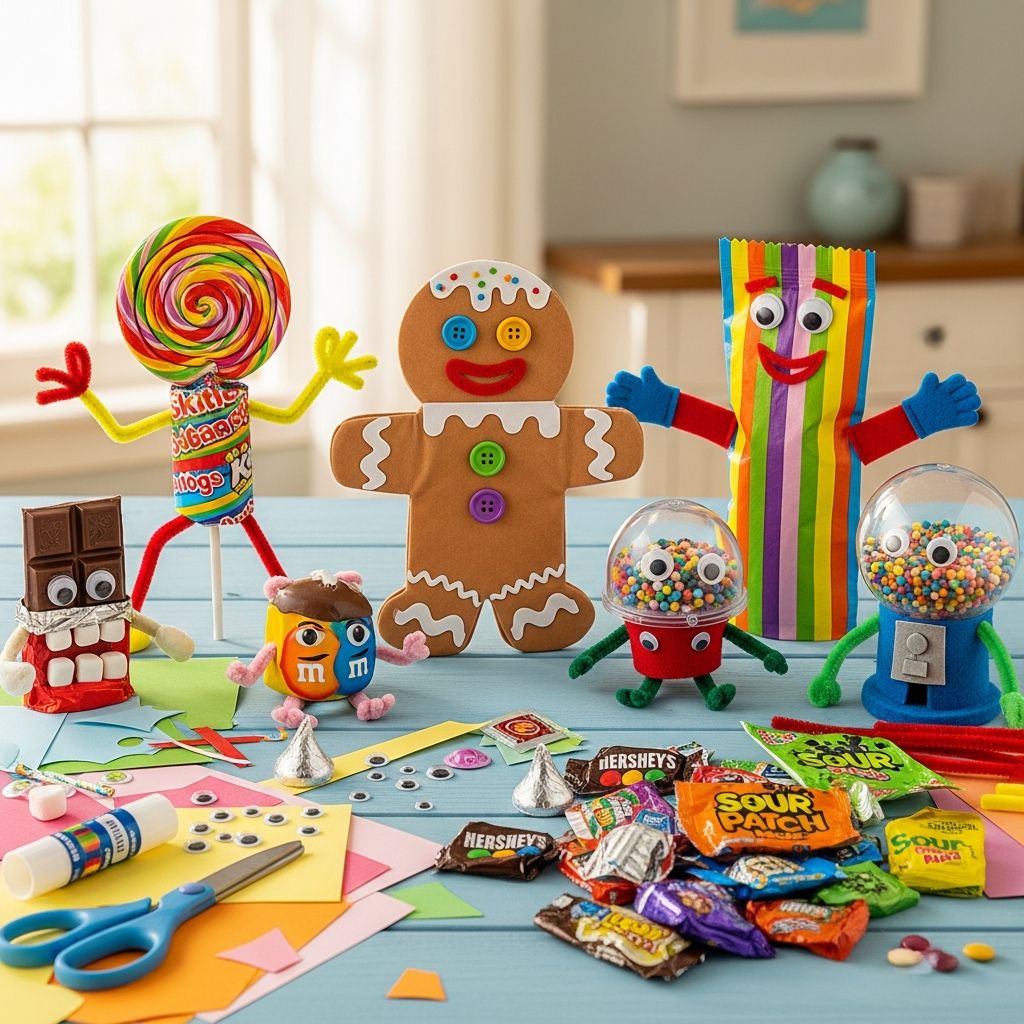
Transform the colorful world of candy into a hands-on puppet show that sparks imagination, storytelling, and plenty of giggles.
This guide walks you through creating candy-themed character puppets using basic craft supplies and optional print-at-home designs so kids can bring their favorite sweet personalities to life without screens.
Why Candy Characters Make Great Puppets
Candy-inspired characters are instantly recognizable, boldly colored, and full of personality, which makes them perfect for puppets that children can easily read and enjoy from across a room.
Instead of focusing on complex puppet mechanics, this project leans into simple shapes, expressive faces, and fun costumes that kids can customize to match their own style or favorite treats.
- Simple geometric candy shapes are easy for young crafters to cut and decorate.
- Bright colors help hold kids’ attention during both crafting and storytelling time.
- Each candy character can reflect a different mood, flavor, or personality.
Materials and Tools You Will Need
You can build these puppets almost entirely from items found in a typical household craft drawer or classroom supply box.
Choose sturdy paper and strong adhesive so that the puppets hold up to repeated play, especially if they will be used for storytime or classroom activities.
| Item | Purpose |
|---|---|
| Cardstock or light cardboard | Forms the main body of each candy character puppet. |
| Craft sticks or paper straws | Act as handles so kids can hold and move the puppets. |
| Markers, crayons, or colored pencils | Add facial expressions, patterns, and details. |
| Glue stick or craft glue | Attaches layers, accessories, and handles securely. |
| Safety scissors | Used to cut out candy shapes and accessories. |
| Optional printed templates | Provide pre-drawn shapes for younger children to color and cut. |
Planning Your Candy Crew
Before anyone reaches for scissors, spend a few minutes planning which candy-inspired characters will star in your puppet show.
Planning together encourages kids to think about personality traits, color palettes, and simple backstories that will later shape how they act out scenes with the puppets.
- Decide on a number of characters, such as a main hero, a sidekick, and a silly villain.
- Assign each candy a mood: bubbly, shy, mischievous, brave, sleepy, or super-energetic.
- Match colors to the candy’s personality (soft pastels for calm, neons for hyper, etc.).
Step-by-Step: Building a Basic Candy Puppet
This simple construction method works for nearly any candy shape, whether you imagine a wrapped sweet, a round gumdrop, or a striped lollipop character.
Adjust sizes so that the puppets are large enough for small hands to hold comfortably and for faces to be seen clearly during storytelling.
1. Create the Candy Shape
Start by drawing a large, bold candy outline on cardstock, leaving room for hair, hats, or other accessories.
Encourage kids to use simple shapes—circles, ovals, rectangles, or rounded squares—so the cutting step stays manageable for different age groups.
- Trace around household objects like cups or lids if freehand drawing feels intimidating.
- Offer pre-drawn outlines for younger crafters or group events to save time.
- Leave plenty of white space if kids want to design their own candy patterns.
2. Add Color and Candy Patterns
Fill in the shape with bold colors using crayons, markers, or colored pencils, building stripes, swirls, dots, or sprinkles to emphasize the candy theme.
Layering colors—like a light base with darker accents—helps the puppet look more dynamic without requiring advanced drawing skills.
- Use two or three main colors to avoid visual clutter.
- Add contrasting outlines around the edges to make the puppet pop against backgrounds.
- Consider using metallic pens or glitter glue for a special “sparkle” effect.
3. Design an Expressive Face
Draw oversized eyes, a clear mouth shape, and distinctive eyebrows to give each candy puppet a readable expression.
Changing only the eye shape and mouth curve can transform a simple candy disc into a curious explorer, a sleepy dreamer, or an overexcited prankster.
- Round eyes with small pupils suggest innocence or surprise.
- Half-closed eyes can signal a calm, laid-back personality.
- Thick eyebrows or a tilted mouth line can show mischief or determination.
4. Cut, Reinforce, and Attach the Handle
Once decorated, cut out the candy shape carefully and glue it to an extra layer of cardstock if you expect heavy play.
Attach a craft stick or paper straw to the back using a strong line of glue, pressing firmly and allowing it to dry completely before moving the puppet.
- Position the handle slightly off-center for better balance during movement.
- Use tape over the glued area on the back as an extra layer of reinforcement.
- Write the character’s name near the handle so kids can identify puppets quickly.
Inventing Candy Personalities and Backstories
Character depth makes puppet play much richer, even for young children, because it guides how they speak, move, and interact on their homemade stage.
Ask simple, open-ended questions about each candy character to help kids think beyond decorations and into personality.
- What does this candy character love to do each day?
- Is the character brave, shy, silly, or a mix of traits?
- What is the character’s favorite treat, friend, or place to visit?
Write these ideas on a note card or the back of the puppet so kids can remember details during performances.
Candy Puppet Style Guide: Character Ideas
To help families get started, use the following table of character ideas as light inspiration while still encouraging children to customize everything from scratch.
Each character concept suggests a shape, color theme, and personality hook that kids can adapt or completely reinvent.
| Character Idea | Basic Shape | Color Theme | Personality Hook |
|---|---|---|---|
| The Peppermint Explorer | Round disc with spiral lines | Red and white stripes | Curious, always looking for new candy lands. |
| The Marshmallow Dreamer | Soft rounded square | Pale pinks, blues, and purples | Gentle and imaginative, loves bedtime stories. |
| The Sour Spark | Jagged oval or starburst | Neon greens and yellows | Loud and energetic, always ready for adventure. |
| The Caramel Guardian | Tall rectangle with rounded corners | Warm browns and golds | Protective and kind, helps everyone follow the rules. |
| The Gummy Jester | Bean-shaped blob | Mixed rainbow colors | Clumsy and funny, loves silly jokes and pranks. |
Using Optional Printables Without Copying Designs
Many craft sites provide printable sheets with candy characters, but these should be used as starting points rather than final designs when aiming for originality.
Parents and teachers can print a base shape, then encourage kids to change colors, features, and accessories so each puppet becomes a unique creation rather than a direct copy.
- Color over printed outlines with new patterns and details.
- Add hats, capes, glasses, or mustaches cut from colored paper.
- Combine parts from multiple printouts to invent a brand-new character species.
From Craft Table to Stage: Puppet Play Ideas
Once the candy crew is complete, turn your living room, classroom, or backyard into a miniature theater where kids can direct and perform their own shows.
Puppet play strengthens storytelling skills, cooperation, and confidence as children experiment with voices, emotions, and problem-solving through make-believe scenarios.
Simple Story Prompts
- A candy carnival opens for one day only, but the rides keep disappearing.
- The hero must find a missing flavor that has vanished from Candy Town.
- A sour candy and a sweet candy have to team up to save their friends.
- Rain falls on Candy Street and starts to melt everything—who can fix it?
Interactive Games With Puppets
Beyond scripted stories, the puppets can star in quick games that work well for groups of kids at parties or playdates.
These games keep sessions short and active, making them ideal warm-ups or transitions between other activities.
- Candy Freeze Dance: Play music and let kids dance with their puppets; when the music stops, the puppets must “freeze” in a funny pose.
- Guess the Flavor: One child acts out a candy’s personality while others guess its “flavor” or mood.
- Trading Places: Kids swap puppets and invent new voices or personality twists for characters they did not create.
Adapting the Craft for Different Ages
This project can be scaled up or down in complexity so toddlers, elementary-age kids, and even preteens remain engaged at their own level.
Adjust supervision, tools, and creative expectations based on children’s ages and fine-motor skills.
- Toddlers: Provide pre-cut shapes and let them focus on coloring and simple sticker placement.
- Early elementary: Allow kids to draw, cut, and decorate their own shapes with gentle guidance.
- Older kids: Encourage layered designs, more detailed accessories, and developed character backstories.
Classroom and Party Uses
Candy puppets adapt well to group settings such as classroom projects, birthday parties, or holiday events where a themed craft doubles as entertainment.
By preparing basic shapes ahead of time, a host or teacher can keep the activity flowing smoothly while still leaving room for individual creativity.
- Use puppets to act out short stories during literacy lessons or library time.
- Let kids take their puppets home as party favors instead of plastic trinkets.
- Organize a quick puppet “parade” where children display and introduce their characters.
Safety, Durability, and Storage Tips
Because these puppets will be handled frequently, it is important to keep safety and durability in mind from the start of the project.
Simple steps such as using age-appropriate scissors, non-toxic materials, and sturdy reinforcements help ensure the puppets last through many shows.
- Choose blunt-tip scissors and supervise closely for younger children.
- Opt for non-toxic glue, markers, and paints labeled as child-safe.
- Store finished puppets upright in a box, jar, or basket to prevent bending.
Frequently Asked Questions
Can I reuse candy puppet templates for multiple events?
Yes, you can print base shapes as many times as needed, but encourage kids to personalize each new set with different colors, faces, and accessories so every event feels fresh.
How long do these puppets usually last?
With sturdy cardstock, reinforced handles, and careful storage, candy puppets can last through many storytelling sessions and classroom activities before showing significant wear.
Do I need a printer to do this craft?
No, a printer is optional; kids can draw their own candy shapes directly on cardstock or cardboard, which often leads to more unique and imaginative characters.
What if my child is not confident drawing faces?
Offer simple face guides, such as examples of different eye and mouth shapes, and remind kids that exaggerated, cartoon-style features are part of the fun and do not need to be realistic.
Can this craft connect to learning goals?
Yes, teachers and parents can link puppets to reading, writing, or social-emotional lessons by having kids act out stories, practice dialogue, or explore feelings and conflict resolution through their candy characters.
Bringing Sweet Stories to Life
Candy-themed character puppets offer a simple, flexible way to turn favorite sweets into playful storytellers that live far beyond a game or snack.
With basic supplies, a bit of planning, and plenty of imagination, families and educators can create a reusable cast of candy heroes and sidekicks ready for adventures on any homemade stage.