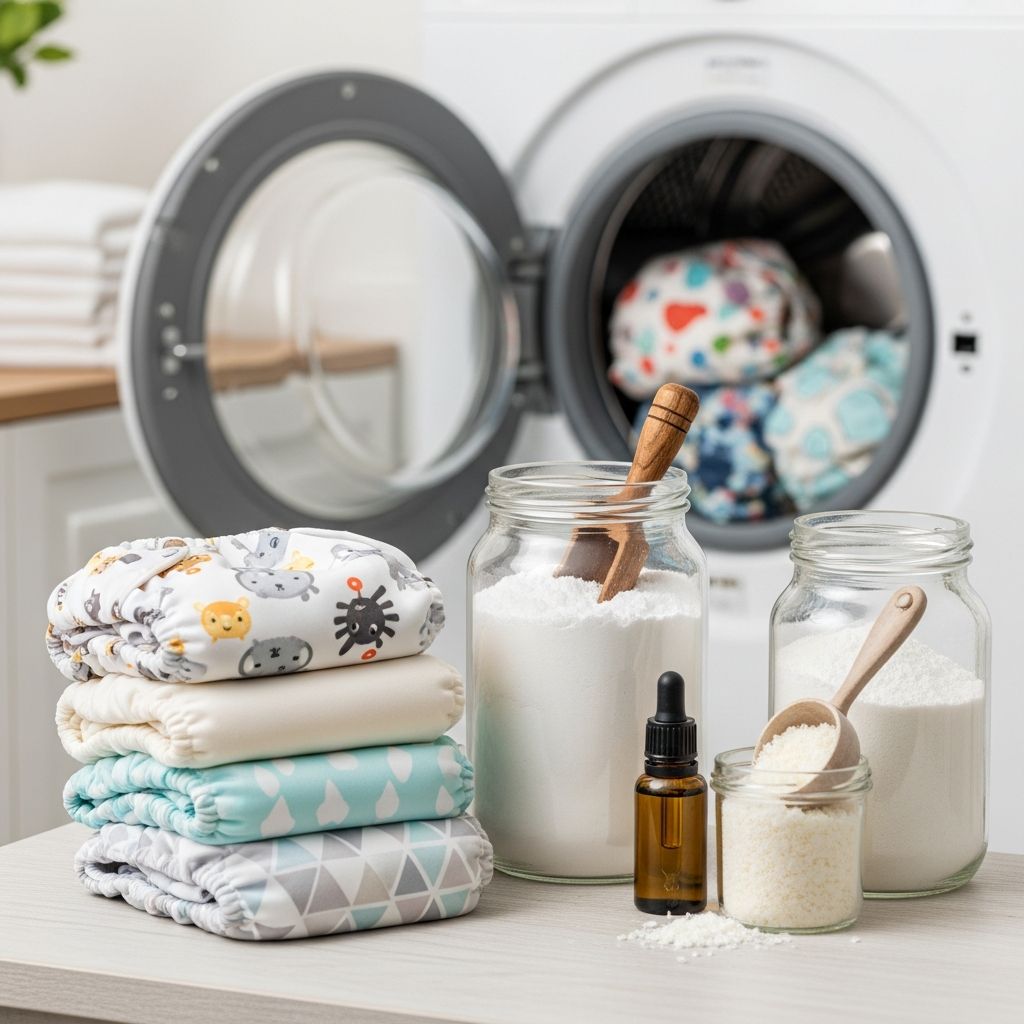
Cloth diapers appeal to many families because they promise less waste, lower long-term cost, and fewer chemicals against a baby’s skin. At the same time, homemade laundry detergents are popular for families who want to save money and control ingredients. Put those two ideas together and you get a big question: is it smart to wash cloth diapers with DIY detergent, and if so, how?
This guide explores how cloth diapers get clean, where homemade detergent can help or hurt, and how to make informed choices if you want to experiment without ruining your diapers or irritating your baby’s skin.
Why Parents Think About Homemade Detergent
Before diving into chemistry, it helps to understand the motivations that push families toward mixing their own laundry solution. Those motivations are valid, but they come with trade-offs that matter more for diapers than for regular clothes.
- Cost control: Cloth-diaper-safe detergents can be pricier than standard laundry soaps, especially for families washing frequent loads.
- Ingredient transparency: Some parents want products with fewer synthetic additives, fragrances, dyes, or brighteners around their baby.
- Environmental concerns: DIY formulas are often seen as more eco-friendly or low-waste, especially if they limit plastics or reduce transport footprint.
- Simplicity and self-sufficiency: Making your own mix can feel empowering, creative, and aligned with a more intentional lifestyle.
All of these reasons make sense, but cloth diapers are a tougher laundry challenge than typical t-shirts or towels. That’s where the fine print begins.
How Cloth Diapers Actually Get Clean
To decide whether a homemade solution is enough, you need a basic sense of how laundry works. Washing diapers is not just about making them smell good; it’s about removing waste, oils, and bacteria from multiple layers of fabric.
The four pillars of diaper washing
- Chemistry: Surfactants and (sometimes) enzymes loosen and lift urine, feces, skin oils, and residues from fabric.
- Water: Enough water must move through the fibers to flush out loosened soil and dissolved detergent.
- Time and agitation: Swishing, tumbling, and soaking help the detergent interact with all layers of the diaper.
- Temperature: Warm to hot water can improve cleaning power and help dissolve detergent more fully.
Commercial detergents are built around surfactants (cleaning agents) and sometimes enzymes, plus water conditioners and other helpers. Many DIY recipes, by contrast, are heavy on boosters and light on true detergent power.
Common DIY Detergent Ingredients and What They Do
Most homemade laundry recipes rely on a small family of ingredients. Some can be useful in moderation; others can cause buildup or even damage when used regularly on absorbent fabrics like diaper inserts.
| Ingredient | Main Role | Potential Issue for Cloth Diapers |
|---|---|---|
| Bar soap (grated) | Cleans skin and surfaces; adds basic cleaning action | Can leave a film on fibers, leading to buildup and reduced absorbency over time |
| Washing soda | Raises pH; helps water soften; supports cleaning action | Too much can be harsh on fabrics and skin; no cleaning by itself without surfactants |
| Borax | Water softener and detergent booster | Debated safety in baby products; does not replace real detergent |
| Baking soda | Deodorizer; mild water softener | Too much can upset skin balance and weaken elastics over time |
| Oxygen bleach powders | Stain removal and whitening | Overuse can fade prints and wear fibers, especially at high temperatures |
| Vinegar | Mild softener; helps dissolve some mineral deposits | In frequent use, may be harsh on elastics and some waterproof laminates |
Many DIY mixes rely mostly on softeners and boosters with only a small proportion of real cleaning agents. That imbalance is what often causes trouble for diaper laundry in particular.
Benefits Parents Hope For — And What Often Happens Instead
It is possible to have a positive experience with homemade detergent on cloth diapers for a while, especially in soft water and with natural fiber inserts. However, it is important to balance hopes with realistic outcomes seen by many families.
Perceived advantages of homemade detergent
- Lower upfront cost: A large batch of DIY powder can seem cheaper per load than some specialty detergents.
- Customizable scent: Some recipes use essential oils in small amounts for fragrance, so parents can control or skip scent entirely.
- Minimalist ingredient lists: Parents may feel reassured by recognizing every item in the recipe.
Common problems that appear over time
- Lingering odors: Diapers may smell fine out of the dryer but develop a strong urine or “barnyard” odor once the baby wets them.
- Leaks and repelling: Soap film can coat fibers so liquid beads on top instead of soaking in, leading to leaks and blowouts.
- Rashes and irritation: Incomplete rinsing or bacterial buildup can cause redness, ammonia burns, or persistent rashes on baby’s skin.
- Extra stripping sessions: Parents may need frequent intensive cleaning routines to undo buildup, which costs time, water, and sometimes extra products.
These issues do not show up after just one or two washes. They tend to appear gradually, which can make it difficult to link the problem back to the detergent choice.
When Homemade Detergent Is Especially Risky
Not every cloth diaper system responds the same way to the same wash routine. Some combinations are much more sensitive to soap film, water hardness, and ingredient balance than others.
Situations where DIY is more likely to fail
- Hard water households: Mineral-heavy water makes it harder for any cleaning agent to work and can lock soap scum into fabrics.
- Microfiber inserts: Synthetic fibers show repelling and odor problems quickly if coated in residue.
- High-efficiency machines: Low-water washers are less forgiving because there is less water to rinse away excess soap and boosters.
- Night or heavy-wetter diapers: These diapers are heavily loaded with urine by morning, so weak detergent formulas struggle the most.
Families with very soft water, mostly natural fiber diapers (cotton, hemp, bamboo), and a top-loading washer may get away with DIY solutions for longer, but even then it requires careful observation and willingness to change course.
A Cautious Approach: If You Still Want To Try DIY
Some parents will want to experiment with homemade detergent regardless of warnings, and that is a personal choice. The goal then becomes risk reduction rather than perfection. There are ways to structure your routine so that problems are caught early and damage is minimized.
Practical guidelines for lower-risk experimentation
- Limit DIY to non-diaper laundry first: Test your recipe on towels and adult clothes for several weeks before using it on diapers.
- Avoid heavy reliance on bar soap: Keep the soap portion modest and ensure it dissolves completely before adding diapers to the washer.
- Skip or minimize fragrance oils: Essential oils can be irritating and do not improve cleaning performance.
- Rinse, then rinse again: Add an extra rinse cycle for diaper loads to help remove any lingering solution or loosened soil.
- Rotate with a proven detergent: Some families alternate between a homemade mix and a commercial detergent to prevent long-term buildup.
Think of DIY detergent as a trial project, not a fixed identity. If diapers start to smell, leak, or bother your baby, treat that as data, not failure.
Reading the Signs: Is Your Diaper Routine Working?
The question is not whether the diapers look bright; it is whether they are genuinely clean and safe against your baby’s skin. Tuning into these signals will help you decide if your detergent, homemade or not, is doing its job.
Healthy signs
- Neutral smell after washing and after baby wets: A faint detergent scent is fine, but no sharp ammonia or sour odor should appear during use.
- Soft but not slimy feel: Inserts and prefolds should feel clean and dry, not slick or waxy.
- Steady absorbency: If your diaper system fit well before, it should continue to hold the same amount without sudden leaks.
- Comfortable skin: Occasional redness can happen, but recurring burns or rashes are a red flag.
Warning signs to act on quickly
- Strong ammonia smell in the morning: This suggests urine is not being fully removed during the wash cycle.
- Persistent barnyard or mildew odor: Indicates trapped bacteria or incomplete rinsing.
- Liquid beading on the surface: Points to residue blocking absorbency.
- Red, shiny, or peeling skin: Could be ammonia burn or irritation from trapped detergent or bacteria.
If any of these appear, it is wise to pause the homemade experiment, deep clean the diapers, and switch to a more robust detergent at least temporarily.
Rescuing Diapers After DIY Detergent Buildup
If things have already gone off track, it does not necessarily mean your entire stash is ruined. In many cases, diapers can be rehabilitated with some targeted steps, though it may take time and effort.
Steps to clean up residue and odor
- Switch detergents immediately: Move to a strong, mainstream detergent without fabric softeners for now.
- Perform a deep clean: Wash diapers several times in hot water with recommended amounts of detergent to help strip out soap film and trapped waste.
- Use a safe sanitizer if needed: Some families use carefully measured bleach or specialized laundry sanitizers on occasion, following manufacturer and diaper-brand instructions.
- Dry thoroughly: Sun-dry when possible to help with odors and stains, or use a dryer on an appropriate setting per the diaper brand’s care guide.
After this reset, monitor closely. If diapers behave like they did when new—no odor, strong absorbency, calm skin—you have likely cleared the bulk of the buildup.
Balancing Values: Eco, Budget, and Baby’s Skin
Parents often feel torn between environmental ideals, financial limits, and the desire to avoid harsh chemicals. Cloth diapers themselves are already a major step toward waste reduction, so it can help to see detergent choice as part of a bigger picture, not a purity test.
- Eco priorities: Using a highly effective detergent that keeps diapers functioning might lead to less total waste than cycling through damaged diapers or quitting cloth altogether.
- Budget realities: A reliably cleaning detergent can prevent the cost of replacing ruined diapers, treating severe rashes, or buying disposables under time pressure.
- Skin health: For most babies, thoroughly rinsed detergent is less of a problem than lingering bacteria and ammonia.
You do not have to choose between being environmentally conscious and using an effective commercial detergent. Many plant-based or low-additive options exist that offer a middle road, though they sometimes require slightly higher doses or warmer water to perform well.
Sample Wash Routine Using a Hybrid Approach
For families who like the idea of DIY but want extra insurance for diaper loads, a hybrid approach can work well. Below is an example routine; you can adjust for your machine, water hardness, and diaper type.
- Pre-rinse or quick wash: Rinse diapers in cool or warm water with no detergent to remove the bulk of waste.
- Main wash: Use a measured amount of a proven detergent for diaper loads; save any homemade mix for non-diaper laundry.
- Optional booster: Only if truly needed, add a small amount of an approved booster (such as oxygen bleach) occasionally, not every wash.
- Extra rinse: If your machine allows, add an extra rinse to make sure all residue is flushed out.
This pattern preserves the spirit of DIY and low-tox living for much of your laundry while giving cloth diapers the thorough cleaning they demand.
Frequently Asked Questions
Can homemade detergent ever be completely safe for cloth diapers?
No detergent choice is universally safe because water type, machine style, diaper materials, and baby’s skin all vary. A very simple homemade formula might work acceptably in certain conditions for a time, but it is rarely as reliable for diapers as a well-formulated commercial product that includes strong surfactants and rinses cleanly.
Is it better to use a “natural” commercial detergent than a homemade one?
For cloth diapers, a commercial detergent designed to clean heavily soiled laundry—whether standard or plant-based—usually outperforms homemade mixes in consistency and cleaning strength. A natural or low-additive detergent can still align with eco and ingredient concerns while protecting diaper function and your baby’s skin.
Will using bar soap in my recipe always cause buildup?
Not always immediately, but bar soaps are more likely to leave a film than properly formulated detergents, especially in hard water or low-water machines. Since diapers need to stay highly absorbent, even slow, invisible buildup from soap can eventually cause repelling and odor issues.
What if my diapers seem fine after months of DIY detergent?
If there are no odors, leaks, or skin issues, your current setup may be working for you. Still, it is wise to remain alert for subtle changes and periodically run a more intensive wash with a stronger detergent as a preventative measure against hidden buildup.
Are there safer things I can DIY for cloth diapering instead?
Absolutely. Many parents successfully make cloth wipes solution, reusable liners from fleece, or simple diaper creams that are safe for cloth. These projects let you enjoy the creative, frugal side of DIY without putting the cleaning power of your diaper routine at risk.
Final Thoughts for Practical Parents
Cloth diapering is already a meaningful commitment; adding homemade detergent on top introduces extra variables. If you choose to experiment, do it with clear eyes, gentle skepticism, and a willingness to change course quickly for your baby’s comfort. Your success with cloth diapers will come less from a perfect recipe and more from paying attention, staying flexible, and being kind to yourself as you learn what works in your home.