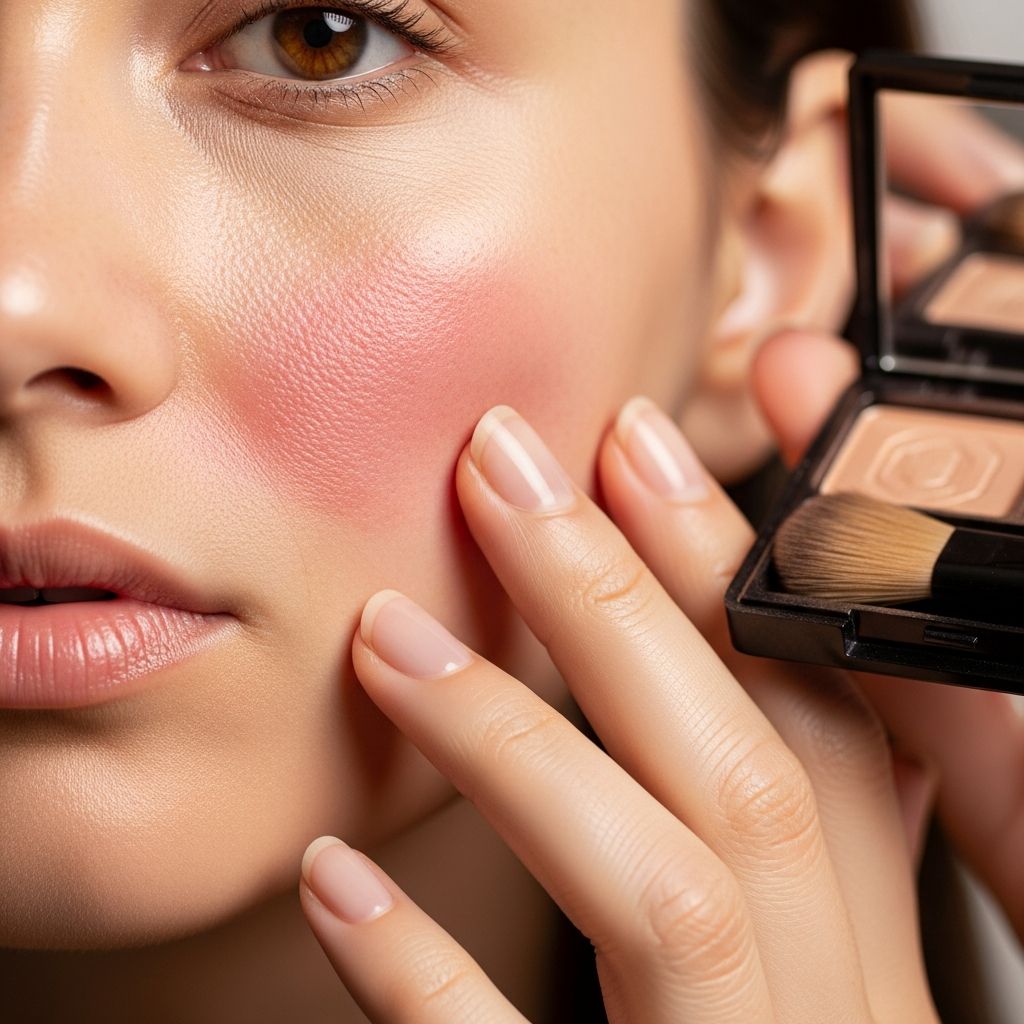
Mineral makeup has a reputation for being “clean,” gentle, and good for problem skin, but some people still develop redness, itching, or rashes after using it. If you have noticed angry skin after applying products like loose mineral foundations, this guide walks through how to recognize a potential reaction, what ingredients may be involved, and what to do next.
Mineral Makeup: Why It Isn’t Always Gentle
Mineral makeup usually relies on finely milled minerals (such as zinc oxide, titanium dioxide, and iron oxides) instead of traditional liquid foundation bases. These formulas often skip fragrance and some preservatives, which is why many brands market them as “better for sensitive skin.” However, “mineral” or “natural” does not automatically mean non-irritating. Any ingredient, including a mineral, can bother the wrong skin type.
Some mineral formulas also include extra ingredients for shine, slip, or staying power. Those additions can be the real culprits when someone begins to experience itching, burning, or delayed rashes even though they assumed mineral makeup would be safer than conventional products.
Common Signs Your Skin Dislikes a Mineral Foundation
A reaction to mineral makeup can show up quickly, within minutes to hours, or it may appear gradually after days of consistent use. Watching for patterns is more important than obsessing over a single bad-skin day.
- Red or pink patches that show up where you applied the makeup, especially on cheeks, forehead, chin, or along the jawline.
- Generalized flushing that makes your face look sunburned or overheated even when you have not been in the sun.
- Persistent itchiness or a “pins and needles” or crawling sensation after application.
- Dry, tight, rough, or sandpaper-like texture that worsens the more days you wear the product.
- Small bumps or hive-like welts that appear after you remove your makeup at night or the next morning.
- Burning or stinging when you wash your face, even with products that did not bother you before.
If you have a history of allergies (to metals, jewelry, fragrances, or certain skincare products), your risk of reacting to a problematic ingredient in makeup may be higher, and subtle symptoms are worth paying attention to rather than pushing through them.
Ingredients in Mineral Makeup That Often Cause Trouble
Many people can wear mineral foundations with no problems; others discover that a single ingredient is driving their skin wild. Learning to read the label is one of the most powerful things you can do for your face.
Bismuth oxychloride and other “shimmer boosters”
Bismuth oxychloride is a pearly, synthetic mineral often added to loose powders and foundations to create a soft glow and help the powder cling to the skin. For some users, this ingredient is linked with itchiness, persistent redness, or hive-like bumps, particularly when they sweat or wear the makeup for long hours.
Because it is not essential for coverage or sun protection, one practical step for sensitive or reactive skin is to seek out mineral foundations that are clearly labeled bismuth-free. Many niche and sensitive-skin brands highlight this on their packaging precisely because some users cannot tolerate it.
Other potential irritants and triggers
Even when a formula looks minimal, a few common components may still provoke irritation or allergy in certain people.
- Mica: A light-reflecting mineral used for glow and slip; it can be scratchy or irritating for very sensitive or compromised skin.
- Dyes and colorants: Iron oxides and ultramarines provide color; most people tolerate them well, but a small number react to specific shades.
- Preservatives in companion products: While pure powders often have few preservatives, primers, liquid mineral foundations, and setting sprays may contain common preservative allergens.
- Fragrance: Some “natural” powders still contain essential oils or fragrance blends, which can be just as irritating as synthetic scents.
It is also possible to react to your brush cleanser, makeup remover, or even residue left in dirty brushes, so consider everything that touches your skin, not just the compact or jar.
Typical Mineral Makeup Reactions vs. Other Skin Problems
Not every flare-up while wearing foundation is an allergy. Sometimes mineral makeup simply highlights dryness or clogged pores that were already there. Still, persistent changes that track closely with a specific product deserve a closer look.
| Type of issue | What it looks/feels like | When it usually appears |
|---|---|---|
| Immediate irritation | Burning, stinging, or itching within minutes; skin may turn pink or red quickly. | Often during or shortly after application. |
| Delayed hypersensitivity | Rash, hives, or rough patches that develop hours to days later; symptoms may worsen with repeated use. | After several days of continuous wear or after stopping the product. |
| Contact dermatitis | Dry, flaking, scaly, or eczema-like patches in the exact areas where makeup was applied. | Gradually over days or weeks, especially with daily use. |
| Acne-like breakouts | Clogged pores, small bumps, or pimples; may or may not be itchy. | Over time when a product is slightly comedogenic for your skin. |
How to Do a Safe Patch Test With Mineral Foundation
Before committing your entire face to a new mineral foundation, a structured patch test can help you catch issues early. This process is not perfect, but it can significantly reduce the risk of a full-face flare.
- Choose a low-visibility test spot. The side of the neck, just below the jawline, or behind the ear works well. Avoid broken or already irritated skin.
- Apply a small amount of the product. Use clean fingers or a freshly washed brush to dust a thin layer on the chosen area.
- Leave it on for at least 8–12 hours. Do not wash it off early unless you feel intense burning, stinging, or swelling.
- Repeat once daily for 2–3 days. Some reactions are delayed; repeating the test helps detect sensitivity that builds with exposure.
- Watch for changes. Redness, itching, rash, or tiny bumps are signals that this formula may not be a match for your skin.
If the patch test is uneventful, you can move on to using the product on half of your face for a few days while leaving the other half bare or with a trusted product; this side-by-side comparison can sometimes reveal subtle irritation you might otherwise ignore.
What to Do When Your Skin Flares After Mineral Makeup
If you suspect your mineral foundation is causing problems, quick, calm, and consistent steps can shorten the life of the flare and help you figure out what went wrong.
- Stop using the suspected product immediately. Do not keep testing it on “just one more day” to be sure; continuing exposure can make the reaction more intense.
- Wash your face gently. Use a bland, fragrance-free cleanser with lukewarm (not hot) water, and pat dry with a soft towel.
- Simplify your routine. Pause exfoliants, retinoids, and strong actives; focus on gentle, hydrating products only.
- Use a barrier-supporting moisturizer. Look for creams that contain soothing ingredients like ceramides, glycerin, or colloidal oatmeal, and avoid heavy fragrance.
- Consider over-the-counter relief. Some people find benefit from topical hydrocortisone used briefly, or from oral antihistamines, but this should be guided by a healthcare professional, especially for frequent or severe reactions.
- See a dermatologist if symptoms persist. Prolonged rashes, swelling, blistering, or breathing problems require medical attention and may call for prescription-strength treatment.
Once the skin has calmed down, it is wise to avoid re-testing the same product on your own face. Instead, bring the packaging, photos of your reaction, and a list of all products used to a dermatologist or allergy specialist for guidance.
How a Dermatologist or Allergist Can Help
When reactions are persistent, severe, or confusing, professional evaluation does more than simply confirm that “something” irritated you. In many cases, experts can help identify specific chemical triggers so you can avoid them across all your makeup and skincare.
Your dermatologist or allergist may recommend patch testing with panels of common cosmetic allergens, including metals, fragrances, preservatives, and certain pigments. They can then provide a list of safe ingredient families and discuss how to decode future labels, which is especially useful if you have multiple sensitivities.
Choosing Gentler Alternatives to Problematic Mineral Formulas
If you have reacted to one mineral makeup, it does not necessarily mean you must abandon all powder foundations. However, it is important to choose future products with greater care and realistic expectations.
- Seek bismuth-free mineral foundations. Many sensitive-skin lines advertise “no bismuth oxychloride” right on the front label.
- Prioritize fragrance-free and essential-oil-free options. This reduces the overall irritant load on already reactive skin.
- Look for short ingredient lists. Fewer extras generally mean fewer potential triggers, making detective work easier if you do react.
- Consider pressed rather than loose powders. Pressed formats may kick up less dust, which is useful if you are concerned about inhalation or eye irritation.
- Do not overlook non-mineral sensitive-skin foundations. Some liquid or cream formulas labeled for rosacea-prone or eczema-prone skin may outperform mineral powders for you personally.
Many brands also offer sample sizes or travel kits; trying a smaller quantity first is a wallet-friendly way to see how your skin (and your daily routine) handle a new product.
Application Habits That Can Make Reactions Worse
Sometimes the problem is not only the formula but how it is used. A few small changes to your technique and tools can lower your risk of irritation even with products that are otherwise well tolerated.
- Over-buffing the skin. Aggressive, circular buffing motions with a densely packed brush can physically irritate the skin and push powder into pores and fine lines.
- Using too much product. Thick layers can trap sweat and oil, leading to more itching and clogged pores throughout the day.
- Dirty brushes. Old makeup, skin oils, and bacteria accumulating in brushes can cause breakouts and worsen redness.
- Stacking too many base products. Applying primer, mineral foundation, concealer, setting powder, and finishing veil can create a heavy film that your skin cannot tolerate.
Switching to softer brushes, using lighter pressure, and washing tools regularly with a gentle cleanser can make your existing makeup less likely to cause problems, especially if your skin barrier is already delicate.
When to Stop Immediately and Seek Urgent Care
Most foundation reactions are limited to the skin and, while miserable, are not life-threatening. But a small number of people can experience more serious responses that go beyond local redness or itch.
- Significant facial swelling, particularly around the eyes, lips, or tongue.
- Difficulty breathing, wheezing, or tightness in the chest.
- Widespread hives across the body, not just where makeup was applied.
- Dizziness, feeling faint, or a sense that your throat is closing.
These symptoms warrant emergency medical care. Once stabilized, follow-up with an allergy specialist can help determine whether a specific ingredient in your makeup, or another exposure around the same time, triggered the reaction.
FAQs About Mineral Makeup and Possible Allergies
Does reacting to one mineral foundation mean I am allergic to all mineral makeup?
No. A reaction usually points to sensitivity to a specific ingredient or combination of ingredients, not the entire category of mineral products. You may tolerate another brand that leaves out your particular trigger, especially if it has a shorter, simpler ingredient list.
Can I be allergic only on certain parts of my face?
Yes. Some people react primarily on the cheeks, forehead, or near the nose while the rest of the face looks relatively calm. Local factors like thinner skin, more friction from brushes, or previous damage (such as old sunburns or eczema patches) can make specific zones more vulnerable.
Why did my reaction appear after weeks or months of normal use?
Certain types of hypersensitivity develop over time as your immune system becomes more familiar with an ingredient and then begins to see it as a threat. Repeated exposure can eventually cross a personal threshold, resulting in a reaction that seems sudden even though you have used the product for a while.
Is mineral makeup safer if I have acne?
Mineral foundations can work well for some acne-prone skin because many are low in oils and fragrances, but they are not automatically safe for everyone with breakouts. Comedogenicity depends on the full formula and your skin’s individual tendencies, so patch testing and cautious introduction are still important.
Can I keep other products from the same brand if one item caused a reaction?
It depends. If the problematic ingredient is unique to that one formula, other products from the brand may still be fine. However, many companies reuse favorite ingredients across multiple items, so you should compare ingredient lists carefully and, ideally, review them with a dermatologist before continued use.
How long does it take skin to recover after stopping a triggering mineral foundation?
Mild irritation can calm within a few days of stopping the product and simplifying your routine, while more intense reactions or eczema-like flares may take several weeks to fully resolve. During this time, gentle skincare, sun protection, and avoiding new experiments are key.
With a bit of detective work and patience, it is possible to enjoy makeup again without sacrificing your skin’s comfort. Paying attention to early warning signs, learning your personal trigger ingredients, and patch testing thoughtfully will dramatically reduce the risk that your next “holy grail” foundation turns into an unexpected skin nightmare.