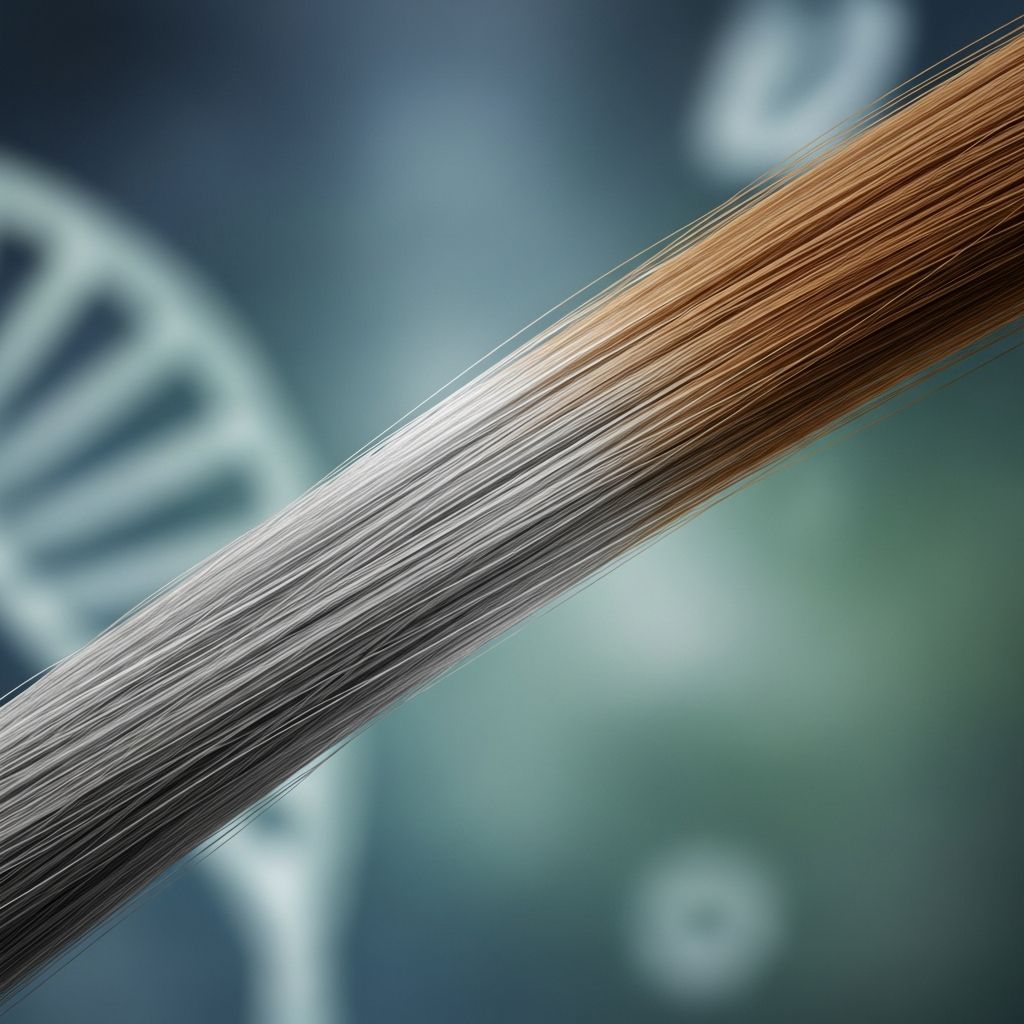
Gray hair has long symbolized inevitable aging, but recent scientific discoveries challenge this notion, revealing that hair pigmentation loss can be reversible under specific conditions. Advances in cellular biology and stress research demonstrate that melanocyte stem cells (McSCs) play a pivotal role, and interventions targeting their behavior could restore color.
The Cellular Mechanics Behind Hair Color Loss
Hair color arises from melanocytes, specialized cells that produce pigments like eumelanin for dark tones and pheomelanin for lighter shades. These cells originate from McSCs housed in hair follicles. In youthful hair cycles, McSCs migrate from a protective niche called the bulge to the hair germ, where WNT signaling proteins activate them to differentiate into pigment-producing melanocytes.
Disruptions occur when McSCs fail to relocate properly. Studies using live imaging and single-cell RNA sequencing on mouse models show that during repeated hair regrowth cycles, these cells remain trapped in the bulge, missing critical activation signals. This stagnation leads to fewer mature melanocytes, resulting in unpigmented, gray strands.
Human relevance is striking: the same positional defects in McSCs may underlie graying, suggesting therapies that promote cell mobility could reinstate color production. Unlike total stem cell depletion, which might make graying permanent, early-stage jamming offers a window for reversal before McSCs are exhausted.
Stress as a Trigger for Premature Graying
Chronic stress accelerates graying by altering cellular function. Researchers analyzed human hairs alongside stress diaries, finding direct correlations: hairs exhibited color loss during high-stress periods, such as breakups or job hunts, followed by repigmentation upon stress relief.
One compelling case involved a hair with a white segment corresponding to two months of intense life stressors, flanked by pigmented sections before and after. This ‘banded’ pattern proves individual hairs can regain color weeks or months post-stress, contrasting mouse studies implying permanence.
Mechanistically, stress impacts mitochondria within hair follicle cells. Proteomic analysis revealed shifts in 300 proteins along hairs coinciding with color changes. A mathematical model links stress-induced mitochondrial dysfunction to halted pigment synthesis, highlighting the mind-body connection in aging markers like gray hair.
- Key Stress Effects: Elevated cortisol disrupts McSC migration and melanocyte activity.
- Reversibility Evidence: Color returns when stress resolves, indicating dynamic, not fixed, damage.
- Broader Implications: Suggests aging processes may be malleable through lifestyle interventions.
Spontaneous Repigmentation: Real-World Cases
Beyond lab models, spontaneous darkening of gray hairs occurs across demographics. A 2020 study crowdsourced hairs showing tips graying mid-strand then recoloring at roots, uncorrelated with age, gender, or ethnicity. This happens in single growth phases (anagen), hinting at resilient McSC pools.
Pharmacological repigmentation adds evidence. Tyrosine kinase inhibitors (TKIs), immunomodulators, and monoclonal antibodies have induced hair darkening as side effects. For instance, drugs targeting immune pathways unexpectedly boosted melanogenesis, possibly by reactivating dormant McSCs.
Micro-injuries or tumor-related changes also trigger repigmentation, underscoring that external stimuli can jolt stalled pigmentation machinery back online.
| Factor | Mechanism | Example Outcome |
|---|---|---|
| Stress Reduction | Mitochondrial recovery | Banded hairs regain root color |
| Drug Therapies | McSC reactivation | Diffuse darkening in patients |
| Cellular Migration Fix | WNT signaling restoration | Potential for targeted treatments |
Pathways to Therapeutic Interventions
Targeting McSC dynamics offers hope for topical or systemic treatments. Early graying, before full McSC depletion, is prime for reversal. Strategies include:
- Compounds mimicking WNT signals to prompt bulge-to-germ migration.
- Antioxidants protecting mitochondrial function against stress.
- Micro-needling or growth factors to stimulate follicle niches.
While permanent cures remain elusive, partial repigmentation is feasible if residual McSCs persist. Researchers emphasize preserving these cells to maintain reversal potential.
Future trials may test small molecules or gene therapies to unjam McSCs, potentially extending to other aging traits.
Lifestyle Strategies to Combat Graying
While awaiting therapies, evidence-based habits can mitigate graying:
- Stress Management: Meditation, exercise, and therapy reduce cortisol, fostering repigmentation as seen in human studies.
- Nutrient Support: Catalase-boosting foods (avocados, sprouts) counter hydrogen peroxide buildup, a graying contributor.
- Scalp Health: Massage enhances circulation, aiding McSC signaling.
- Avoid Toxins: Smoking depletes melanocytes; cessation preserves color longer.
These approaches, grounded in observational data, complement emerging science without promising miracles.
Debunking Gray Hair Myths
- Myth: Graying is purely genetic. Genetics set onset, but stress and environment modulate it.
- Myth: Plucking grays more hairs. No evidence; each follicle acts independently.
- Myth: Gray hair is brittle. Pigment loss doesn’t impair strength; hydration matters more.
Frequently Asked Questions
Can stress really cause gray hair?
Yes, proteomic and diary-linked studies confirm stress triggers graying via mitochondrial changes, reversible upon relief.
Is gray hair reversal possible for everyone?
It depends on residual McSCs; early graying responds best before depletion.
Will there be a pill to reverse gray hair soon?
Promising research targets McSC mobility, but human trials are needed.
Does diet affect hair color?
Antioxidant-rich diets may slow oxidative stress-related graying indirectly.
Can gray hair turn color naturally?
Yes, banded hairs show spontaneous repigmentation post-stress or spontaneously.
References
- Gray hair may soon be reversible at cellular level, according to study results — Earth.com. 2024-04-22. https://www.earth.com/news/gray-hair-may-soon-be-reversible-at-cellular-level-according-to-study-results/
- We may finally have a way to reverse grey hair — BBC Science Focus Magazine. 2023-06-12. https://www.sciencefocus.com/wellbeing/why-hair-greying-science-reverse
- It’s True: Stress Does Turn Hair Gray (And It’s Reversible) — Columbia University Irving Medical Center. 2021-06-22. https://www.cuimc.columbia.edu/news/its-true-stress-does-turn-hair-gray-and-its-reversible
- Reversing Gray Hair: Inspiring the Development of New Therapies — PMC (PubMed Central). 2023-10-01. https://pmc.ncbi.nlm.nih.gov/articles/PMC10535703/