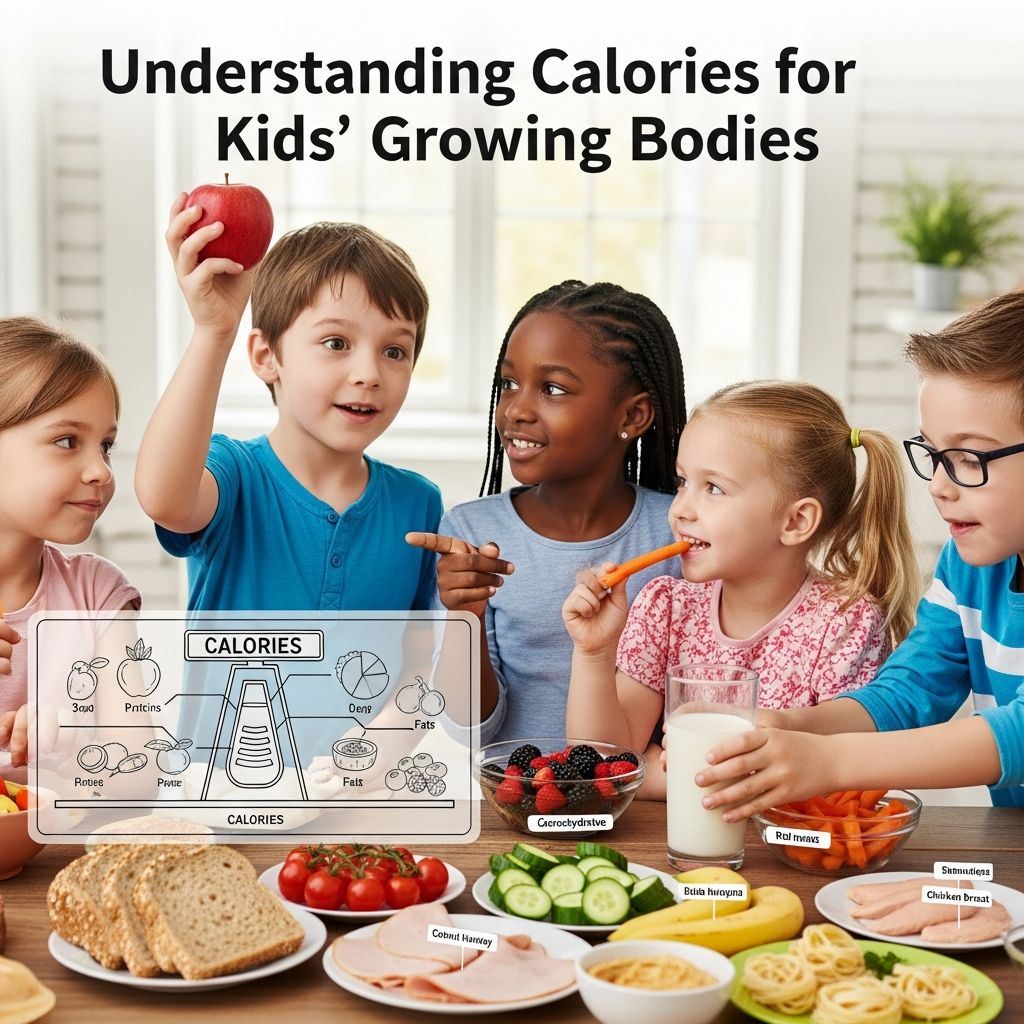
Every jump, laugh, class, and game of tag needs energy. That energy comes from calories in the foods and drinks kids enjoy each day. Knowing what calories are and how they work helps families make choices that support healthy growth, strong muscles, and active minds.
What Is a Calorie?
A calorie is a unit that measures energy in food and drinks. Your body uses that energy to:
- Keep your heart beating and lungs breathing
- Fuel your brain so you can think, read, and learn
- Move your muscles when you walk, run, dance, or play sports
- Grow taller, build bones, and repair body tissues
Even when you are sitting still, your body is busy. It needs a steady supply of energy from calories all day long.
Where Do Calories Come From?
Calories come from three main nutrients in food:
- Carbohydrates (carbs) – found in fruits, grains, beans, milk, and some vegetables
- Proteins – found in meat, poultry, fish, eggs, beans, nuts, and dairy
- Fats – found in oils, nuts, seeds, fish, avocado, and dairy
Each gram of carbohydrate and protein has about 4 calories, and each gram of fat has about 9 calories. Fat packs more energy in a small amount, which is why high-fat foods are often higher in calories.
Energy In and Energy Out
Your body is always balancing energy:
- Energy in: calories you eat and drink
- Energy out: calories your body uses for breathing, digesting, playing, and growing
Over time:
- If energy in and energy out are about equal, weight tends to stay the same.
- If you usually take in more calories than your body uses, extra energy is stored as body fat.
- If you take in fewer calories than your body needs for a long time, it may be harder to grow and stay healthy.
How Many Calories Do Kids Need?
There is no single perfect number of calories for every child. Needs change with:
- Age – older kids and teens usually need more than younger kids
- Sex – boys often need slightly more than girls after puberty
- Activity level – very active kids need more energy than less active kids
- Growth rate – growth spurts may temporarily increase calorie needs
Health organizations provide ranges to help families plan balanced meals. These examples assume typical growth and a moderate activity level.
| Age Range | Girls (approx.) | Boys (approx.) |
|---|---|---|
| 4–8 years | 1,200–1,800 calories/day | 1,200–2,000 calories/day |
| 9–13 years | 1,400–2,200 calories/day | 1,600–2,600 calories/day |
| 14–18 years | 1,800–2,400 calories/day | 2,000–3,200 calories/day |
These are general guidelines, not strict rules. Some kids will need more or less than these ranges. A pediatrician or registered dietitian can help with specific questions about your child.
Not Just How Many Calories, But What Kind
Two snacks may have the same number of calories but totally different effects on the body. Experts encourage kids to get most of their calories from nutrient-dense foods—foods that provide vitamins, minerals, fiber, and other helpful nutrients along with energy.
Everyday Foods: Great Energy Choices
- Fruits: fresh, frozen, or canned in water or 100% juice
- Vegetables: colorful options like carrots, spinach, peppers, and broccoli
- Whole grains: whole-wheat bread, brown rice, oats, whole-grain pasta
- Lean proteins: chicken, turkey, fish, beans, lentils, tofu, eggs
- Dairy or fortified alternatives: low-fat milk, yogurt, cheese, or fortified soy drinks
- Healthy fats: nuts, seeds, avocado, and oils like olive or canola
Sometimes Foods: High in Calories, Low in Nutrients
Some foods and drinks have a lot of calories but very few helpful nutrients. These are often called “empty calories.”
- Sugary drinks like soda and many sports or energy drinks
- Candy and chocolate bars
- Chips, fries, and other heavily fried snacks
- Desserts like cookies, cakes, donuts, and ice cream
Kids do not have to completely avoid these foods, but it helps to have them less often and in small amounts. Many health experts recommend limiting calories from added sugars and solid fats so that most daily energy comes from nutritious choices.
How Calories Help Kids Grow and Learn
When kids get the right amount of calories from healthy foods, it supports:
- Steady growth in height and weight
- Strong bones and muscles
- Healthy brain development and school performance
- Stable energy levels throughout the day
- Good mood and focus for learning and play
Under-consuming calories for long periods can lead to tiredness, difficulty concentrating, and slower growth. Consistently taking in far more calories than the body uses can increase the risk of unhealthy weight gain and related health problems over time.
Listening to Hunger and Fullness Signals
Bodies are equipped with built-in signals that help manage energy in and out. Kids can learn to pay attention to those signals:
- Hunger signs: stomach growling, low energy, finding it hard to focus
- Comfortable fullness: feeling satisfied, not stuffed; no longer thinking about food
- Overfullness: stomach discomfort, sluggishness, feeling like you ate too much
Children often do well when adults:
- Offer regular meals and snacks with balanced foods
- Avoid pressuring kids to “clean their plate” if they say they are full
- Do not use food as a reward or punishment
- Provide water instead of sugary drinks to quench thirst
Calories and Physical Activity
Activity is a major part of how kids use the calories they eat. Health organizations recommend that most school-aged children get at least:
- 60 minutes or more of moderate-to-vigorous physical activity each day, such as brisk walking, biking, sports, or active games.
When kids move more, their bodies usually need more calories. When they are less active, they may need fewer. Over time, matching calories eaten with calories burned helps maintain a healthy weight.
Making Smart Calorie Choices at Meals and Snacks
Families can use simple strategies to keep calories working for kids instead of against them.
Build a Balanced Plate
For most meals, aim for:
- About half the plate filled with fruits and vegetables
- About one-quarter with whole grains (like brown rice, whole-grain bread, or whole-wheat pasta)
- About one-quarter with lean protein (like chicken, beans, fish, or tofu)
- Dairy on the side or included in the meal (milk, yogurt, or cheese)
Snack Ideas That Use Calories Wisely
- Apple slices with peanut butter
- Carrot sticks with hummus
- Low-fat yogurt with berries
- Whole-grain crackers with cheese
- Air-popped popcorn (lightly seasoned)
These snacks provide both energy and nutrients, rather than just sugar or solid fats.
Comparing Empty vs. Nutrient-Dense Calories
| Choice | What It Often Provides | How It Helps Your Body |
|---|---|---|
| Fizzy soda | Calories from added sugar, almost no vitamins or minerals | Short burst of energy, can add many “extra” calories |
| Glass of low-fat milk | Calories plus protein, calcium, vitamin D, and other nutrients | Supports bones, teeth, muscles, and longer-lasting energy |
| Bag of chips | Calories from refined starch and added fats, often lots of salt | Fills you quickly but may not keep you satisfied for long |
| Whole-grain toast with peanut butter | Calories plus fiber, protein, and healthy fats | Helps you stay full and powers muscles and brain |
When to Ask a Health Professional
Because calorie needs can be different from child to child, it is wise to talk with a health professional if you notice that:
- Your child seems very tired, weak, or has trouble concentrating
- Growth seems to slow suddenly or weight changes very quickly
- Your child is very worried about food, calories, or body size
Pediatricians can use growth charts and other tools to check whether a child’s growth pattern is on track and may suggest meeting with a dietitian for a more detailed eating plan.
Frequently Asked Questions (FAQs) About Calories for Kids
Should kids count calories every day?Most kids do not need to count calories. It is usually more helpful to focus on eating a variety of healthy foods, paying attention to hunger and fullness, and being active every day. Health professionals may use calorie estimates as a guide when needed, but strict counting is rarely necessary for healthy children.
Q: Are all high-calorie foods unhealthy?
No. Some high-calorie foods are very nutritious, like nuts, seeds, avocado, and nut butters. These foods contain healthy fats, vitamins, and minerals that support growth and development. They should just be eaten in amounts that fit a child’s total energy needs.
How can I tell if my child is getting too many calories?
Over time, regularly taking in more calories than the body uses can lead to steady weight gain. Healthcare providers look at a child’s growth pattern—including height, weight, and body mass index (BMI)—over several visits to see whether weight is increasing too quickly for their age and height.
Is it okay to give my child dessert?
Desserts can fit into a healthy pattern if they are eaten in small portions and not too often. Try to make nutrient-dense foods the main part of meals and snacks, and enjoy sweets as occasional extras rather than everyday habits.
What is one simple change that can cut extra calories?
Replacing sugary drinks with water or low-fat milk is one of the easiest ways to reduce extra calories. Many children get a large share of their added sugars—and extra calories—from sweet drinks.
References
- Nutrition for kids: Guidelines for a healthy diet — Mayo Clinic Staff. 2021-09-24. https://www.mayoclinic.org/healthy-lifestyle/childrens-health/in-depth/nutrition-for-kids/art-20049335
- Dietary Recommendations for Healthy Children — American Heart Association. 2021-04-29. https://www.heart.org/en/healthy-living/healthy-eating/eat-smart/nutrition-basics/dietary-recommendations-for-healthy-children
- Energy In: Recommended Food & Drink Amounts for Children — American Academy of Pediatrics / HealthyChildren.org. 2015-11-21. https://www.healthychildren.org/English/healthy-living/nutrition/Pages/Energy-In-Recommended-Food-Drink-Amounts-for-Children.aspx
- Childhood Nutrition Facts — Centers for Disease Control and Prevention (CDC). 2021-04-16. https://www.cdc.gov/school-nutrition/facts/index.html
- Heart-Healthy Living: For Children — National Heart, Lung, and Blood Institute (NHLBI). 2022-04-01. https://www.nhlbi.nih.gov/health/heart-healthy-living/children