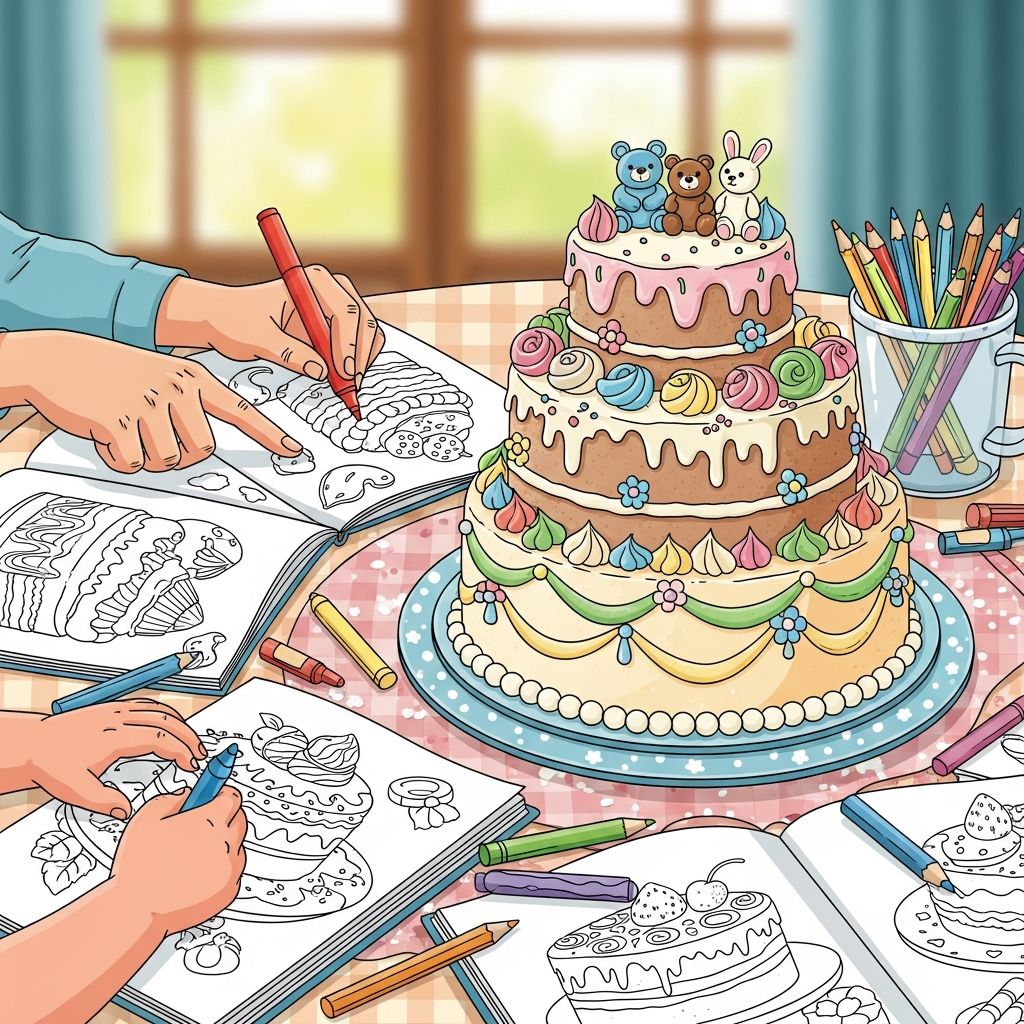
Cake coloring pages combine the joy of desserts with the calming, creative power of coloring, making them a favorite activity for kids and a useful tool for parents and teachers. These printable sheets turn simple cake drawings into invitations for imaginative play, learning, and memory-making moments.
Whether you are preparing for a birthday party, looking for rainy-day entertainment, or planning a classroom activity, cake-themed coloring pages offer a flexible, low-cost option that works for many ages and skill levels.
Why Cakes Make Great Coloring Themes
Cakes are naturally celebratory, colorful, and full of patterns, which makes them ideal subjects for coloring. Kids can experiment with stripes, sprinkles, candles, and frosting swirls, all while choosing their favorite color combinations.
This theme also feels familiar and exciting because children associate cakes with birthdays, holidays, and special milestones, which keeps them engaged longer than more abstract images.
Benefits of Cake Coloring Pages for Kids
Cake coloring sheets are more than cute illustrations; they quietly build important developmental skills while children play. Parents and educators can use them as a fun supplement to early learning activities at home or in the classroom.
- Fine motor practice: Holding crayons or markers and coloring within lines supports pencil grip and hand control.
- Color recognition: Choosing and naming colors helps children build vocabulary and visual awareness.
- Creativity and self-expression: Kids design their own frosting, layers, and decorations, which encourages originality.
- Focus and patience: Completing a detailed cake picture teaches persistence and attention to detail.
Types of Cake Coloring Pages
Not all cake coloring pages are the same. Choosing the right type for a child’s age and interests can make the activity more enjoyable and better matched to their skill level.
Below is a quick overview of popular styles and how they can be used.
| Type of Cake Page | Best For | Key Features |
|---|---|---|
| Simple birthday cake | Preschoolers and toddlers | Few details, thick outlines, 1–2 candles, large frosting areas. |
| Layered celebration cake | Early elementary kids | Multiple tiers, patterns on each layer, more candles and toppings. |
| Slice of cake | Quick activities and warm-ups | Single piece of cake with visible layers and plate details. |
| Holiday or themed cake | Seasonal crafts and parties | Hearts, snowflakes, pumpkins, or other themed decorations. |
| Detailed bakery scene | Older kids and adults | Cake stands, tablecloths, background details, and lettering. |
How to Choose the Right Cake Coloring Page
Picking the right cake page prevents frustration and keeps children interested from start to finish. A page that is too simple may feel boring, while one that is overly detailed may feel overwhelming.
- Match detail to age: Younger kids benefit from bold outlines and large frosting spaces; older kids enjoy intricate patterns and decorations.
- Consider the occasion: For birthdays, choose designs with candles and banners; for everyday fun, simple slices or cupcakes work well.
- Respect interests: If a child loves unicorns, sports, or animals, look for cake pages that incorporate those themes.
Creative Ways to Use Cake Coloring Pages
Cake coloring sheets can go far beyond basic coloring when combined with crafts, storytelling, and pretend play. This makes them versatile resources for both home and classroom environments.
- Turn completed pages into birthday cards or party invitations.
- Use colored cakes as decorations on party walls, doors, or bulletin boards.
- Bind several pages together to create a homemade “cake coloring book.”
Birthday Party Ideas with Cake Printables
Cake coloring pages fit naturally into birthday celebrations and help keep kids busy while adults handle food, photos, or gift opening. They can also act as keepsakes that guests take home.
- Arrival activity: Set out cake pages, crayons, and stickers for kids to enjoy as they get to the party.
- Color-and-sign station: Ask each guest to color a cake and sign their name for a custom birthday scrapbook.
- Quiet corner: Offer coloring for children who need a break from noisy games.
Classroom and Homeschool Uses
In learning environments, cake printables can support lessons in math, language arts, and social-emotional skills. They work especially well around class birthdays, end-of-year parties, or units on food and celebrations.
- Use cake slices to practice fractions by shading halves, thirds, or quarters.
- Ask students to write a short story about who baked the cake and why.
- Create a class birthday chart, assigning a cake page to each month or student.
Hands-On Craft Extensions
Coloring is a natural starting point for craft projects. Once a cake page is colored, kids can cut, glue, and embellish it with extra materials to make the activity tactile and three-dimensional.
- 3D sprinkles: Add real sprinkles (for display only), sequins, or beads to the frosting areas using glue.
- Textured frosting: Use cotton balls, tissue paper, or yarn to create fluffy frosting on the cake.
- Collage cakes: Glue magazine cutouts of candies, fruits, or celebration items onto the cake for a mixed-media look.
Learning Through Color and Design
Coloring cakes offers opportunities to discuss color combinations, patterns, and symmetry in a playful way. Adults can guide children to notice how repeating stripes, polka dots, or alternating colors create pleasing designs.
Encouraging kids to plan their color choices before they start coloring also supports early problem-solving and planning skills, which are helpful later for writing, math, and project work.
Simple Cake Coloring Activity Plan
The following example activity is ideal for a 20–30 minute session with one child or a small group. It focuses on creativity and light learning without feeling like a lesson.
- Select a cake coloring page with medium-level detail.
- Ask children to choose three to five colors and name them out loud.
- Encourage them to repeat at least one pattern, such as alternating colors on the layers.
- Invite kids to give their cake a name and describe what flavor it would be.
- Display the finished pages on a wall or refrigerator to celebrate their work.
Materials and Tools for Best Results
Having a basic art setup ready makes cake coloring sessions smoother and more enjoyable. The right supplies also help pages look brighter and last longer as decorations or keepsakes.
- Good-quality printer paper or light cardstock to prevent tearing.
- Crayons for youngest children and colored pencils or markers for older kids.
- Child-safe scissors, glue sticks, and optional extras such as stickers, glitter glue, or ribbon.
Ideas for Different Age Groups
Cake coloring pages can be adapted to grow with your child by changing the level of detail and the instructions given. Adjusting expectations keeps the activity interesting while building new skills over time.
- Toddlers: Focus on scribbling with large crayons and naming colors, without worrying about staying in the lines.
- Preschoolers: Encourage basic patterns (such as rainbow layers) and simple decoration ideas.
- Early elementary: Introduce symmetrical designs, themed cakes (sports, holidays), and simple written labels.
- Older kids: Challenge them to shade, blend colors, and design complete bakery scenes.
Safety and Practical Tips
Although coloring is a low-risk activity, a few precautions keep materials and artwork in good shape. This is particularly important when using small decorative items or if younger siblings are nearby.
- Use washable markers around young children to reduce stains on clothing or furniture.
- Supervise use of beads, sequins, and other small embellishments with kids who still explore with their mouths.
- Store finished pages flat in folders, binders, or display sleeves to prevent smudging.
Involving the Whole Family
Cake coloring pages can become a shared family tradition, especially around birthdays and holidays. Adults and older siblings can color their own cakes alongside younger children, turning the table into a simple art party.
Families can even vote on the “cake of the week” and display the winning picture on the fridge or in a frame, giving children a sense of pride and ownership of the space.
Frequently Asked Questions
How can cake coloring pages help with learning?
Cake coloring pages support early learning by developing fine motor skills, color recognition, pattern awareness, and basic planning. When combined with simple questions or prompts, they also encourage children to practice language, storytelling, and math concepts such as counting candles or cake layers.
Are cake coloring pages suitable for very young children?
Yes, as long as you choose simple designs with big shapes and use child-safe, washable art materials. Very young children may not color within the lines, but they still benefit from the sensory experience of holding crayons, seeing bright colors, and spending calm time with a caregiver.
What can I do with finished cake coloring pages?
Finished pages can be turned into greeting cards, party banners, mini posters, or covers for homemade storybooks. Many families also create yearly binders of kids’ artwork to show progress over time, and cake pages make cheerful additions to those collections.
How do I keep kids interested in cake coloring over time?
Rotate different types of cake pages, introduce new coloring tools, and occasionally add challenges such as using only warm colors or designing a cake for a specific character or holiday. Combining coloring with crafts, such as adding 3D decorations, keeps the activity feeling fresh and exciting.
Can adults use cake coloring pages too?
Absolutely. Detailed cake designs with intricate decorations and backgrounds can be relaxing for teens and adults, offering a stress-relief activity that feels nostalgic and playful. Adult participation also sets a positive example, showing kids that creativity and art are valuable at any age.