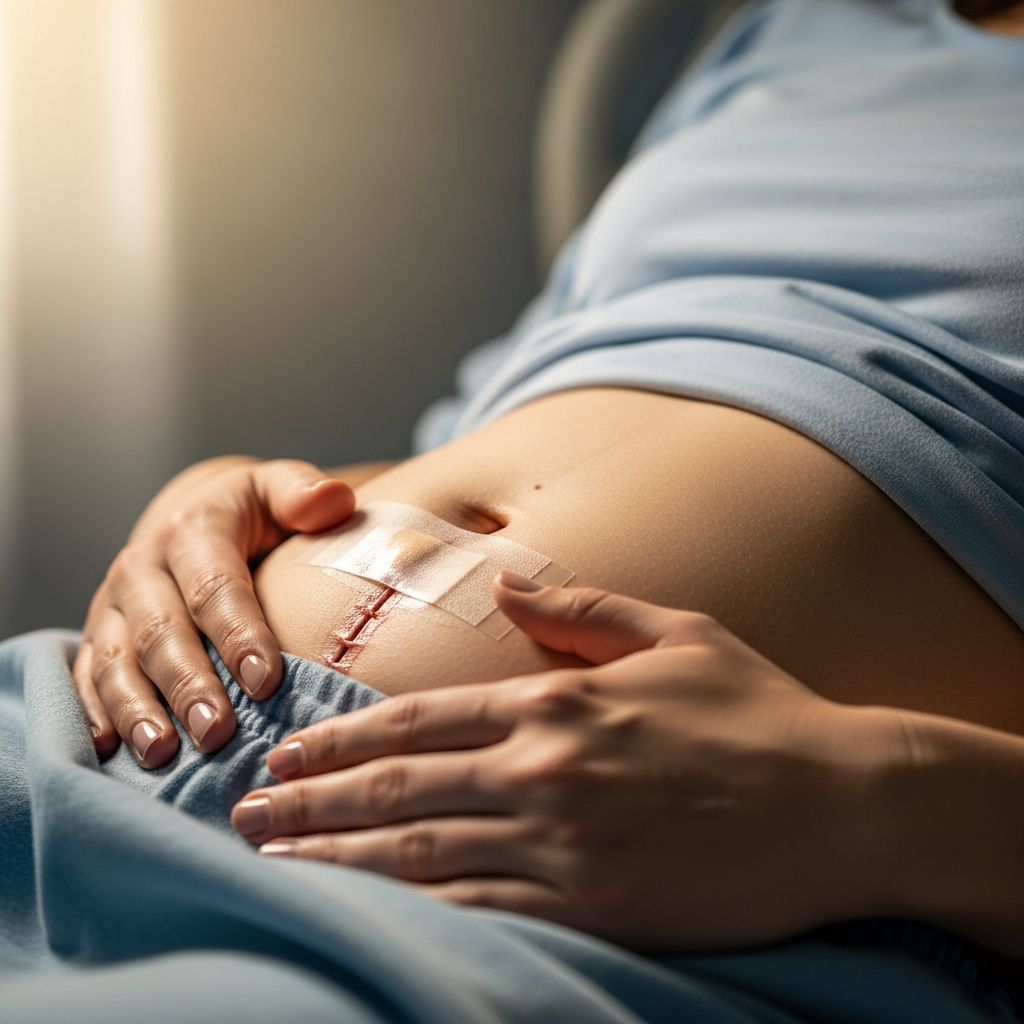
Cesarean sections, commonly known as C-sections, account for about 31.7% of births in the U.S., making them the most frequent major surgery performed on women. Despite their prevalence, persistent myths portray them as a simpler alternative to vaginal birth. In reality, C-sections involve significant physical, emotional, and long-term considerations that demand respect and understanding.
Understanding the True Nature of Cesarean Surgery
A C-section is not a minor procedure but a complex abdominal surgery requiring incisions through multiple layers of tissue, including skin, fat, fascia, muscles, peritoneum, and uterus. Performed while the mother is awake under regional anesthesia, patients feel pressure and tugging sensations during the operation, which can last 45-60 minutes.
Unlike vaginal births, where mobility returns quickly, C-section patients face immediate restrictions. Nearly 1.2 million women undergo this surgery annually in the U.S., often when vaginal delivery poses risks to mother or baby.
Common Myths vs. Medical Realities
Misconceptions fuel unnecessary stigma. Here’s a breakdown:
| Myth | Reality | Source |
|---|---|---|
| C-sections are easier and less painful than vaginal birth. | Major surgery with longer recovery (6-8 weeks vs. 2-4 weeks for vaginal), more pain, and mobility limits. | LLU Health, AMA |
| No impact on vagina means no issues later. | Risks like prolapse exist regardless; surgery adds adhesions and future complication risks. | LLU, MacArthur MC |
| It’s a choice for convenience. | Medically indicated for complications like obesity, fetal distress, or prior surgeries. | Essence, MacArthur MC |
| Body failure causes C-sections. | Life-saving intervention; not a personal shortcoming. | Essence |
Medical Indications: When C-Sections Are Essential
C-sections become necessary due to factors like maternal obesity, which prolongs labor and complicates anesthesia; macrosomia (large baby); cord prolapse; or prior uterine surgeries. Placenta previa or breech position also necessitate them. While vaginal birth after cesarean (VBAC) is possible, risks like uterine rupture guide decisions.
- Fetal distress: Immediate delivery prevents oxygen deprivation.
- Maternal health: Conditions like preeclampsia or active infections.
- Previous C-section: Increases adhesions but not an absolute barrier.
Obstetricians counsel based on individual risks, emphasizing that labor’s unpredictability often shifts plans.
The Surgical Experience: What Really Happens
Patients are draped and awake, hearing medical chatter and feeling manipulations without pain. The “bikini cut” (horizontal, ~10cm above pubic bone) is standard, though vertical incisions occur in emergencies or prior cases. Post-delivery, the uterus is repaired, layers closed, and staples or sutures applied.
Immediate aftermath includes catheter use, IV fluids, and monitoring for complications like infection or hemorrhage. Pain management via opioids can affect breastfeeding initiation.
Recovery Challenges: A Marathon, Not a Sprint
Recovery spans 6-8 weeks, far exceeding vaginal birth’s timeline. New mothers struggle with basic tasks: walking to the bathroom, lifting the baby, or climbing stairs. Adhesions from surgery complicate mobility and future pregnancies.
Emotional tolls include guilt from societal pressure viewing C-sections as “lesser” births. Physical restrictions hinder bonding, with pain peaking days 3-5. Nutrition, rest, and support are crucial.
- Week 1: Hospital stay, incision care, constipation from meds.
- Weeks 2-4: Gradual activity increase; no driving or lifting over 10lbs.
- Weeks 5-8: Full recovery for most, but scar sensitivity lingers.
Long-Term Health Implications
Multiple C-sections heighten risks: placenta accreta, hysterectomy, bladder/bowel injury from adhesions. Future labors face higher complication rates, including abruption or previa. Breastfeeding success is comparable long-term, but initial delays occur.
No maximum C-section limit exists, but risks escalate with each.
Societal Stigma and Its Impact
The “easy way out” narrative shames mothers, ignoring medical necessity. This stigma exacerbates mental health issues postpartum. Education counters this: C-sections save lives, comprising one-third of U.S. births.
Advocacy for informed choice reduces unnecessary surgeries while destigmatizing needed ones.
Tips for Optimal C-Section Recovery
Prepare proactively:
- Stock frozen meals; accept help.
- Use stool softeners early.
- Practice deep breathing for pain.
- Walk short distances daily post-op.
- Monitor incision for infection (redness, pus).
Consult providers on VBAC feasibility for future pregnancies.
Frequently Asked Questions (FAQs)
Is a C-section safer than vaginal birth?
No universal answer; it depends on circumstances. It’s safer when medically indicated, like fetal distress.
How long until I can exercise after a C-section?
Wait 6-8 weeks; start with walking, then pelvic floor exercises per doctor approval.
Does C-section affect breastfeeding?
Possibly delayed start due to pain/meds, but most succeed with support.
Can I have a vaginal birth after C-section (VBAC)?
Yes, for many, but risks like rupture (0.5-1%) require evaluation.
What’s the scar like after a C-section?
Usually a faint horizontal line fading over 6-12 months; vertical in rare cases.
Empowering Expectant Mothers with Knowledge
By debunking myths, we foster empathy and informed decisions. C-sections are heroic interventions, not shortcuts. Discuss options openly with providers to navigate birth confidently.
References
- It’s “The Easy Way Out” And Other Misconceptions About C-Sections — Essence. 2019. https://www.essence.com/lifestyle/c-section-delivery/
- Five common myths about C-sections — Loma Linda University Health News. N/A. https://news.llu.edu/patient-care/five-common-myths-about-c-sections
- Why C-Sections Aren’t The “Easy Way Out”: Separating Fact From Fiction — One Health NG. N/A. https://onehealthng.com/blog/post/why-c-sections-arent-the-easy-way-out-separating-fact-from-fiction
- Mom Explains Why A C-Section Is Not The Easy Way Out — The Bump. N/A. https://www.thebump.com/news/c-section-not-easy-way-out
- C-Sections: Truths, Myths, Facts, and Fiction — MacArthur Medical Center. N/A. https://macarthurmc.com/c-sections-truths-myths-facts-fiction/
- What doctors wish patients knew about getting a cesarean section — American Medical Association. N/A. https://www.ama-assn.org/public-health/population-health/what-doctors-wish-patients-knew-about-getting-cesarean-section