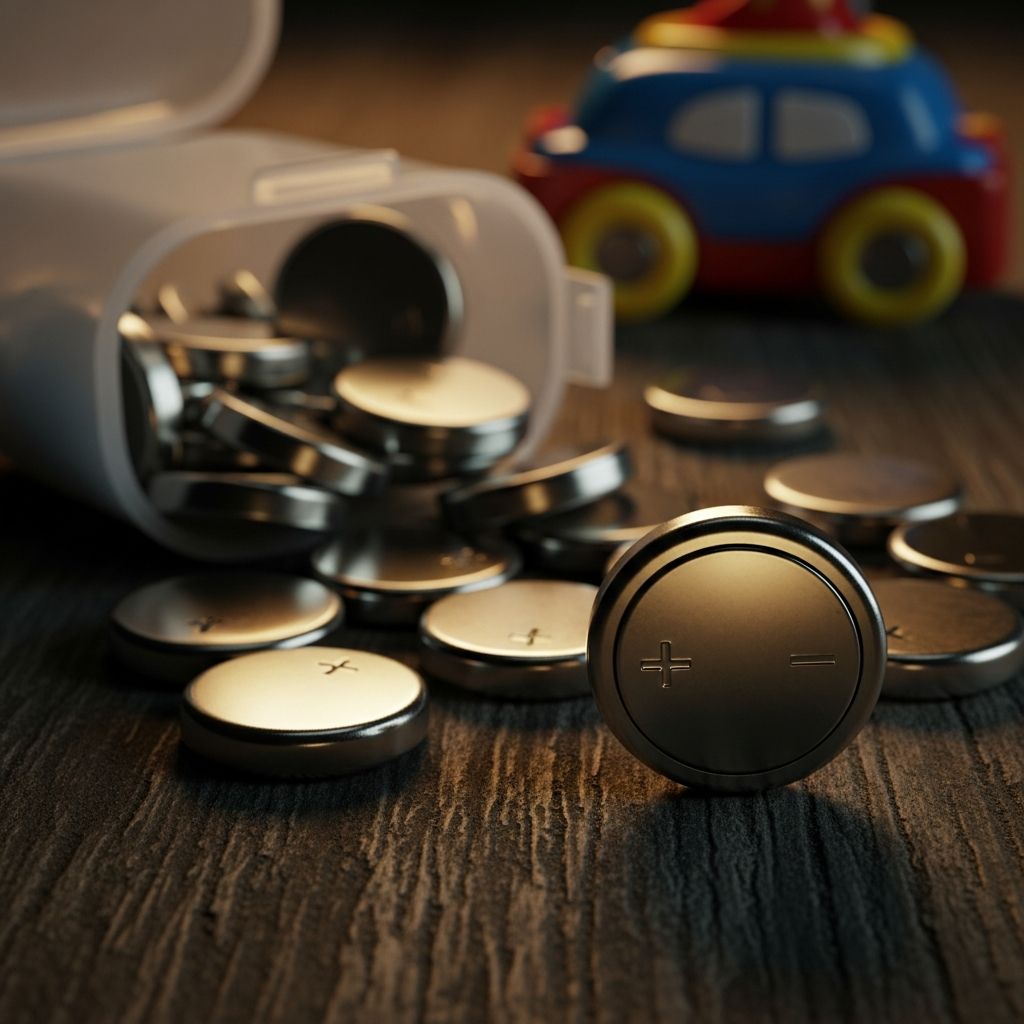
Small, shiny disc-shaped batteries commonly found in toys, remotes, and gadgets represent one of the most underestimated threats in modern households, particularly for young children who may swallow them, leading to devastating internal injuries within hours.
Understanding the Unique Chemistry of Danger
Button batteries, also known as coin cells, generate an electrical current when moistened by saliva or tissue fluids, producing hydroxide—a highly corrosive alkali akin to drain cleaner—that rapidly erodes soft esophageal tissues. This reaction can liquefy skin and muscle in as little as one to two hours, even from seemingly depleted batteries, creating pressure necrosis that erodes blood vessels and risks fatal complications like aortoesophageal fistulas. Unlike other foreign objects, the damage often progresses post-removal, necessitating urgent endoscopic intervention.
Statistics underscore the crisis: From 2011 to 2021, U.S. emergency departments recorded over 54,300 button battery exposures, with 78% involving children under six and at least 25 deaths reported by the Consumer Product Safety Commission (CPSC). Annually, more than 3,500 ingestions occur nationwide, disproportionately affecting exploratory toddlers.
Everyday Items Harboring Hidden Risks
These batteries lurk in ubiquitous products, often with insecure compartments that young hands can easily pry open. Common culprits include:
- Remote controls for TVs, garages, and cars
- Key fobs and digital thermometers
- Watches, calculators, and hearing aids
- Flashing toys, novelties, and light-up apparel or jewelry
- Kitchen/bathroom scales, musical greeting cards, and imitation candles
- Children’s talking books, cameras, and small electronics
Consumer testing revealed that one-third of 31 button-battery products had accessible batteries, violating emerging safety norms, with many lacking comprehensive warnings.
The Science Behind Rapid Tissue Destruction
Upon ingestion, a lodged 20mm lithium battery in the esophagus initiates electrolysis: Moisture completes the circuit, generating hydroxide ions at the negative terminal (anode), reaching pH levels over 13—capable of burning through tissue at 1-2 mm per hour. Smaller batteries (e.g., 12-15mm) often pass harmlessly to the stomach, but larger ones (20mm+) demand immediate action due to lodging risk. Nasal or ear insertions cause localized necrosis, impairing smell, hearing, or breathing.
Even “dead” batteries react similarly, as residual electrolytes activate in bodily fluids. Surgical scars, strictures, or lifelong dysphagia plague survivors, highlighting why the National Safety Council deems these “silent killers”.
Regulatory Responses and Gaps in Protection
Reese’s Law, enacted in 2022, mandates secure battery compartments (requiring tools to open) and explicit warnings on products, packaging, and instructions for items aimed at children under 6. The CPSC’s subsequent standard targets high-risk lithium cells (CR and BR series), yet enforcement lags: Recent marketplace audits found 10 of 31 items non-compliant, with incomplete labels omitting burn risks beyond choking.
| Requirement | Reese’s Law Standard | Compliance Issues Found |
|---|---|---|
| Battery Compartment | Screw-secured; no tool-free access | 32% easily accessible |
| Warnings | On product, package, instructions: “Ingesting burns esophagus in 2 hrs. Keep out of children.” | Only 26% fully labeled; many partial |
| Target Batteries | ≥6mm diameter lithium cells | Gaps in non-children’s products |
While progress exists, parents must bridge these gaps proactively.
Proven Strategies for Button Battery-Proofing Your Home
Elimination isn’t feasible, but vigilance is: Prioritize screw-closure devices and store spares in locked containers with tape over terminals to prevent fires or accidental ingestion.
- Inventory Check: Audit gadgets; relocate high-risk items to upper shelves or discard if possible.
- Secure Storage: Use childproof boxes for loose batteries; opt for bitter-coated versions from Energizer or Duracell that deter mouthing and signal ingestion via blue mouth staining.
- Caregiver Briefing: Educate babysitters, relatives on risks—emphasize no magnets/decoctions as flawed remedies.
- Product Vetting: Seek CPSC-compliant labels; avoid loose-battery toys.
For existing items, add custom tape over compartments until replacements arrive.
Spotting and Responding to Ingestion Emergencies
Symptoms may delay: Initial drooling, gagging, or fussiness mimic reflux, but watch for chest pain, wheezing, or refusal to eat within hours. If suspected:
- Do not induce vomiting, feed, or wait for passage—call Poison Control (1-800-222-1222) or 911 immediately.
- Alert medics: “Button battery ingestion”—time is critical; endoscopy within 2 hours prevents 90% of severe damage.
- For nose/ear: Seek exam pronto; avoid drops.
Hospitals use X-rays (batteries appear radiopaque) to confirm location; urgent removal averts catastrophe.
Innovations and Future Safeguards
Bitterant-coated batteries reduce appeal, turning saliva blue for detection. Emerging tech includes shape-changing polymers that expand on moistening, preventing swallow-through, though not yet widespread. Advocacy pushes broader bans on non-essential uses, prioritizing rechargeable alternatives. Parents play a pivotal role by supporting stricter CPSC audits.
Frequently Asked Questions
What sizes pose the greatest risk?
20mm lithium batteries (CR2032 common) most often lodge; under 15mm usually pass safely.
Can symptoms appear immediately?
No—often 30 minutes to 6 hours; minimal initial signs mask progression.
Are all button batteries lithium?
No, but lithium types (silver sheen) are riskiest due to higher voltage.
What if my child swallowed one yesterday?
Seek evaluation anyway—delayed erosion possible; X-ray confirms.
Do bitter batteries fully prevent ingestion?
They deter but don’t eliminate risk; combine with storage.
Empowering Families Through Awareness
By grasping the electrochemical peril, auditing homes, and acting decisively, families can neutralize button battery threats. Share this knowledge—prevention saves lives amid imperfect regulations.
References
- Button Batteries in Toys and Home Products Are a Hazard to Children — Consumer Reports. 2023-11-28. https://www.consumerreports.org/electronics-computers/batteries/button-batteries-in-toys-home-items-pose-hazard-to-children-a8831148288/
- Tiny, shiny, and dangerous: What families should know about button batteries — Boston Children’s Hospital Answers. 2023-10-12. https://answers.childrenshospital.org/button-battery-safety/
- Dangers of Button Batteries and Kids — Johns Hopkins Medicine. 2024-01-15. https://www.hopkinsmedicine.org/health/wellness-and-prevention/dangers-of-button-batteries-and-kids
- Button Batteries — National Safety Council. 2023-05-10. https://www.nsc.org/community-safety/safety-topics/child-safety/button-batteries
- Button Cell and Coin Batteries — U.S. Consumer Product Safety Commission (CPSC). 2024-02-20. https://www.cpsc.gov/Safety-Education/Safety-Education-Centers/Button-Cell-Coin-Battery-Information-Center
- What Parents Need to Know about Button Batteries and Lithium Coin Batteries — American Academy of Pediatrics (HealthyChildren.org). 2023-08-05. https://www.healthychildren.org/English/safety-prevention/at-home/Pages/What-Parents-Need-to-Know-about-Button-and-Lithium-Coin-Batteries.aspx
- Tips to make your home safe from button batteries — SA Health (Government of South Australia). 2023-11-01. https://www.sahealth.sa.gov.au/wps/wcm/connect/public+content/sa+health+internet/healthy+living/protecting+your+health/your+home/button+battery+safety/tips+to+make+your+home+safe+from+button+batteries