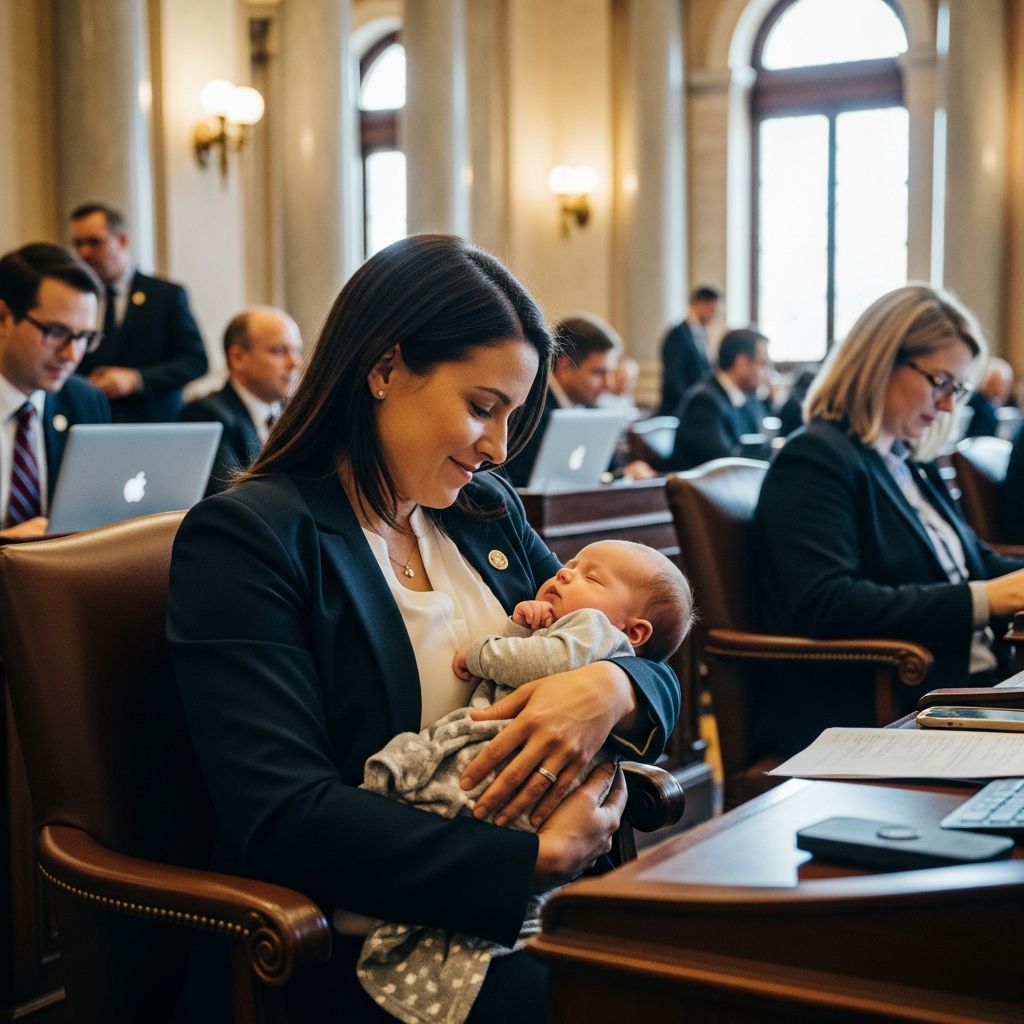
California Assemblymember Buffy Wicks made headlines in 2020 by carrying her one-month-old daughter onto the state assembly floor, a striking moment that exposed tensions between legislative duties and new parenthood during the COVID-19 pandemic. Denied permission to vote remotely despite health concerns post-childbirth, Wicks traveled from Oakland to Sacramento to advocate for key housing legislation, cradling her fussy infant while pleading for bill passage. This act not only captured national attention but also fueled broader discussions on supporting working parents in high-stakes public roles.
The Incident That Captured National Attention
On the final day of the legislative session, Wicks, a Democrat representing Oakland, faced an impossible choice. Fresh from giving birth in late July, she was still navigating early motherhood when a critical housing bill came up for debate. Assembly rules, adapted for the pandemic, allowed proxy voting only for those at higher COVID-19 risk, as determined by Speaker Anthony Rendon. Maternity leave did not qualify, according to leadership, forcing Wicks to either skip the vote or bring her newborn, Elly, to the Capitol.
Wicks chose duty and motherhood in tandem. Masked and wearing a baby carrier, she stood at the podium, her daughter growing restless. “Please, please, please pass this bill,” she urged, supporting measures to streamline multi-unit housing development amid California’s affordability crisis. Midway through, Elly’s cries interrupted; Wicks calmly noted she needed to feed her daughter, embodying the raw realities of balancing public service with private life. The moment, shared widely online, resonated with millions, turning a personal dilemma into a viral symbol of parental advocacy.
Background on Buffy Wicks: From Obama Aide to Assembly Floor
Buffy Wicks brings a storied resume to her role. A former senior advisor to President Barack Obama and key figure in his 2008 campaign, she transitioned into California politics, winning her East Bay seat in 2018. Known for progressive stances on housing, climate, and labor, Wicks entered motherhood as her second child, already mother to an older daughter. Her decision to bring Elly to work stemmed from deep commitment to bills like the one on that fateful night, aimed at easing housing shortages.
This wasn’t mere theatrics; it was necessity. Wicks had requested proxy voting two weeks prior, citing postpartum recovery and infant vulnerability. Denied, she drove hours with her baby, debating until midnight. Her spokesperson emphasized the ruling: maternity wasn’t deemed ‘high-risk’ under pandemic protocols. This rigidity clashed with the Senate’s more flexible remote options, highlighting intra-chamber disparities.
Legislative Rules Under Scrutiny During Pandemic
California’s assembly adopted proxy voting on August 3, 2020, to mitigate COVID-19 spread. Eligibility hinged on Speaker approval for those at elevated viral risk—think chronic conditions or age-related vulnerabilities. Postpartum status, despite immune system shifts and newborn exposure risks, fell outside this narrow definition. Wicks’ case tested these boundaries, revealing gaps for parents, caregivers of immunocompromised family, or those with elderly dependents.
Comparatively, the state Senate permitted broader remote participation that session day. Nationally, precedents existed: Kentucky’s Josie Raymond brought her newborn to the floor earlier that year, supported by leadership-approved accommodations like an aisle seat and nearby nursery. Wicks hoped her experience would prompt reforms, extending proxy options beyond illness to family care responsibilities.
Public Reaction: Support, Debate, and Viral Momentum
The image of Wicks juggling legislation and lullabies exploded across media. KTVU FOX 2 interviewed her, where she expressed hopes for valuing working families more. Social media buzzed with solidarity from working moms, while critics questioned chamber disruptions. Supporters praised her resilience, arguing it humanized politics and spotlighted systemic barriers.
- Massive Empathy Wave: Thousands shared stories of interrupted feedings or daycare woes, amplifying Wicks’ plea.
- Policy Critiques: Feminists and parent advocates called out gendered expectations, noting men rarely face such scrutiny.
- Media Coverage: Outlets from Politico to LA Times dissected the event, framing it as essential workers’ reality check.
Polls and commentary suggested a tipping point: 70% of Americans support workplace flexibility for parents, per contemporary surveys, aligning with Wicks’ narrative.
Broader Challenges for Parents in Politics
Wicks’ story underscores enduring hurdles for elected parents, especially mothers. Historically, legislatures lacked facilities like nursing rooms or childcare, rooted in assumptions of child-free lawmakers. The pandemic accelerated change—proxy voting emerged—but inconsistently. Women, primary caregivers statistically, bear disproportionate burdens: 80% handle most childcare per U.S. Census data.
| State | Lawmaker Example | Accommodations Provided |
|---|---|---|
| California | Buffy Wicks | Denied proxy; brought baby to floor |
| Kentucky | Josie Raymond | Aisle seat, private nursery nearby |
| Federal (House) | Various post-2010s | Proxy voting pilots during COVID |
This table illustrates variance: progressive steps exist, but uniformity lags. Wicks advocated expanding proxies to household caregivers, recognizing women’s roles with aging parents or disabled relatives.
Impact on Policy and Future Reforms
Short-term, Wicks’ bill advanced, crediting her floor presence. Long-term, her visibility pressured California Democrats toward family-inclusive rules. By 2021 sessions, discussions on permanent proxy for parents gained traction, though full adoption stalled. Nationally, it inspired bills like the FAMILY Act federally, proposing paid leave expansions.
Wicks reflected: “Any working mom knows this—baby cries, needs feeding, life’s interruptions don’t pause for votes.” Her resolve modeled integration of spheres, challenging ‘superwoman’ myths. Experts note such moments shift culture: visibility breeds policy.
Lessons for Workplaces Beyond the Capitol
Resonating beyond Sacramento, Wicks’ episode spotlights universal working-parent struggles. Amid hybrid work post-pandemic, companies grapple with lactation spaces, flex hours, childcare subsidies. Data shows parental leave boosts retention 90%, per McKinsey, yet U.S. lags globally—no federal paid maternity standard.
- Corporate Parallels: Tech firms offer ‘parent pods’; politics must catch up.
- Equity Gaps: Low-income, minority mothers hit hardest without buffers.
- Call to Action: Normalize family in professional spaces.
Her story urges leaders: adapt rules or risk talent loss.
Personal Reflections from Wicks and Peers
In interviews, Wicks described mid-feeding rushes to the floor, underscoring urgency. Peers lauded her: “She did her job,” amid fussy cries. Mother to two, she balances advocacy with home, pushing for societal valuation of families. This authenticity endears her, humanizing often aloof politics.
Frequently Asked Questions
Why was Buffy Wicks denied remote voting?
Assembly rules limited proxy to high COVID-19 risk cases; maternity leave wasn’t classified as such.
What bill did she advocate for?
A measure simplifying multi-unit housing to combat California’s shortage.
Did this change California laws?
It sparked reform talks, leading to proxy expansions for caregivers in later sessions.
How did the public respond?
Overwhelmingly supportive, with viral shares highlighting parent struggles.
Are there similar stories elsewhere?
Yes, like Kentucky’s Josie Raymond, who received better accommodations.
Conclusion: Pioneering Change One Cry at a Time
Buffy Wicks’ assembly floor moment transcends anecdote—it’s a catalyst. By merging motherhood and mandate, she compelled reckoning with parenthood’s demands in power corridors. As workplaces evolve, her legacy urges inclusive policies, ensuring public service accessible to all life stages. Working parents everywhere owe her for voicing the unspoken.
(Word count: 1678)
References
- Assemblywoman Buffy Wicks talks about bringing newborn to assembly floor — KTVU FOX 2 San Francisco. 2020-09-01. https://www.youtube.com/watch?v=0D1BkQTeC0A
- East Bay lawmaker brings baby to assembly floor — KTVU. 2020-09-01. https://www.ktvu.com/video/846282
- Lawmaker who brought her newborn to the California statehouse joins other elected women challenging outdated notions around parenthood — The 19th. 2020-09-02. https://19thnews.org/2020/09/lawmaker-who-brought-her-newborn-to-the-california-statehouse-joins-other-elected-women-challenging-outdated-notions-around-parenthood/
- California lawmaker brings newborn to Assembly floor after denied proxy vote — Politico. 2020-09-01. https://www.politico.com/states/california/story/2020/09/01/california-assemblymember-denied-remote-voting-brings-newborn-to-legislature-1314320
- East Bay lawmaker brings her newborn baby to Assembly floor for vote — KTVU. 2020-09-01. https://www.ktvu.com/news/east-bay-lawmaker-brings-her-newborn-baby-to-assembly-floor-for-vote
- Newsletter: Why a crying newborn was on the state Assembly floor — Los Angeles Times. 2020-09-02. https://www.latimes.com/california/newsletter/2020-09-02/buffy-wicks-baby-legislature-mom-essential-california