Understanding Montessori Education Beyond Expensive Materials
Parents often assume that implementing Montessori principles at home requires purchasing specialized, costly materials and creating picture-perfect learning environments. However, the true foundation of Montessori education transcends aesthetics and commercial products. The methodology emphasizes child-led discovery, purposeful movement, and real-world engagement—elements that cost nothing to cultivate. By understanding the core philosophy behind Montessori learning, families can create meaningful educational experiences using resources already available in their homes, making this approach accessible to households of any economic background.
The Montessori method, developed by Dr. Maria Montessori over a century ago, prioritizes children’s natural curiosity and their desire to participate in meaningful work. This foundational principle means that authentic learning materials can be as simple as kitchen items, natural objects, or recycled containers. When parents shift their perspective from purchasing branded Montessori products to recognizing the educational potential of everyday items, they unlock a wealth of learning opportunities.
The Philosophy of Practical Independence in Your Home
One of the cornerstones of Montessori education is the emphasis on practical life skills. Young children possess an innate desire to participate in real-world tasks, and parents can harness this motivation by involving them in daily household activities. Rather than viewing these moments as interruptions, Montessori advocates suggest they represent golden opportunities for developing independence, concentration, and coordination.
Toddlers genuinely enjoy mimicking adult activities, whether that means pretending to cook, clean, or care for objects. By intentionally slowing down and inviting children to participate in age-appropriate household responsibilities, parents create a profound learning experience. The Montessori perspective encourages adults to focus on the process rather than the final product—a child may spill water while pouring, scatter flour while baking, or leave objects out of place while organizing. These moments reflect learning in action, not failure.
Creating a Prepared Environment Without Breaking the Budget
A prepared environment is central to Montessori philosophy, but it doesn’t necessitate expensive furnishings or designer materials. The key principle involves thoughtful organization that makes learning materials easily accessible to children at their own developmental level. Rather than displaying toys in large bins or overstuffed containers, arranging items individually on low shelves invites engagement and helps children make intentional choices about their activities.
An effective strategy involves rotating toys and materials periodically. Items stored away for several months become fresh and appealing when reintroduced, effectively multiplying the value of the toys already in your home. This rotation system also prevents overwhelming children with too many choices while maintaining their interest in available materials.
Organization Strategies That Support Learning
- Display materials individually on child-height shelves rather than in bulk containers
- Group similar items together for easy identification and sorting
- Rotate materials every two to four weeks to sustain novelty and interest
- Ensure pathways remain clear so children can safely navigate their learning space
- Label areas with simple pictures or words to promote organization and independence
Inexpensive Materials for Sensory and Fine Motor Development
Developing fine motor skills—the precise coordination of small muscles in fingers and hands—forms a critical foundation for writing, eating, and countless daily tasks. Montessori education incorporates numerous activities specifically designed to strengthen these abilities, and remarkably, most materials cost nothing or require only recycled items.
Pouring activities, among the simplest and most effective fine motor exercises, require only two small containers and water, dried beans, or rice. A child transferring liquid from one pitcher to another develops hand-eye coordination, concentration, and the ability to control their movements with precision. Placing a tray beneath the containers normalizes the natural spills that occur during learning, transforming potential frustration into a manageable part of the process.
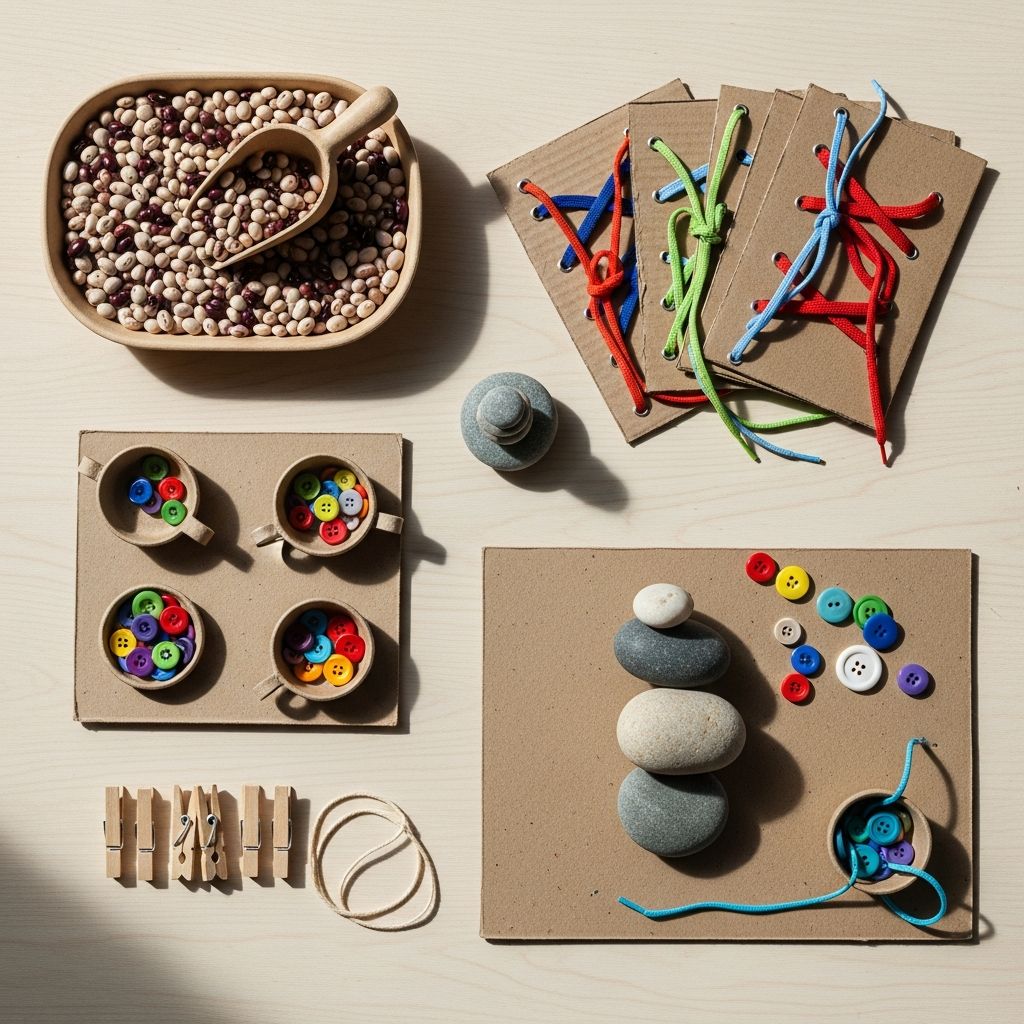
Similarly, transferring small objects using utensils strengthens the three-finger pinch grip essential for holding writing instruments. Buttons, beads, cotton balls, or dried pasta become engaging materials when presented in a sorted, organized manner on a low shelf. A child might transfer these items between bowls using a spoon, tweezers, or tongs—each tool offering different levels of challenge and developing distinct muscle groups.
Mathematical Thinking Through Everyday Exploration
Mathematics in the Montessori approach develops through concrete, hands-on experiences before progressing to abstract understanding. Parents can facilitate mathematical thinking using materials found around the home, bypassing expensive commercial number systems.
Creating a number board requires only an egg crate and bottle caps. By labeling each compartment with numerals from zero to twenty and having children sequence the caps accordingly, parents introduce number recognition, ordering concepts, and the correspondence between quantities and symbols. This self-correcting activity provides feedback when a child discovers they have too many or too few items for the available spaces.
Sorting activities by color, size, or category also support mathematical reasoning. Bottle caps, paper clips, buttons, or wooden blocks present in various categories invite children to observe differences, make classifications, and identify patterns. These foundational concepts prepare developing minds for more complex mathematical thinking.
DIY Mathematical Activities
| Activity Name | Materials Needed | Skills Developed |
|---|---|---|
| Number Sequencing Board | Egg crate, bottle caps, markers | Number recognition, ordering, counting |
| Color or Size Sorting | Household items (buttons, clips), bowls or containers | Visual discrimination, classification, logical thinking |
| Geoboard Exploration | Wooden board, nails, rubber bands | Geometry concepts, spatial awareness, fine motor control |
| Pouring Practice | Two small pitchers, water or beans, tray | Hand-eye coordination, concentration, practical life skills |
Language Development Through Tactile and Sensory Methods
Montessori approaches to language development emphasize the connection between sensory input and letter or word formation. Salt writing trays exemplify this principle—children trace letters or numerals in a shallow tray of salt or sand, engaging their sense of touch while strengthening the motor patterns necessary for writing. The tactile feedback helps encode letter shapes in the child’s muscular memory in ways that conventional pencil-and-paper practice may not achieve.
Parents can create a salt writing tray using a shallow baking pan, salt or sand, and simple printed cards showing letters or numerals. A child uses their finger as a writing tool, exploring the shapes repeatedly without pressure to achieve perfect letter formation. This low-stakes, highly sensory approach removes anxiety from the pre-writing stage and appeals especially to kinesthetic learners who benefit from movement-based input.
Threading activities similarly support language and fine motor development. Cardboard shapes, felt pieces, or recycled containers with holes can be threaded with yarn, string, or shoelaces. Children practicing threading simultaneously develop the pinch grip, hand strength, and eye-hand coordination essential for holding and controlling writing instruments.
Practical Life Skills That Build Confidence and Competence
Perhaps the most transformative aspect of Montessori education at home involves giving children genuine responsibilities within the household. Rather than performing these tasks for children or assigning them as chores with reluctance, framing household participation as meaningful work unlocks motivation and develops genuine competence.
A self-serving station set at child height—perhaps a low shelf with a small pitcher, cup, and napkin—invites children to independently prepare their own drink or snack. The initial instruction requires minimal time from parents: demonstrate the process once, then allow the child to practice repeatedly. Over time, spills decrease, efficiency increases, and the child experiences the authentic pride that accompanies genuine accomplishment.
Caring for the environment similarly develops responsibility and awareness. A child might water plants using a small watering can, cultivating an understanding of cause and effect while developing nurturing behaviors. Dusting, wiping surfaces, or organizing items all present opportunities for children to contribute meaningfully while practicing real skills they observe adults performing daily.
Sensory Activities Using Found and Recycled Materials
The Montessori method emphasizes sensory exploration as a foundation for all learning. Environmental materials—leaves, stones, sticks, sand—and recycled household items provide rich sensory input at virtually no cost.
A mystery bag filled with familiar household objects invites tactile exploration and descriptive language development. Children reach inside, feel an object without seeing it, describe its texture and shape, then pull it out to confirm their hypothesis. This classic sensory activity develops observation skills, vocabulary, and the ability to make predictions based on limited information.
Lock-and-key games using small padlocks and matching keys present problem-solving challenges while developing fine motor control and patience. The trial-and-error process inherent in matching keys teaches persistence and logical thinking. Similarly, nesting containers—whether commercial nesting dolls or homemade versions created from stacked bowls or recycled containers with velcro fasteners—develop spatial reasoning and fine motor skills.
Frequency of Rotation and Material Management
Parents implementing Montessori principles at home don’t require extensive toy collections. Instead, thoughtful rotation of existing materials maximizes engagement and prevents overstimulation. A general guideline suggests rotating materials every one to two weeks, though observation of individual children informs the ideal frequency.
When previously available toys return after weeks in storage, they capture children’s interest with renewed enthusiasm. This strategy proves both economically efficient and developmentally sound—children concentrate better when fewer options are simultaneously available, and the rotation system ensures continuous novelty without requiring purchases.
Design and Creation: DIY Montessori Furniture and Structures
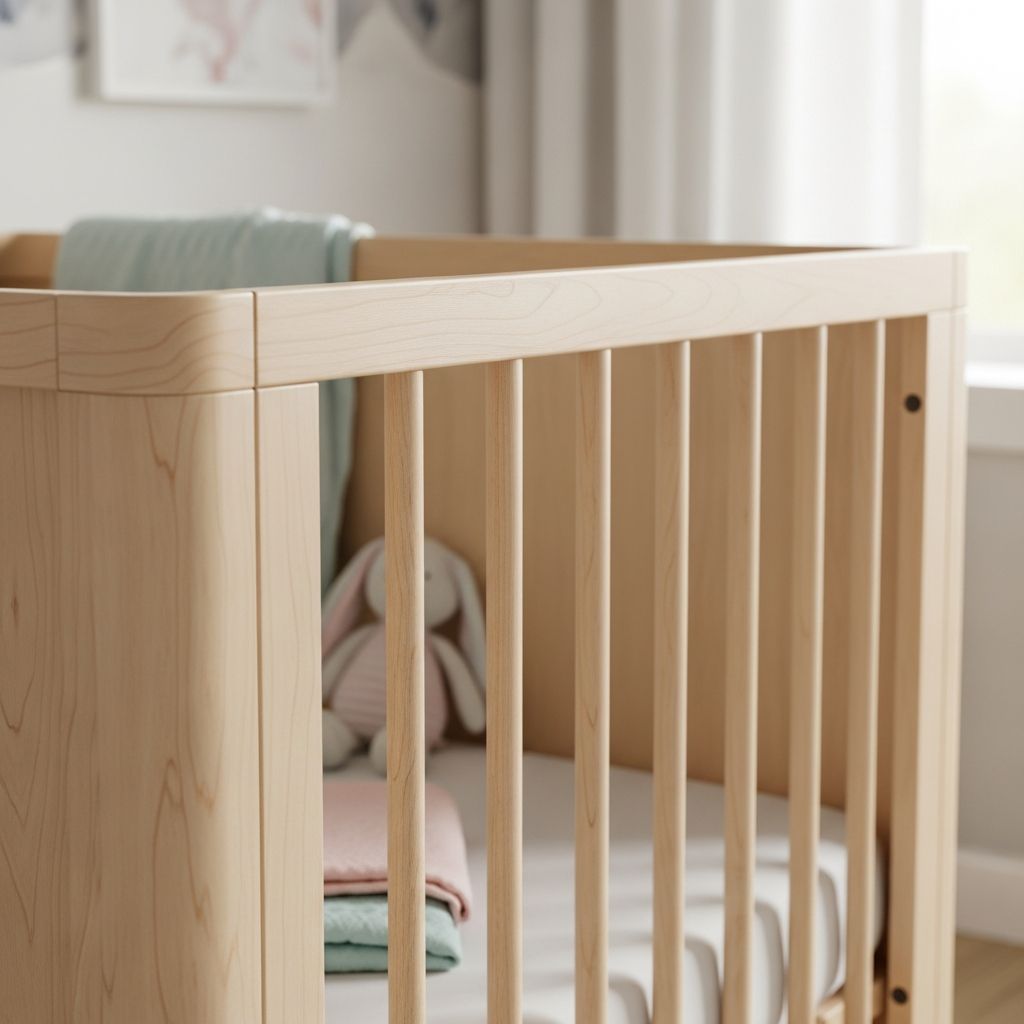
While not essential, simple furniture modifications can enhance a home’s preparedness for Montessori learning. Parents comfortable with basic crafting or woodworking can create or modify pieces to support child independence. A learning tower—essentially a sturdy step stool that brings children to counter height—enables them to participate in kitchen activities without being held. This structure can be DIY-constructed using readily available materials or created through various IKEA hacks.
Similarly, child-sized tables and chairs support comfortable engagement with activities. Shortening the legs of existing children’s furniture or building simple tables from IKEA components achieves appropriate sizing without expensive purchases. While such modifications aren’t prerequisites for Montessori learning, they do enhance accessibility and comfort.
Observation as the Foundation for All Learning
Perhaps the most valuable—and completely free—tool in Montessori implementation is systematic observation. Parents who take time to watch their children’s interests, challenges, and preferences gain insight into their developmental needs far more valuable than any purchased material. Observation informs decisions about which activities to introduce, which to rotate out, and how to adjust presentations for optimal engagement.
Effective observation involves watching without intervention, noting what captures a child’s attention, where they encounter difficulty, and how long they persist with activities. This information guides parents in following the child’s lead rather than imposing predetermined schedules or materials. The Montessori principle “follow the child” rests entirely on attentive observation, requiring no expenditure of funds.
Frequently Asked Questions About Budget-Friendly Montessori
Q: Can I implement Montessori principles effectively without purchasing any specialized materials?
A: Yes, absolutely. Montessori education fundamentally emphasizes independence, purposeful movement, and real-world engagement—elements cultivated through everyday household activities and materials. Specialized commercial products enhance but don’t create authentic Montessori learning. Many parents successfully implement these principles using only items already present in their homes or found in nature.
Q: How often should I rotate materials to maintain my child’s interest?
A: Every one to four weeks works well for most children, though individual preference varies. Observe your child—if interest wanes noticeably or engagement becomes distracted, rotation may help. Some children thrive with more frequent changes while others develop deeper focus with longer exposure. Experimentation reveals what works best for your family.
Q: What’s the most important activity to prioritize if I’m starting with limited resources?
A: Practical life activities—involving your child in genuine household responsibilities—offer the most profound foundation. These activities develop independence, coordination, concentration, and confidence while requiring no special materials. Start here, then gradually introduce sensory and mathematical activities using household items.
Q: How do I know if my child is ready for specific activities?
A: Careful observation provides the answer. Watch for signs of interest in specific skills—if a child repeatedly watches you pouring drinks, they may be ready for pouring practice. If they’re fascinated by sorting or arranging objects, sorting activities would appeal. Children show readiness through demonstrated interest and emerging capabilities.
Q: Can I combine Montessori methods with other educational approaches?
A: Many families successfully integrate Montessori principles with other educational philosophies. The emphasis on independence, real-world learning, and child-led discovery complements many approaches. Focus on core Montessori values—respect for the child, purposeful activity, and prepared environments—while adapting other elements to fit your family’s needs and values.
References
- 10 DIY Activities for Toddlers Supporting Montessori at Home — Montessori West. 2024. https://montessoriwest.com/10-diy-activities-for-toddlers-supporting-montessori-at-home/
- Montessori at Home on a Budget — Montessori in Real Life. 2020. https://www.montessoriinreallife.com/home/2020/1/2/montessori-on-a-budget
- 10+ Low-cost Homemade Montessori-inspired Toys for Toddlers — Miracu Love. 2023. https://miraculove.com/10+_Low-cost_Homemade_Montessori-inspired_Toys_for_Toddlers
- Montessori Toddler Activities: Shelfwork 24-30 Months — Home and On The Way. 2022. https://www.homeandontheway.com/blog/montessori-at-home-shelfwork-24-30-months
- 10 Budget-Friendly Outdoor Montessori Activities — Sugar Spice and Glitter. 2023. https://sugarspiceandglitter.com/10-budget-friendly-outdoor-montessori-activities/