Halloween does not have to mean expensive, uncomfortable costumes that fall apart before you reach the end of the block. With a little planning and imagination, any family can pull together outfits that are fun, budget-friendly, and memorable. This guide walks through ideas for every age and personality, plus clever ways to reuse what you already own.
Planning a Low-Stress Halloween
Before choosing costumes, think through your family’s real life: weather, walking distance, school rules, and sensory needs matter more than any picture-perfect photo. Starting with comfort and simplicity helps everyone enjoy the night instead of battling itchy tags and impossible props.
Set a spending limit up front and involve kids in brainstorming so they feel ownership while you keep things realistic. A simple rule like “use what we have first, buy only what we must” can turn costume planning into a creative challenge instead of a shopping marathon.
Costumes for Babies and Toddlers
For the tiniest trick-or-treaters, safety and warmth come first. Think soft, breathable layers they can nap in rather than stiff, elaborate outfits that will end up on the floor by 6 p.m.
- Comfy creatures: Solid-color pajamas plus a matching hat with felt ears can become a kitten, puppy, bear, or bunny.
- Food costumes: A yellow onesie with brown felt “seeds” makes a banana; a red sleeper with black “seeds” becomes a strawberry.
- Wearable blankets: A hooded fleece animal blanket can double as both stroller cover and costume.
Skip any hard headpieces, loose strings, or glitter that sheds into tiny eyes. A single statement piece—a soft hat, cozy cape, or themed bib—is often all you need for adorable photos and a happy baby.
Easy School-Friendly Looks
Many schools limit masks, weapons, and scary imagery, so it helps to think in terms of characters and professions rather than horror. Choose outfits that kids can sit, write, and play in all day without overheating.
- Career day costumes: Doctor, veterinarian, teacher, chef, or astronaut outfits can be built from regular clothes plus a few key props.
- Book-inspired characters: Dress like a favorite hero from a children’s story using colors and accessories rather than full replicas.
- Color-themed costumes: Head-to-toe in one color plus simple props—a green shirt, green pants, and cardboard leaves for a “vine,” for example.
Send a backpack or tote where your child can stash accessories if they become distracting in class. Comfort-first costumes are more likely to survive the school day and still look good for evening festivities.
Character Ideas for Kids Who Love Stories
Many children want to become the characters they know from books, games, or shows. You do not have to perfectly match every detail to capture the spirit of the character.
- Signature colors: Focus on color schemes—red and blue for a superhero, soft blues for an ice queen, earthy greens and browns for a forest adventurer.
- Iconic props: A toy shield, cardboard crown, homemade “gadget belt,” or felt animal companion can make a simple outfit instantly recognizable.
- Mix-and-match: Combine pieces from dress-up bins, sports uniforms, and everyday clothing to represent a version of a favorite hero.
Let kids choose one or two “must have” elements (like a cape or special hat) and fill in the rest with what you already own. This keeps costs manageable while still honoring their vision.
Creative Group Costumes for Families
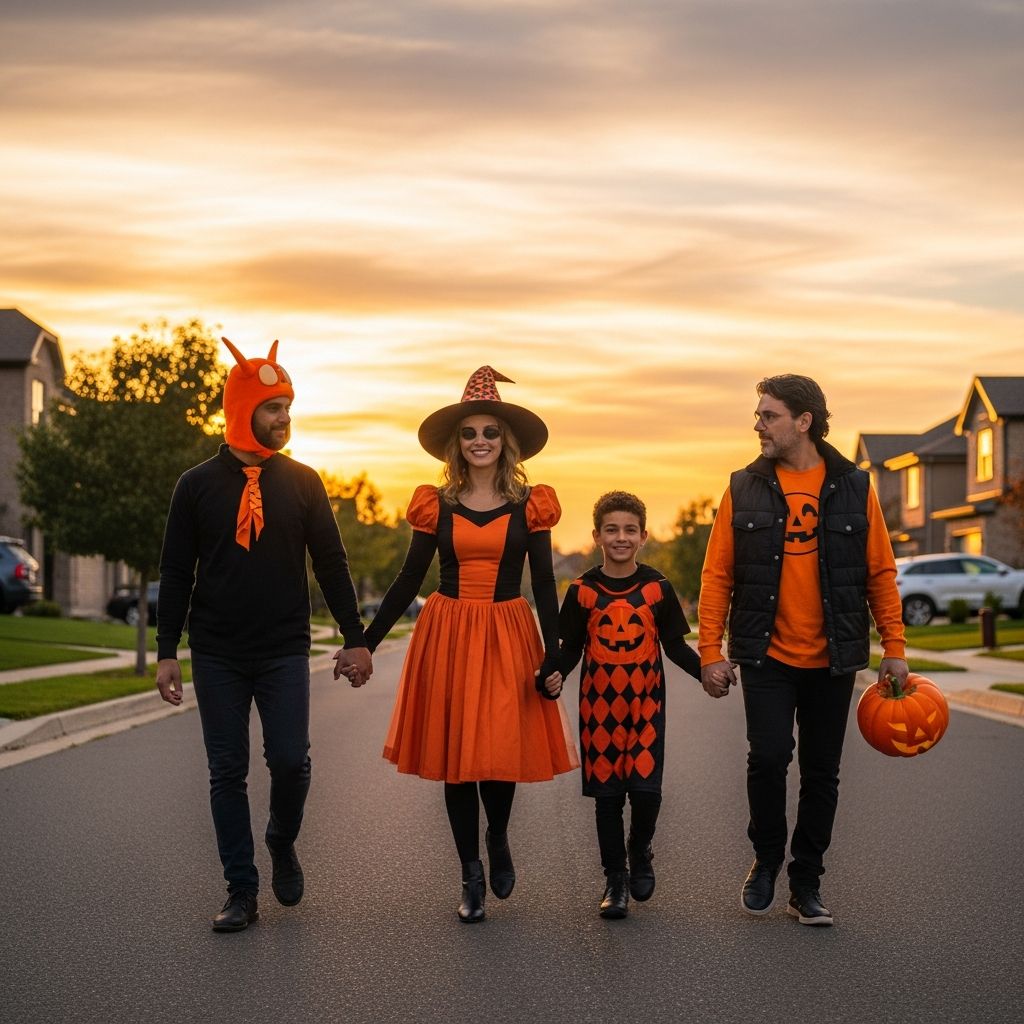
Coordinated family costumes can be as simple or elaborate as you want. The secret is picking a broad theme that allows each person to choose a role they genuinely like.
Theme Ideas That Scale
- Weather and seasons: One person as sunshine, another as rain, someone as a rainbow, and another as autumn leaves.
- Board games: Parents as game boards (printed logos on cardboard) and kids as game pieces or dice.
- Gardens and nature: Adults as gardeners, kids as flowers, bees, butterflies, or vegetables.
Group themes work well for photos and parties, but make sure each costume can stand on its own. That way, if family members split into different activities, their look still makes sense.
Simple Family Costume Table
| Theme | Adult Roles | Kid Roles | Key DIY Pieces |
|---|---|---|---|
| Space Adventure | Astronauts, scientist, alien ambassador | Aliens, robots, baby “comet” in blanket | Foil-covered cardboard, silver tape, glow sticks |
| Farm Life | Farmer, scarecrow | Cows, pigs, chicks, pumpkins | Overalls, plaid shirts, felt animal ears, straw hat |
| Storybook Land | Fairy godparent, narrator | Knight, dragon, princess, talking animal | Capes, cardboard shields, paper crowns, toy wands |
Last-Minute Costumes from Your Closet
If October snuck up on you, there is still plenty you can do without a rush order or craft marathon. Look at what you already own, then build a costume around one standout item.
- Striped shirt: Add a beret and a scarf for a mime, or a bandana and eye patch for a pirate.
- Sports jersey: Turn into a dedicated superfan with face paint, or a “time travel athlete” with mismatched gear from different sports.
- Little black dress or suit: Become a secret agent, classic movie star, or mysterious magician with just a few accessories.
Keep a small stash of multipurpose costume helpers—face paint, colored duct tape, cardboard, and safety pins—to transform ordinary clothes quickly.
Costumes for Shy or Sensory-Sensitive Kids
Some children do not enjoy heavy makeup, masks, or strangers commenting on their appearance. Costumes can still be special without feeling overwhelming.
- Low-key accessories: A themed hoodie, subtle headband, or printed T-shirt with Halloween art can feel safer than full dress-up.
- Soft fabrics only: Use leggings, cotton tops, and familiar shoes, then layer simple costume elements on top.
- Comfortable face alternatives: Stickers, temporary tattoos, or small hand props instead of masks or full-face paint.
Do a “dress rehearsal” a few days before Halloween so kids can try everything on and decide what feels okay. Be ready with a backup plan, such as a plain outfit with a festive jacket, if the full costume is too much that night.
Teen and Adult Costume Ideas That Aren’t Boring
Older kids and adults often crave humor, subtlety, or clever references more than elaborate outfits. Costumes that start conversations usually rely on wit instead of complexity.
- Pun costumes: Attach small paper clocks to your clothes to become “ahead of your time,” or wear a crown and carry a measuring tape as the “ruler” of measurements.
- Decade throwbacks: Choose a decade and commit—hairstyle, accessories, and slang included.
- Occupation twists: A “vacationing” superhero in flip-flops, or a “retired” villain in cozy loungewear and slippers.
For teens, set boundaries around appropriateness and safety, then allow as much creativity as possible within that frame. Co-creating a costume can be a surprisingly fun way to connect with older kids.
Budget-Smart Costume Strategies
Halloween expenses can add up quickly, especially for large families. A few thoughtful habits can dramatically cut costs without sacrificing fun.
- Borrow and swap: Trade costumes with friends, neighbors, or cousins. Many outfits only get worn once.
- Thrift store treasure hunting: Look for interesting jackets, hats, belts, or dresses that can anchor a costume and then be reused.
- Choose reusable pieces: Capes, solid-color tutus, and neutral accessories can serve many different themes over the years.
Write down what worked and what did not after Halloween. A quick note on your phone about sizes, comfort levels, and favorite themes can save time and money next year.
Safety and Comfort Tips
Even the most creative costume is not worth it if it is unsafe. A few small tweaks can make outfits much more practical for walking, visibility, and weather changes.
- Visibility: Add reflective tape to backs and sleeves, and choose light-colored treat bags when possible.
- Length checks: Hem long skirts or robes so kids do not trip on stairs or curbs.
- Weather layers: Build costumes that can go over or under jackets, or plan matching hats and gloves for outdoor events.
Test walking, sitting, and climbing stairs in full costume a day or two before Halloween. Adjust straps, pins, and hems so kids are safe and comfortable when the big night arrives.
Makeup, Face Paint, and Accessories
Accessories and makeup often transform simple clothes into recognizable costumes. Use them strategically instead of relying on a full store-bought set.
- Minimal makeup: A single bold feature—like whiskers, freckles, or a dramatic eyebrow—can say more than a full-face design.
- DIY props: Cardboard shields, paper wings, felt badges, and yarn wigs can be light, comfortable, and inexpensive.
- Safe materials: Choose products labeled for skin use, avoid sharing eye makeup, and have wipes ready for mid-party touch-ups or removal.
Keep breakable or pokey props for photos at home instead of taking them trick-or-treating. Hands-free designs leave more room for flashlights and candy bags.
Eco-Friendly Costume Choices
Many costumes are worn for only a few hours, so it makes sense to think about their environmental impact. With a little creativity, you can reduce waste while still enjoying the holiday.
- Natural materials: Cotton, wool, and reused clothing are easier on the planet than single-use plastics.
- Upcycling: Turn cardboard boxes into robot bodies or race cars, and repurpose scrap fabric into capes and sashes.
- After-Halloween plan: Donate gently used costumes to schools, theaters, or community centers, or store them in a labeled bin for future dress-up play.
When you think of costumes as part of a long-term dress-up collection rather than one-time outfits, it becomes easier to choose durable, versatile pieces.
Frequently Asked Questions About Halloween Costumes
How early should my family start planning costumes?
Planning one month in advance offers plenty of time to gather pieces without last-minute stress. If your idea requires shipping or multiple craft sessions, starting in early fall is even better. That said, simple closet-based or thrifted costumes can come together in a few days if needed.
What if my child changes their mind at the last minute?
Kids often change their minds as they see new ideas, so build in flexibility. Try to choose base pieces—like a solid cape or neutral dress—that can quickly shift themes with different accessories. Establish a clear cutoff date when the final decision is set, and let your child know that small tweaks are fine but complete overhauls may not be possible after that point.
How can I keep costumes affordable for multiple kids?
Choose themes that share elements, such as matching color schemes or similar accessories, so siblings can use the same supply stash. Focus on one big “hero” piece per child—a cape, a hat, or a special prop—and fill in the rest with basics you already have. Over time, build a reusable costume box with items that mix and match across years.
Are homemade costumes really worth the effort?
Homemade costumes often fit better, feel more comfortable, and reflect your child’s interests more closely than generic store options. They also create opportunities for kids to help with safe, age-appropriate tasks like choosing colors or decorating cardboard pieces. If full DIY feels overwhelming, mix homemade elements with a few purchased items instead of going all or nothing.
How do I balance safety with creativity?
Start by setting a few non-negotiable rules: no full-face masks for young children, no sharp props, and nothing that limits movement or vision. Within those boundaries, encourage kids to be as imaginative as they like. Small additions—reflective tape, comfortable shoes, layered clothing—can turn even elaborate ideas into practical outfits for real sidewalks and real weather.
With thoughtful planning, a realistic budget, and a focus on comfort, your family’s Halloween costumes can feel magical without being stressful. The most memorable outfits are rarely the most expensive; they are the ones that let every person feel seen, safe, and excited to step into the night together.