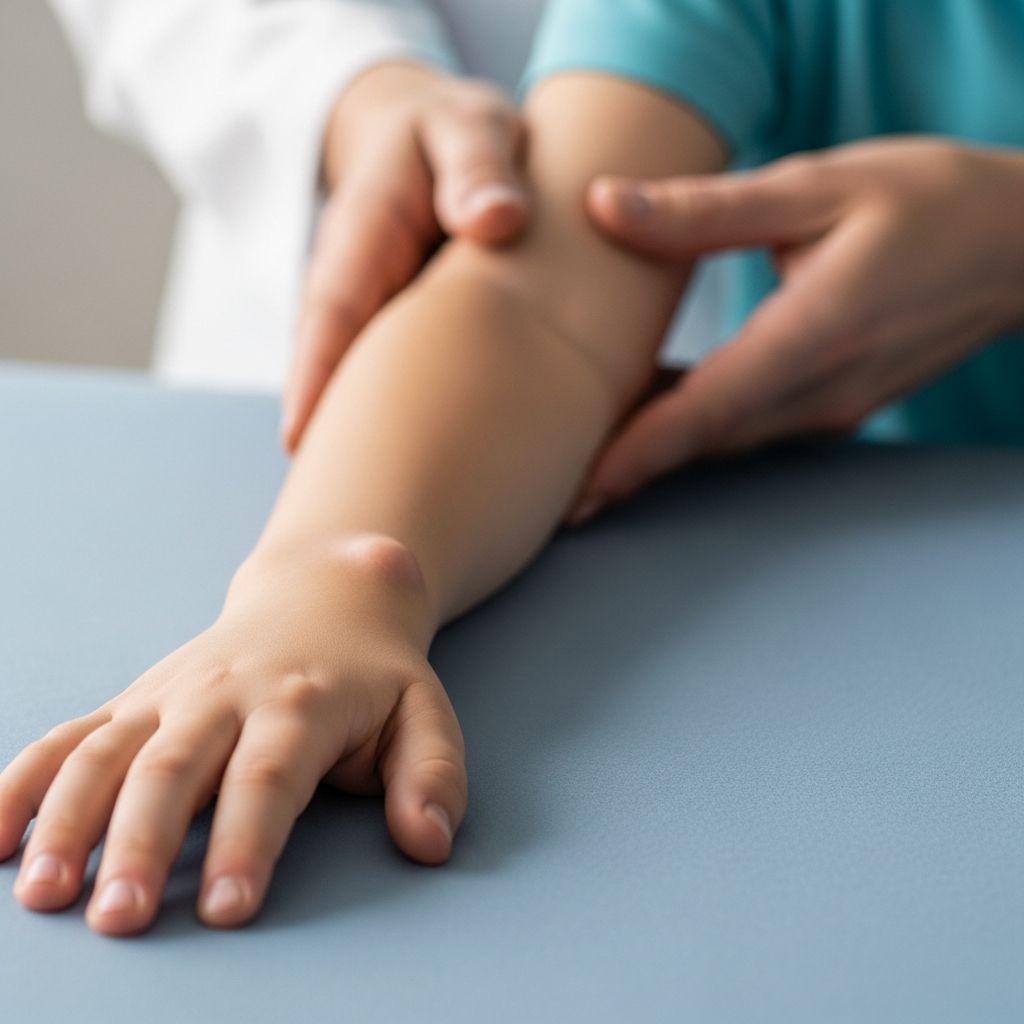
Buckle fractures, also known as torus fractures, represent one of the most frequent bone injuries in young children, typically occurring in the forearm or wrist due to compression forces during falls.
Understanding the Nature of Buckle Fractures
These injuries happen when the outer layer of a child’s bone cortex buckles under pressure without fully breaking through, creating a bulging or crumpling effect on one side of the bone. Unlike complete fractures seen more often in adults, buckle fractures are inherently stable because much of the bone remains intact, which supports rapid healing unique to pediatric bones.
Children under 12 are particularly prone due to their softer, more porous bones that bend rather than snap completely. The distal radius, the larger forearm bone near the wrist, is the most common site, often from landing on an outstretched hand.
Common Causes and Risk Factors
Buckle fractures usually result from everyday childhood accidents like falling off playground equipment, bikes, or during sports. The mechanism involves axial loading or compression on the bone perpendicular to its long axis.
- Playground mishaps: Slips from swings, slides, or monkey bars account for many cases.
- Sports activities: Skateboarding, soccer, or gymnastics where falls onto hands occur.
- Household incidents: Tripping while running indoors or minor tumbles.
Risk increases with age groups 5-10 years, as kids are active explorers but their bones are still developing. No specific genetic factors dominate, but active lifestyles amplify exposure.
Recognizing Symptoms Early
Parents often notice immediate signs after a fall: the child clutches their wrist, cries from pain, and shows swelling or tenderness at the site. Unlike severe breaks, there’s usually no obvious deformity, making it tricky to spot without imaging.
| Symptom | Description | Severity Level |
|---|---|---|
| Pain | Sharp at injury site, worsens with movement | Mild to moderate |
| Swelling | Localized puffiness around wrist/forearm | Mild |
| Bruising | May appear later, minimal compared to full breaks | Variable |
| Limited Motion | Child avoids using the arm | Moderate |
| Deformity | Rarely present; subtle bulge possible | Low |
Prompt recognition prevents complications; seek care if pain persists beyond minor bumps.
Diagnosis Process Explained
Healthcare providers start with a history of the fall and physical exam, checking for tenderness, range of motion, and neurovascular status. X-rays confirm the diagnosis, revealing the characteristic cortical buckling without a full break.
Views include posteroanterior and lateral wrist films; buckle appears as a focal density increase or corner fracture. Advanced imaging like MRI or CT is rarely needed for isolated cases.
- Emergency department triage for acute injuries.
- Rule out associated injuries like ligament strains.
- Assess for child abuse if mechanism unclear in non-walkers, though rare.
Treatment Options: Splints Over Casts
Treatment prioritizes comfort, stability, and quick return to activity. Removable splints are gold standard, preferred over casts for better function and parent satisfaction.
Splinting lasts 2-4 weeks, allowing bone remodeling via children’s periosteum-rich healing. Evidence from RCTs shows splints yield faster recovery, less disability, and fewer complications like skin issues.
| Method | Duration | Pros | Cons |
|---|---|---|---|
| Removable Splint | 2-3 weeks | Easy removal for hygiene, better motion, parent-preferred | May loosen if not fitted well |
| Soft Cast | 3 weeks | Moderate support, removable at home | Slightly more restrictive |
| Rigid Cast | 4 weeks | Strong immobilization | Heavy, skin risks, less satisfaction |
Surgery is virtually never required for isolated buckle fractures. Pain management uses OTC NSAIDs like ibuprofen.
Step-by-Step Recovery Timeline
Healing is swift: pain eases in days, splint weans as symptoms resolve. Full strength returns in 4-6 weeks; avoid contact sports for 6-8 weeks.
- Weeks 1-2: Wear splint full-time except bathing; ice and elevate.
- Weeks 3-4: Part-time use if pain-free; gentle exercises.
- Week 5+: Resume activities gradually; no routine follow-up X-rays needed.
Monitor for worsening pain, numbness, or fever signaling rare issues.
Potential Complications and When to Worry
These fractures boast excellent outcomes with low complication rates. Rare issues include refracture if returned too soon or cast-related blisters.
- Infection: From poor hygiene under splint.
- Stiffness: Prolonged immobilization.
- Nonunion: Extremely rare in kids.
Contact provider for intense pain, color changes, or swelling increase.
Activity Restrictions and School Tips
Limit wrist-straining tasks initially. Schools accommodate with notes for PE exemptions.
- Use opposite hand for writing/backpacks.
- Buddy tape if needed for stability.
- Gradual sports return post-clearance.
Preventing Future Buckle Fractures
Prevention focuses on supervision and safety gear. Helmets for biking, wrist guards for skating reduce falls.
- Secure playground surfaces with soft mulch.
- Teach fall techniques: tuck chin, roll.
- Calcium-rich diets support bone health.
Regular check-ups catch growth-related weaknesses early.
Frequently Asked Questions (FAQs)
Q: How long does a buckle fracture take to heal in children?
A: Typically 2-4 weeks with splinting; full activity in 4-6 weeks.
Q: Is a cast always needed for buckle fractures?
A: No, removable splints are preferred for comfort and efficacy.
Q: Can my child go to school with a buckle fracture?
A: Yes, with accommodations like avoiding PE; splint allows most tasks.
Q: When should we see a doctor after a fall?
A: If pain lasts, swelling occurs, or child won’t use arm.
Q: Do buckle fractures cause long-term problems?
A: Rarely; kids heal fully without growth issues.
Q: What’s the difference between buckle and greenstick fractures?
A: Buckle is compression bulge; greenstick is partial bend.
This guide empowers parents with evidence-based insights. Always consult pediatric specialists for personalized advice.
References
- Pediatric Fracture Types and How They’re Treated — Kidsville Pediatrics. 2023-09-12. https://www.kidsvillepeds.com/blog/1332083-6-pediatric-fracture-types-amp-treatment/
- Pediatric Torus Buckle Fracture — NCBI StatPearls. 2023-07-17. https://www.ncbi.nlm.nih.gov/books/NBK560634/
- Splint vs. Cast for Forearm Buckle Fracture in Children — AAFP. 2022-04-01. https://www.aafp.org/pubs/afp/issues/2022/0400/od2.html
- Buckle Fractures in Children — Children’s Mercy. 2023-09-01. https://www.childrensmercy.org/health-care-providers/refer-or-manage-a-patient/connect-with-childrens-mercy/newsletter-the-link/link-newsletter-september-2023/buckle-fractures-in-children/
- Extremity Fracture Clinical Pathway — CHOP. 2023-01-15. https://www.chop.edu/clinical-pathway/suspected-extremity-fractures-immobilization-devices-cast-types-by-injury
- Buckle (Torus) Fractures of the Wrist — Texas Children’s Hospital. 2024-02-20. https://www.texaschildrens.org/content/conditions/buckle-torus-fractures-wrist
- Buckle Fracture: Symptoms, Causes & Treatment — Cleveland Clinic. 2023-11-10. https://my.clevelandclinic.org/health/diseases/22235-buckle-fracture