When a child falls and hurts a wrist or forearm, parents often fear the worst: a serious broken bone. One of the most common outcomes, however, is a buckle fracture, a mild and very stable type of fracture that usually heals quickly and completely with simple treatment. Understanding what a buckle fracture is, how it is diagnosed, and what to expect during recovery can greatly ease anxiety and help families navigate the healing process with confidence.
What Is a Buckle Fracture?
A buckle fracture (also called a torus fracture) is a type of incomplete break in a bone where one side of the bone compresses and crumples slightly instead of snapping all the way through. Children’s bones are softer and more flexible than adult bones, so under pressure they tend to bend, dent, or “buckle” rather than fracture cleanly.
This small crumpling of the outer layer of bone creates a stable injury. The bone is still in one piece and typically stays in good alignment. That stability is the main reason buckle fractures heal quickly and almost always without long-term problems.
Why Buckle Fractures Happen Mostly in Kids
Growing bones have a thick, flexible outer layer and a softer inner core. This structure allows children’s bones to absorb force in a way that is different from adult bones, which are more rigid and break cleanly under similar stress. As a result, children are prone to incomplete fractures, including buckle fractures and greenstick fractures.
Buckle fractures occur most often near the wrist in the radius bone of the forearm. This is where kids instinctively put out their hands to catch themselves when they trip or fall from playground equipment, bicycles, or sports activities.
Common Causes and Risk Situations
Many everyday childhood activities can lead to a buckle fracture. The injury is usually the result of a fall onto an outstretched hand, but it can also occur when a force pushes straight along the length of the bone.
- Falling off playground equipment such as monkey bars, jungle gyms, or slides.
- Coming off a bicycle, scooter, or skateboard and landing on the hands.
- Collisions on the sports field, especially during soccer, basketball, or gymnastics.
- Tripping while running and instinctively using the hands to break the fall.
In most cases, the fall may not even seem particularly dramatic. Parents are sometimes surprised to learn that a relatively minor tumble caused a fracture at all.
Typical Signs and Symptoms
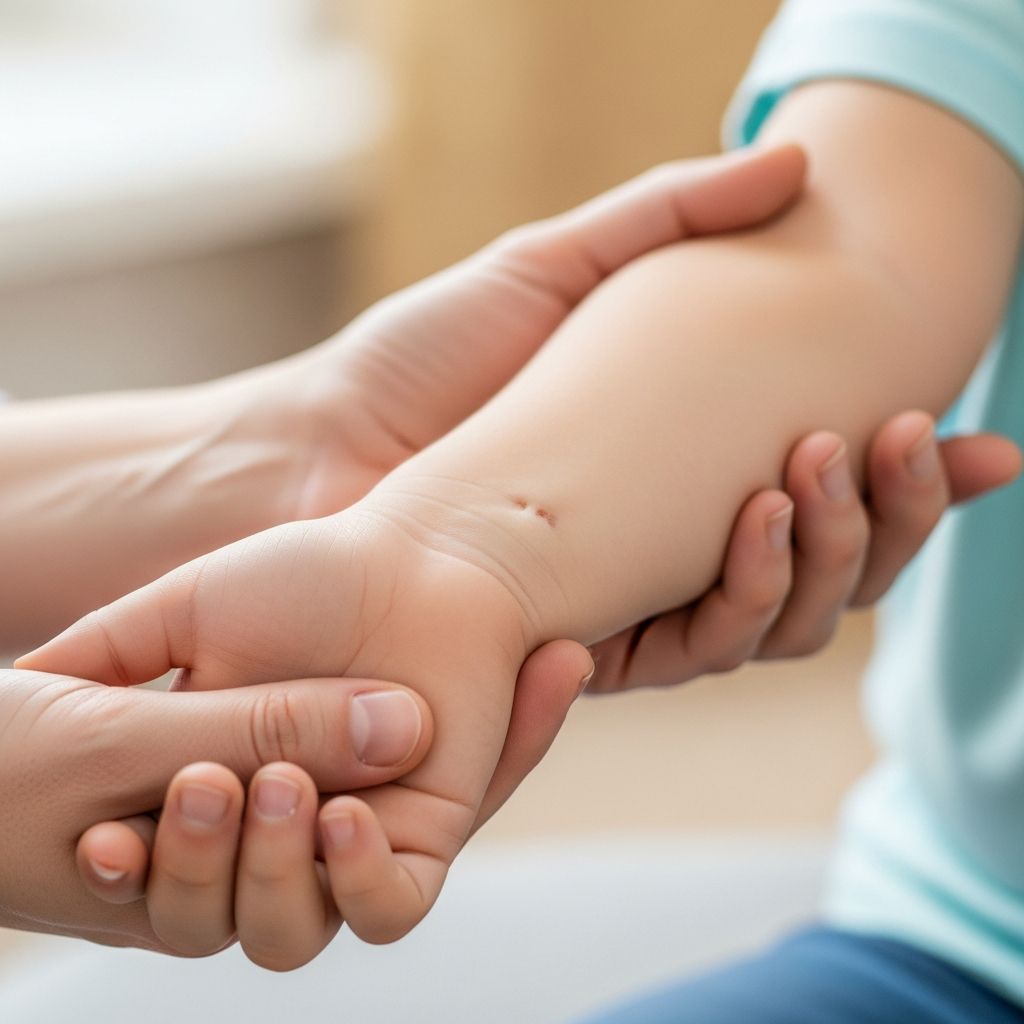
Symptoms of a buckle fracture can resemble those of a bruise or sprain. Because the bone is not completely broken or twisted far out of position, the arm often looks fairly normal. However, a few key features can help distinguish this injury from a simple soft-tissue strain.
- Pain at or near the wrist or lower forearm that worsens when the child moves or bears weight on the hand.
- Swelling or puffiness along the bone, usually just above the wrist joint.
- Tenderness when the area is gently pressed, especially directly over the bone rather than the muscles.
- Reluctance to use the affected hand for gripping, pushing up from the floor, or lifting objects.
- Mild bruising; in many buckle fractures, bruising is minimal or absent.
Severe deformity, obvious bending of the arm, or a bone appearing out of place are less typical of buckle fractures and may signal a more serious injury that needs urgent care.
When to Seek Medical Care
Any significant wrist or forearm injury in a child deserves medical evaluation, even if it does not look very dramatic. A health professional can determine whether there is a fracture and recommend appropriate treatment.
Parents should seek prompt care if:
- The child has persistent pain that does not improve with rest and simple pain relievers.
- Using the arm or wrist clearly increases pain, or the child refuses to move it.
- There is visible swelling, especially along the bone.
- The child describes a fall onto an outstretched hand followed by immediate wrist pain.
Emergency services are indicated if the arm looks severely misshapen, if the child cannot move the fingers, or if the hand appears pale or numb. Those signs suggest a more serious or complicated injury.
How Buckle Fractures Are Diagnosed
Diagnosis starts with a history of the injury and a careful physical examination. The clinician will ask how the fall or impact happened, which direction the child landed, and what symptoms appeared immediately afterward. Then the injured arm is examined for swelling, tenderness, range of motion, and circulation.
If a fracture is suspected, standard X-rays of the wrist or forearm are taken. On the image, a buckle fracture often appears as a slight bump or bulge on one side of the bone, sometimes described as a small wave or wrinkle in the outer bone surface. The rest of the bone typically looks intact and aligned.
How Buckle Fractures Differ from Other Fractures
One way to understand buckle fractures is to compare them with other common pediatric fracture types. The table below summarizes the key differences.
| Type of injury | What happens to the bone | Stability | Typical treatment |
|---|---|---|---|
| Buckle (torus) fracture | One side of the bone is compressed, creating a small bulge; bone remains in one piece. | Very stable; low risk of bone shifting. | Removable splint or soft cast for a short period. |
| Greenstick fracture | Bone bends and partially breaks on one side. | Less stable than a buckle fracture; may need closer follow-up. | Cast immobilization and monitoring for alignment. |
| Complete fracture | Bone breaks all the way across. | Can be unstable; pieces can shift. | Cast, possible reduction (realignment), and more frequent follow-up. |
Treatment Goals and Principles
Treatment for a buckle fracture focuses on comfort and protection while the bone heals itself. Because the fracture is stable, the main objective is not to hold fragments in place, but to keep the area from being bumped or stressed while new bone forms.
Pain relief, reassurance for the child and family, and a quick return to normal daily activities are central goals. Most children do not need surgery or invasive procedures for this type of injury.
Splints, Braces, and Casts
Immobilization is usually provided with a removable wrist splint or prefabricated brace. These devices wrap around the wrist and lower forearm, limiting motion and absorbing minor bumps. Many children appreciate that splints are lighter and less restrictive than traditional casts.
- Removable splints or braces: Common first choice; easy to take off briefly for bathing if approved by the clinician.
- Soft casts: Flexible material that provides support but can be removed with simple tools.
- Hard casts: Less often needed for buckle fractures but may be used in specific situations based on clinician judgment.
The device is typically worn for a relatively short time, often just a few weeks. Parents receive instructions on how long the child should wear it each day, whether it can be removed for hygiene, and how to check for skin irritation or pressure spots.
Pain Control and Comfort at Home
Most children experience moderate discomfort in the first few days after the injury, which gradually improves. Over-the-counter pain relievers recommended by the child’s clinician are usually enough. Always follow age-appropriate dosing guidelines and avoid giving any medication that has not been approved for the child’s age or medical history.
Other simple measures can help as well:
- Elevating the arm on pillows when resting to reduce swelling.
- Applying a cool pack wrapped in a cloth for short intervals, if authorized by the clinician.
- Encouraging the child to wiggle fingers gently to maintain circulation and prevent stiffness in the hand.
Healing Timeline and Follow-Up
Because children’s bones remodel rapidly, buckle fractures usually heal more quickly than many parents expect. A common pattern is noticeable improvement in pain and function within one to two weeks and near-complete symptom resolution within about three to four weeks, depending on age and individual variation.
Some clinicians do not require routine follow-up X-rays if the child is improving as expected and the injury was clearly identified as a simple buckle fracture. Others may schedule a brief checkup to ensure that pain has resolved and that the child is comfortable discontinuing the splint or brace.
Activity Restrictions and Safe Return to Play
Even after pain improves, the bone continues to strengthen. To reduce the risk of re-injury, most children are advised to temporarily avoid activities that involve falls, collisions, or heavy impact on the arms.
- Pause from contact sports such as football, hockey, or aggressive playground games until cleared.
- Avoid climbing, gymnastics, or activities where falling from height is likely.
- Use caution with bikes, scooters, and skateboards; many clinicians prefer the child to be fully healed before resuming these activities.
Light daily tasks—writing, gentle play, and school activities—can often continue as long as they do not cause pain and the splint is worn as instructed. A gradual return to sports is typically allowed once the child has no pain, normal motion, and the clinician confirms that healing is sufficient.
Long-Term Outlook
The long-term outlook for buckle fractures is excellent. Since the bone has remained in good alignment and the injury is inherently stable, problems such as growth disturbance, deformity, or chronic pain are very rare. Children generally regain full strength and function without specialized physical therapy.
A mild ache or stiffness can occasionally linger briefly after the splint is removed, especially when the child first starts using the wrist normally again. This usually fades quickly as the child resumes regular activities and the bone continues to remodel.
How Parents Can Support Recovery
Parents play a key role in ensuring a smooth recovery. Clear communication, reassurance, and consistent follow-through with medical instructions all help the child feel safe and confident during the healing phase.
- Explain in simple, positive language that the bone has a small dent, not a major break, and that it will heal.
- Help the child remember to wear the splint or brace during the recommended times.
- Monitor for increased pain, new swelling, numbness, or changes in skin color and contact the clinician if any appear.
- Plan safe activities that keep the child engaged while temporarily avoiding higher-risk sports or rough play.
Practical Tips for Daily Life with a Splint
Managing school, hygiene, and play while a child is wearing a splint or soft cast requires a few adjustments but is usually manageable.
- For school: Inform teachers and caregivers about the injury and any activity limits.
- For bathing: Follow specific instructions about whether the splint can be removed or needs to be kept dry.
- For clothing: Loose sleeves or tops with wide cuffs make it easier to dress.
- For sleep: Many children sleep comfortably with the splint on; some may be allowed to remove it once pain is minimal, if advised by the clinician.
Frequently Asked Questions
Is a buckle fracture really a broken bone?
Yes. A buckle fracture is a type of broken bone, even though it is less severe than a complete break. The outer layer of the bone has been compressed and damaged, and the body responds by repairing the area just as it would with other fractures.
Will my child need surgery?
Surgery for an uncomplicated buckle fracture is extremely uncommon. The bone is still in one piece and stable, so a removable splint or soft cast is usually all that is required. Surgical treatment is generally reserved for more complex or unstable fractures.
How long will my child need to wear the splint?
The exact duration varies with age, symptoms, and clinician preference, but many children wear a splint for only a few weeks. The device may be worn longer during sports or rough play if the clinician recommends extra protection while strength returns.
Is it normal for my child to still have some soreness after the splint comes off?
Mild soreness or stiffness can be normal in the days after splint removal, especially when the child first begins using the wrist more freely. This discomfort should gradually diminish. If pain suddenly worsens or interferes with daily activities, a follow-up evaluation is recommended.
Can a buckle fracture affect bone growth?
Buckle fractures usually occur in the shaft or metaphyseal area of the bone rather than directly through the growth plate. Because of this, growth-related complications are very rare. In most cases, the bone continues to grow normally and reaches full adult size and shape.
How can we reduce the risk of another injury?
Not all falls can be prevented, but certain measures lower the risk of future injuries. Well-fitting protective gear during sports, properly adjusted helmets and wrist guards for wheeled activities, and supervised, age-appropriate playground use can all help. Teaching kids safe habits—such as using both hands on climbing equipment and not pushing or roughhousing on elevated surfaces—also plays an important role.
Key Takeaways for Parents
- A buckle fracture is a mild, stable type of broken bone commonly seen in children, especially near the wrist.
- It usually results from a fall onto an outstretched hand and presents with localized pain and swelling but minimal deformity.
- Diagnosis is confirmed with an X-ray, and treatment typically involves a removable splint or soft cast for a few weeks.
- The long-term outlook is excellent, with most children returning to full activity without lasting problems.
By understanding the nature of buckle fractures and following medical advice, parents can help their children recover comfortably and quickly, returning them to the activities they love with confidence and peace of mind.