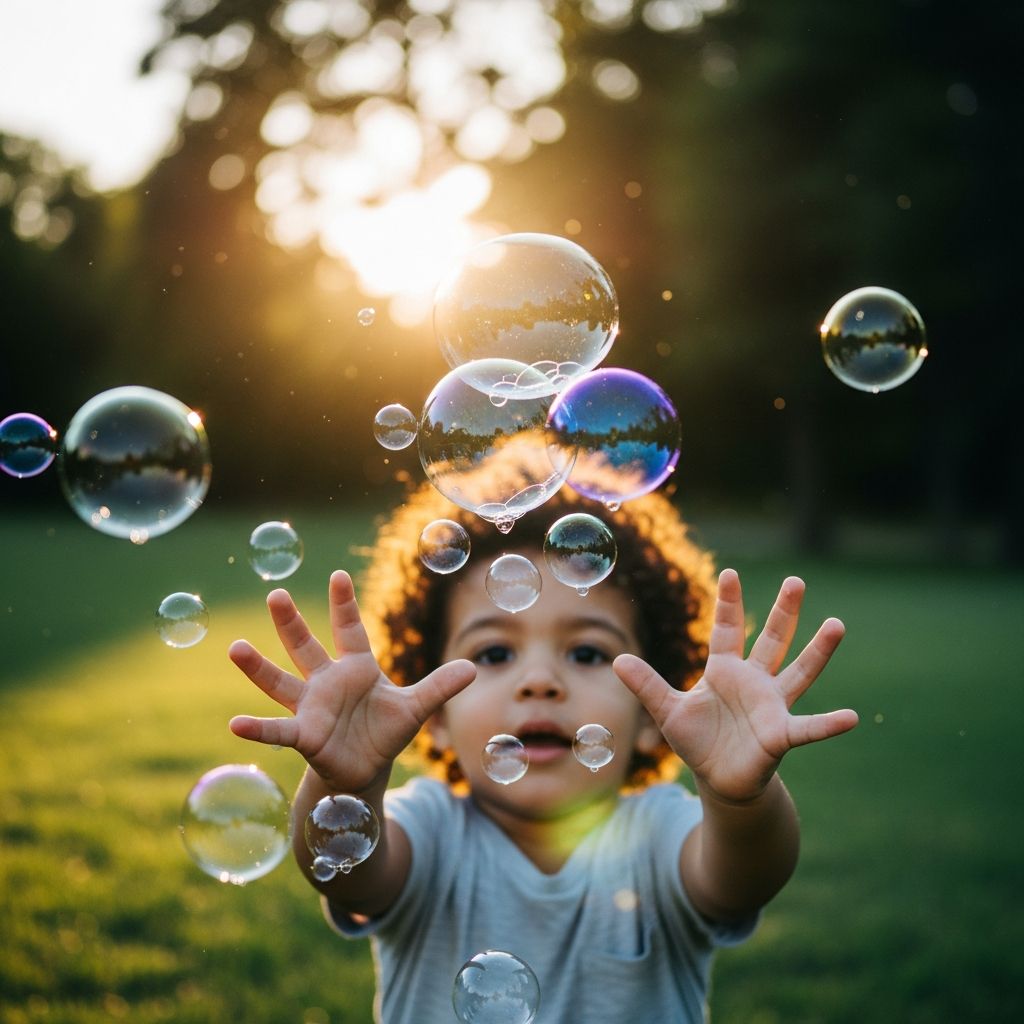
Bubble play is one of the simplest ways to entertain a baby or toddler, yet it offers a surprising amount of developmental value. A basic bottle of bubble solution can turn an ordinary afternoon into a moment of wonder, connection, and learning. This guide shows how to use bubbles in fresh, age-appropriate ways without complicated setup or special equipment.
Why Bubble Play Matters More Than It Looks
To a child, bubbles are tiny floating mysteries: they appear, drift, shimmer with color, and disappear with a satisfying pop. What looks like mindless fun is actually a layered experience that supports physical, cognitive, and emotional growth.
Because bubble play is flexible and low-pressure, it suits many moods and environments—indoors by a sunny window, outdoors on the grass, or even in the bathtub with the right solution. Parents and caregivers can easily scale the activity up or down depending on a child’s energy level and age.
Key Benefits of Bubble Play for Babies and Toddlers
Bubble activities are more than a way to pass time; they support a range of skills without children even realizing they are “practicing.” Understanding the benefits can help caregivers feel confident that simple play really does matter.
- Visual tracking: Watching bubbles drift across the air helps babies strengthen eye muscles and practice following a moving object.
- Motor skills: Reaching, crawling, walking, and jumping for bubbles encourage both gross and fine motor development.
- Hand–eye coordination: Trying to poke or clap bubbles helps children learn how to match what they see with how they move their hands.
- Cause and effect: Children begin connecting actions with outcomes: “When I touch the bubble, it pops.”
- Language growth: Bubble play naturally invites repetition of simple words like “pop,” “more,” “up,” and color or size descriptions.
- Social connection: Sharing the moment—laughing together, taking turns blowing, or cheering—strengthens bonds between child and caregiver.
Bubble Play Ideas by Age
Every child develops at a unique pace, but grouping activities loosely by age can help caregivers choose safe, engaging ways to play. Always supervise closely and adapt based on your child’s abilities and temperament.
For Young Babies (Around 3–9 Months)
At this stage, babies are often captivated just by looking. Rather than encouraging active chasing, the goal is calm observation and gentle movement. Keep bubbles well away from the face and eyes, and use small amounts of solution.
- Bubble “rain” show: Seat your baby in a supportive position (on your lap or in a baby seat) and blow a light stream of bubbles that fall slowly down in front of them. Pause often to let them process and gaze.
- Tummy-time spark: During supervised tummy time, blow bubbles across your baby’s field of vision to encourage lifting the head and turning side to side.
- Quiet wind-down: Before nap or bedtime, dim the lights slightly and blow a few bubbles by a gentle light source so your baby can watch the soft shimmer.
For Older Babies (Around 9–18 Months)
Older babies are usually ready to move more and experiment with cause and effect. They may reach, crawl, pull up, or totter after bubbles, turning the activity into a playful workout.
- Reaching and popping: Hold your baby in your arms or have them stand with support while you blow bubbles at chest level. Encourage them to tap, pat, or clap the bubbles.
- Crawling chase: For babies who love to crawl, blow bubbles a short distance away along the floor or play mat so they can move toward them.
- First words bubble game: As you play, repeat simple words like “pop,” “more,” or “bubbles” and pause to let your child react before blowing again.
For Toddlers (Around 18 Months–3 Years)
Toddlers bring energy, curiosity, and creativity to bubble play. They might try to blow bubbles themselves, invent games, or run wildly through a cloud of foam. With simple guidelines, this can remain safe and manageable.
- Run-and-pop game: Blow bubbles in front of your toddler and invite them to chase, jump, or stomp them.
- Count the pops: Encourage basic counting by counting together each time your child pops a bubble: “One pop, two pop, three pop.” Keep it playful, not pressured.
- Toddler-sized blowing: Offer a sturdy bubble wand and demonstrate how to blow gently. Expect spills and imperfections—this is about practice, not perfection.
- Follow-the-bubble: Blow one bubble and invite your child to walk slowly behind it, trying to stay close without popping it right away.
Simple Bubble Games for Everyday Moments
Bubble play does not need to be a big event. Short bursts of a few minutes can reset a tough day, break up long afternoons, or brighten routines like waiting for dinner or getting ready for bath time.
- Freeze and pop: Call out a fun action—”freeze!”—while bubbles float. When you say “go,” your child can move again and pop as many as possible.
- Color talk: While bubbles float, point out colors in the surrounding environment: “A bubble near the green tree” or “a bubble by your red shirt.”
- Big vs. tiny: Experiment with blowing big, slow bubbles and faster, smaller ones, describing the difference as you go.
- Bubble parade: Walk in a line around your yard or living room while you blow bubbles ahead, turning it into a moving mini-parade.
Indoor vs. Outdoor Bubble Fun
Where you play with bubbles changes the experience. Outdoors offers space and easy cleanup, while indoors can feel cozy and controlled. Each environment has its own advantages and considerations.
| Setting | Advantages | Things to Watch |
|---|---|---|
| Indoor |
|
|
| Outdoor |
|
|
Safety and Comfort Tips for Bubble Play
Even simple activities deserve thoughtful care. Bubbles are generally safe when used as intended, but they can still irritate eyes, create slippery surfaces, or become a frustration point if a child feels overwhelmed.
- Keep bubble solution away from the face and eyes. If it does get in the eyes, rinse gently with clean water.
- Play on a surface where a little extra slipperiness will not be dangerous, such as grass, a rug, or a mat.
- Offer breaks if your child becomes overstimulated or upset; some children dislike bubbles popping too close to their skin at first.
- Avoid encouraging children to drink or taste the solution, and store bottles out of reach when not in use.
Supporting Language and Social Skills
Bubble play naturally invites conversation and cooperation. Even before children speak, they are noticing tone, rhythm, and face expressions. Caregivers can use this opportunity to build connection and vocabulary.
- Describe what you see: Use simple, clear language: “The bubble is floating up,” “You popped it,” or “That one is big.”
- Offer choices: Ask questions with two options, such as “More bubbles or all done?” or “Big bubbles or little bubbles?”
- Practice turn-taking: Take turns blowing or popping, narrating with phrases like “My turn” and “Your turn” to introduce social concepts.
- Celebrate efforts: Focus on the attempt, not the result: “You tried so hard to blow that bubble” or “You reached so high.”
Adapting Bubble Play for Different Needs
Not every child responds to bubbles the same way. Some may be cautious about new sensory experiences; others may require extra support with motor skills or communication. With a few adjustments, bubble play can be welcoming to many different needs.
- For sensory-sensitive children: Start with bubbles at a distance, allowing them to watch without feeling pressure to touch.
- For children working on motor goals: Coordinate with therapists, if applicable, to turn bubble reaching, squatting, or jumping into playful practice.
- For children building communication skills: Use bubbles as a motivating context for practicing eye contact, gestures (like pointing), or words.
Making Bubble Play Part of Your Routine
Instead of treating bubbles as a rare treat, consider weaving them into existing routines. Short, predictable bursts of play can help transitions feel friendlier and give children something positive to anticipate.
- Use a two-minute bubble break between activities, such as after cleaning up toys and before starting a meal.
- Introduce a small bubble session as a reward for completing a task, like putting on shoes or brushing teeth, while keeping the tone light and fun.
- Bring travel-sized bubbles in a bag for waiting rooms, long lines, or park visits.
Frequently Asked Questions About Bubble Play
How long should a bubble play session last?
There is no single right length. For many babies and toddlers, five to fifteen minutes is enough to enjoy the novelty without becoming overstimulated or bored. Watch your child’s cues: if they turn away, wander off, or seem frustrated, that is a natural signal to pause or switch activities.
How often can I use bubbles with my child?
Bubbles can be used as often as you like, as long as your child remains interested and you are able to supervise closely. Because they are low-cost and portable, they can be part of daily or weekly play without needing much planning.
Are bubble solutions safe for babies?
Commercial bubble solutions are generally designed for external use, not for drinking or direct contact with eyes. Choose products made for children, follow the label instructions, avoid intentional tasting, and rinse skin or eyes with clean water if irritation occurs. If you have concerns, discuss ingredients or any reactions with a pediatric professional.
When can my child start blowing bubbles on their own?
Many children begin experimenting with blowing bubbles sometime in the toddler years, but the timing varies widely. At first, they may suck in instead of blowing out or spit into the wand. Provide gentle demonstrations, laugh off the mess, and treat the learning process as part of the fun.
What if my child is afraid of bubbles?
Some children are uneasy about the unexpected pops or the sensation of bubbles landing on their skin. Respect that feeling and step back rather than pushing them to interact. Allow them to observe from a distance, and consider reintroducing bubbles later in small, predictable amounts.
Do I need special equipment for meaningful bubble play?
A basic bottle of bubble solution and a simple wand are enough for rich, developmentally supportive play. Extra tools like bubble machines or novelty wands can be fun add-ons, but the real value lies in shared attention, conversation, and movement—not in fancy gear.
Final Thoughts
Bubbles are a reminder that meaningful play does not have to be complicated or expensive. With a few mindful choices about safety, language, and pacing, caregivers can transform a tiny bottle of soap and water into a powerful tool for connection and growth. The next time you reach for bubbles, remember that every pop carries a bit of practice, joy, and shared memory.