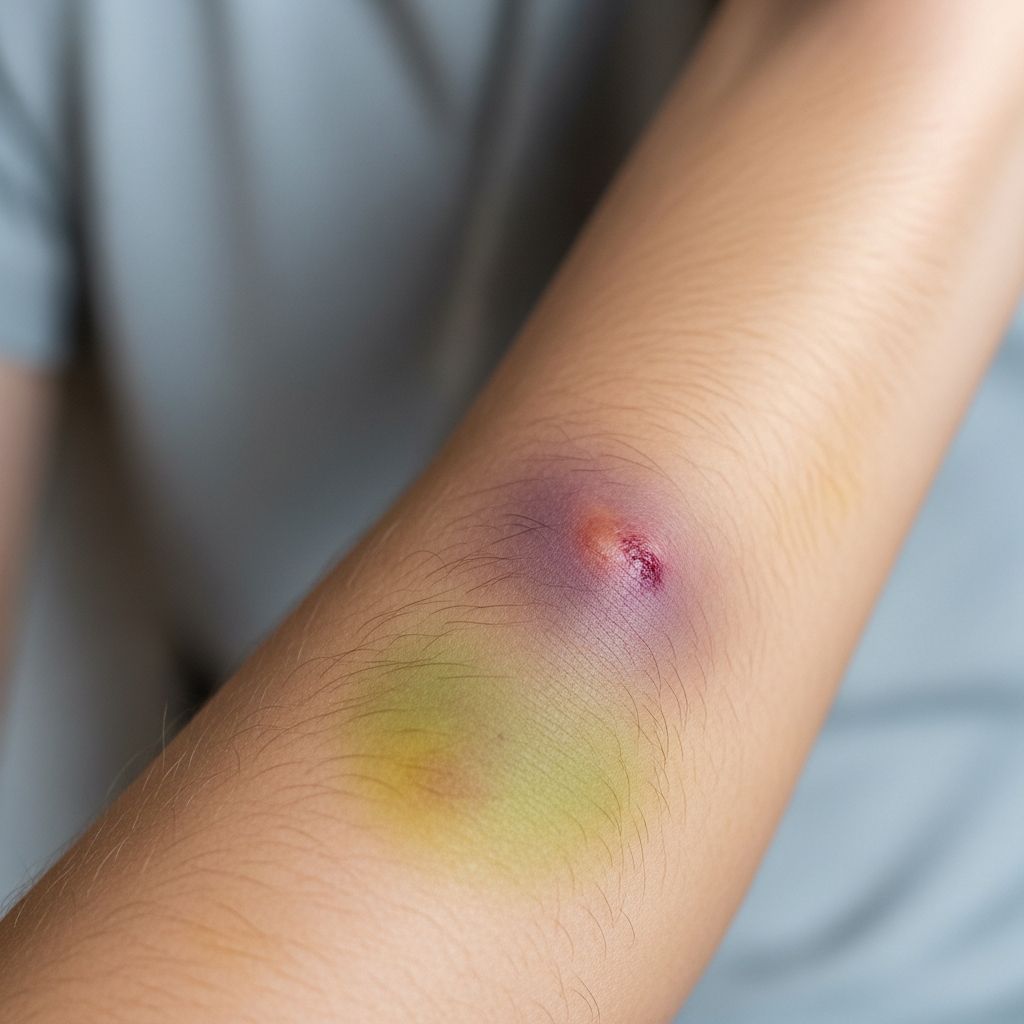
Almost every teen ends up with a random purple or blue patch at some point, whether from sports, dancing, bumping into a desk, or not even knowing how it showed up. This guide explains what bruises are, why they happen, how to help them heal, and when they might be a sign that something else is going on.
What Exactly Is a Bruise?
A bruise is a small internal injury where tiny blood vessels under the skin break, letting a bit of blood leak into the nearby tissue. Because the skin itself is not cut open, that trapped blood shows through as a colored patch on the surface.
Bruises are also called contusions by health professionals, and they can happen in muscles, deep tissues, or even bones, not just the top layer of skin. Most bruises are harmless and heal on their own, but the size, color, and pain level can vary depending on how hard you were hit and where the injury is.
Why Bruises Are Common in Teen Years
Teen life often involves more activity, risk, and growth than childhood, which naturally leads to more bumps and bruises. The combination of sports, rapid growth, and busy schedules makes teens especially likely to notice these marks.
- More physical activity: Sports, PE classes, dance, martial arts, and outdoor games all increase the chance of colliding with people or equipment.
- Growth and coordination changes: During growth spurts, your center of balance can shift, and you may feel clumsier, leading to minor accidents.
- Tighter schedules: Rushing between school, practice, and activities can mean more hurried movements and more chances to run into things.
- New responsibilities: Jobs like stocking shelves or lifting equipment can also cause muscle bruises and strains.
How Bruises Form and Change Color
When a part of your body is hit or squeezed hard enough, tiny blood vessels called capillaries can break. The blood that escapes has nowhere to go, so it pools under the skin, creating discoloration and sometimes swelling.
Over time, the body breaks down and reabsorbs that leaked blood, which is why a bruise doesn’t stay the same color. The exact timing varies, but many bruises move through several stages before fading away.
Typical Color Changes
Each bruise can look a little different, but many go through a pattern of changing shades as your body cleans up the leaked blood.
- Fresh bruise: May look reddish or pink shortly after the injury.
- Next few days: Often turns dark blue, purple, or almost black as the blood sits under the skin.
- Middle stage: Can shift to green or yellow as the blood pigments are broken down.
- Final stage: Fades to light brown or a yellow-tan before disappearing completely.
Bruises on the legs often last longer than bruises on the face or arms because circulation is different in those areas. Larger or deeper bruises can also take more time to fade than small, surface bruises.
| Approximate Time | Common Colors | What’s Happening Inside |
|---|---|---|
| First hours | Red or pink | Fresh blood has leaked from tiny vessels after an impact. |
| 1–3 days | Blue, dark purple, or black | The trapped blood loses oxygen and darkens under the skin. |
| 4–7 days | Greenish | The body starts breaking down components of the blood. |
| 1–2 weeks | Yellow or light brown | Leftover pigments are being cleared away as healing finishes. |
Common Causes of Bruises in Teens
Not every bruise has the same cause. For most teens, bruises come from ordinary activities, but sometimes they can signal a more serious issue or even unsafe situations.
Everyday Bumps and Sports
The majority of bruises in teens are linked to physical contact or impact. If you can connect a bruise to a clear event, it is usually less worrisome.
- Running into furniture, doors, or lockers.
- Falling during sports, dance, skateboarding, or biking.
- Contact from balls, sticks, or other players in team sports.
- Carrying heavy backpacks or gear that presses on shoulders or hips.
Less Obvious Triggers
Sometimes a bruise can appear after something that did not feel like a major hit. In those cases, more subtle factors might be involved.
- Certain medications or supplements that affect clotting or blood vessels.
- Very intense exercise that strains muscles and small vessels.
- Having naturally more delicate skin or connective tissue.
- Temporary changes from illness, fatigue, or poor nutrition.
When Bruises Could Be a Warning Sign
Although uncommon, repeated or unusual bruising can sometimes point to a medical condition that affects how blood clots or how strong blood vessels are. In those situations, bruises may be larger, more frequent, or slow to heal.
Bruises also matter in the context of safety. Unexplained bruises in certain patterns or locations, especially if you feel unsafe at home, school, or in a relationship, should be taken seriously and discussed with a trusted adult or professional.
Types of Bruises You Might Notice
Not all bruises are the same. How deep the damage is and which body structures are affected can change how a bruise feels and looks.
- Skin-level bruise: Shows as a flat patch of discoloration on the surface, often tender but not usually serious.
- Muscle bruise: Caused by a direct blow to a muscle, such as a thigh or upper arm, leading to soreness, swelling, and sometimes stiffness.
- Deep tissue bruise: Less obvious on the skin but can cause significant pain and swelling underneath.
- Bone bruise: A deeper injury to the bone itself, often from a strong impact; it can be more painful and take longer to recover.
If you have trouble moving a joint after an injury, or the area looks very deformed or extremely swollen, that could point to a sprain, fracture, or more serious type of damage that needs medical attention.
How to Care for a Fresh Bruise
Quick, simple care in the first couple of days can help control swelling, reduce pain, and may keep a bruise from spreading as much. These steps are especially helpful right after the injury happens.
First 48 Hours: Cool and Protect
- Rest the area: Try not to use the injured body part more than necessary, especially for sports or heavy lifting.
- Apply something cold: Use a cold pack or a bag of ice wrapped in a thin cloth for about 15–20 minutes at a time, several times a day.
- Elevate if possible: If the bruise is on an arm or leg, raise it above the level of your heart to help reduce swelling.
- Avoid direct heat: Hot packs or hot showers on the area too early can increase blood flow and make the bruise bigger.
Pain Relief and Support
Mild pain from a bruise is common, especially when you move the injured part. Over-the-counter pain relievers can be useful, but they need to be used safely.
- Ask a parent, guardian, or health professional before taking any pain medicine.
- Use medications only as directed on the label or by your doctor.
- If advised, a light elastic wrap can provide support, but it should never be so tight that it causes numbness, tingling, or more pain.
After a Couple of Days
Once the initial swelling has gone down, gentle warmth may help your body circulate blood through the area and continue the healing process. Some people find warm compresses soothing at this stage.
- Use a warm (not hot) cloth or heating pad on a low setting for short periods.
- Stop if you notice more pain, swelling, or redness.
- Gradually return to normal activities as the soreness improves.
How Long Do Bruises Last?
Many simple bruises start to feel better after a few days and fade over one to two weeks. The exact timing depends on your circulation, the location of the bruise, and how severe the impact was.
Leg and foot bruises may stick around longer because blood flow back to the heart has to work against gravity. Deep bruises or those from high-impact injuries can also take more time to completely disappear.
Preventing Bruises (As Much as Possible)
It is impossible to avoid every bruise, especially if you are active, but there are smart steps you can take to reduce your risk and protect vulnerable areas. Small changes add up over time.
- Use protective gear: Wear recommended pads, helmets, shin guards, and other equipment for your sport or activity.
- Warm up and stretch: Preparing your muscles before intense activity may help them handle impact better.
- Keep your environment safe: Clear clutter from floors, secure loose rugs, and keep walkways well lit to avoid tripping.
- Strengthen muscles: Stronger muscles support and cushion your body when you fall or bump into something.
- Maintain good nutrition: Eating a balanced diet with enough vitamins, minerals, and protein supports healthy skin and blood vessels.
When Bruising Might Be a Medical Issue
Occasional bruises from clear injuries are normal, but certain patterns deserve attention from a doctor. Your body should not bruise heavily from very minor contact over and over again without an explanation.
Consider talking with a health professional if you notice any of the following:
- Bruises that appear without any remembered bump or injury.
- Very large or painful bruises after small impacts.
- Bruising that keeps getting worse instead of fading.
- Frequent nosebleeds, heavy menstrual periods, or bleeding gums along with bruises.
- Family history of bleeding or clotting problems.
- New bruising after starting a medicine or supplement.
A doctor may ask questions about your health history, your activity level, and any medicines you take, and may order blood tests to check how well your blood clots. Figuring out the cause can help you manage or treat any underlying issue early.
Bruises and Emotional Safety
Not all bruises come from accidents or sports. Sometimes they can be a sign that someone is hurting you physically, whether at home, at school, in a relationship, or in another setting. That kind of harm is never your fault and is never okay.
If you have bruises in places usually covered by clothing, if you are scared of someone’s reactions, or if you are told to hide your injuries, consider reaching out to:
- A parent, guardian, or other trusted adult.
- A school counselor, nurse, coach, or teacher.
- A doctor or clinic, where staff are trained to help keep you safe.
- A local or national help line that supports teens in unsafe situations.
Frequently Asked Questions About Bruises
Is it normal to bruise easily as a teen?
Some people naturally bruise more easily than others, especially if they are very active, have lighter skin, or have a slimmer build with less padding over bones. However, if you suddenly start bruising much more than before or see large bruises from small bumps, it is worth checking in with a health professional.
Can I exercise or play sports if I have a bruise?
Light activity that does not increase your pain is often fine, especially if the bruise is small and not over a joint. Avoid contact sports or intense workouts that involve the injured area until pain and swelling have clearly improved, and follow any recommendations from your doctor or athletic trainer.
Should I massage a bruise to make it fade faster?
Rubbing or massaging a fresh bruise can actually make bleeding under the skin worse, particularly in the first couple of days. After the early phase, very gentle movement can be okay, but if touching the area hurts, it is better to let it rest and follow standard care steps instead.
Do certain foods or vitamins stop bruises?
No single food can guarantee you will not bruise, but an overall balanced diet supports healthy tissues and normal clotting. If a doctor finds a specific vitamin deficiency or other medical issue, they may recommend changes to your eating habits or supplements tailored to your situation.
Can a bruise leave a permanent mark?
Most bruises fade completely without leaving any trace, especially in younger people with good circulation. Very deep or severe injuries can sometimes leave slight color changes or small areas of firmness, but that is not typical for ordinary minor bruises.
Key Takeaways for Teens
- Bruises are common, especially if you are active, and most are not a cause for alarm.
- They form when tiny blood vessels break under the skin and gradually change color as they heal.
- Rest, cold packs, elevation, and appropriate pain relief help in the first couple of days.
- Watch for patterns like frequent, unexplained bruises or bleeding, and talk to a doctor if you are concerned.
- If anyone is hurting you and causing bruises, you deserve support and protection; reaching out for help is a strong and important step.