The collarbone, or clavicle, serves as a vital link between the shoulder blade and breastbone, supporting arm movement and stability. In children, fractures here are among the most frequent shoulder injuries due to their active lifestyles and developing bones. These breaks often result from everyday mishaps but heal remarkably well with proper care. Parents play a crucial role in early detection and supportive recovery.
Recognizing the Signs of a Collarbone Injury
Spotting a broken collarbone promptly can prevent complications. Children may clutch their shoulder or refuse to use the affected arm. Key indicators include intense pain that worsens with any shoulder motion, noticeable swelling or bruising around the area, and a visible bump or deformity where the bone has shifted.
Additional symptoms involve a grinding sensation, known as crepitus, during arm movement, stiffness limiting range of motion, and tenderness when the site is touched. In infants, signs might be subtler, such as not moving the arm after birth or crying during handling. Shoulder sagging forward or downward also signals misalignment.
- Pain escalation: Sharp discomfort intensifying with arm lifts or deep breaths.
- Visual changes: Skin tenting over the break or an unnatural bulge.
- Mobility issues: Inability to raise the arm without agony.
Common Triggers Behind Pediatric Collarbone Breaks
Children’s exploratory nature exposes them to risks. Falls onto an outstretched arm or directly on the shoulder top the list, common during playground antics or bike rides. Sports like soccer, gymnastics, or biking amplify chances, especially with collisions or awkward landings.
Vehicle accidents, even minor ones, pose threats via impact forces. Newborns face risks from challenging deliveries where shoulder dystocia occurs. Less common are direct blows or stress from repetitive overhead activities in young athletes.
| Cause Category | Examples in Kids | Frequency |
|---|---|---|
| Falls | Playground slips, stair tumbles | Most common |
| Sports | Contact games, skating falls | High in school-age |
| Birth-related | Difficult labor | Infants only |
| Accidents | Bike crashes, car impacts | Variable |
Steps for Initial Response and When to Seek Help
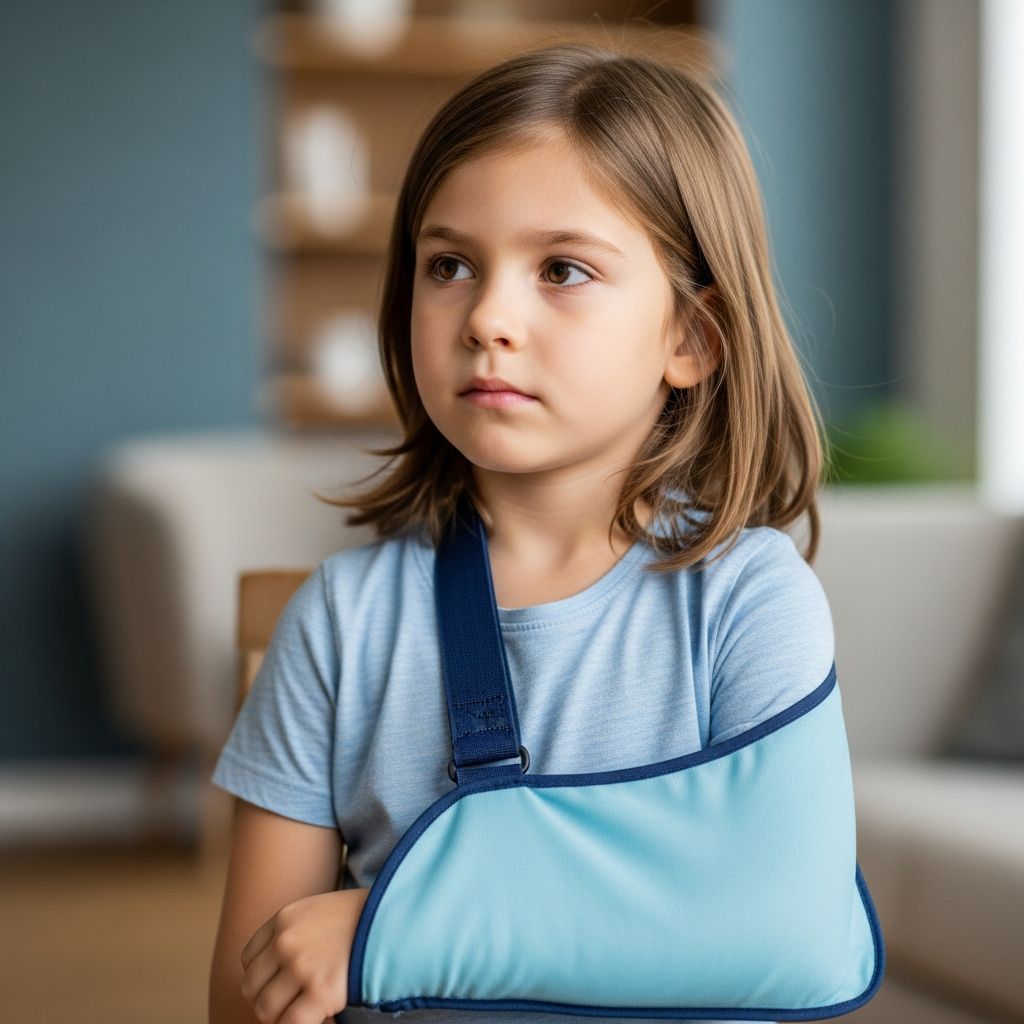
Act swiftly if injury is suspected. Immobilize the arm gently against the body using a makeshift sling from a towel or scarf to minimize movement. Apply ice wrapped in cloth for 15-20 minutes to curb swelling, avoiding direct skin contact. Elevate the area and administer age-appropriate pain relief like acetaminophen, following dosage guidelines.
Rush to emergency care for severe pain, deformity, numbness, breathing issues, or open wounds. Delaying risks poor alignment or vessel damage. X-rays confirm the diagnosis, revealing fracture location—most occur mid-bone.
Standard Treatment Approaches for Kids
Most pediatric cases, about 90%, heal without surgery thanks to robust remodeling capacity. A sling or figure-eight brace holds the shoulder stable for 4-8 weeks, promoting natural union. Pain management combines rest, ice, compression, and elevation (RICE) with medications.
Physical therapy starts early with gentle pendulum swings to avert stiffness, progressing to strengthening as healing advances. Full activity resumption takes 6-12 weeks, guided by follow-up imaging.
- Conservative care: Sling wear, meds, PT—ideal for aligned breaks.
- Surgical options: Pins, plates for displaced or compound fractures.
Surgical Interventions: When and How
Surgery suits fractures with significant displacement, multiple fragments, or skin penetration. Open reduction internal fixation (ORIF) realigns bones using metal hardware, which may stay permanently or be removed later. Post-op, slings last 2-6 weeks, with therapy restoring function. Risks include infection or hardware irritation, but success rates exceed 95% in children.
Navigating the Recovery Journey
Healing timelines vary: infants recover in 2-4 weeks, school-age kids 6-8, teens up to 12. Monitor for non-union (rare, <5%) or lump formation, which often resorbs. Encourage nutrition rich in calcium, vitamin D, and protein.
Gradual return to sports requires clearance. Complications like arthritis or nerve issues are uncommon but warrant vigilance.
| Age Group | Healing Time | Activity Return |
|---|---|---|
| Infants | 2-4 weeks | Full soon |
| 5-12 years | 4-8 weeks | 8-12 weeks |
| Teens | 6-12 weeks | 3-6 months |
Potential Complications and Red Flags
While most heal seamlessly, watch for poor union, shortening, or prominent callus. Rare vascular/nerve injuries cause tingling or pallor—emergencies. Joint-involving breaks raise osteoarthritis odds later. Persistent pain post-recovery signals re-evaluation.
Preventive Measures for Active Youngsters
Promote safety: helmets for biking/skating, spotters in gymnastics, proper warm-ups. Build bone health via dairy, sunlight, weight-bearing play. Supervise high-risk play.
Frequently Asked Questions About Collarbone Fractures in Children
Can a child’s broken collarbone heal without a cast?
Yes, slings suffice for most, leveraging kids’ healing prowess. Casts are rare.
How long until my child can play sports again?
Typically 8-12 weeks, per doctor approval and X-ray confirmation.
Will there be a permanent bump after healing?
Often yes initially, but it usually shrinks over months.
Is surgery common for kids’ collarbone breaks?
No, only 5-10% need it, mainly severe displacements.
What home care helps during recovery?
RICE method, prescribed pain relief, light exercises as advised.
Long-Term Outlook and Parental Support
Children rarely face lasting issues, regaining full strength. Emotional support eases frustration from immobility. Consult pediatric orthopedists for tailored plans.
References
- Broken collarbone – Symptoms and causes — Mayo Clinic Staff. 2022-12-10. https://www.mayoclinic.org/diseases-conditions/broken-collarbone/symptoms-causes/syc-20370311
- Clavicle Fracture (Broken Collarbone) — OrthoInfo – AAOS. N/A. https://orthoinfo.aaos.org/en/diseases–conditions/clavicle-fracture-broken-collarbone/
- Broken Collarbone: Basics, Symptoms, and Treatments — 3D Sports Medicine. 2021-08-18. https://www.3dsportsmed.com/2021/08/18/broken-collarbone/
- Clavicle Fracture (Broken Collarbone) — Cleveland Clinic. N/A. https://my.clevelandclinic.org/health/diseases/16874-broken-collarbone-clavicle-fracture
- Broken collarbone — NHS. N/A. https://www.nhs.uk/conditions/broken-collarbone/