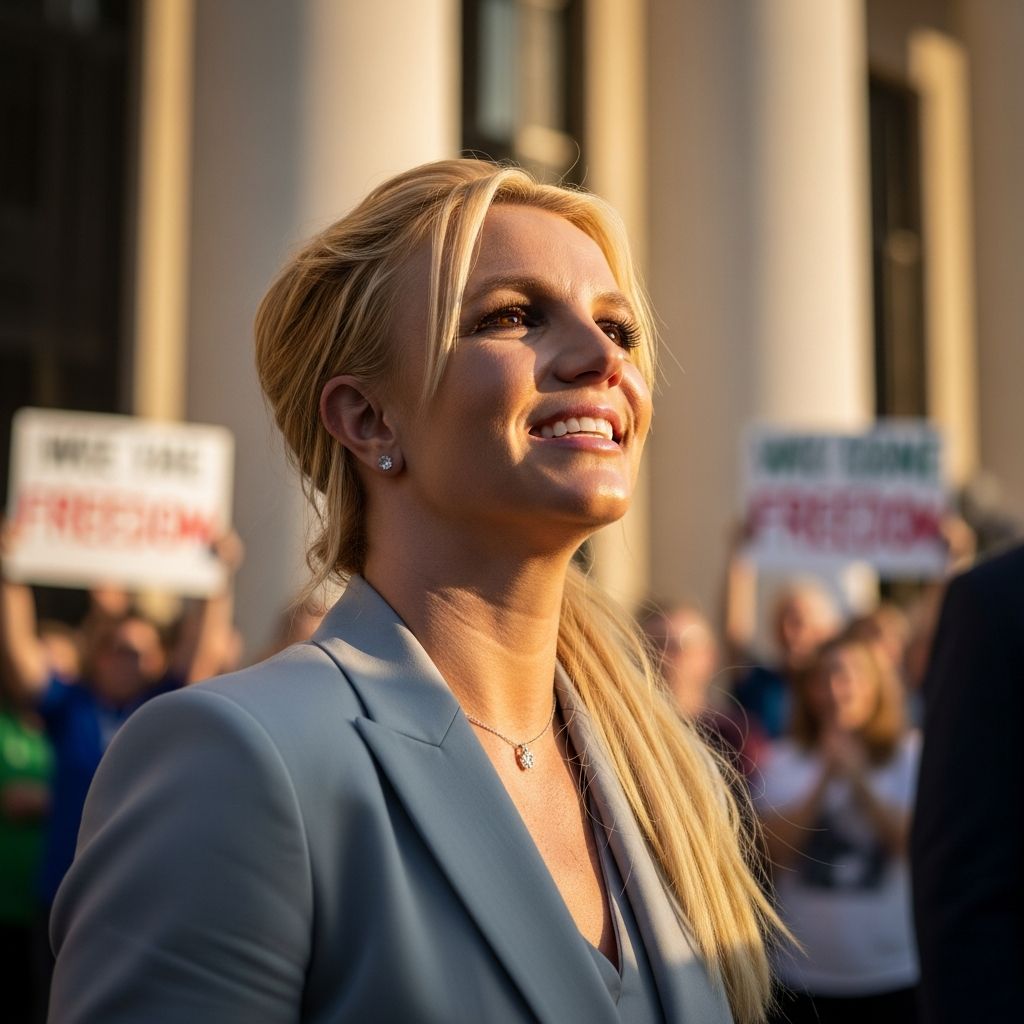
Britney Spears’ conservatorship, a legal arrangement that controlled her personal and financial affairs for nearly 14 years, officially ended on November 12, 2021, when Judge Brenda Penny terminated it, restoring full control to the singer. This decision marked the culmination of a highly publicized legal fight fueled by fan support and Spears’ own testimony against what she described as an abusive system.
Origins of the Conservatorship: A Crisis in 2008
The conservatorship began in early 2008 amid Britney Spears’ personal turmoil. Following high-profile incidents including a mental health hospitalization, her parents, Jamie and Lynne Spears, sought court intervention to protect her safety and assets. On February 1, 2008, a temporary conservatorship was established, with Jamie Spears appointed as conservator of both her person and estate.
By October 2008, after several extensions, it became permanent. Attorney Andrew Wallet joined as co-conservator of the estate, overseeing Spears’ multimillion-dollar fortune from her music career and endorsements. The arrangement was initially framed as necessary due to Spears’ vulnerability, but it soon drew criticism for its restrictive nature.
- February 2008: Parents issue statement expressing concern for her safety, citing disregarded court orders.
- Initial focus: Protecting her from risks amid media scrutiny and family concerns.
This period stripped Spears of basic autonomies, such as driving or making medical decisions, setting the stage for long-term controversy.
Key Developments Through the 2010s: Control and Quiet Resistance
Throughout the 2010s, the conservatorship persisted with periodic adjustments. Jamie Spears remained the primary figure, but shifts occurred due to health issues and resignations. In March 2019, Andrew Wallet resigned, leaving Jamie as sole conservator of the estate.
September 2019 saw Jamie temporarily step down as conservator of the person due to health reasons, with Jodi Montgomery, a care manager, appointed in his place. Spears announced a performance hiatus in January 2019 after Jamie’s hospitalization, highlighting family priorities amid ongoing oversight.
In May 2019, Spears attended a hearing with her mother Lynne, reportedly requesting its end, though proceedings remained sealed. These years saw Spears continue working, including her Las Vegas residency, yet under strict supervision that limited her choices.
| Year | Event | Impact |
|---|---|---|
| 2019 | Wallet resigns; Jamie sole estate conservator | Centralized control under father |
| 2019 | Jamie steps down temporarily; Montgomery appointed | Split conservatorship roles |
| 2019 | Work hiatus announced | Public glimpse of family dynamics |
The #FreeBritney Movement Ignites Public Awareness
A grassroots fan campaign, #FreeBritney, emerged around 2019, gaining momentum with social media posts questioning the conservatorship’s necessity. Fans analyzed Spears’ Instagram activity for clues of distress, turning speculation into organized advocacy.
The movement surged in February 2021 after The New York Times documentary Framing Britney Spears exposed the arrangement’s details, including sealed proceedings and family tensions. This reframed public perception from protection to potential overreach.
- Early fans: Noted odd videos and captions as cries for help.
- 2021 boost: Documentary fueled third wave of activism.
- Global reach: Petitions and rallies outside courthouses.
Spears publicly endorsed #FreeBritney in June 2021 via Instagram, amplifying the call for her release.
Pivotal 2021 Testimony: Spears Speaks Out
On June 23, 2021, Spears delivered a virtual testimony to Judge Penny, her first direct address to the court. She described the conservatorship as abusive, detailing forced medication, work demands, and loss of freedoms like contraception and seeing her children without supervision. “I just want my life back,” she stated emotionally.
This led to immediate changes: On July 1, Bessemer Trust resigned as estate co-conservator, respecting her wishes. Her court-appointed lawyer, Sam Ingham, stepped down on July 6, allowing her to hire Matthew Rosengart.
August 12 marked a turning point when Jamie agreed to step down, though contesting grounds for removal. By September 2021, Jamie filed to end the entire conservatorship, citing changed circumstances after facing investigations into financial management.
Termination and Aftermath: Reclaiming Autonomy
On September 29, Judge Penny suspended Jamie, appointing an investigator. On November 12, 2021, the conservatorship ended without further evaluation of Spears’ capacity, as petitions from both parents supported dissolution.
Post-termination, Spears celebrated on social media: “Good God I love my fans so much it’s crazy”. No criminal charges followed, but she pursued accountability for alleged abuses. The case sparked U.S.-wide conservatorship reforms, questioning guardianship laws.
Legal and Financial Ramifications
During its run, the conservatorship managed over $60 million in assets, with fees exceeding $18 million paid to overseers. Rosengart pursued audits, revealing expenditures like Jamie’s $6 million legal fees. Spears regained control of her estate, prenup considerations with Sam Asghari proceeded without interference.
The battle highlighted conservatorship abuses: often irreversible once imposed, disproportionately affecting women and disabled individuals.
Broader Societal Impact: Reforms and Discussions
Spears’ fight prompted legislative changes. California passed the Honoring Britney Spears and Welfare Reform Act, easing guardianship terminations. Similar bills emerged nationwide, emphasizing least restrictive alternatives.
Experts note conservatorships, intended for protection, can enable exploitation. Spears’ story underscored celebrity vulnerability to family and legal systems.
Personal Reflections and Future Outlook
Since 2021, Spears has focused on music, marriage to Asghari (2022), and memoir The Woman in Me, detailing her ordeal. She advocates for mental health awareness, transforming trauma into empowerment.
Her journey from pop icon to conservatorship symbol to free artist inspires discussions on autonomy, fame’s toll, and justice.
Frequently Asked Questions
What was Britney Spears’ conservatorship?
A court-ordered guardianship controlling her finances and personal decisions from 2008 to 2021.
Why was it established?
Amid 2008 personal crises, including hospitalization, to safeguard her well-being and assets.
What ended it?
Spears’ June 2021 testimony, legal maneuvers by Matthew Rosengart, and petitions from family, leading to Judge Penny’s November 12 ruling.
What is #FreeBritney?
Fan-led movement since 2019 demanding the conservatorship’s end, boosted by media.
Did Spears face ongoing legal issues after?
She pursued investigations into abuses but focused on recovery and career.
References
- Britney Spears’s Conservatorship Case Explained by an Attorney — Barr Attorneys. 2021-09. https://www.barrattorneys.com/blog/britney-spearss-conservatorship-case-explained/
- Timeline of Britney Spears’ Conservatorship — Business Insider. 2023-10-23. https://www.businessinsider.com/inside-britney-spears-conservatorship-freebritney-movement-2020-12
- Overprotected: A Timeline of Britney Spears’s Conservatorship and the FreeBritney Movement — HeinOnline Blog. 2021-10. https://home.heinonline.org/blog/2021/10/overprotected-a-timeline-of-britney-spearss-conservatorship-and-the-freebritney-movement/
- Britney Spears’ Conservatorship: A Complete Timeline — Biography.com. N/A. https://www.biography.com/musicians/a69611740/britney-spears-conservatorship-timeline-explained
- Britney Spears conservatorship case — Wikipedia (sourced primaries). N/A. https://en.wikipedia.org/wiki/Britney_Spears_conservatorship_case