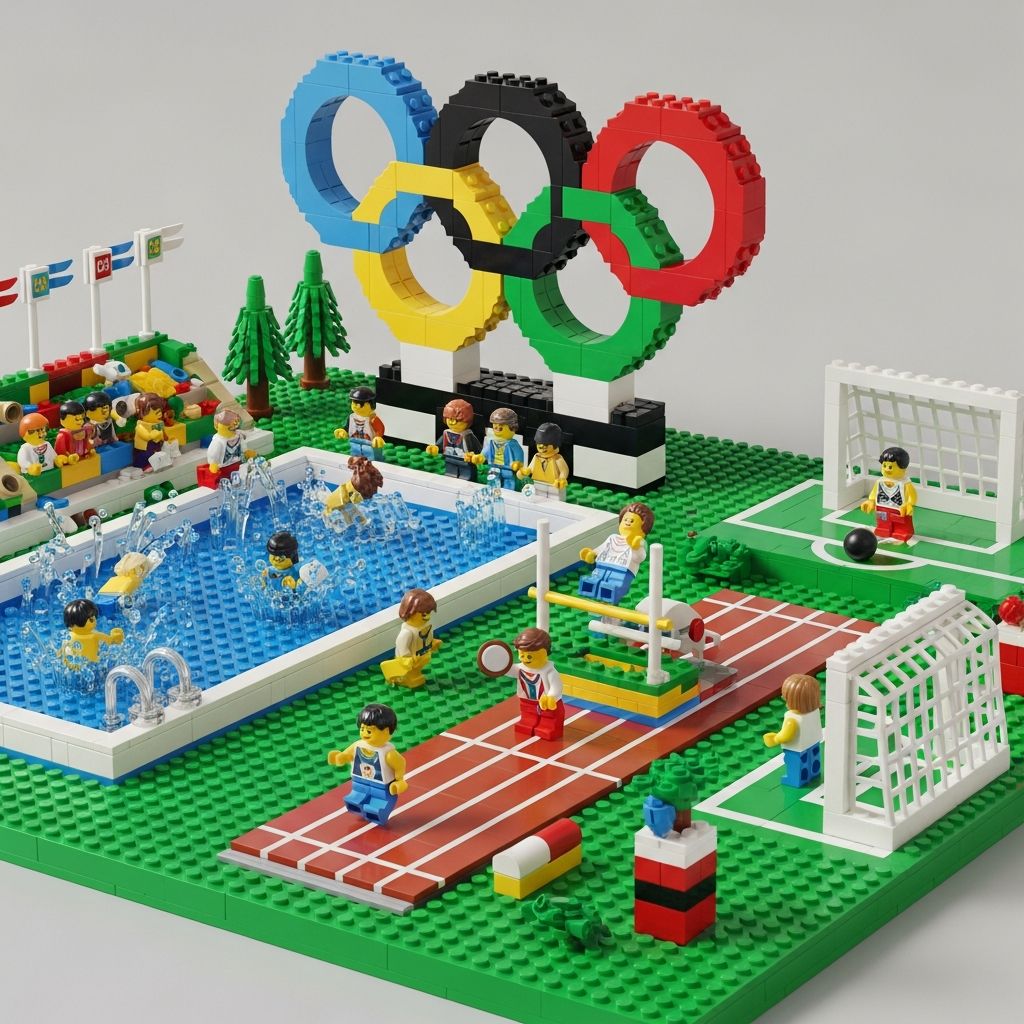
Small building bricks are more than toys; they are tiny tools for storytelling, creativity, and friendly competition. An at-home Summer Games inspired by the Olympics is a fun way to turn loose bricks into a day-long celebration of building, movement, and imagination for kids of all ages.
Why Create Brick-Based Summer Games?
Designing your own brick-based Summer Games gives children a chance to problem-solve, collaborate, and explore basic STEM concepts while playing. It is also an engaging way to talk about sportsmanship, perseverance, and how athletes train and compete around the world.
- Encourages fine motor skills through building and rebuilding structures.
- Sparks creativity as kids invent original sports, arenas, and characters.
- Provides a screen-free activity that can last an afternoon or turn into an ongoing project.
Planning Your Mini Games: Theme and Roles
Before the building begins, decide what kind of Summer Games you want to host. You can focus on classic Olympic-style sports, create futuristic events, or mix both into your own unique festival of play.
- Classic theme: Brick versions of running, swimming, gymnastics, rowing, and cycling.
- Fantasy theme: Hoverboard races, cloud diving, rocket relays, or underwater cities.
- Mixed theme: Real sports with imaginative twists, such as trampoline basketball on the moon.
Assign roles so everyone feels involved, even when it is not their turn to compete.
- Build engineers (design arenas, obstacles, and finish lines).
- Event organizers (write rules, announce events, and manage the schedule).
- Judges and referees (track scores, keep time, and encourage fair play).
Simple Materials Checklist
You do not need any specific set to run your brick-based Summer Games. Gather what you already have and improvise for the rest.
- Assorted mini building bricks and plates in various colors.
- Mini figures or small tokens to act as athletes (or build simple block characters).
- Flat baseplates or sturdy cardboard pieces as arenas.
- Paper, markers, and tape for signs, flags, and scoreboards.
- Small containers to sort bricks by color, size, or type for faster building.
Core Brick Events for Your Summer Games
Instead of copying real-world events exactly, treat them as inspiration. Each of the events below focuses on creativity, problem-solving, and storytelling as much as winning.
1. Mini Marathon Track Challenge
Create a running course that twists, climbs, and curves across a baseplate. The athletes are mini figures or simple block characters that must navigate the track.
- Ask kids to design a start gate, finish arch, and at least three obstacles.
- Use tiles or smooth pieces as slippery spots and bricks as hurdles or ramps.
- Time how fast each athlete can be guided around the course by hand or using a gentle tilting of the base (if mounted on a tray).
2. Brick Aquatics: Pool and Boat Races
Construct a rectangular “pool” or racing lane using bricks on a baseplate, then build tiny boats or flotation platforms for mini figures. Water is optional; the racing can happen on a dry surface using imagination alone.
- Challenge: Who can build the smallest boat that still holds one mini figure?
- Variation: Use a shallow tray of water (supervised) to test which designs stay upright the longest.
- Scoring: Award points for creativity, stability, and speed over a short distance.
3. Gymnastics Arena and Trick Showcase
Gymnastics translates beautifully into brick form because it is all about shapes, balance, and movement. Build a small arena that includes bars, beams, or rings made out of long bricks and plates.
- Create a balance beam from a single long brick supported at both ends.
- Use clips and rods (or long thin pieces) to represent bars and rings.
- Have kids pose mini figures in mid-routine, then describe their imaginary flips and twists.
4. Vertical Climb Wall
A climbing event is a great way to explore height and stability. Build a tall wall with scattered studs and ledges that mini figures can “climb” step by step.
- Set a rule that every handhold must be at least one brick apart.
- Kids can experiment with different patterns to make the wall easier or harder.
- Time how long it takes to move a figure from the bottom to the top carefully.
5. Wheel Sports: Cycling and Cart Racing
If you have any wheel pieces, turn them into bicycles, carts, or race cars. If not, build blocky vehicles that slide along the floor or across a tabletop.
- Set up a lane using tape or colored bricks to mark boundaries.
- Add ramps or bridges for extra challenge.
- Use a gentle push to send vehicles down a short ramp and see which travels farthest.
Sample Event Ideas Table
| Event Name | Main Skill | Key Building Elements | Suggested Scoring |
|---|---|---|---|
| Mini Marathon Track | Planning & sequencing | Curved track, arches, hurdles | Fastest time to complete one lap |
| Brick Boat Regatta | Engineering & balance | Flat plates, lightweight walls | Stability plus distance traveled |
| Gymnastics Showcase | Creativity & storytelling | Beams, bars, platforms | Originality of poses and routines |
| Climbing Wall Sprint | Problem-solving | Vertical wall, ledges, holds | Fewest moves from bottom to top |
| Wheel Sport Rally | Design & testing | Wheels, axles, ramps | Longest distance or straightest path |
Designing a Simple Scoring and Medal System
Competition can be fun when it focuses on effort, improvement, and creativity rather than strict winning. Build a scoring system that celebrates many kinds of achievements.
- Give points for creativity, teamwork, persistence, and sportsmanship.
- Create special awards such as “Most Imaginative Arena” or “Best Team Cheer.”
- Set a maximum number of points per event to keep things balanced.
DIY Brick Medals and Trophies
Instead of buying prizes, build them from the same bricks used in the games. This makes the awards feel unique and part of the shared experience.
- Stack round pieces or flat circles onto a brick necklace shape for wearable medals.
- Build small trophy cups or pedestals and place a mini figure on top as the “champion.”
- Encourage kids to design their own signature medal for a special category.
Learning Extensions: Turn Play Into Discovery
Your brick Summer Games can also support learning goals without feeling like formal lessons. Weave in gentle challenges that highlight math, science, and geography.
- Math moments: Count studs, measure distances, or compare heights of structures.
- Science sparks: Talk about balance, center of gravity, and why some builds tip over.
- Geography links: Assign each team a country and invite kids to design tiny flag builds.
Family and Classroom Variations
The same core ideas work for families at home, classrooms, or community groups. Adjust the length and complexity to fit the age and number of participants.
- For younger kids, keep events short with simple builds and lots of visual cues.
- For older kids, add written rules, design blueprints, and time limits for construction.
- In groups, divide kids into design teams, builders, and judges, rotating roles every event.
Safety and Cleanup Tips
Small bricks can be sharp underfoot and are easy to lose, so plan ahead for safety and cleanup. A little structure keeps the fun from turning into frustration later.
- Use trays or shallow boxes as building zones to keep pieces contained.
- Keep very small pieces away from toddlers or young children who may put them in their mouths.
- End the day with a quick sorting game to see who can return bricks to the right containers fastest.
FAQ: Brick Summer Games
Do I need official LEGO sets to do this?
No. Any compatible mini building bricks will work, including generic brands. The focus is on creative building and storytelling, not specific pieces or instructions.
What if we have only a small number of bricks?
Limit the size of arenas and instead focus on miniature events. For example, you can build a tiny sprint track, a compact climbing wall, or a simple boat with only a handful of pieces.
How long should our Summer Games last?
That depends on attention span and group size. Younger kids may enjoy a single event and a short award ceremony, while older kids might plan a whole afternoon of events or even continue the games across several days.
How can I keep competition positive?
Emphasize effort and creativity, give multiple types of awards, and rotate winners for different categories. Encourage kids to cheer for each other, share building tips, and celebrate personal bests.
Can we combine physical movement with the brick events?
Yes. You can alternate between building-based events and active challenges, such as a short relay race or a jumping contest. Frame it as a full festival of play that blends building, movement, and imagination.
Bringing It All Together
A brick-based Summer Games can become a new family or classroom tradition that returns every time the real-world Olympics come around. Each year, kids can refine their events, try new ideas, and see how their building and storytelling skills have grown.
With a table full of loose bricks and a bit of imagination, kids can become engineers, athletes, announcers, and designers all at once—creating a celebration that is every bit as memorable as a big sports tournament, just at miniature scale.