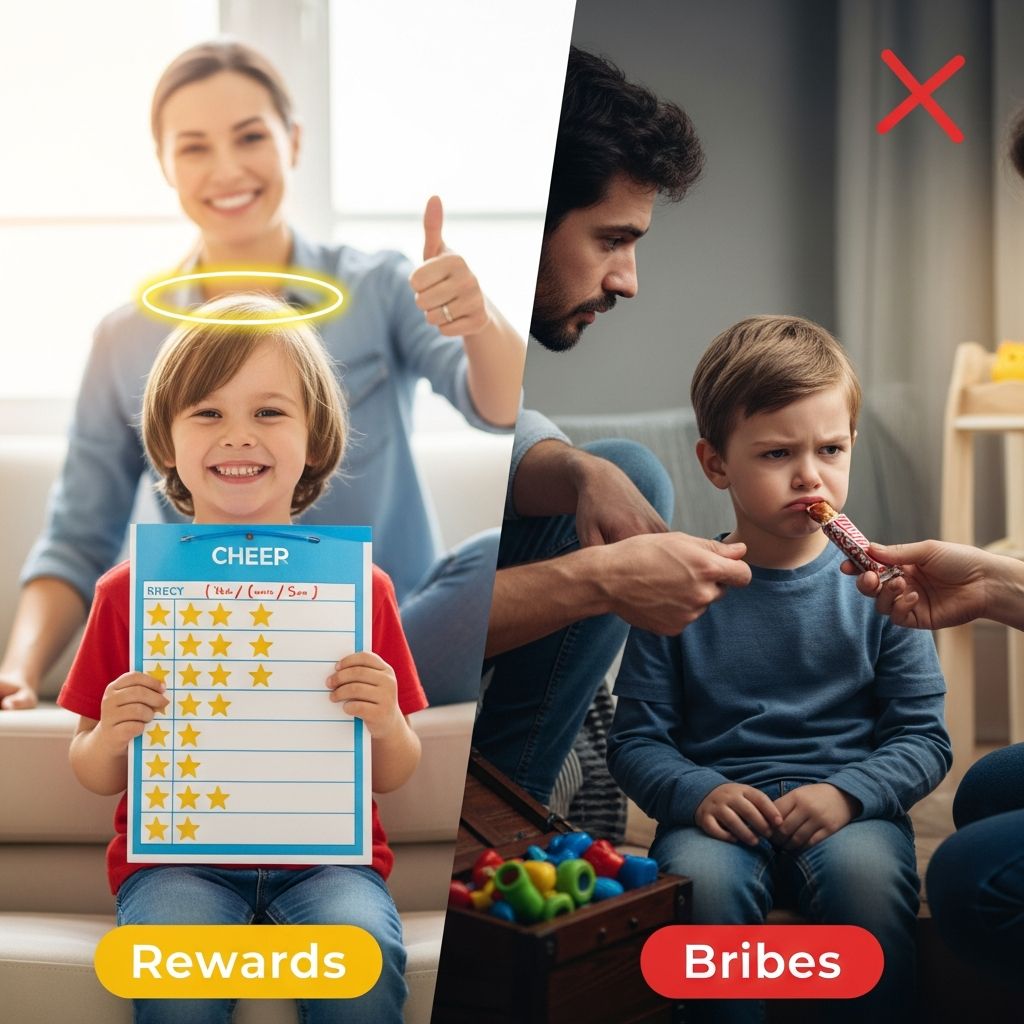
Parents often face challenging moments when guiding children’s behavior, turning to incentives as a quick solution. However, not all incentives serve the same purpose. Distinguishing between **bribes** and **rewards** is essential for promoting healthy development and sustainable good habits. Bribes typically occur reactively during misbehavior, while rewards are proactive tools planned to reinforce positive actions. This article delves into their differences, impacts, and practical applications to help you nurture responsible, self-motivated children.
Defining the Core Concepts
To navigate parenting effectively, grasp the fundamental definitions. A **bribe** is an impromptu offer made amid undesirable conduct, such as promising a treat to halt a tantrum. This reactive approach aims to end immediate disruption but often backfires by linking poor actions to gains. In contrast, a **reward** is a pre-established incentive tied to completing a positive task, like extra playtime after finishing homework. It builds association between effort and positive outcomes.
These distinctions matter because they shape long-term behavioral patterns. Bribes can foster manipulation tactics, where children learn that escalation yields results. Rewards, when used correctly, cultivate intrinsic motivation and accountability.
Why Timing Makes All the Difference
The primary separator between bribes and rewards is **timing**. Bribes precede or coincide with stopping bad behavior, reinforcing the negative cycle. For instance, offering candy during a grocery store meltdown signals that outbursts lead to sweets. Rewards follow successful positive behavior, such as praising and giving a sticker after tidying toys without prompting.
| Aspect | Bribe | Reward |
|---|---|---|
| Timing | During/ before stopping negative action | After positive action or as pre-agreed |
| Intent | Desperation to end disruption | Encourage and recognize good effort |
| Outcome | Reinforces misbehavior | Promotes repetition of good habits |
This table highlights how timing influences child learning. Proactive planning with rewards keeps parents in control, avoiding negotiation traps.
The Hidden Costs of Relying on Bribes
While bribes provide momentary relief, their consequences extend far. Children quickly discern that fussing or whining prompts offers, perpetuating demands for bigger incentives. This erodes parental authority and hinders emotional regulation skills. Over time, it creates dependency on external pacifiers rather than self-control.
- Bribes teach manipulation over cooperation.
- They escalate expectations, making future incidents harder to manage.
- Children miss opportunities to learn natural consequences of actions.
Research from child development experts emphasizes that such patterns can delay maturity, as kids prioritize short-term gains over long-term growth. Transitioning away requires consistency and patience.
Unlocking the Power of Positive Rewards
Rewards shine when structured thoughtfully. They bridge the gap between effort and satisfaction, encouraging repetition of desirable behaviors. Plan them collaboratively with your child to boost buy-in—discuss what motivates them, set clear goals, and deliver promptly upon success.
Effective rewards align with age and task difficulty. For toddlers, simple praises or hugs suffice; older kids appreciate privileges like screen time. The goal is gradual fading: start with frequent rewards, then space them out to build internal drive.
Age-Appropriate Reward Strategies
Tailor approaches to developmental stages for maximum impact.
For Ages 3-5: Simple and Immediate
Young children thrive on tangible, instant feedback. Use sticker charts for tasks like dressing independently. Fill a row for a small outing, celebrating each step verbally.
- Stickers or stamps for daily routines.
- Extra storytime for cooperative meals.
- Choose-your-snack privileges after play cleanup.
For Ages 6-9: Building Responsibility
School-age kids respond to goal-oriented systems. Implement weekly charts tracking chores and homework, culminating in family fun like a park visit.
| Task | Reward Idea | Frequency |
|---|---|---|
| Homework completion | 30 min extra gaming | Daily |
| Room tidying | Pick dinner side dish | Weekly |
| Helping siblings | Special badge or note | Immediate |
For Ages 10-12: Fostering Independence
Tweens benefit from choice-driven rewards emphasizing autonomy. Offer points redeemable for teen privileges, like later bedtime, after consistent effort.
- Allowance boosts for sustained chores.
- Personalized goal-setting sessions.
- Non-material options like leadership roles in family decisions.
Across ages, prioritize variety to prevent boredom and over-reliance.
Crafting a Sustainable Reward System
Success hinges on structure. Follow these steps:
- Identify targets: Focus on 2-3 specific, achievable behaviors needing improvement.
- Collaborate on incentives: Let kids select from approved options to enhance ownership.
- Set clear criteria: Define exact success metrics to eliminate ambiguity.
- Track progress visually: Charts or apps make advancement tangible.
- Review and adjust: Weekly check-ins refine the system.
- Fade gradually: Reduce frequency as habits solidify.
Proportionality is key—match reward scale to effort. A minor task warrants a sticker, not a toy, preserving value.
Common Mistakes and How to Avoid Them
Even well-intentioned systems falter without vigilance.
- Inconsistency: Sporadic delivery breeds distrust; commit fully.
- Over-rewarding: Tangibles for every action diminish intrinsic joy.
- Ignoring praise: Verbal affirmation often outperforms items—pair them.
- Unrealistic goals: Start small to ensure early wins.
Monitor for entitlement signs, like demanding rewards for basics, and pivot promptly.
Shifting from Bribes to Rewards: A Transition Guide
If bribes dominate your routine, change incrementally. Introduce rewards for positives first, ignoring minor misbehaviors. Model calm responses, explaining connections between actions and results. Over weeks, children adapt, valuing effort over outbursts. Patience yields empowered kids who self-regulate.
Expert Insights on Long-Term Benefits
Child psychology underscores rewards’ role in skill-building. They enhance executive function, like planning and persistence, vital for academic and social success. Unlike bribes, which stunt growth, rewards pave paths to independence.
Frequently Asked Questions (FAQs)
What if my child demands rewards like bribes?
Stay firm: Remind them of pre-agreed terms and ignore demands. Consistency retrains expectations over time.
Are non-tangible rewards effective?
Yes, praise, hugs, and privileges often prove more enduring, fostering emotional bonds.
How long should a reward system last?
Until the behavior internalizes, typically 4-8 weeks, then phase out gradually.
Can rewards work for children with special needs?
Absolutely—customize to their motivators, like sensory items or routine changes, consulting professionals.
What if rewards lose appeal?
Rotate options and incorporate child input to refresh engagement.
Empowering Your Family’s Future
Mastering rewards over bribes transforms discipline into growth opportunities. By emphasizing positives proactively, you equip children with tools for lifelong success. Implement one change today—track a single behavior—and witness the shift toward harmony and responsibility.
References
- The Difference Between Bribing and Rewarding Your Child — Expressable. 2023. https://www.expressable.com/learning-center/social-emotional-academic/the-difference-between-bribing-and-rewarding-your-child
- Positive Reinforcement Vs. Bribing: A Guide For Parents — Autism Learning Partners. 2023. https://autismlearningpartners.com/positive-reinforcement-vs-bribing/
- Understanding the Difference Between Bribery and Rewards in Parenting — Dr. Amber Ufford. 2023. https://www.dramberufford.com/post/understanding-the-difference-between-bribery-and-rewards-in-parenting
- Child Bribes vs. Rewards — Utah Valley Pediatrics. 2023. https://www.uvpediatrics.com/topics/bribes-vs-rewards/
- The Difference Between a Reward and a Bribe — The Gospel Coalition. 2023. https://www.thegospelcoalition.org/blogs/melissa-kruger/the-difference-between-a-reward-and-a-bribe-2/
- When Is a Child’s Reward Actually a Bribe? — Psychology Today. 2023-03-01. https://www.psychologytoday.com/us/blog/liking-the-child-you-love/202303/when-is-a-childs-reward-actually-a-bribe