Navigating the postpartum period while breastfeeding presents unique challenges for a mother’s wardrobe. Fluctuating body sizes, frequent feedings, and the need for quick access can make getting dressed feel daunting. A well-planned breastfeeding-friendly closet simplifies this by focusing on versatile, comfortable pieces that allow discreet nursing without sacrificing style. This guide outlines key components, building strategies, and real-life outfit combinations to help you assemble a collection that supports your daily routine and boosts your confidence.
Understanding Postpartum Wardrobe Needs
During breastfeeding, your body undergoes significant changes, including breast size variations due to milk production and postpartum recovery demands. Clothing must accommodate these shifts while enabling one-handed access for feeding. Prioritize soft, breathable fabrics like cotton, bamboo, and modal that prevent irritation and promote airflow. Elastic waistbands and stretchy materials offer flexibility for comfort during long nursing sessions or active days. Deep necklines, wrap styles, and clip-down features are game-changers for functionality.
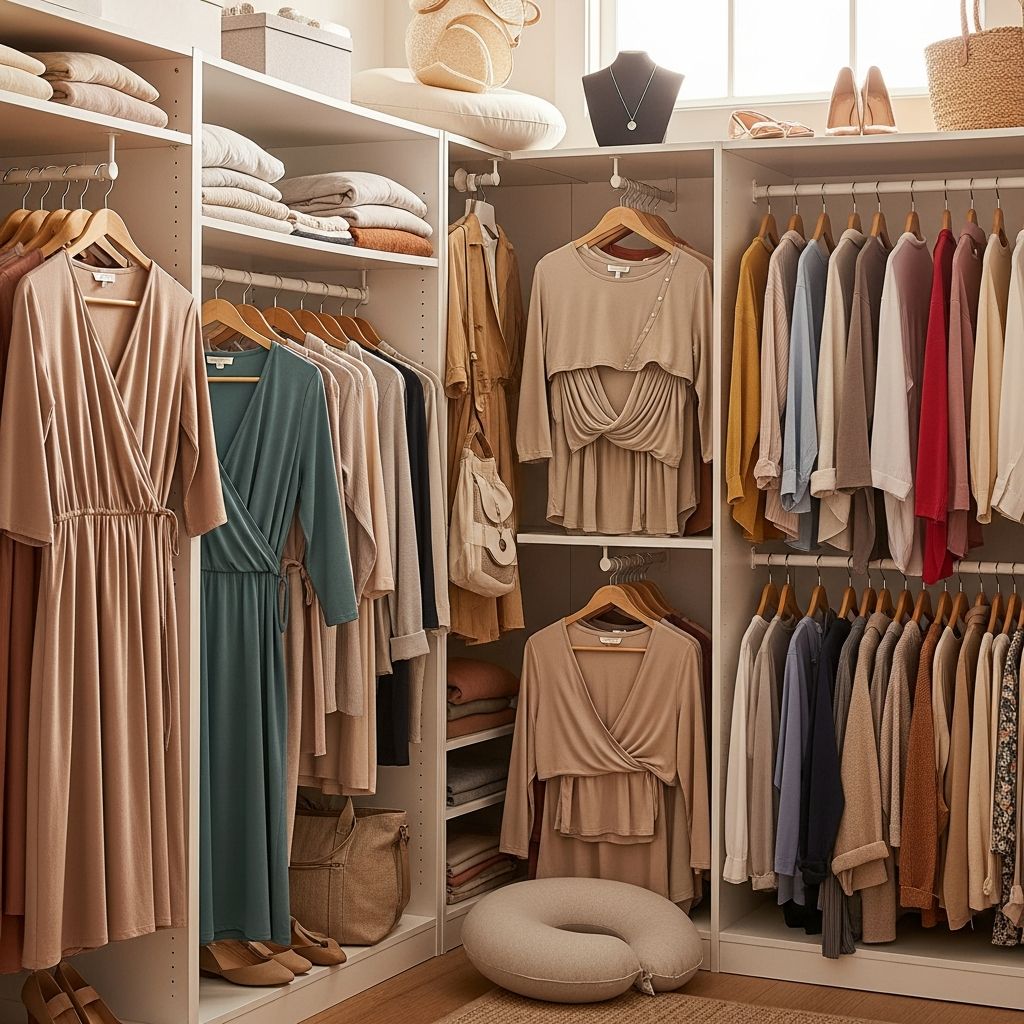
Building around a capsule approach—selecting 20-30 interchangeable items—maximizes utility with minimal volume. This method reduces decision fatigue, saves space in a nursery-packed home, and ensures every piece pulls double duty for home lounging, errands, or outings.
Essential Underlayers: The Foundation of Comfort
Start with supportive undergarments designed specifically for nursing. Nursing bras with clip-down cups provide instant access without full exposure, supporting breasts that may increase several cup sizes. Opt for wire-free styles to avoid duct blockages, as recommended by lactation experts. Sports bras for active days offer compression and moisture-wicking properties ideal for walks or workouts.
- 2-3 seamless sleep bras for nighttime feeds and rest.
- 2-3 daytime or sports bras for daily wear.
- 4-6 pairs of postpartum underwear with high-rise, seamless designs for c-section or vaginal birth recovery.
Layering tanks with pull-up/pull-down necklines serve as bases under tops, adding modesty and versatility. These essentials form the reliable base layer for all outfits.
Versatile Tops for Everyday Accessibility
Nursing tops are the core of any breastfeeding closet, featuring hidden panels, zippers, snaps, or stretchy necklines for effortless access. V-neck tees, henleys, and button-front shirts allow pulling down or unbuttoning one side discreetly. Bamboo or organic cotton blends feel luxurious against sensitive skin and regulate temperature.
| Top Type | Key Features | Best For |
|---|---|---|
| Nursing T-Shirts | Double-layer panels, soft stretch | Casual outings, home |
| Button-Down Shirts | Full front placket, lightweight fabrics | Work calls, layering |
| Hoodies/Sweatshirts | Side zippers or kangaroo pockets | Cooler weather, comfort |
| Tanks | Spaghetti straps, scoop necks | Layering base, summer |
Aim for 3-5 tees, 2 tanks, 1-2 hoodies, and a blouse for variety. These mix seamlessly with bottoms for endless combinations.
Effortless Dresses and Jumpsuits
Dresses remain viable with nursing-specific designs like empire waists, wrap fronts, or side-ruche panels that lift easily. Fit-and-flare silhouettes flatter postpartum figures, while jersey knit dresses drape forgivingly. Jumpsuits with snap crotches or front zippers offer a playful one-piece option without sacrificing access.
- 1-2 casual day dresses for errands or playdates.
- 1 maxi or wrap dress for events.
- 1 jumpsuit for casual chic looks.
These pieces transition from maternity to everyday wear, extending their lifespan beyond breastfeeding.
Comfortable Bottoms That Adapt
Bottoms should prioritize ease with pull-on styles and high elastic waists that sit above the belly button, accommodating bloating or diastasis recti. Leggings with tummy support, joggers with tapered legs, and soft denim jeggings provide options for all occasions.
- 2 pairs of leggings (one black, one patterned).
- 1-2 joggers or lounge pants.
- 1 pair of stretch jeans or culottes.
- 1 flowy midi skirt for variety.
These pair with any top, ensuring mobility for chasing toddlers or pumping sessions.
Layering and Sleepwear for All Seasons
Layering amplifies versatility: cardigans with drape fronts, kimonos, or circle scarves cover during feeds. For sleep, nightgowns with empire waists and matching robes allow middle-of-the-night access without chill exposure.
- 2 cardigans or light jackets.
- 1-2 sleep nursing sets or gowns.
- 1 cozy robe.
Open-front knits and ponchos work year-round, pulling forward for coverage.
Outfit Ideas for Real-Life Scenarios
Put your capsule to work with these mix-and-match ensembles:
- Errand Run: Nursing tank + leggings + long cardigan + sneakers.
- Stroller Walk: Sports bra + hoodie + joggers + baseball cap.
- Work-from-Home: Button-down shirt + joggers + loafers.
- Date Night: Wrap dress + ballet flats + statement necklace.
- Park Day: Tee + skirt + sun hat + sandals.
- Travel Day: Tank + pants + zip hoodie + crossbody bag.
- Overnight Feeds: Nightgown + robe.
These 7 outfits utilize under 20 pieces, demonstrating capsule efficiency.
Pumping and Travel Accessories
For on-the-go moms, hands-free pumping bras with built-in flanges enable multitasking. Insulated pump bags, wet/dry pouches for pads, and nursing covers add practicality. Travel must-haves include wrinkle-resistant fabrics and packing cubes for organization.
Care and Maintenance Tips
Extend garment life by washing in cold water, air-drying to preserve elasticity, and spot-treating milk stains with enzyme cleaners. Rotate pieces to avoid wear, and invest in quality over quantity for longevity.
Frequently Asked Questions
What are the best fabrics for nursing clothes?
Soft, breathable options like bamboo, organic cotton, and modal prevent irritation and wick moisture effectively.
How many pieces do I need for a capsule wardrobe?
20-30 items covering bras, tops, bottoms, dresses, and layers suffice for most lifestyles.
Can I wear regular clothes while breastfeeding?
Yes, with hacks like deep V-necks, stretchy necklines, or layering tanks, but nursing-specific items offer superior access and support.
Are nursing dresses practical?
Absolutely—choose wrap, empire waist, or ruched styles for easy lift-and-feed access without bulk.
How do I transition out of nursing wear?
Many pieces like leggings, cardigans, and basic tees double as regular wardrobe staples post-weaning.
References
- La Leche League International: Breastfeeding and Clothing Choices — La Leche League International. 2023-05-15. https://llli.org/breastfeeding-info/clothing/
- American Academy of Pediatrics: Breastfeeding Support Guidelines — American Academy of Pediatrics. 2022-11-01. https://publications.aap.org/pediatrics/article/150/1/e2022057988/188694/Breastfeeding-and-the-Use-of-Human-Milk
- CDC: Maternal Health and Breastfeeding — Centers for Disease Control and Prevention. 2024-02-20. https://www.cdc.gov/breastfeeding/php/data/maternal/index.htm
- WHO: Breastfeeding Nutrition and Clothing Recommendations — World Health Organization. 2023-08-10. https://www.who.int/health-topics/breastfeeding
- NIH Postpartum Recovery Guidelines — National Institutes of Health. 2024-01-12. https://www.nichd.nih.gov/health/topics/postpartum-care