Puberty can feel like your body suddenly has a mind of its own. Your chest is changing, you are thinking about your first period, and it may feel like there are more questions than answers. This guide breaks things down in simple language so you can understand how breast development and your menstrual cycle fit together, and what “normal” really looks like.
How Puberty Changes Your Body
Puberty is a stage of life when your brain sends new signals to your ovaries and other glands, telling your body to start maturing sexually. These signals come in the form of hormones, which act like chemical messengers and affect everything from your height to your mood. One of the most noticeable changes is the growth of breast tissue along with the start of your menstrual cycle.
Everyone moves through puberty at their own speed. Some people notice breast changes and pubic hair earlier, while others grow later and more gradually. Both patterns can be completely healthy, and the exact timing has more to do with your genetics and overall health than anything you are doing wrong or right.
Breast Development: What Actually Happens
Breasts do not appear all at once. They grow in stages over several years, and they may not grow in a perfectly even or symmetrical way. It can help to know what is happening beneath the skin so you can understand why your chest might feel sore, lumpy, or different from day to day.
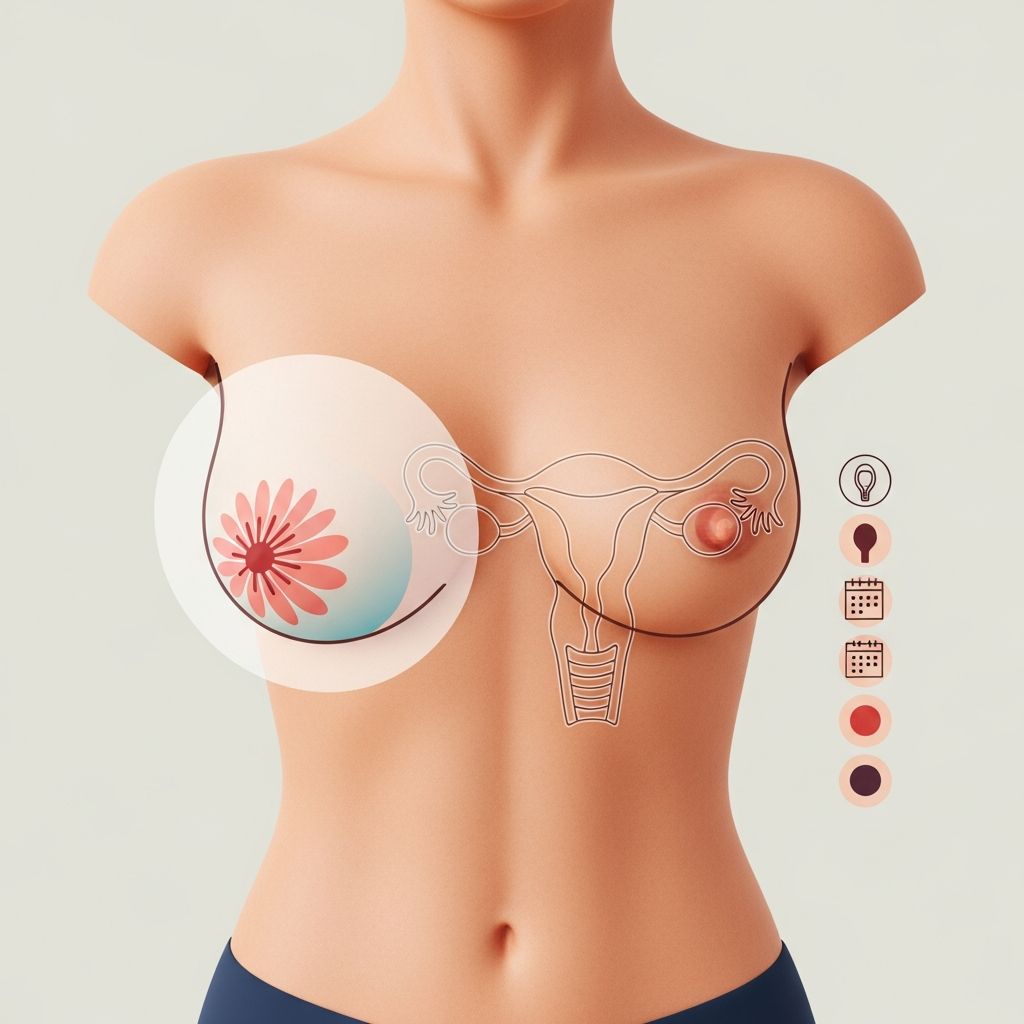
Inside each breast, there is a mix of fatty tissue, milk-producing glands, and small tubes called ducts. During puberty, estrogen and other hormones tell these tissues to grow, leading to new sensations and visible changes on the surface of your chest.
Common Stages of Breast Growth
- Flat chest with small nipples: Before puberty, the breast area is mostly flat, and only the nipple is slightly raised.
- Breast buds: A small, firm lump forms under the nipple and the darker skin around it (the areola) often gets bigger. This can feel sore or sensitive.
- Growing breasts: The breast mound becomes more noticeable, and you may see more shape or curve on your chest.
- More defined shape: The nipple and areola may stick out a bit more, and your breast tissue becomes fuller and heavier.
- Mature size (for now): Your breasts take on a more settled shape, but they can still change across your life with weight shifts, pregnancy, hormones, and aging.
It is extremely common for one breast to be larger than the other, especially during the growing years. Over time they often look more similar, but many adults still have slight differences in size or shape, which is completely normal.
How Breast Growth and Your First Period Are Connected
Many people wonder which comes first: breast growth or their period. For most, breast development begins before the first menstrual bleed. Once the chest starts changing, the rest of puberty usually continues to unfold in a fairly predictable order, even though exact ages vary widely.
A rough pattern many people experience looks like this: breast buds start, then pubic and underarm hair appears, followed by growth spurts, and then the first period. You might notice small changes in your nipples or a new tender spot on your chest long before you ever see blood on your underwear.
Typical Timing (Approximate)
| Change | What You Might Notice | How It Relates to Periods |
|---|---|---|
| Breast buds | Small, firm lumps under one or both nipples; tenderness | Often one of the first signs that your period is still a couple of years away. |
| Growing breast mound | More curve and fullness on the chest, changing bra needs | Usually happens as you get closer to starting your period. |
| Fuller breast shape | Breasts look more developed and feel heavier or denser | Many people are near or already at their first menstruation at this point. |
| Regular monthly cycle | Bleeding every month, with patterns you begin to recognize | Breasts now tend to change with each cycle and may feel different throughout the month. |
Because every body is unique, these stages may arrive sooner, later, or in a slightly different order. If you feel worried that your development is very far outside what seems typical for your age, it is always fine to ask a health care professional to check in with you.
Monthly Hormones and Breast Changes
Once your menstrual cycle begins, your breasts usually do not stay exactly the same all month. Hormones rise and fall over roughly 21 to 35 days, and your breast tissue responds to these shifts. Learning this pattern can make it less scary when your breasts feel different from week to week.
Two key hormones are especially important here: estrogen and progesterone. Both levels tend to increase and decrease across your cycle, affecting your breast glands, ducts, and the fluid your body holds onto.
How Your Breasts May Feel During the Cycle
- Right after your period: Breasts often feel softer and less tender, and some people notice they seem slightly smaller.
- Middle of the cycle (around ovulation): There may be a gentle fullness or mild tenderness as estrogen peaks.
- Days before your next period: Soreness, aching, swelling, and a slightly lumpy texture can appear as progesterone and fluid retention increase.
- During your period: Tenderness may continue at first, then often eases as hormone levels drop again.
These shifts are often called cyclical breast changes because they repeat with each menstrual cycle. Tracking them in a calendar or health app can help you notice patterns and feel more in control.
Normal Breast Sensations (and What’s Not)
Feeling something new in your chest area can be unsettling, especially when you hear so much about breast diseases online. Most sensations during puberty are harmless and simply reflect normal development or hormone changes. Learning the difference between common, expected feelings and signs that deserve extra attention can give you peace of mind.
Keep in mind that most teens have healthy breasts, and serious problems are rare at this age. Still, respecting your body and paying attention to new or unusual symptoms is a smart habit to build early.
Common, Usually Normal Experiences
- One breast larger than the other, especially while still developing.
- Breast buds that are tender or feel like a small, round lump directly under the nipple.
- Breast soreness that gets stronger before your period and eases after it starts.
- A slightly bumpy texture in both breasts that comes and goes with your cycle.
- Nipples that change in size, shape, or color as you go through puberty.
Signs You Should Get Checked
- A lump that feels very hard, keeps growing, or does not go away after a few cycles.
- Breast pain on only one side that is severe, sudden, or unrelated to your cycle.
- Redness, warmth, or swelling that makes the skin look irritated or infected.
- Fluid leaking from the nipple (especially if it is bloody or happens without squeezing).
- Any change that worries you or makes daily life difficult, even if it might be normal.
If any of these happen, a health care provider can examine you, ask questions, and often reassure you that everything is okay. If something does need treatment, catching it early usually makes it easier to manage.
Emotional Stuff: Body Image, Bras, and Confidence
Breast development is not just physical. It can stir up a lot of emotions, from excitement and pride to embarrassment and anxiety. You might compare yourself to friends, social media images, or people on TV and feel like your body is “behind,” “too big,” or “not right.” These thoughts are very common, but they are not a fair way to judge your worth.
It may help to remember that breast size does not measure beauty, maturity, or value. Some people have small chests and large periods of confidence, while others with larger breasts still feel insecure. Building a kinder inner voice toward your body can help you feel more comfortable in your changing shape.
Tips for Feeling More Comfortable
- Wear a soft, well-fitting bra or sports bra if movement makes your chest sore.
- Choose tops that make you feel safe and confident, whether that means looser or more fitted styles.
- Limit time comparing your body to edited photos online; those images rarely show real-life variety.
- Talk with a trusted adult or friend if you feel confused, overwhelmed, or pressured about your body.
Caring for Your Breasts During Your Period
When your period shows up, your breasts may feel different from earlier in your cycle. Simple habits can ease discomfort and help you understand what your breasts are “supposed” to feel like at different times. Taking time to notice patterns will make it easier to spot anything unusual later on.
Good breast care is not about constantly checking for problems. It is about being gently aware, kind to yourself, and supportive of your body as it changes.
Simple Comfort Strategies
- Wear a supportive bra, especially during sports or vigorous activity.
- Use a warm compress or warm shower on your chest if you feel achy or tight.
- Try light stretching or gentle exercise to improve circulation and lower overall period discomfort.
- Reduce very salty or heavily processed foods if you notice lots of bloating and swelling.
- Talk to a parent, guardian, or health care provider about pain relief options if soreness is intense.
When Periods and Breast Changes Seem “Late” or “Early”
Because everyone in school is growing at a different rate, it is easy to label yourself as “behind” or “ahead” based on breasts or your period. In reality, there is a wide range of healthy ages for these changes. Genetics, nutrition, health history, and even stress can all influence timing.
Having a sense of what usually falls in the normal range can be reassuring. However, if you are ever unsure, a quick check-in with a health care professional can clear up a lot of worry.
Examples of When to Check In
- You have not noticed any breast changes by your early teen years and feel concerned.
- Your breasts started growing, but many years have passed with no sign of a period.
- Your period started very early and your body seems to be changing faster than most peers.
- You had a period and then it stopped completely for several months without a clear reason.
Health care providers who work with teens are used to talking about this stuff every day. They can explain what is typical, run tests if needed, and help you understand your own development without judgment.
Frequently Asked Questions
Do my breasts have to reach a certain size before I get my period?
No. There is no exact size your breasts must be for menstruation to begin. Many people start their periods while their breasts are still developing, and the chest may continue to grow for several years after the first bleed.
Why does one breast look bigger than the other?
It is very common for one breast to be slightly larger or a different shape than the other, especially during puberty. As you finish growing, they may look more similar, but many adults still have one side that is a bit different, and it is usually nothing to worry about.
Is breast pain before my period normal?
Yes, mild to moderate soreness in both breasts in the days before your period is a common response to hormone changes. If pain is only on one side, gets worse quickly, or makes it hard to do normal activities, it is a good idea to check in with a health care provider.
Can I exercise or play sports if my breasts are sore?
In most cases, yes. Wearing a well-fitting sports bra and choosing supportive clothing can make movement much more comfortable. If pain is severe or you notice unusual swelling or redness, you should pause and ask a trusted adult or health professional for guidance.
Do I need to examine my breasts every month like adults do?
For most teens, there is no strict rule requiring a formal monthly exam. What matters more is getting familiar with how your breasts typically look and feel across your cycle so you can notice any major change and get it checked if something feels off.
Who can I talk to if I feel embarrassed about breast changes?
You might start by talking with a parent, guardian, older sibling, school nurse, or health care provider you trust. Online resources from reputable health organizations and teen clinics can also offer reliable information, but they should not replace a professional who can look at your specific situation.
Key Takeaways
- Breast development and your menstrual cycle are closely linked, but the exact timing and size vary from person to person.
- Cyclical breast soreness and changes in fullness before your period are usually normal responses to hormone shifts.
- Most teens experience uneven growth, tenderness, or lumps related to breast buds that are harmless.
- Any breast change that feels very painful, rapidly growing, or worrying deserves a conversation with a health care provider.
- Your body is allowed to grow in its own way and on its own schedule; comparison rarely tells the full story.